Artwork
Aquilegia vulgaris (almindelig akeleje)
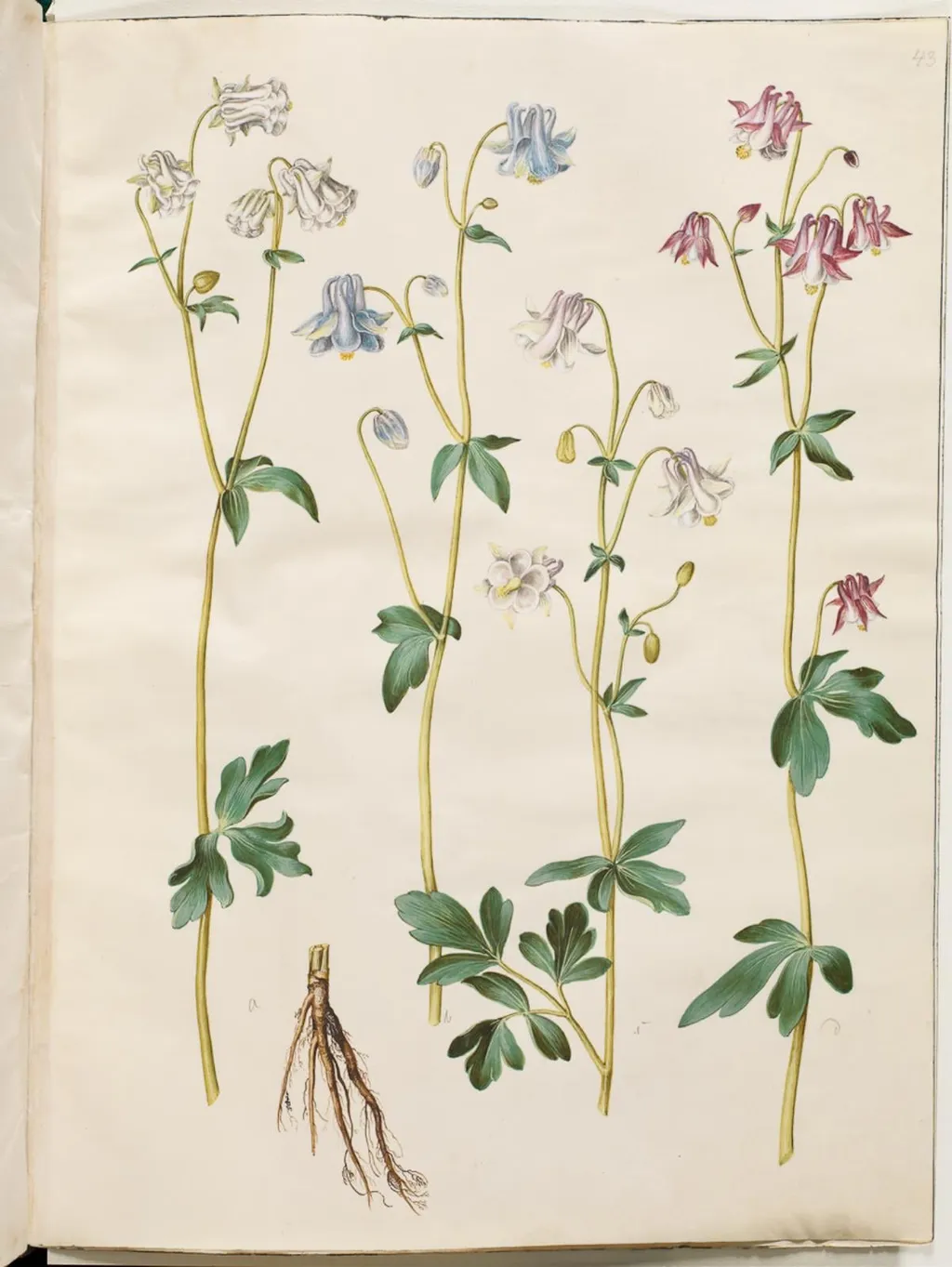
Aquilegia vulgaris (almindelig akeleje) is an unspecified work on paper by Unknown. It dates from 1654 and is held in the collection of the Statens Museum for Kunst. This botanical illustration depicts Aquilegia vulgaris, commonly known as common columbine, painted around 1654.
About this work
Overview
The image is held in the collection of the Museum of Ethnography, where it functions as a scientific record rather than a decorative piece.
This botanical illustration depicts Aquilegia vulgaris, commonly known as common columbine, painted around 1654. Rendered in watercolor on paper, the work presents six flowering stems with precise attention to anatomical detail. The image is held in the collection of the Museum of Ethnography, where it functions as a scientific record rather than a decorative piece. Its plain background focuses attention entirely on the plant’s structure.
Subject & Meaning
The painting isolates the columbine plant to document its morphology for study. Each element—petals, leaves, and even the exposed root system—is rendered with clinical accuracy. The inclusion of roots suggests an intent to capture the full life cycle, not just the bloom. This reflects a 17th-century scientific impulse to classify and preserve knowledge of flora, particularly in an era when botanical taxonomy was rapidly evolving.
Technique & Style
The artist employed delicate watercolor washes to build subtle gradations of white, blue, and pink, avoiding harsh outlines. Fine brushwork defines each petal’s curve and leaf vein, while the brown roots are rendered with dry, textured strokes. The smooth, even application of pigment and absence of shadow or perspective create a flat, objective composition typical of early scientific illustration, prioritizing clarity over aesthetic flourish.
History & Provenance
Attributed to an artist identified as 35199_person, the work dates to the mid-17th century, a period when European institutions began systematically collecting plant specimens and their images. It entered the Museum of Ethnography’s holdings through unknown means, likely as part of a broader collection of natural history materials. Its preservation suggests it was valued for its accuracy rather than its artistic merit.
Context
Created during the rise of empirical science, this image aligns with the work of naturalists like John Ray and the early Royal Society, who emphasized direct observation. Botanical illustrations like this one served as visual references for scholars before photography. The emphasis on root systems and unadorned presentation reflects a shift away from ornamental plant depictions toward standardized documentation for classification.
Legacy
Though unsigned and anonymous in public record, the illustration remains a representative example of pre-modern botanical art. It contributes to the historical archive of how plants were visually understood before the advent of scientific photography. Its continued presence in a museum collection underscores its role as a tool of knowledge, not merely an artifact of aesthetics.
Artist & collection

 Domestic Scene
 Giacomo and Cardinal Marco, investing Andrea, Abbot of San Zeno, with his Benefice
 The Nymph of Fontainebleau
 Portrait of a Woman
 Madonna and Child with Saints in the Enclosed Garden
 Venus and Minerva
 Family Group of Four on Sofa
 Wall painting from Room H of the Villa of P. Fannius Synistor at Boscoreale
 Antennaria dioica (almindelig kattefod)
 Helleborus niger (almindelig julerose)
 Polemonium caeruleum (almindelig jakobsstige); Lotus tetragonolobus (aspargesært)
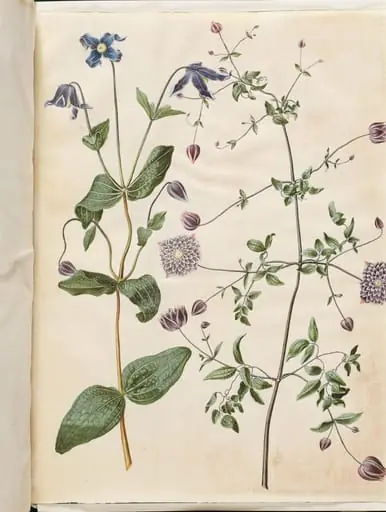 Clematis integrifolia (blå staudeklematis); Clematis viticella (italiensk skovranke)
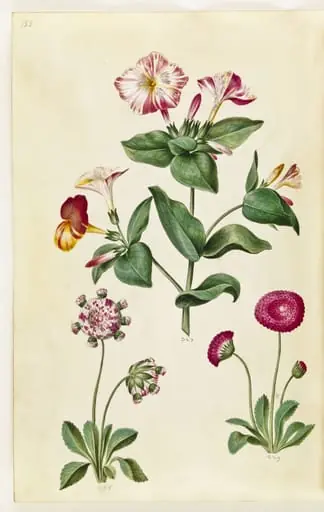 Mirabilis jalapa (vidunderblomst); Bellis perennis (almindelig tusindfryd)
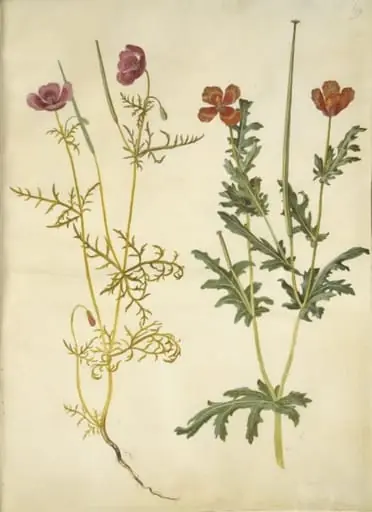 Roemeria hybrida (violet hornvalmue); Glaucium corniculatum (rød hornskulpe)