Artwork
Clematis integrifolia (blå staudeklematis); Clematis viticella (italiensk skovranke)
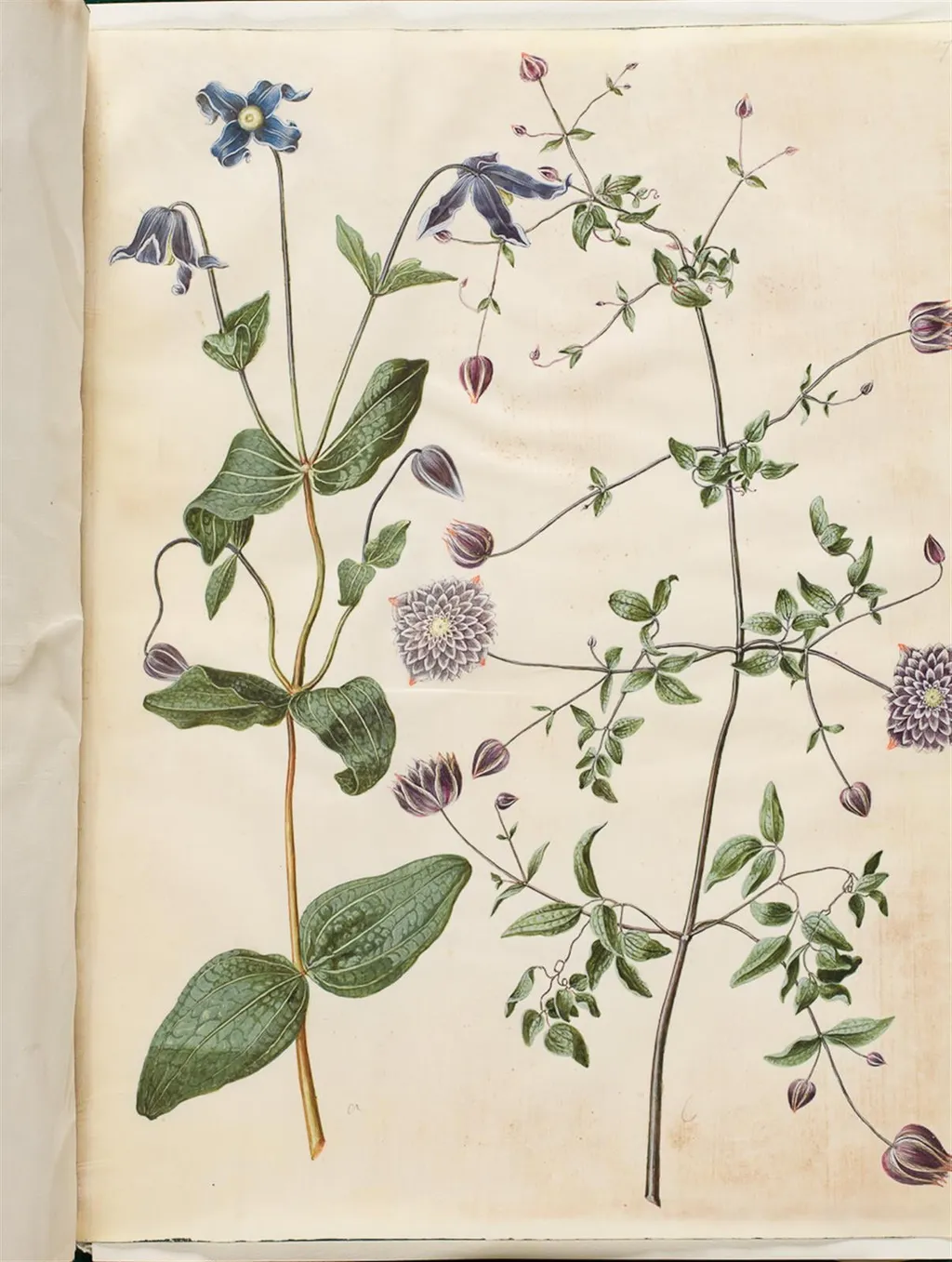
Clematis integrifolia (blå staudeklematis); Clematis viticella (italiensk skovranke) is an unspecified work on paper by Unknown. It dates from 1654 and is held in the collection of the Statens Museum for Kunst.
About this work
Overview
Rendered with precision, the work belongs to a tradition of botanical illustration that prioritized scientific accuracy over decorative flourish.
This watercolor painting, dated around 1654, depicts three species of climbing clematis plants: Clematis integrifolia and Clematis viticella, alongside a third variety. Rendered with precision, the work belongs to a tradition of botanical illustration that prioritized scientific accuracy over decorative flourish. It is held in the collection of the Museum of Ethnography, where it serves as a record of plant forms observed in early modern Europe.
Subject & Meaning
The painting presents three distinct clematis species, each identified by its floral structure and foliage. Bright blue blooms with yellow centers, trumpet-shaped purple flowers, and fluffy pink-and-white blossoms are arranged to highlight their botanical differences. The composition emphasizes growth patterns—vines intertwine naturally, suggesting observation from life rather than imagination. The work functions as a visual catalog, intended for study rather than aesthetic display.
Technique & Style
Executed in watercolor, the painting employs thin, layered washes to capture subtle variations in petal tone and leaf texture. Fine brushwork delineates individual veins, bud formations, and the delicate edges of petals. The pale, unmodulated background isolates the plants, enhancing contrast and clarity. No shadows or perspective are used; the focus remains strictly on botanical detail, reflecting a method common in scientific illustration of the period.
History & Provenance
The painting is attributed to an artist identified only by a catalog number, 35199_person, suggesting its origin lies in an institutional or academic collection rather than a named individual’s oeuvre. It entered the Museum of Ethnography’s holdings at an unknown date, likely as part of a broader collection of natural history materials gathered during the 17th century. Its survival reflects the value placed on botanical documentation in early modern scientific circles.
Context
Created during a time when European naturalists were systematically documenting flora from home and abroad, this work aligns with the rise of illustrated herbals and botanical gardens. Artists like the unknown creator often worked under the patronage of universities or collectors seeking to classify plant species. The emphasis on accurate morphology, rather than ornamentation, reflects the growing influence of empirical science over artistic convention.
Legacy
Though unsigned and uncelebrated in its time, the painting contributes to a larger archive of pre-modern botanical records. Its meticulous rendering offers insight into how plant knowledge was visually transmitted before photography. Today, it remains a quiet testament to the labor of early scientific illustrators—individuals whose work underpinned the classification systems still in use.
Artist & collection

 Domestic Scene
 Giacomo and Cardinal Marco, investing Andrea, Abbot of San Zeno, with his Benefice
 The Nymph of Fontainebleau
 Portrait of a Woman
 Madonna and Child with Saints in the Enclosed Garden
 Venus and Minerva
 Family Group of Four on Sofa
 Wall painting from Room H of the Villa of P. Fannius Synistor at Boscoreale
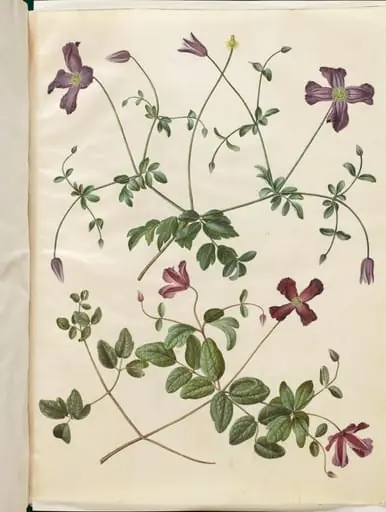 Clematis viticella (italiensk skovranke)
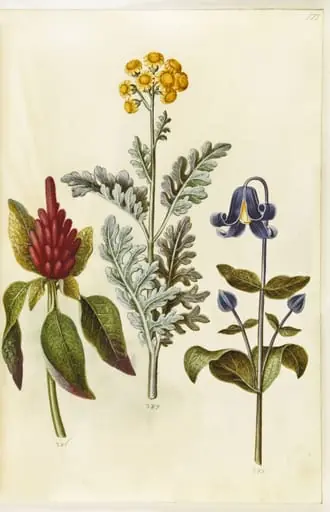 Amaranthus cruentus (rød amarant); Jacobaea maritima (gråblad); Clematis integrifolia (blå staudeklematis)
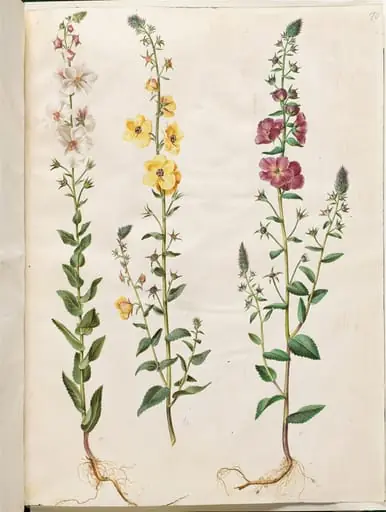 Verbascum blattaria (klase-kongelys); Verbascum phoeniceum (purpur-kongelys)
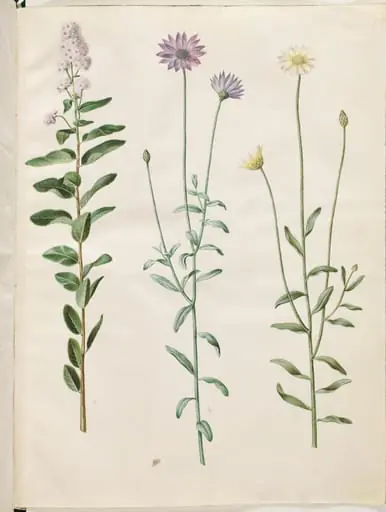 Spiraea salicifolia (pilebladet spiræa); Catananche caerulea (blå rasleblomst)
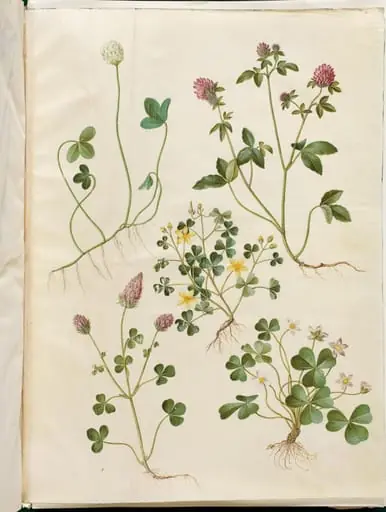 Trifolium repens (hvid-kløver); Trifolium pratense (rød-kløver); Oxalis corniculata (nedliggende surkløver); Trifolium incarnatum (blod-kløver); Oxalis acetosella (skovsyre)
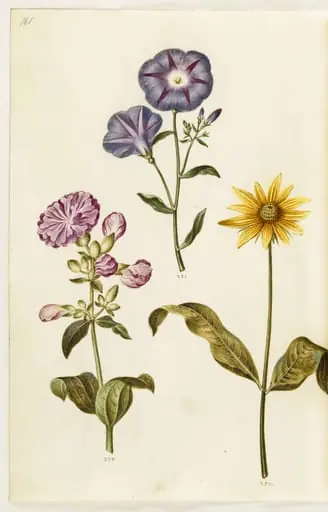 Saponaria officinalis (almindelig sæbeurt); Convolvulus tricolor (jomfruskørt); Helianthus (?) (solsikke-art)
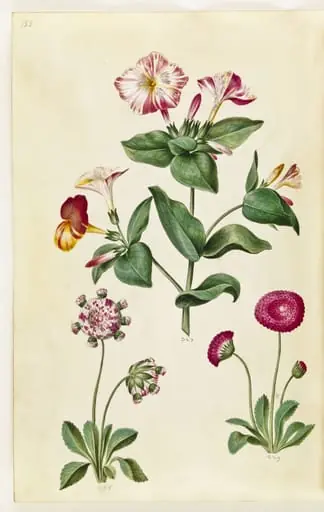 Mirabilis jalapa (vidunderblomst); Bellis perennis (almindelig tusindfryd)
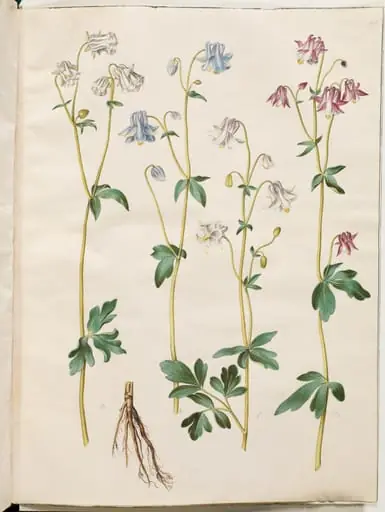 Aquilegia vulgaris (almindelig akeleje)
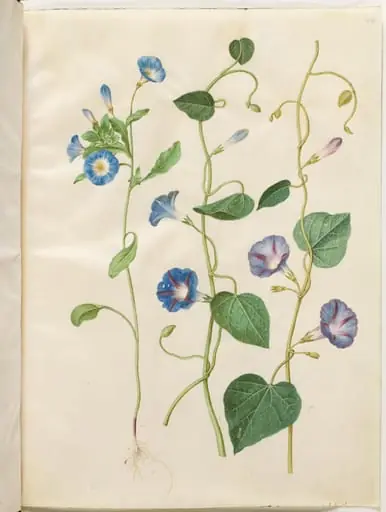 Convolvulus tricolor (jomfruskørt); Ipomoea purpurea (purpur-pragtsnerle)
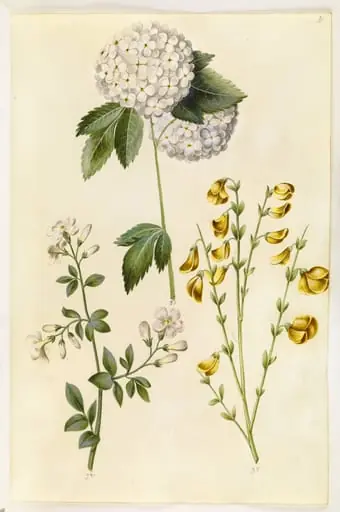 Viburnum opulus (almindelig snebolle); Jasminum officinale (læge-jasmin); Cytisus scoparius (almindelig gyvel)