Artwork
Argemone mexicana (mexicansk pigvalmue)
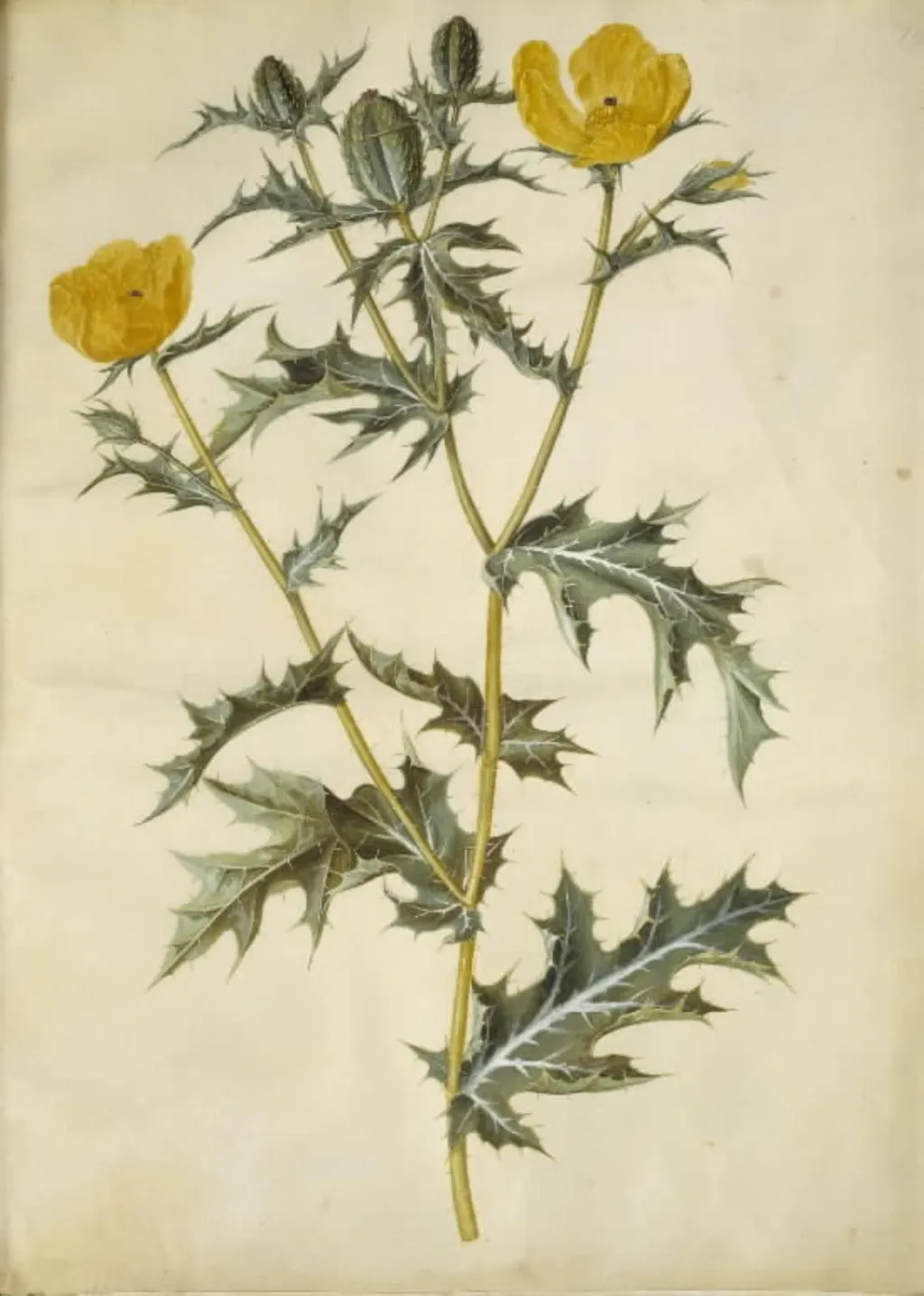
Argemone mexicana (mexicansk pigvalmue) is an unspecified work on paper by Unknown. It dates from 1654 and is held in the collection of the Statens Museum for Kunst. This watercolor depicts Argemone mexicana, a flowering plant native to the Americas, rendered around 1654 by an unnamed artist.
About this work
Overview
This watercolor depicts Argemone mexicana, a flowering plant native to the Americas, rendered around 1654 by an unnamed artist. The work is part of the collection at the Museum of Ethnography. It presents a solitary specimen with precise attention to botanical accuracy, reflecting the scientific interest in plant documentation during the mid-seventeenth century.
Subject & Meaning
The painting isolates a single specimen of Argemone mexicana, emphasizing its physical form without contextual elements. The focus on botanical detail suggests an intent to record the plant’s morphology, likely for scholarly or colonial botanical study. Its inclusion in an ethnographic collection implies an interest in the plant’s cultural or medicinal use beyond its visual representation.
Technique & Style
Executed in watercolor, the work employs delicate layering to capture the texture of soft, crinkled petals and the fine hairs along the spiky leaves.
Executed in watercolor, the work employs delicate layering to capture the texture of soft, crinkled petals and the fine hairs along the spiky leaves. The thin stem and loosely arranged foliage suggest a naturalistic pose, avoiding stylization. The medium’s transparency allows subtle gradations of green and yellow, enhancing the plant’s lifelike presence through controlled washes rather than heavy outlines.
History & Provenance
Created circa 1654, the painting entered the Museum of Ethnography’s holdings at an unknown date. Its origin is tied to early European efforts to document New World flora, possibly through colonial networks or botanical expeditions. The artist’s identity remains unrecorded, though the precision aligns with contemporary naturalists working in the Netherlands or Spain.
Context
During the mid-1600s, European collectors and scholars systematically illustrated plants from newly encountered regions. This work fits within a broader trend of botanical illustration that prioritized accuracy over aesthetics, serving as reference material for herbaria and medical texts. Argemone mexicana, known for its medicinal and toxic properties, would have been of particular interest in this context.
Legacy
The painting endures as a quiet example of pre-modern scientific observation. Though not widely exhibited, it contributes to the historical record of how non-European flora was visually cataloged. Its preservation underscores the value placed on detailed botanical documentation, even when created by anonymous hands within colonial systems of knowledge collection.
Artist & collection

 Domestic Scene
 Giacomo and Cardinal Marco, investing Andrea, Abbot of San Zeno, with his Benefice
 The Nymph of Fontainebleau
 Portrait of a Woman
 Madonna and Child with Saints in the Enclosed Garden
 Venus and Minerva
 Family Group of Four on Sofa
 Wall painting from Room H of the Villa of P. Fannius Synistor at Boscoreale
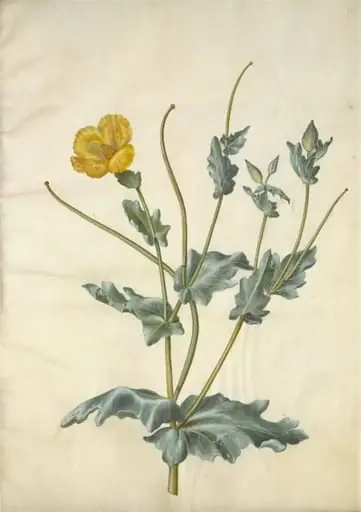 Glaucium flavum (strand-hornskulpe)
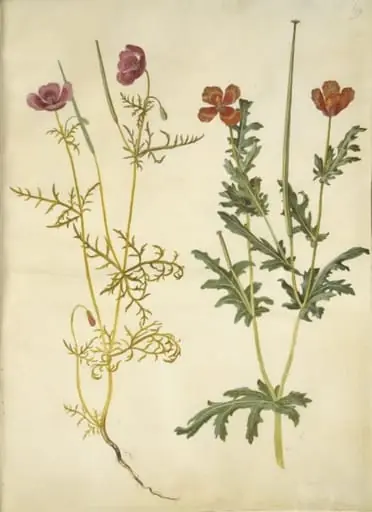 Roemeria hybrida (violet hornvalmue); Glaucium corniculatum (rød hornskulpe)
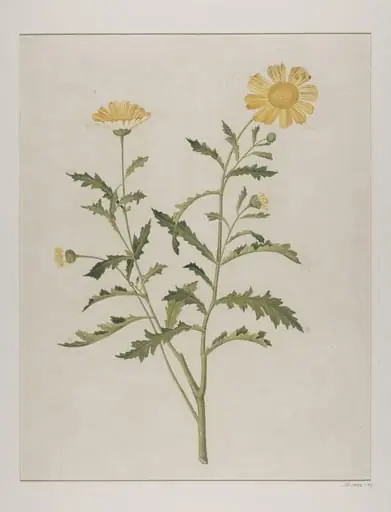 Wild chrysanthemum (chrysanthemum indicum)
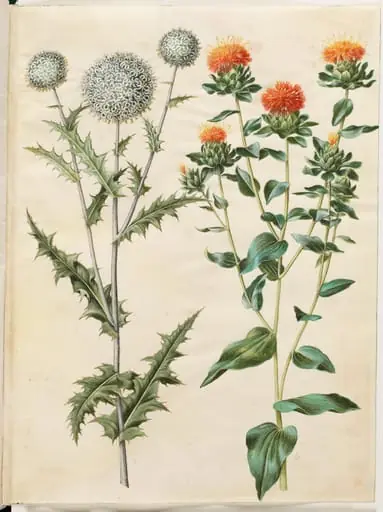 Echinops sphaerocephalus (almindelig tidselkugle); Carthamus tinctorius (gul saflortidsel)
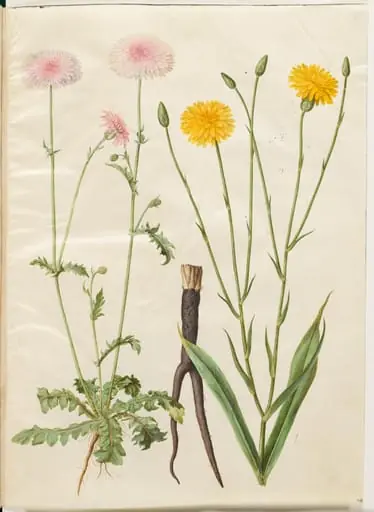 Crepis rubra (rød høgeskæg); Scorzonera hispanica (have-skorzoner)
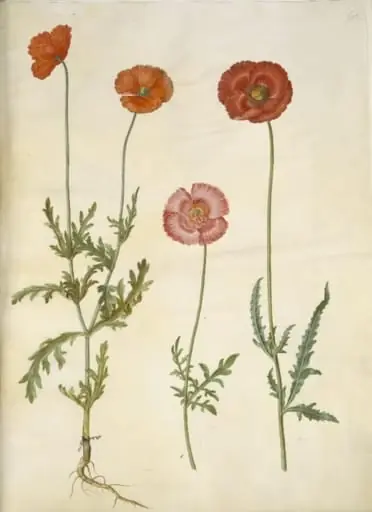 Papaver dubium (gærde-valmue); Papaver rhoeas (korn-valmue)
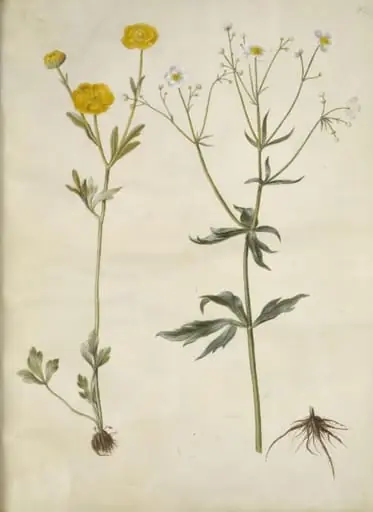 Ranunculus monspeliacus (silke-ranunkel); Ranunculus aconitifolius (stormhatbladet ranunkel)
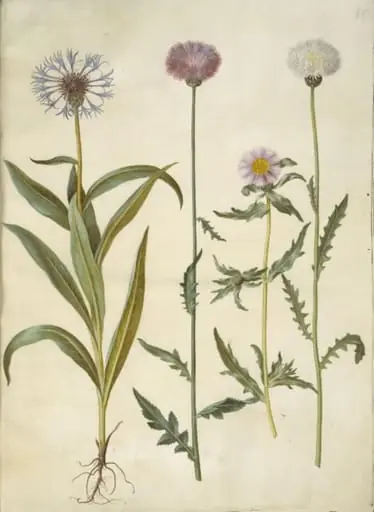 Centaurea montana (bjerg-knopurt); Amberboa moschata (duft-sultan)
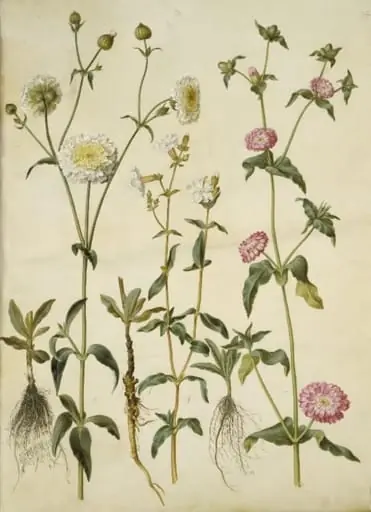 Silene latifolia (aften-pragtstjerne); Silene dioica (dag-pragtstjerne)
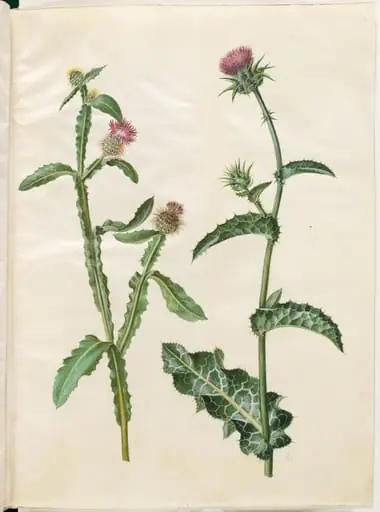 Centaurea seridis; Silybum marianum (almindelig marietidsel)
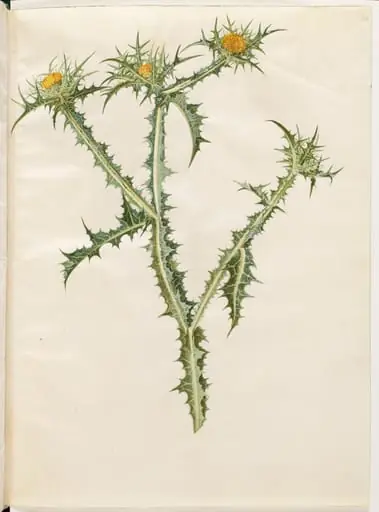 Scolymus hispanicus (spansk guldtidsel)
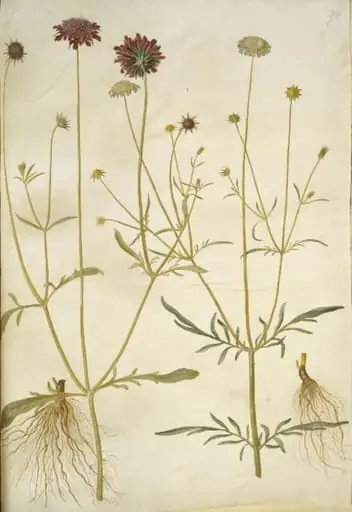 Scabiosa atropurpurea (enkeblomst); Scabiosa columbaria (due-skabiose)