Artwork
Crepis rubra (rød høgeskæg); Scorzonera hispanica (have-skorzoner)
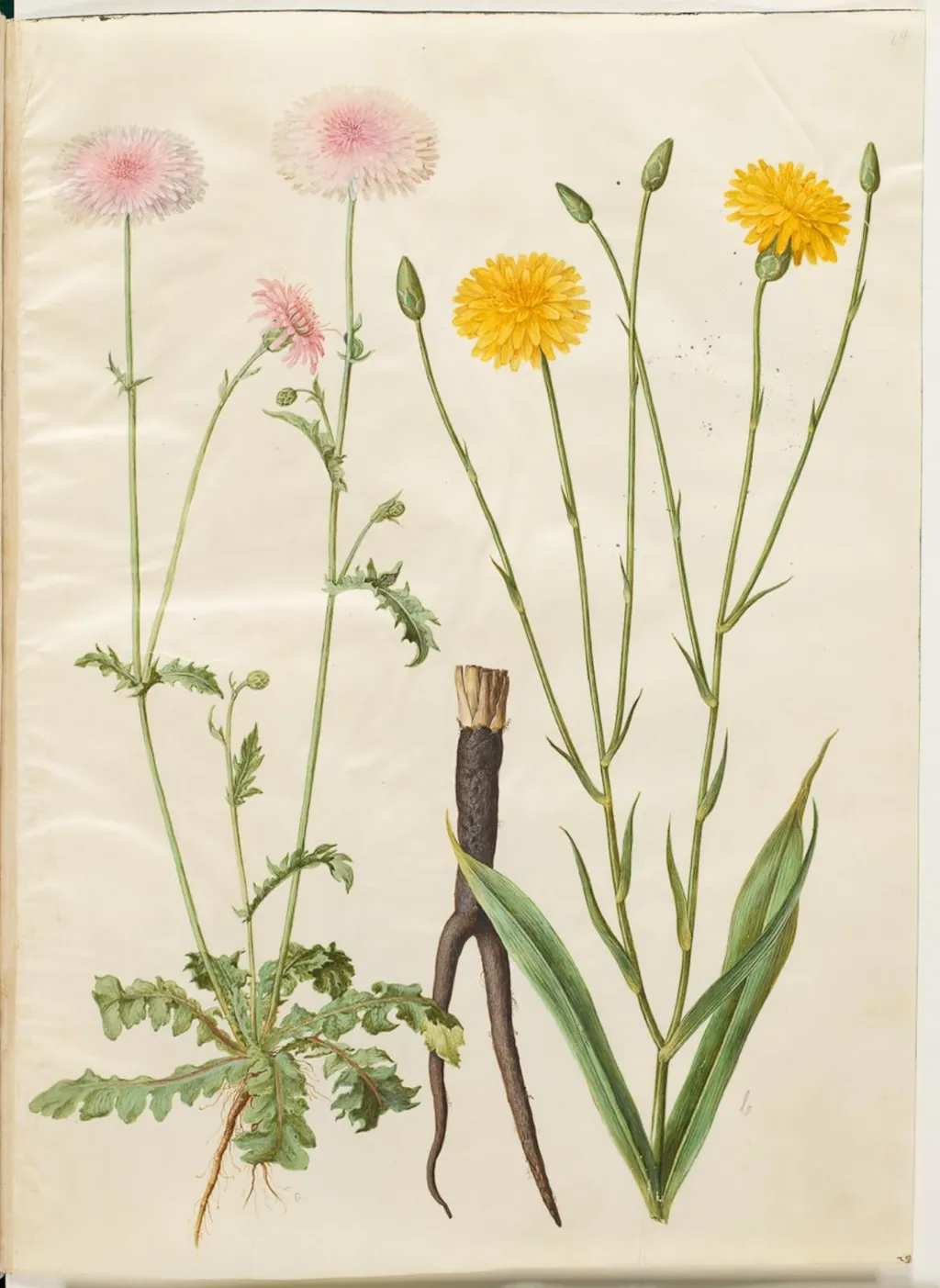
Crepis rubra (rød høgeskæg); Scorzonera hispanica (have-skorzoner) is an unspecified work on paper by Unknown. It dates from 1654 and is held in the collection of the Statens Museum for Kunst. Created around 1654, this watercolor illustration depicts three upright herbaceous plants, each rendered with meticulous attention to form.
About this work
Overview
Its purpose aligns with the scientific illustration tradition of the mid‑seventeenth century, emphasizing accurate visual documentation over decorative effect.
Created around 1654, this watercolor illustration depicts three upright herbaceous plants, each rendered with meticulous attention to form. The work is attributed to the artist identified as 35199_person and is part of the collection of the Museum of Ethnography. Its purpose aligns with the scientific illustration tradition of the mid‑seventeenth century, emphasizing accurate visual documentation over decorative effect.
Subject & Meaning
The image features Crepis rubra, commonly known as red hawkweed, and Scorzonera hispanica, or Spanish salsify, alongside a third, unnamed specimen. The plants are shown in varying stages of bloom: one displays pink, daisy‑like flowers, another bears yellow blossoms, and the third presents unopened buds. Together they illustrate botanical diversity and the developmental cycle of flowering herbs.
Technique & Style
Executed in watercolor, the artist employed fine brushwork to convey the texture of stems, the translucency of petals, and the subtle coloration of leaves, some of which appear slightly wilted. The precise line work and layered washes reflect the conventions of early modern scientific illustration, where clarity and fidelity to the natural form were paramount.
History & Provenance
The piece entered the Museum of Ethnography’s holdings at an unspecified date, where it remains catalogued under its dual Latin titles. Its attribution to 35199_person suggests a cataloging system used by the institution to identify artists whose identities are not fully documented, preserving the work’s provenance within the museum’s collection.
Context
In the mid‑17th century, botanical illustration served both scholarly and practical functions, supporting the burgeoning field of plant taxonomy and the exchange of medicinal knowledge. Watercolor was a favored medium for such works because of its ability to render delicate hues and fine details, essential for distinguishing species like Crepis rubra and Scorzonera hispanica.
Artist & collection

 Domestic Scene
 Giacomo and Cardinal Marco, investing Andrea, Abbot of San Zeno, with his Benefice
 The Nymph of Fontainebleau
 Portrait of a Woman
 Madonna and Child with Saints in the Enclosed Garden
 Venus and Minerva
 Family Group of Four on Sofa
 Wall painting from Room H of the Villa of P. Fannius Synistor at Boscoreale
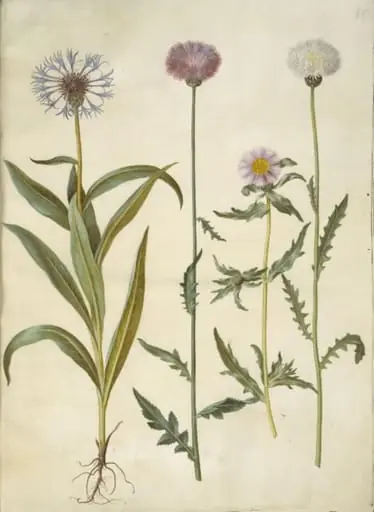 Centaurea montana (bjerg-knopurt); Amberboa moschata (duft-sultan)
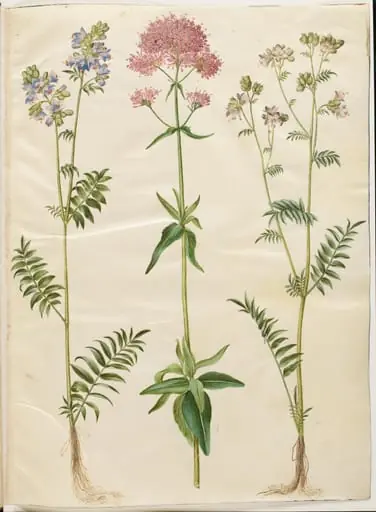 Polemonium caeruleum (almindelig jakobsstige); Centranthus ruber (rød sporebaldrian)
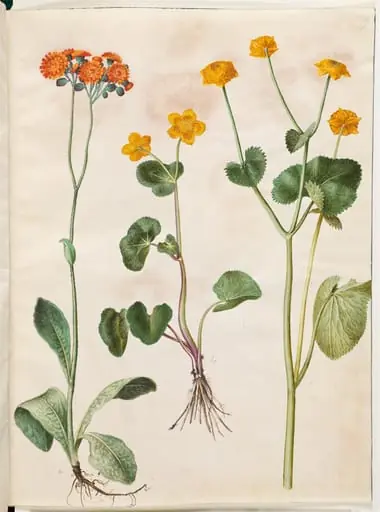 Pilosella aurantiaca (pomerans-høgeurt); Caltha palustris (eng-kabbeleje)
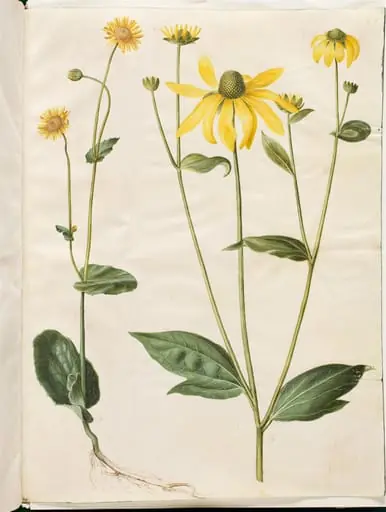 Doronicum pardalianches (hjertebladet gemserod); Rudbeckia laciniata (fliget solhat)
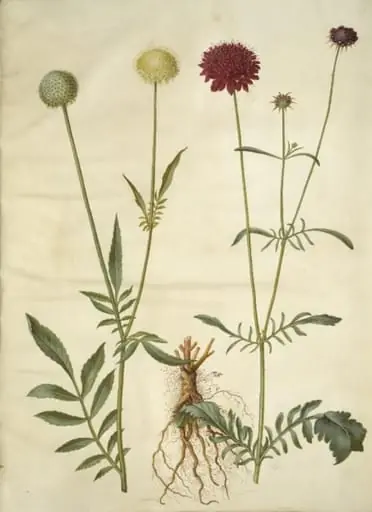 Cephalaria leucantha (hvid skælhoved); Scabiosa atropurpurea (enkeblomst)
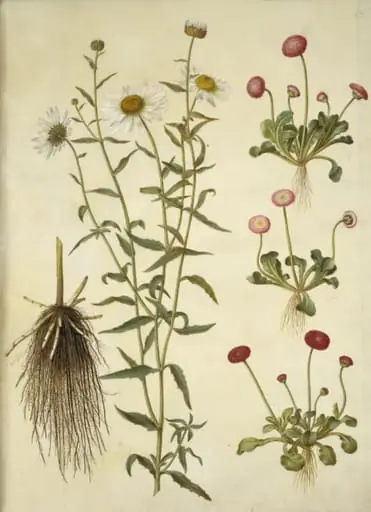 Leucanthemum vulgare (hvid okseøje); Bellis perennis (almindelig tusindfryd)
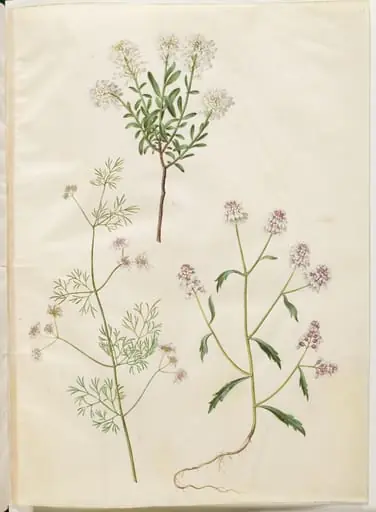 Iberis sempervirens (snepude); Coriandrum sativum (almindelig koriander); Iberis amara (bitter sløjfeblomst)
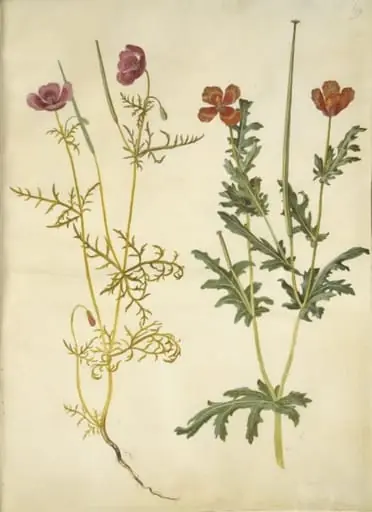 Roemeria hybrida (violet hornvalmue); Glaucium corniculatum (rød hornskulpe)
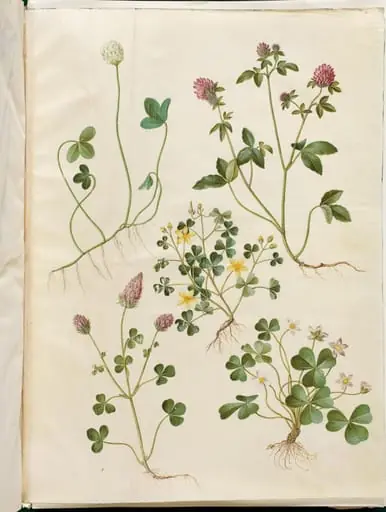 Trifolium repens (hvid-kløver); Trifolium pratense (rød-kløver); Oxalis corniculata (nedliggende surkløver); Trifolium incarnatum (blod-kløver); Oxalis acetosella (skovsyre)
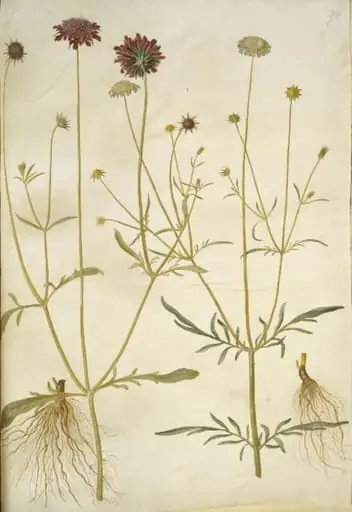 Scabiosa atropurpurea (enkeblomst); Scabiosa columbaria (due-skabiose)
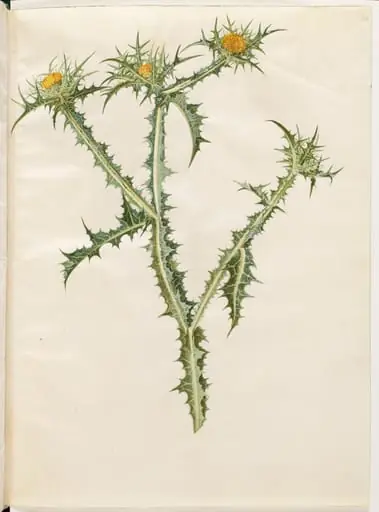 Scolymus hispanicus (spansk guldtidsel)