Artwork
Asphodelus ramosus (grenet affodil)
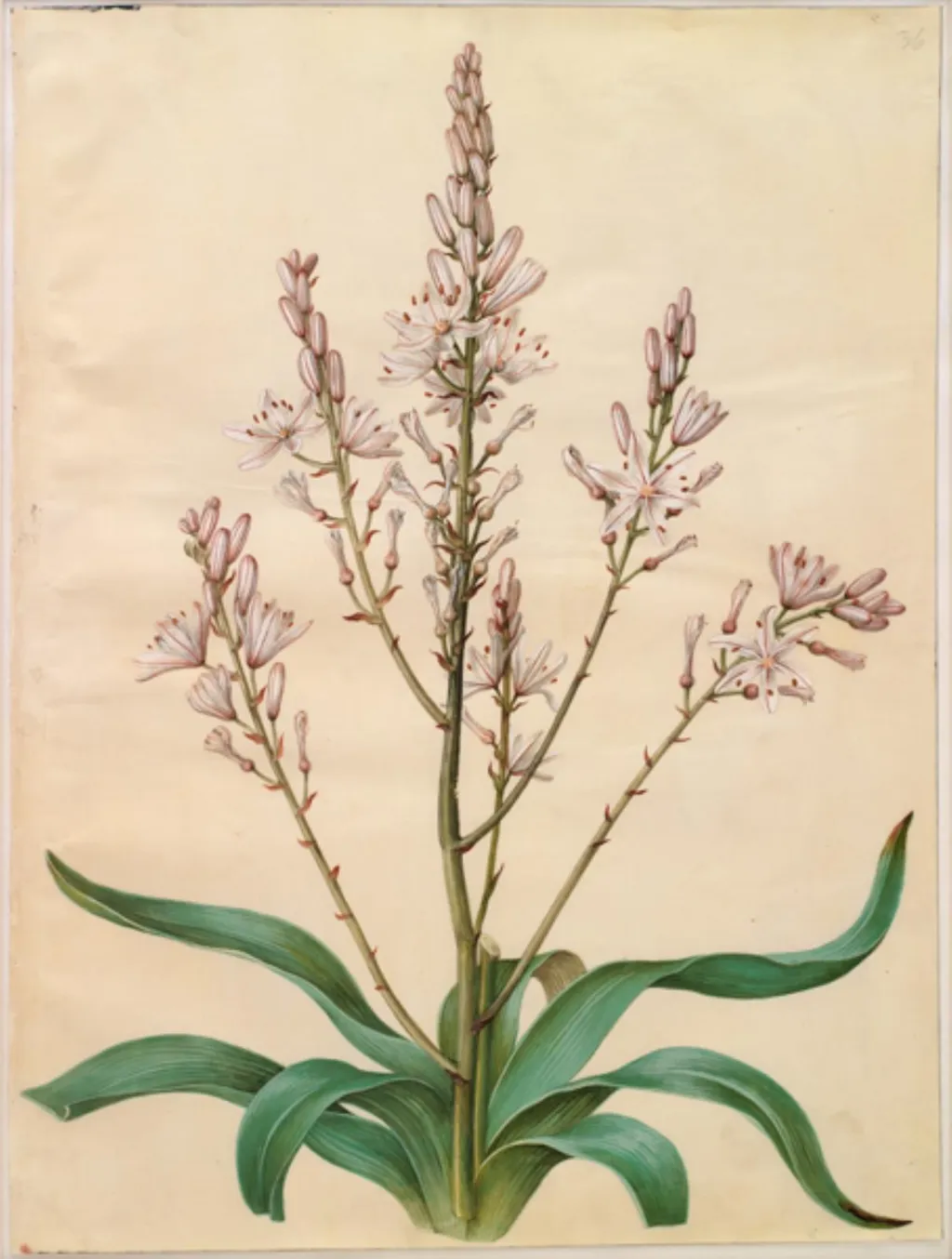
Asphodelus ramosus (grenet affodil) is an unspecified work on paper by Unknown. It dates from 1654 and is held in the collection of the Statens Museum for Kunst. Created around 1654, this watercolor depicts Asphodelus ramosus, a flowering plant native to the Mediterranean.
About this work
Overview
Created around 1654, this watercolor depicts Asphodelus ramosus, a flowering plant native to the Mediterranean. The work is part of the Museum of Ethnography’s collection and reflects a tradition of detailed botanical illustration from the mid-seventeenth century. Its simplicity and precision suggest a scientific intent, prioritizing accurate representation over decorative flourish.
Subject & Meaning
The painting isolates a single specimen of Asphodelus ramosus, emphasizing its natural form without contextual elements. The plant, known for its slender stems and clustered pink blooms, was historically associated with burial grounds in antiquity. Here, however, the focus is purely on botanical fidelity, suggesting an interest in classification rather than symbolic meaning.
Technique & Style
Delicate strokes define the petals and fine stamens, while the leaves are rendered with careful gradations of green.
The artist employed transparent watercolor washes to capture the plant’s subtle tonal variations. Delicate strokes define the petals and fine stamens, while the leaves are rendered with careful gradations of green. The plain background enhances clarity, allowing each anatomical detail to be studied independently. Layering was used to build depth without heavy pigment, typical of scientific illustration of the period.
History & Provenance
The work is attributed to an unnamed artist, possibly associated with a larger botanical project of the time. It entered the Museum of Ethnography’s holdings in the late nineteenth or early twentieth century, likely as part of a collection of natural history studies. Its origin remains undocumented beyond its estimated date and medium.
Context
In mid-seventeenth-century Europe, detailed plant illustrations were increasingly produced for scientific study, often accompanying herbals or botanical catalogs. This piece aligns with that trend, reflecting the growing emphasis on empirical observation. Unlike ornamental art, it avoids embellishment, serving instead as a visual record for scholars and collectors.
Legacy
Though not widely known outside specialized circles, the work contributes to a broader archive of pre-modern botanical documentation. Its restrained aesthetic and technical precision offer insight into how natural forms were recorded before photography. It remains a quiet example of the intersection between art and early scientific inquiry.
Artist & collection

 Domestic Scene
 Giacomo and Cardinal Marco, investing Andrea, Abbot of San Zeno, with his Benefice
 The Nymph of Fontainebleau
 Portrait of a Woman
 Madonna and Child with Saints in the Enclosed Garden
 Venus and Minerva
 Family Group of Four on Sofa
 Wall painting from Room H of the Villa of P. Fannius Synistor at Boscoreale
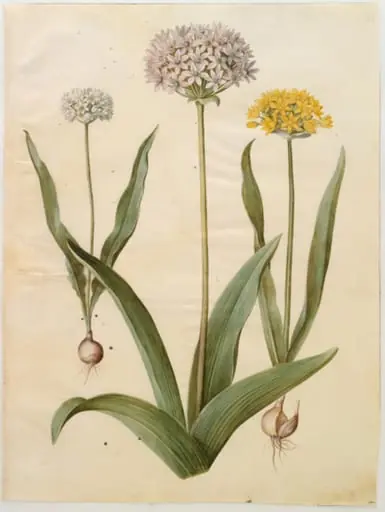 Allium moly (guld-løg); Allium nigrum (sort løg)
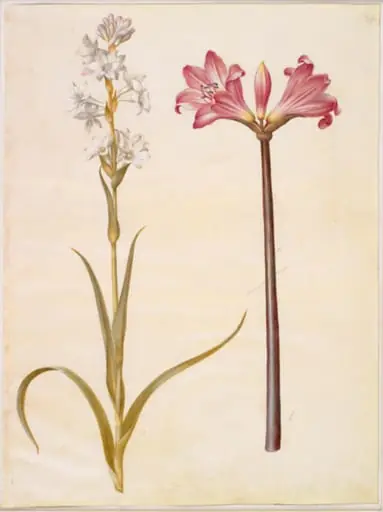 Polianthes tuberosa (tuberose); Amaryllis belladonna (belladonnalilje)
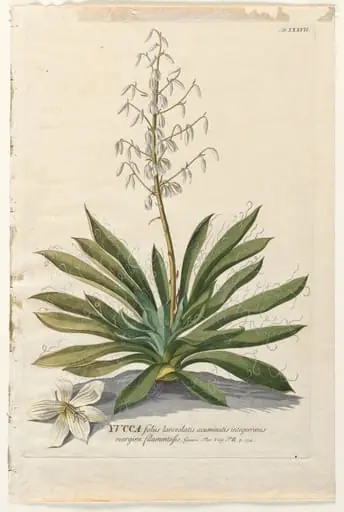 Plantae Selectae: No. 37 - Yucca
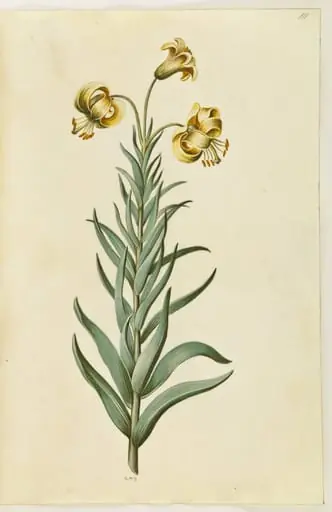 Lilium pyrenaicum (pyrenæisk lilje)
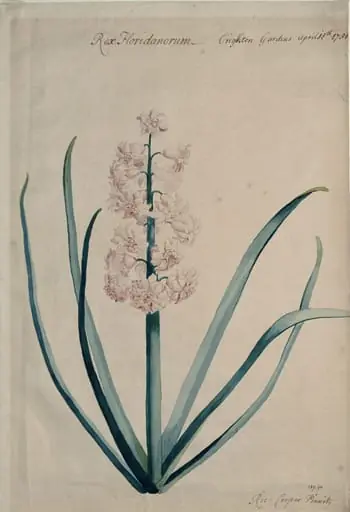 Rex Floridanorum
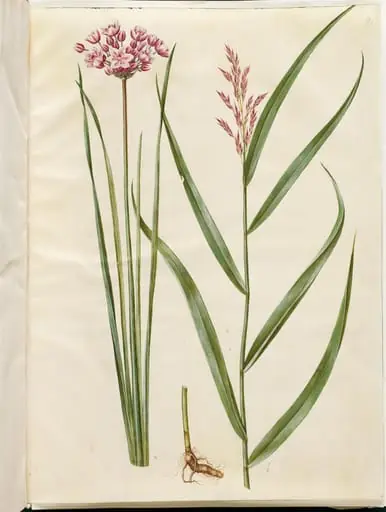 Butomus umbellatus (brudelys); Phragmites australis (almindelig tagrør)
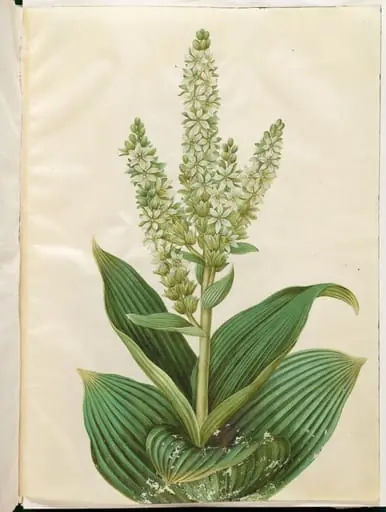 Veratrum album (hvid foldblad)