Artwork
Atropa belladonna (galnebær)
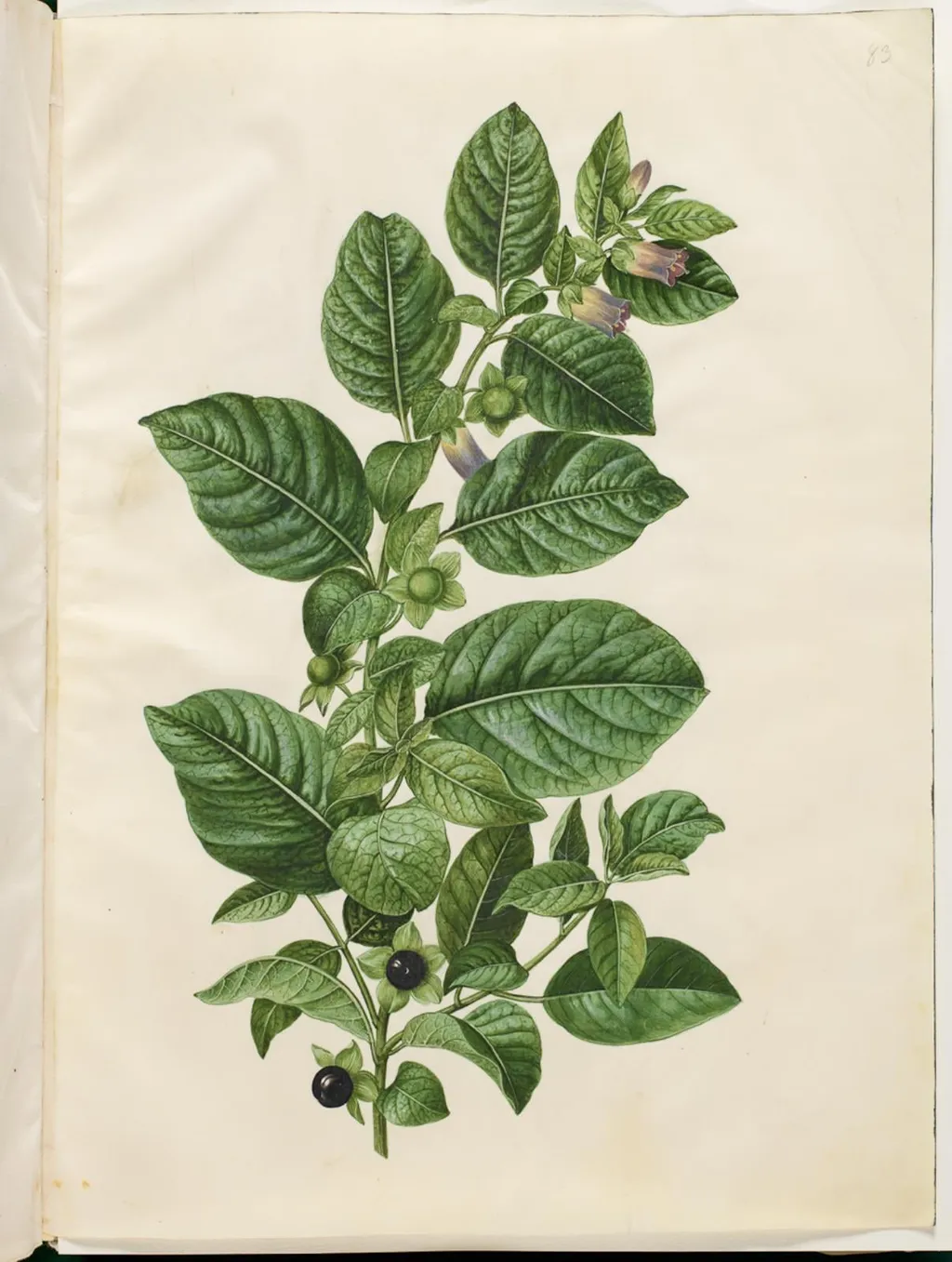
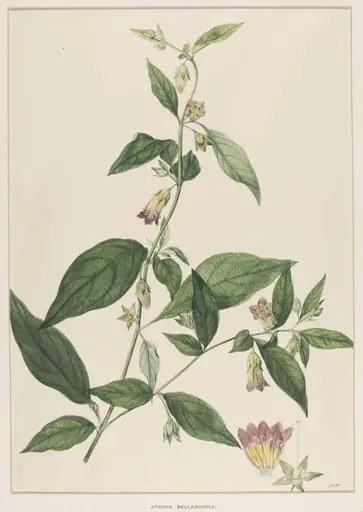
Atropa belladonna (galnebær) is an unspecified work on paper by Unknown. It dates from 1654 and is held in the collection of the Statens Museum for Kunst. Created around 1654, this watercolor depicts Atropa belladonna, commonly known as deadly nightshade.
About this work
Overview
Rendered with precision, the image captures the plant in full growth, emphasizing its botanical features without decorative embellishment.
Created around 1654, this watercolor depicts Atropa belladonna, commonly known as deadly nightshade. The work is part of the collection at the Museum of Ethnography. Rendered with precision, the image captures the plant in full growth, emphasizing its botanical features without decorative embellishment. The artist’s focus on natural detail suggests a scientific or instructional purpose rather than purely aesthetic intent.
Subject & Meaning
The painting portrays Atropa belladonna, a highly toxic plant native to Europe. Its glossy leaves and dark berries are rendered with clinical clarity, highlighting features critical to identification. Historically, the plant was known for its medicinal and poisonous properties, used in both healing and harm. The image likely served as a reference for herbalists or naturalists seeking to distinguish it from non-toxic species.
Technique & Style
Executed in watercolor, the work employs subtle gradations of tone to model the leaves and berries with lifelike depth. The artist used fine brushwork to capture the sheen of foliage and the delicate texture of blossoms in pale purple and yellow. The composition is centered and balanced, filling the page to emphasize structural clarity. This method aligns with 17th-century botanical illustration traditions that prioritized accuracy over ornamentation.
History & Provenance
The artwork is attributed to an anonymous creator identified only as 35199_person, a designation likely assigned by the museum for cataloging purposes. It entered the Museum of Ethnography’s collection in the 19th or early 20th century, possibly as part of a broader collection of European botanical studies. Its origins remain undocumented beyond its date and medium, reflecting the common practice of preserving scientific illustrations without recording the artist’s identity.
Context
In mid-17th century Europe, detailed plant illustrations were vital to the emerging field of botany. Scholars and apothecaries relied on such images to identify medicinal and toxic species. This work fits within a broader tradition of illustrated herbals, where visual precision was essential for safe use. The absence of human figures or landscape elements underscores its function as a diagnostic tool rather than a decorative piece.
Legacy
Though unsigned and obscure in authorship, the painting endures as a representative example of early scientific botany. It contributes to the historical record of how toxic plants were documented and understood before modern pharmacology. Today, it serves as a resource for researchers studying the intersection of art, medicine, and natural history in early modern Europe.
Artist & collection

 Domestic Scene
 Giacomo and Cardinal Marco, investing Andrea, Abbot of San Zeno, with his Benefice
 The Nymph of Fontainebleau
 Portrait of a Woman
 Madonna and Child with Saints in the Enclosed Garden
 Venus and Minerva
 Family Group of Four on Sofa
 Wall painting from Room H of the Villa of P. Fannius Synistor at Boscoreale
 Plantae Selectae: No. 50 - Ficus
 Lunaria annua (judaspenge)
 Hypericum androsaemum (bær-perikon)
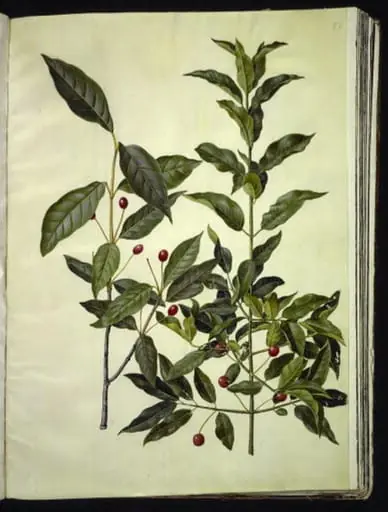 Euonymus latifolius (bredbladet benved); Euonymus europaeus (almindelig benved)
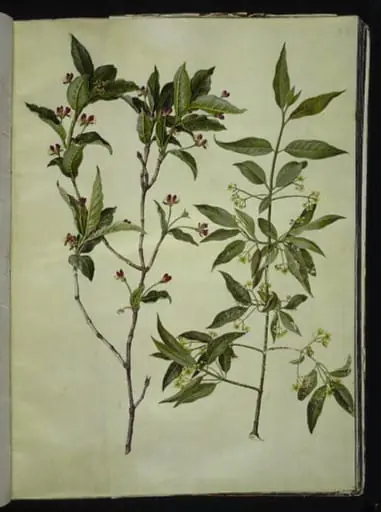 Lonicera alpigena (alpe-gedeblad); Euonymus europaeus (almindelig benved)
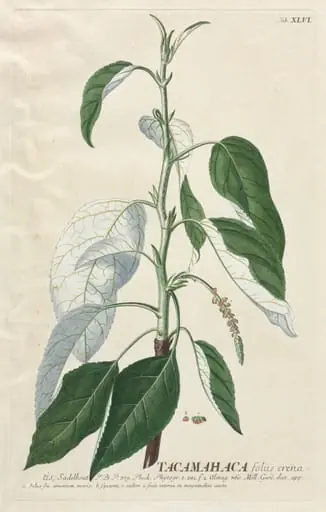 Plantae Selectae: No. 46 - Tacamahaca
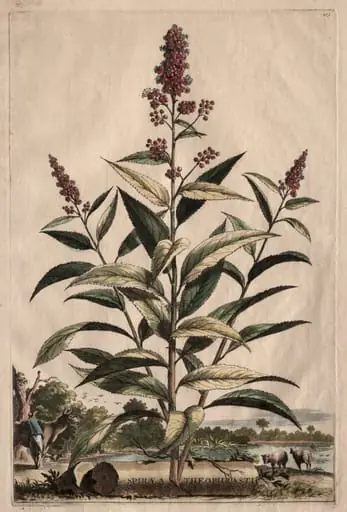 Phytographia Curiosa: Spiraea Theophrasti
 Atropa Belladonna