Artwork
Citrus aurantium (pomerans)
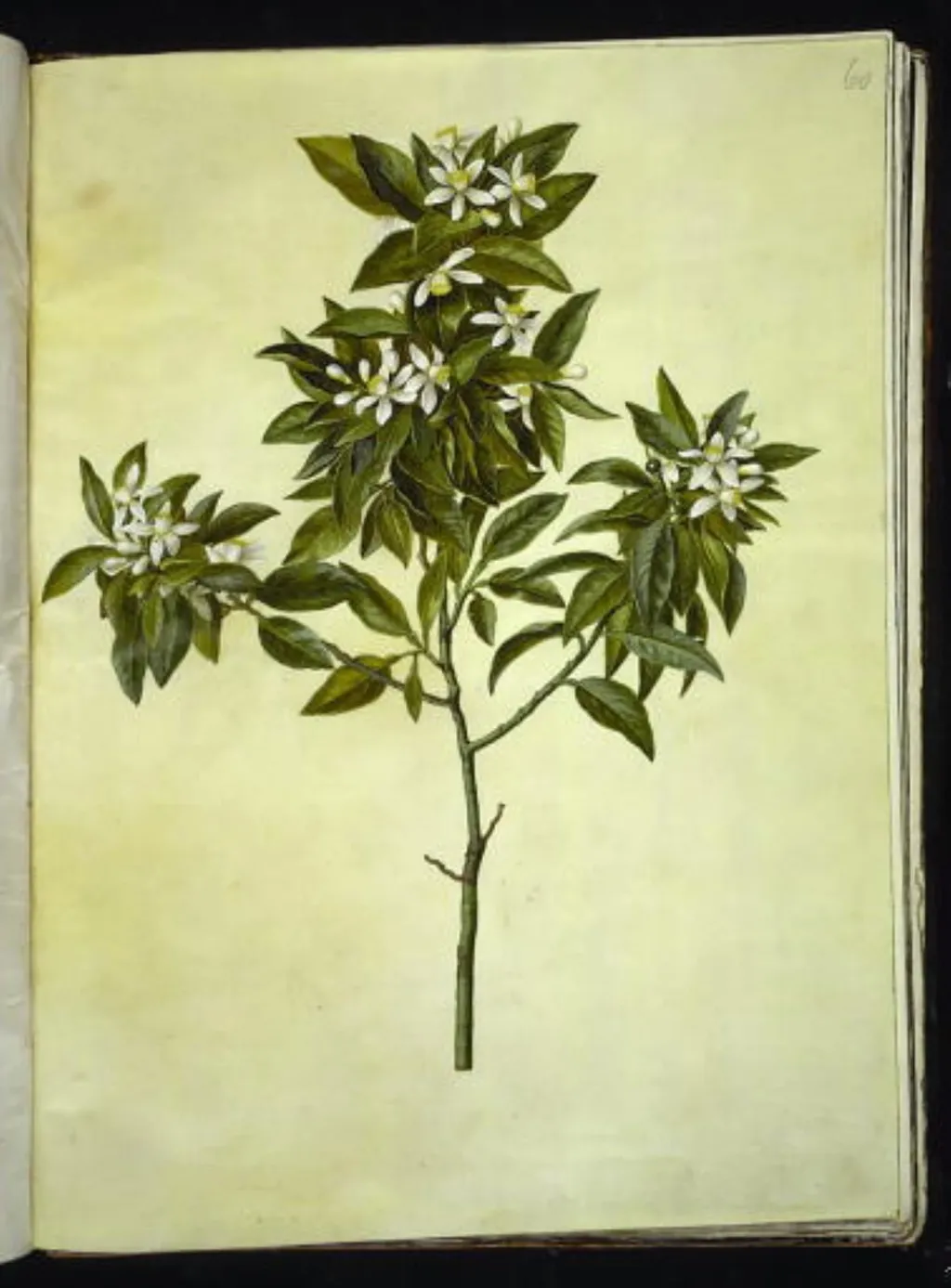
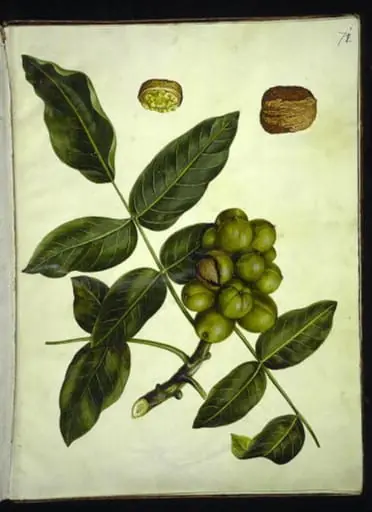
Citrus aurantium (pomerans) is an unspecified work on paper by Unknown. It dates from 1654 and is held in the collection of the Statens Museum for Kunst. Created around 1654, this watercolor depicts a single branch of Citrus aurantium, commonly known as the bitter orange.
About this work
Overview
Rendered with meticulous attention to botanical accuracy, it reflects the scientific interest in plant species during the mid-seventeenth century.
Created around 1654, this watercolor depicts a single branch of Citrus aurantium, commonly known as the bitter orange. The work is held in the collection of the Museum of Ethnography. Rendered with meticulous attention to botanical accuracy, it reflects the scientific interest in plant species during the mid-seventeenth century. The composition isolates the branch against a neutral background to emphasize structural detail.
Subject & Meaning
The painting presents a botanical specimen without ornamental embellishment, suggesting its purpose was documentation rather than decoration. The branch, bearing small green leaves, white blossoms, and hints of developing fruit, represents the plant’s life cycle. Such images served as visual records for scholars and collectors, aiding in the classification and study of exotic flora introduced to Europe.
Technique & Style
The artist employed watercolor to build subtle layers of pigment, capturing the delicate translucency of petals and the fine veins of leaves. Soft tones of green, white, and pale yellow dominate, with no harsh outlines or dramatic contrasts. The technique prioritizes precision over expression, aligning with the conventions of early scientific illustration where clarity and fidelity to nature were paramount.
History & Provenance
The work is attributed to an artist identified as 35199_person, though little else is known about their identity or training. It entered the Museum of Ethnography’s collection as part of a broader effort to preserve visual records of plant species from colonial and trade networks. Its survival suggests it was valued for its accuracy, possibly used in educational or archival contexts.
Context
In the mid-1600s, European naturalists increasingly documented foreign plants brought back from Asia and the Americas. Botanical illustrations like this one were essential tools in a pre-photographic era, helping to communicate plant morphology across distances. This piece reflects the intersection of science, exploration, and art during a period of expanding global exchange.
Legacy
Though unsigned and uncelebrated in its time, the work contributes to a larger archive of early scientific imagery. It remains a quiet testament to the discipline of observational drawing in natural history. Today, it offers insight into how knowledge of the natural world was visually constructed before modern botanical photography.
Artist & collection

 Domestic Scene
 Giacomo and Cardinal Marco, investing Andrea, Abbot of San Zeno, with his Benefice
 The Nymph of Fontainebleau
 Portrait of a Woman
 Madonna and Child with Saints in the Enclosed Garden
 Venus and Minerva
 Family Group of Four on Sofa
 Wall painting from Room H of the Villa of P. Fannius Synistor at Boscoreale
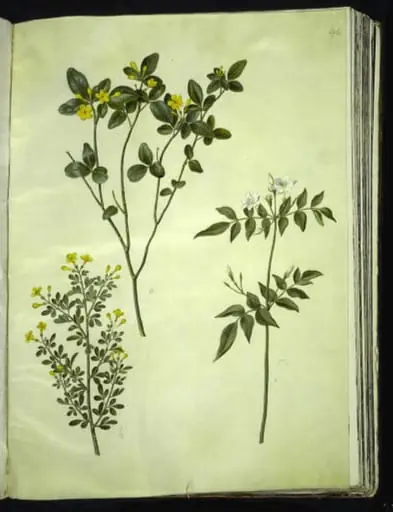 Jasminum odoratissimum (stue-jasmin); Jasminum fruticans (busk-jasmin); Jasminum grandiflorum (duft-jasmin)
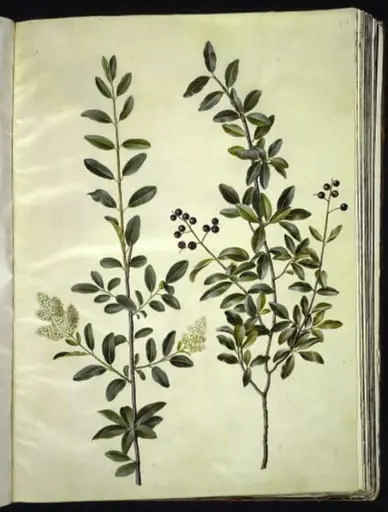 Ligustrum vulgare (almindelig liguster)
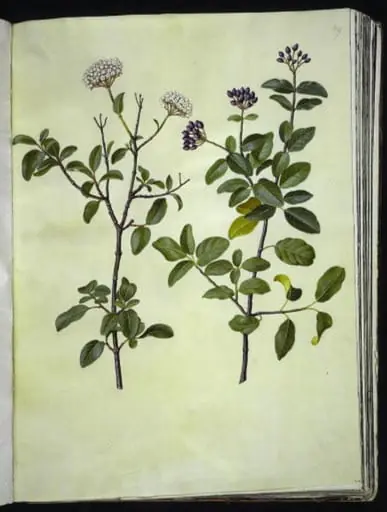 Viburnum tinus (vinter-snebolle)
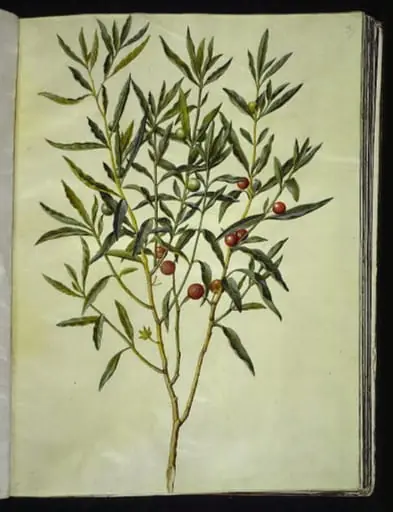 Solanum pseudocapsicum (jerusalem-koralbær)
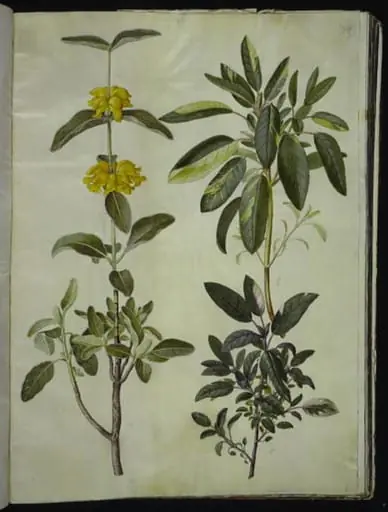 Phlomis fruticosa (almindelig løvehale); Salvia officinalis (læge-salvie)
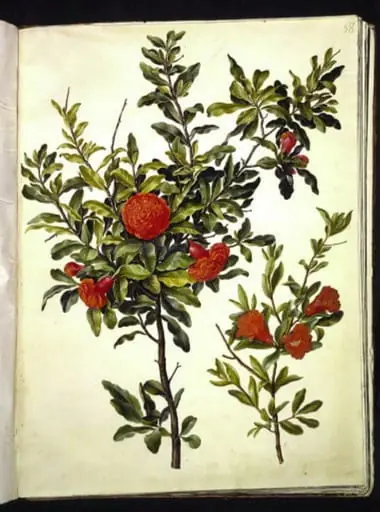 Punica granatum (granatæble)
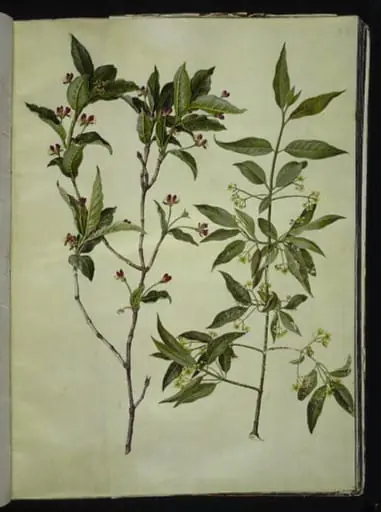 Lonicera alpigena (alpe-gedeblad); Euonymus europaeus (almindelig benved)
 Juglans regia (almindelig valnød)