Artwork
Consolida ajacis (have-ridderspore)
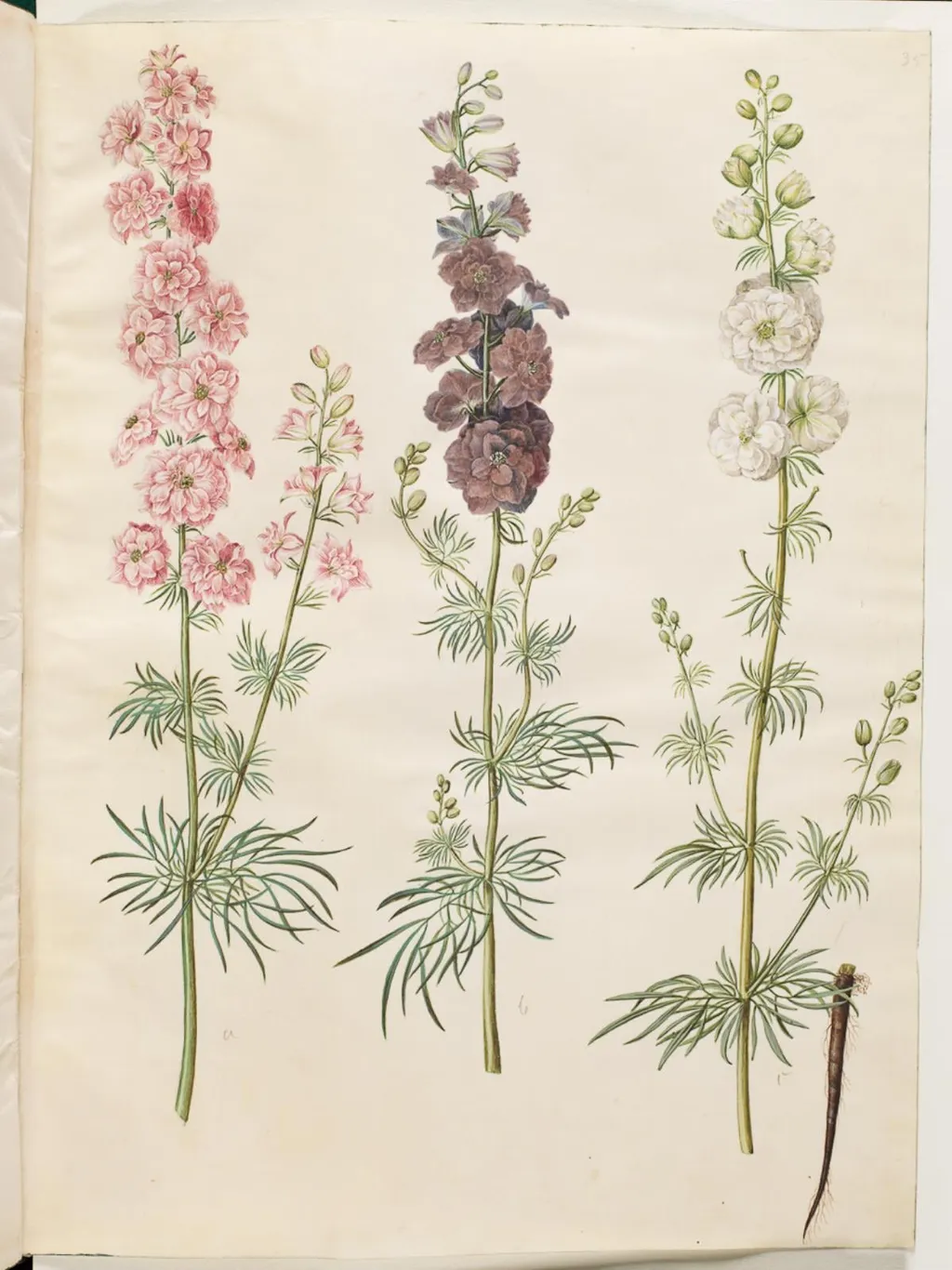
Consolida ajacis (have-ridderspore) is an unspecified work on paper by Unknown. It dates from 1654 and is held in the collection of the Statens Museum for Kunst. This image, dated around 1654, depicts three stalks of Consolida ajacis, commonly known as larkspur.
About this work
Overview
Each stem is rendered with careful attention to natural form, suggesting an intent rooted in observation rather than artistic embellishment.
This image, dated around 1654, depicts three stalks of Consolida ajacis, commonly known as larkspur. Rendered in watercolor, the work is part of the collection at the Museum of Ethnography. The composition presents the plants in a quiet, frontal arrangement, emphasizing botanical accuracy over decorative flourish. Each stem is rendered with careful attention to natural form, suggesting an intent rooted in observation rather than artistic embellishment.
Subject & Meaning
The three flower stalks—pink, deep purple, and pale white with green buds—represent different stages of bloom, possibly illustrating the plant’s life cycle. Their stillness and precise placement suggest a scientific purpose, perhaps as a record for study or classification. The absence of background or context focuses attention solely on the flora, aligning with early modern practices of documenting plant species for botanical knowledge.
Technique & Style
The artist employed layered watercolor washes to achieve subtle gradations in petal color and delicate transparency in the leaves. Fine brushwork defines individual veins and tiny side shoots, while the flat, even lighting eliminates shadows, enhancing clarity. The flowers appear pressed, as if preserved between pages, reflecting a method common in herbarium illustrations of the period—prioritizing detail and fidelity over atmospheric effect.
History & Provenance
The work is attributed to an artist identified only as 35199_person, a designation likely used for an unnamed or undocumented contributor to a larger collection. It entered the Museum of Ethnography’s holdings through an early acquisition of botanical materials, possibly from a private cabinet of curiosities or a scholarly archive. Its origin remains unverified, but its style aligns with 17th-century European botanical documentation practices.
Context
Created during a period of expanding botanical study, this image reflects the growing interest in classifying plant species across Europe. Artists and naturalists often collaborated to produce accurate visual records for scientific use. Such works were not intended for public display but served as reference tools in universities, gardens, and medical institutions, bridging art and early empirical science.
Legacy
Though unsigned and obscure in authorship, the image contributes to a broader tradition of botanical illustration that laid groundwork for modern plant taxonomy. Its preservation in a museum setting underscores its value as a historical document of visual science. It continues to inform discussions on the intersection of art, observation, and knowledge production in the early modern era.
Artist & collection

 Domestic Scene
 Giacomo and Cardinal Marco, investing Andrea, Abbot of San Zeno, with his Benefice
 The Nymph of Fontainebleau
 Portrait of a Woman
 Madonna and Child with Saints in the Enclosed Garden
 Venus and Minerva
 Family Group of Four on Sofa
 Wall painting from Room H of the Villa of P. Fannius Synistor at Boscoreale
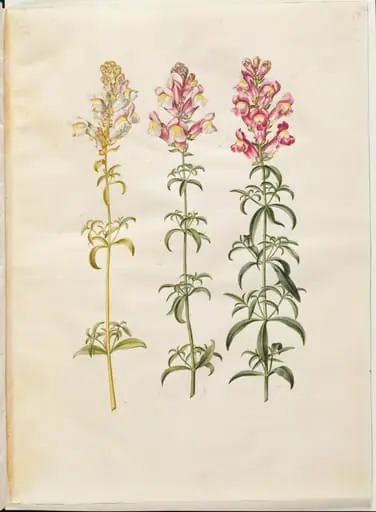 Antirrhinum majus (have-løvemund)
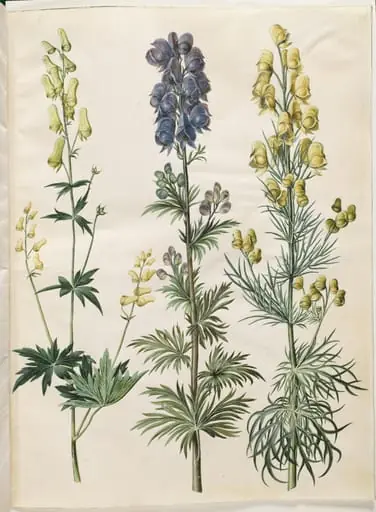 Aconitum lycoctonum (nordisk stormhat); Aconitum napellus (ægte stormhat); Aconitum anthora (finbladet stormhat)
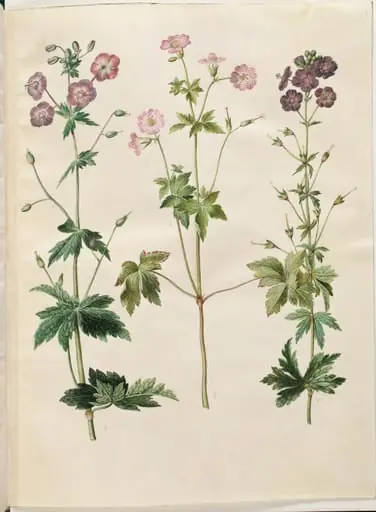 Geranium phaeum (bølgekronet storkenæb); Geranium versicolor (net-storkenæb)
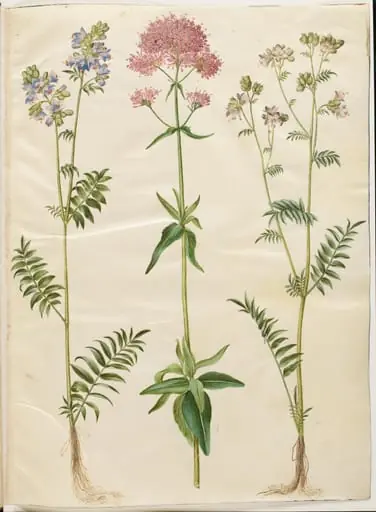 Polemonium caeruleum (almindelig jakobsstige); Centranthus ruber (rød sporebaldrian)
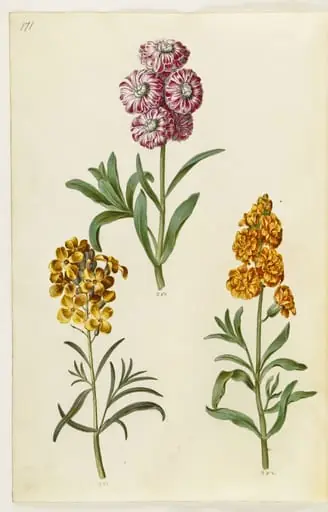 Matthiola incana (vinter-levkøj); Erysimum cheiri (gyldenlak)
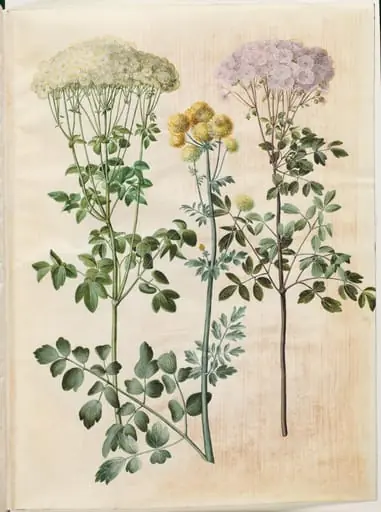 Thalictrum aquilegiifolium (akeleje-frøstjerne); Thalictrum flavum (gul frøstjerne)
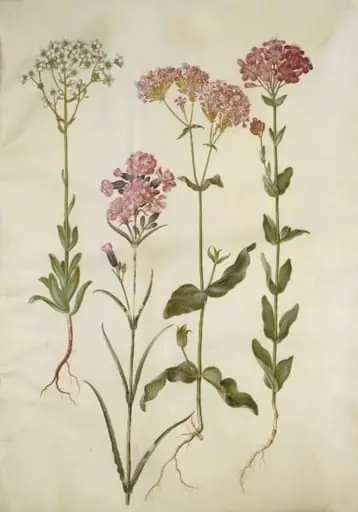 Saxifraga paniculata (klippe-stenbræk); Silene viscaria (almindelig tjærenellike); Silene armeria (knippe-limurt);
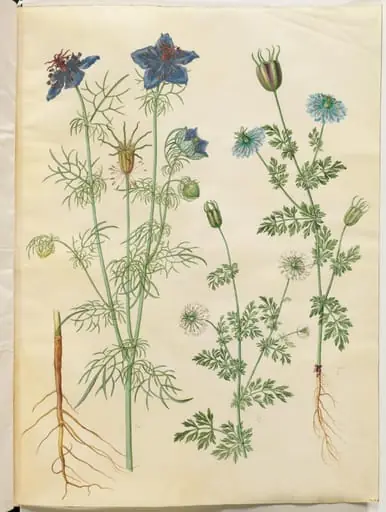 Nigella hispanica (djævlen i busken); Nigella sativa (sortkommen)
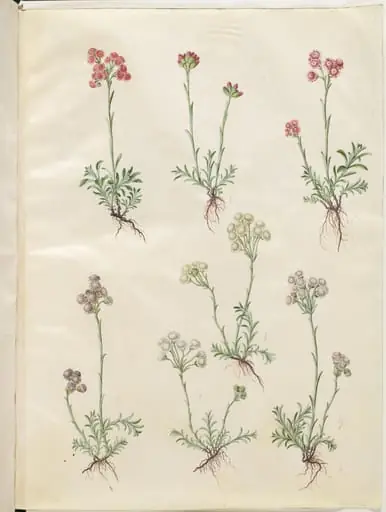 Antennaria dioica (almindelig kattefod)