Artwork
Polemonium caeruleum (almindelig jakobsstige); Centranthus ruber (rød sporebaldrian)
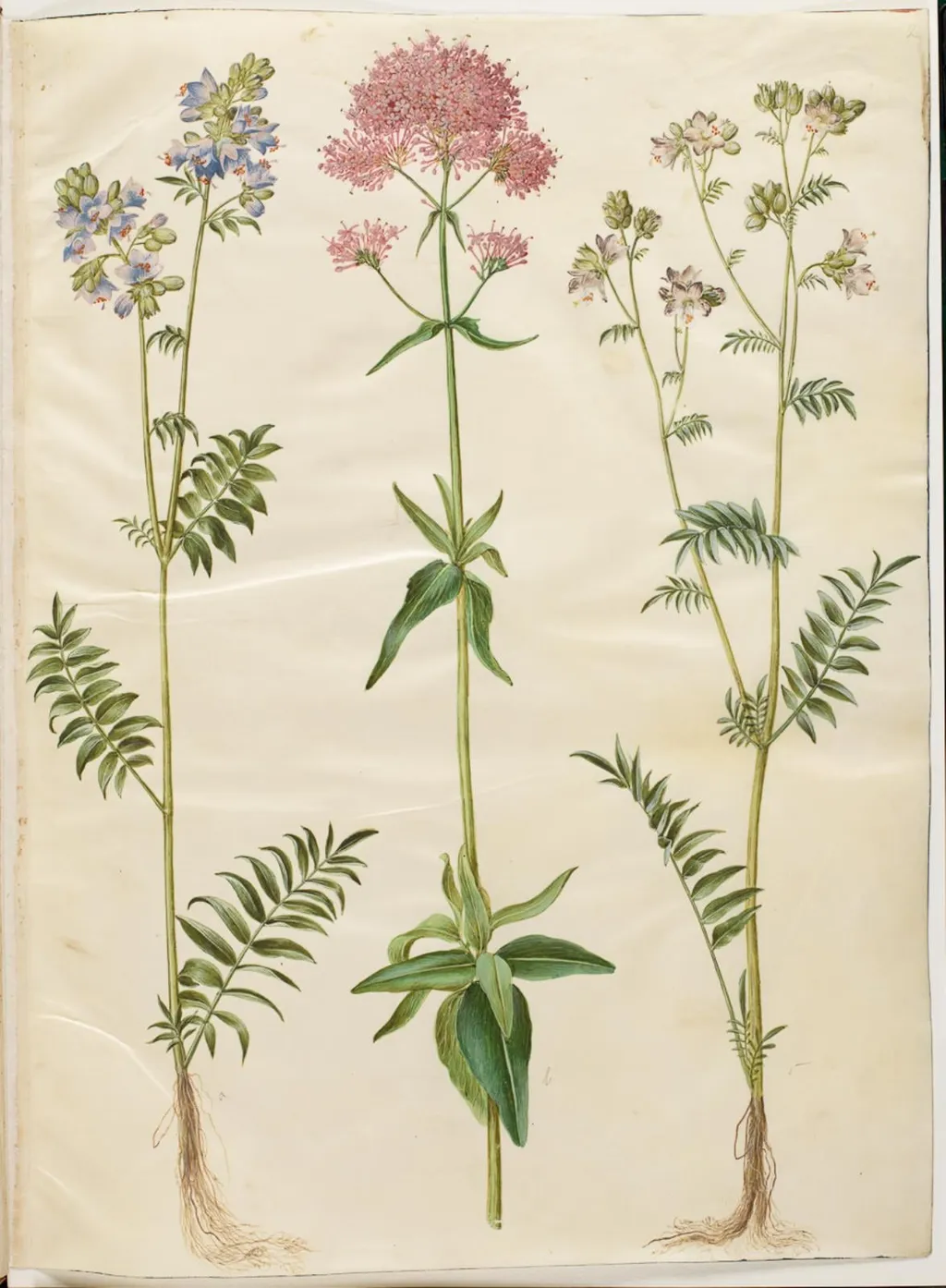
Polemonium caeruleum (almindelig jakobsstige); Centranthus ruber (rød sporebaldrian) is an unspecified work on paper by Unknown. It dates from 1654 and is held in the collection of the Statens Museum for Kunst. This watercolor painting, dated around 1654, depicts two botanical specimens: Polemonium caeruleum and Centranthus ruber.
About this work
Overview
This watercolor painting, dated around 1654, depicts two botanical specimens: Polemonium caeruleum and Centranthus ruber. Rendered with quiet precision, the work belongs to a tradition of naturalist illustration rather than decorative art. It is held in the collection of the Museum of Ethnography, where it functions as a record of plant forms observed in early modern Europe.
Subject & Meaning
The composition suggests an intent to document rather than idealize, reflecting the period’s growing interest in systematic plant classification.
The painting presents two distinct flowering plants side by side—blue-flowered Jacob's ladder on the left and red valerian on the right, with a central stem bearing narrow leaves. These species were likely chosen for their visual contrast and botanical clarity. The composition suggests an intent to document rather than idealize, reflecting the period’s growing interest in systematic plant classification.
Technique & Style
Executed in watercolor on a pale, unobtrusive background, the work emphasizes delicate layering and fine linework. The artist uses translucent washes to suggest petal transparency and leaf veins, avoiding heavy outlines. The softness of the medium enhances the naturalism of the forms, allowing subtle variations in tone to convey texture without theatrical emphasis.
History & Provenance
The painting’s origin is tied to an unnamed artist identified only by a catalog number, 35199_person, whose broader oeuvre remains undocumented. It entered the Museum of Ethnography’s holdings through early 20th-century acquisitions of scientific illustrations, likely from private collections of naturalists or medical practitioners who valued botanical accuracy.
Context
Created during a period of expanding botanical study in Northern Europe, the work aligns with the rise of herbaria and illustrated floras. While not part of a published volume, its style echoes the observational rigor of contemporaries like Jacob Marrel or the Dutch botanical illustrators who served academic and medical institutions seeking visual documentation of flora.
Legacy
Though unsigned and unattributed to a known master, the painting endures as a quiet example of pre-scientific botanical recording. Its preservation in a museum of ethnography underscores its role as cultural artifact—evidence of how natural observation was practiced and valued in early modern Europe beyond formal scientific circles.
Artist & collection

 Domestic Scene
 Giacomo and Cardinal Marco, investing Andrea, Abbot of San Zeno, with his Benefice
 The Nymph of Fontainebleau
 Portrait of a Woman
 Madonna and Child with Saints in the Enclosed Garden
 Venus and Minerva
 Family Group of Four on Sofa
 Wall painting from Room H of the Villa of P. Fannius Synistor at Boscoreale
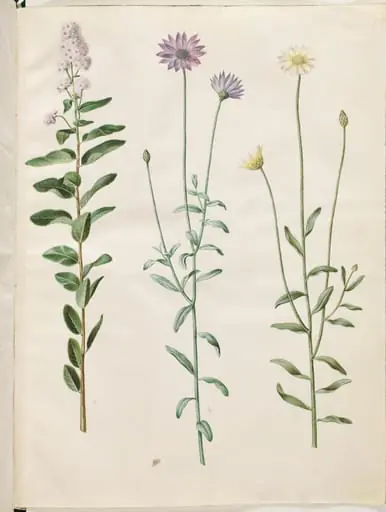 Spiraea salicifolia (pilebladet spiræa); Catananche caerulea (blå rasleblomst)
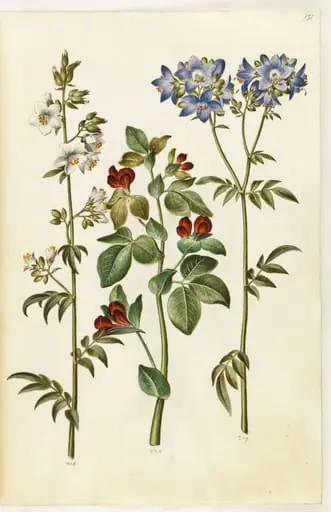 Polemonium caeruleum (almindelig jakobsstige); Lotus tetragonolobus (aspargesært)
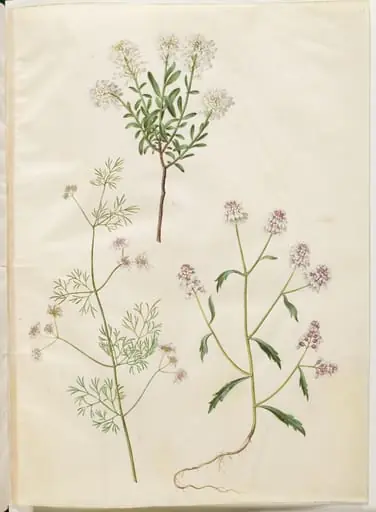 Iberis sempervirens (snepude); Coriandrum sativum (almindelig koriander); Iberis amara (bitter sløjfeblomst)
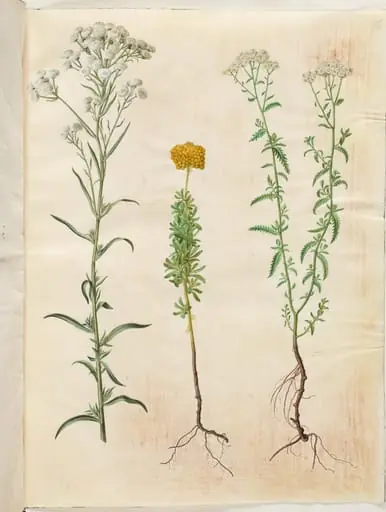 Achillea ptarmica (sølvknap-røllike); Achillea ageratum (balsam-røllike); Achillea millefolium (almindelig røllike)
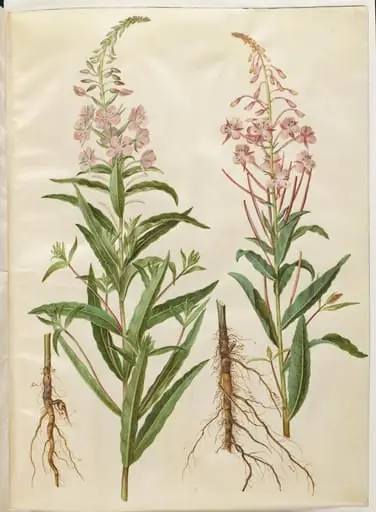 Chamerion angustifolium (smalbladet gederams)
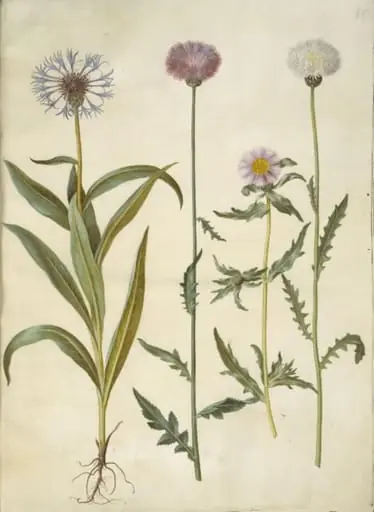 Centaurea montana (bjerg-knopurt); Amberboa moschata (duft-sultan)
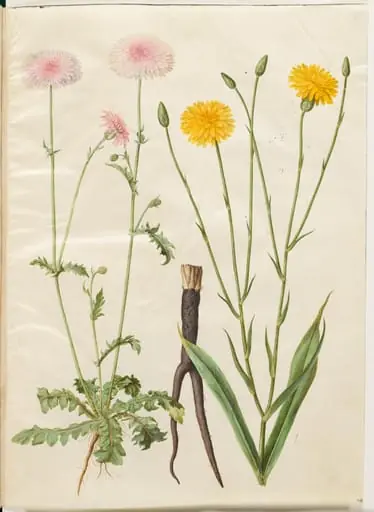 Crepis rubra (rød høgeskæg); Scorzonera hispanica (have-skorzoner)
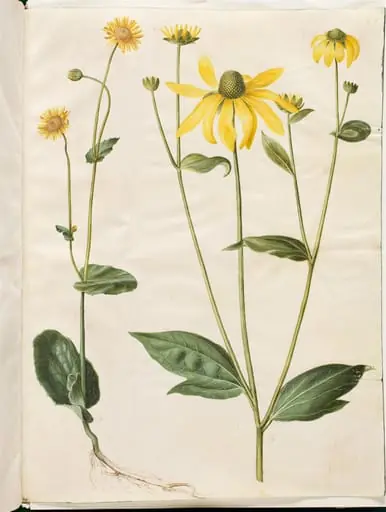 Doronicum pardalianches (hjertebladet gemserod); Rudbeckia laciniata (fliget solhat)