Artwork
Hesperis matronalis (almindelig aftenstjerne)
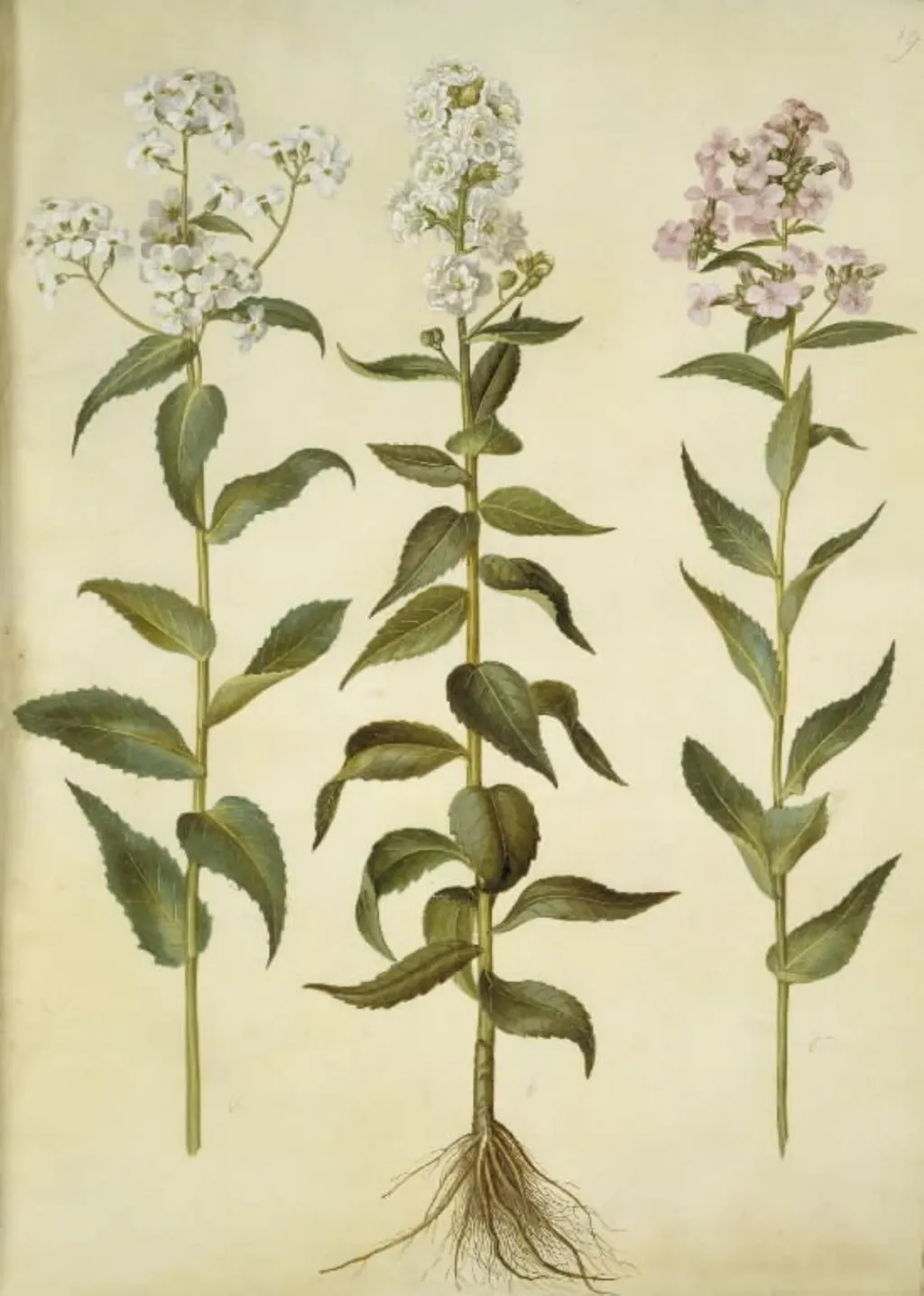
Hesperis matronalis (almindelig aftenstjerne) is an unspecified work on paper by Unknown. It dates from 1654 and is held in the collection of the Statens Museum for Kunst. This botanical illustration, dated around 1654, depicts three specimens of Hesperis matronalis, commonly known as dame's rocket.
About this work
Overview
This botanical illustration, dated around 1654, depicts three specimens of Hesperis matronalis, commonly known as dame's rocket. Rendered in watercolor, the work emphasizes precise naturalistic detail. It is part of the collection at the Museum of Ethnography, where it serves as a record of plant forms observed in early modern Europe.
Subject & Meaning
The painting presents three flowering stalks of Hesperis matronalis, distinguished by their white and pale pink blossoms. The inclusion of exposed roots suggests an interest in the plant’s full structure, not merely its bloom. This focus reflects a scientific impulse to document flora accurately, aligning with the period’s growing emphasis on empirical observation in natural history.
Technique & Style
Executed in watercolor, the work uses translucent layers to achieve subtle gradations of color. The artist avoided strong contrasts, favoring soft, muted tones that mimic natural light. Fine brushwork captures the delicate texture of petals and the slender curvature of leaves, demonstrating a methodical approach to rendering botanical specimens with clarity and restraint.
History & Provenance
Created circa 1654, the illustration likely originated in a private or academic collection focused on natural science. It entered the Museum of Ethnography’s holdings through later acquisitions, possibly as part of a broader collection of early botanical studies. Its origin as a standalone study, rather than a published plate, suggests personal or educational use.
Context
In mid-17th-century Europe, detailed plant illustrations were increasingly valued for both scientific and aesthetic purposes. This work aligns with a tradition of amateur and professional naturalists who recorded local flora, often for use in herbals or private cabinets of curiosities. The absence of decorative elements underscores its function as a documentary record.
Legacy
Though unsigned and unattributed to a known artist, the illustration remains a representative example of early scientific botany. Its preservation in a museum context highlights its role in the transition from ornamental to empirical plant study. It continues to serve as a reference for historical plant morphology and the evolution of botanical illustration techniques.
Artist & collection

 Domestic Scene
 Giacomo and Cardinal Marco, investing Andrea, Abbot of San Zeno, with his Benefice
 The Nymph of Fontainebleau
 Portrait of a Woman
 Madonna and Child with Saints in the Enclosed Garden
 Venus and Minerva
 Family Group of Four on Sofa
 Wall painting from Room H of the Villa of P. Fannius Synistor at Boscoreale
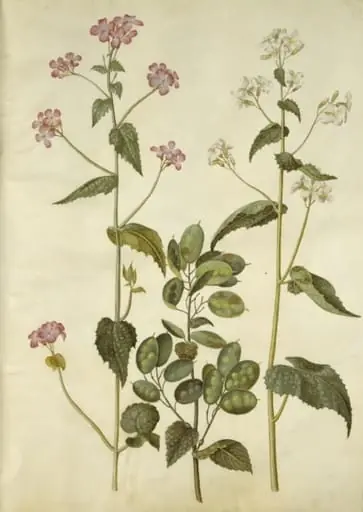 Lunaria annua (judaspenge)
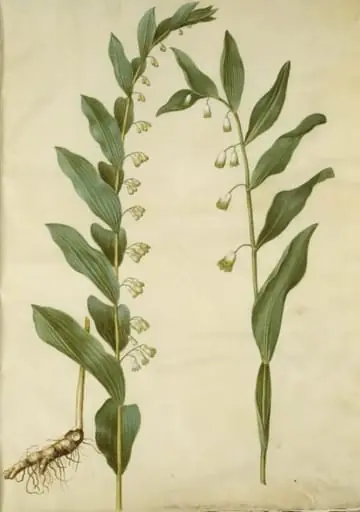 Polygonatum multiflorum (stor konval); Polygonatum odoratum (kantet konval)
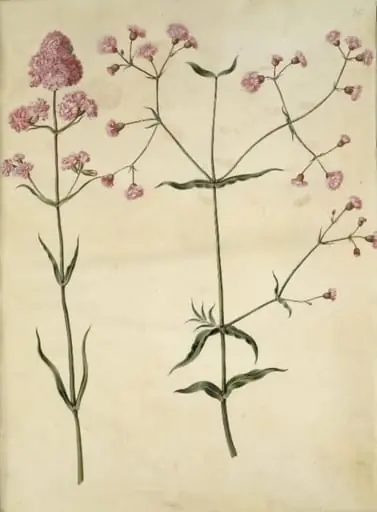 Silene viscaria (almindelig tjærenellike); Silene (trævlekrone)
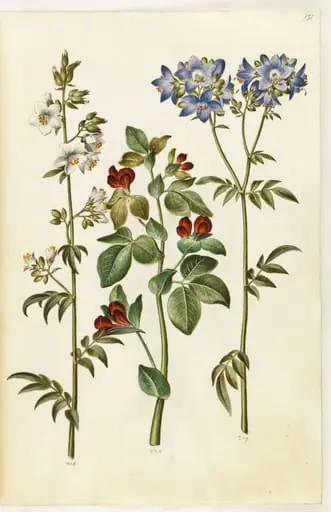 Polemonium caeruleum (almindelig jakobsstige); Lotus tetragonolobus (aspargesært)
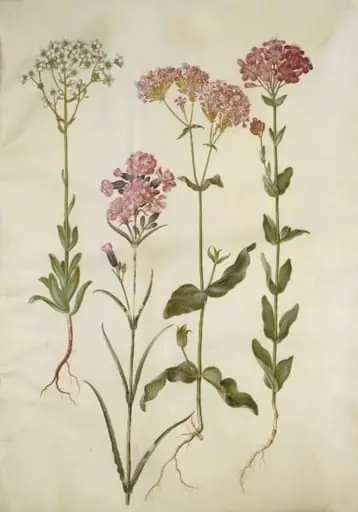 Saxifraga paniculata (klippe-stenbræk); Silene viscaria (almindelig tjærenellike); Silene armeria (knippe-limurt);
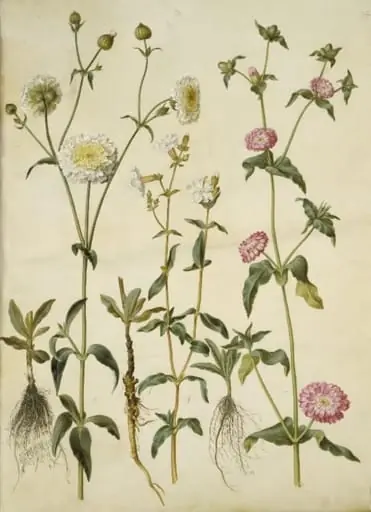 Silene latifolia (aften-pragtstjerne); Silene dioica (dag-pragtstjerne)
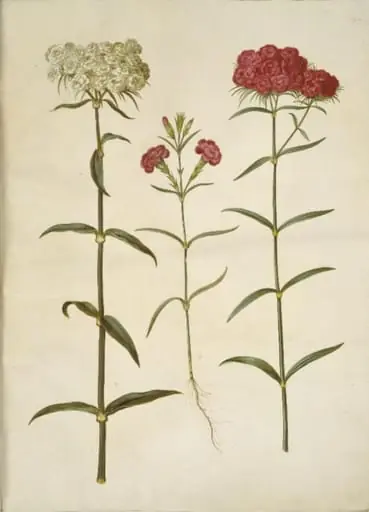 Dianthus barbatus (studenter-nellike); Dianthus (art af nellike)
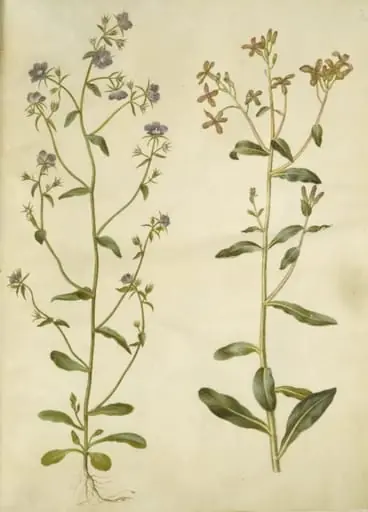 Legousia speculum-veneris (ægte venusspejl); Hesperis tristis (natviol)