Artwork
Lavatera trimestris (mamelukærme)
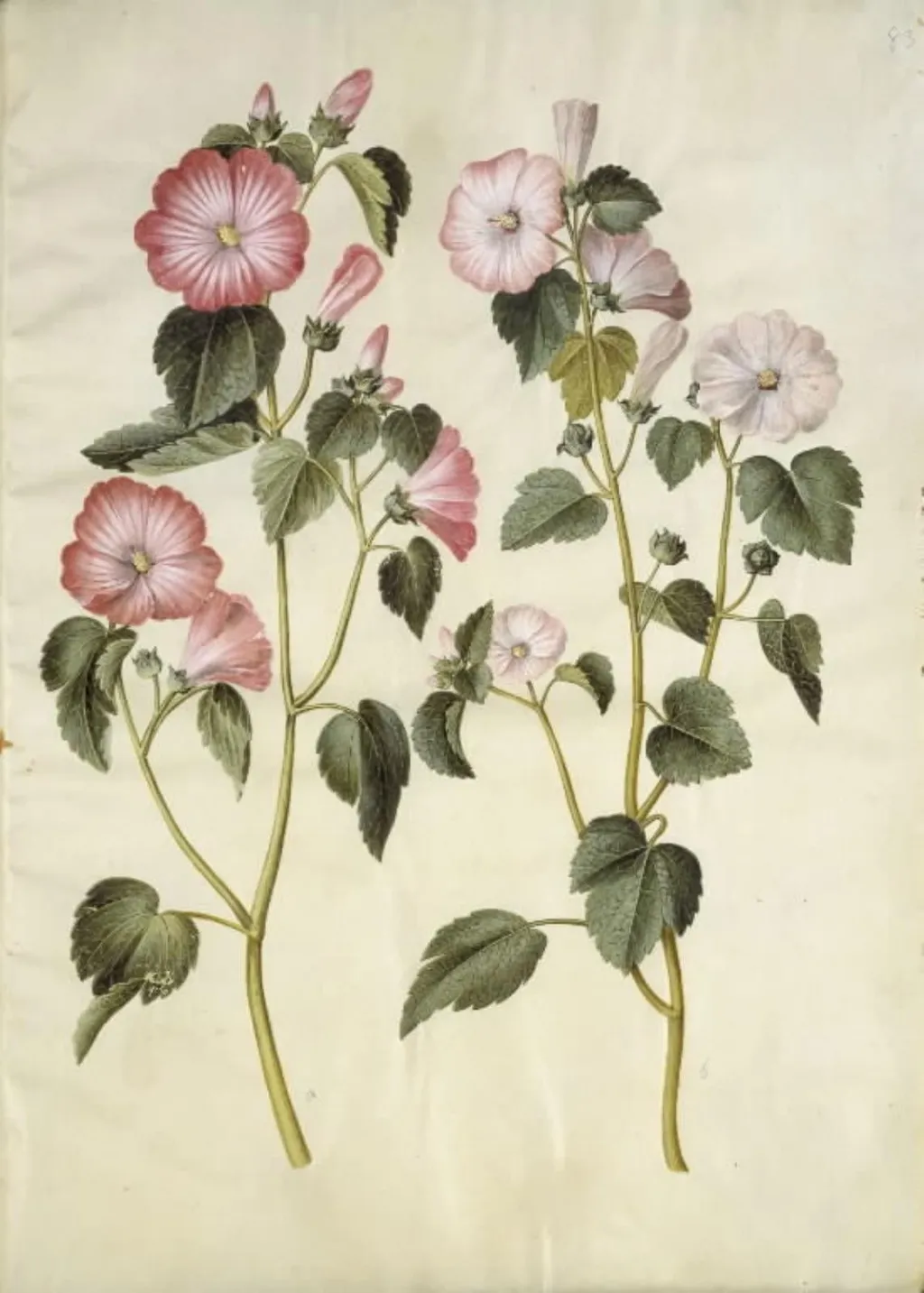
Lavatera trimestris (mamelukærme) is an unspecified work on paper by Unknown. It dates from 1654 and is held in the collection of the Statens Museum for Kunst. Lavatera trimestris, also known by its Danish name mamelukærme, is a watercolor painting dating from around 1654.
About this work
Overview
Lavatera trimestris, also known by its Danish name mamelukærme, is a watercolor painting dating from around 1654. Executed by the artist catalogued as 35199_person, the work is part of the collection of the Museum of Ethnography. It presents a single branch of hollyhock blossoms rendered in soft pink and white tones against an unadorned background, emphasizing the delicate nature of the flowers.
Subject & Meaning
The composition focuses on a solitary sprig of Lavatera, a plant valued for its ornamental blooms. The flowers display subtle veining and emerging buds, suggesting a moment of quiet growth. By isolating the branch, the artist invites contemplation of the plant’s fleeting beauty and the transition from bud to full blossom, a theme often associated with renewal in botanical illustration.
Technique & Style
Fine brushwork delineates the delicate petals and the darker veins that run through them, while the green foliage is rendered with restrained strokes.
Executed in watercolor, the artist achieves a translucent effect through successive glazing, allowing light to pass through the pigment layers. Fine brushwork delineates the delicate petals and the darker veins that run through them, while the green foliage is rendered with restrained strokes. The plain background serves to amplify the subtle color variations and the airy quality characteristic of 17th‑century botanical watercolors.
History & Provenance
Created circa 1654, the painting entered the Museum of Ethnography’s holdings at an unspecified later date, where it remains on display. Its attribution to 35199_person reflects the museum’s cataloguing system rather than a widely recognized name, indicating that the work may have been part of a broader collection of scientific or ethnographic illustrations assembled during the museum’s early acquisitions.
Artist & collection

 Domestic Scene
 Giacomo and Cardinal Marco, investing Andrea, Abbot of San Zeno, with his Benefice
 The Nymph of Fontainebleau
 Portrait of a Woman
 Madonna and Child with Saints in the Enclosed Garden
 Venus and Minerva
 Family Group of Four on Sofa
 Wall painting from Room H of the Villa of P. Fannius Synistor at Boscoreale
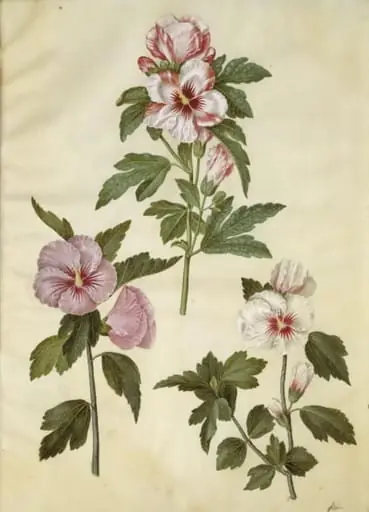 Hibiscus syriacus (syrisk rose)
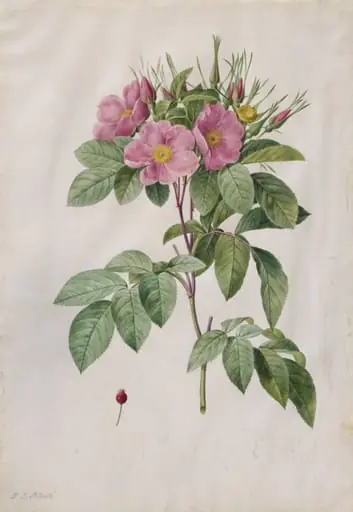 Pasture Rose (Rosa Carolina Corymbosa)
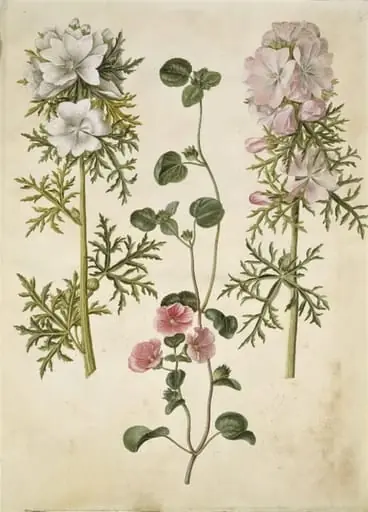 Malva moschata (moskus-katost); Malva eller Malope (art af katost eller malope)
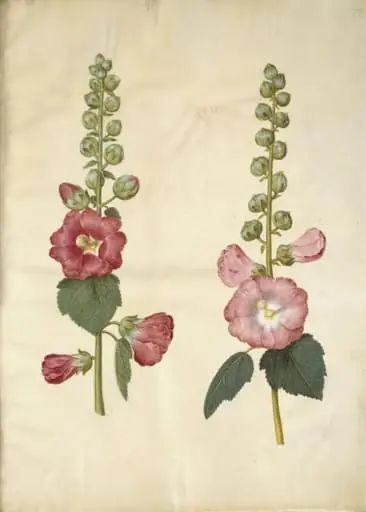 Alcea rosea (have-stokrose)
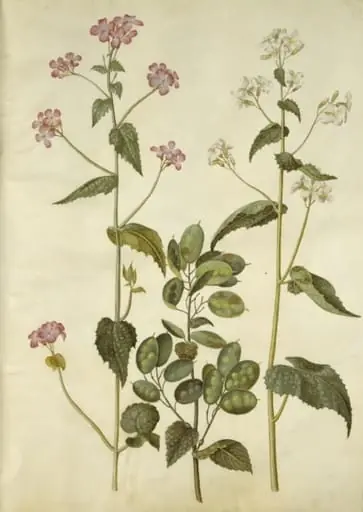 Lunaria annua (judaspenge)
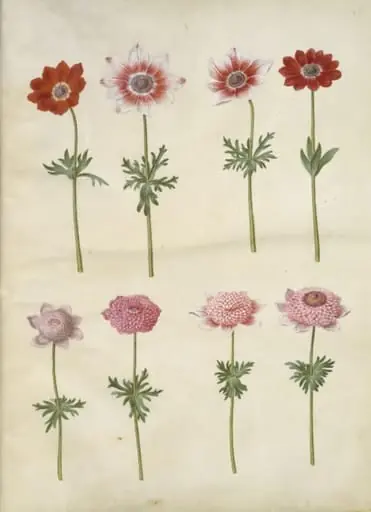 Anemone coronaria L. (fransk anemone); Anemone pavonina (påfugle-anemone)
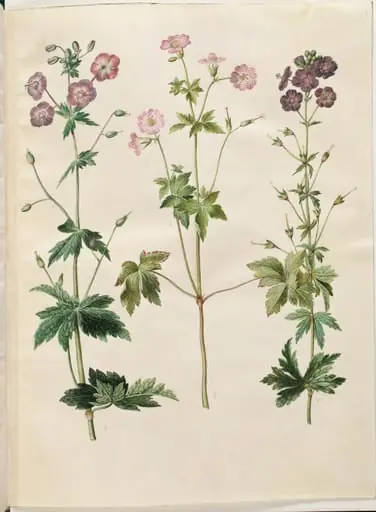 Geranium phaeum (bølgekronet storkenæb); Geranium versicolor (net-storkenæb)