Artwork
Alcea rosea (have-stokrose)
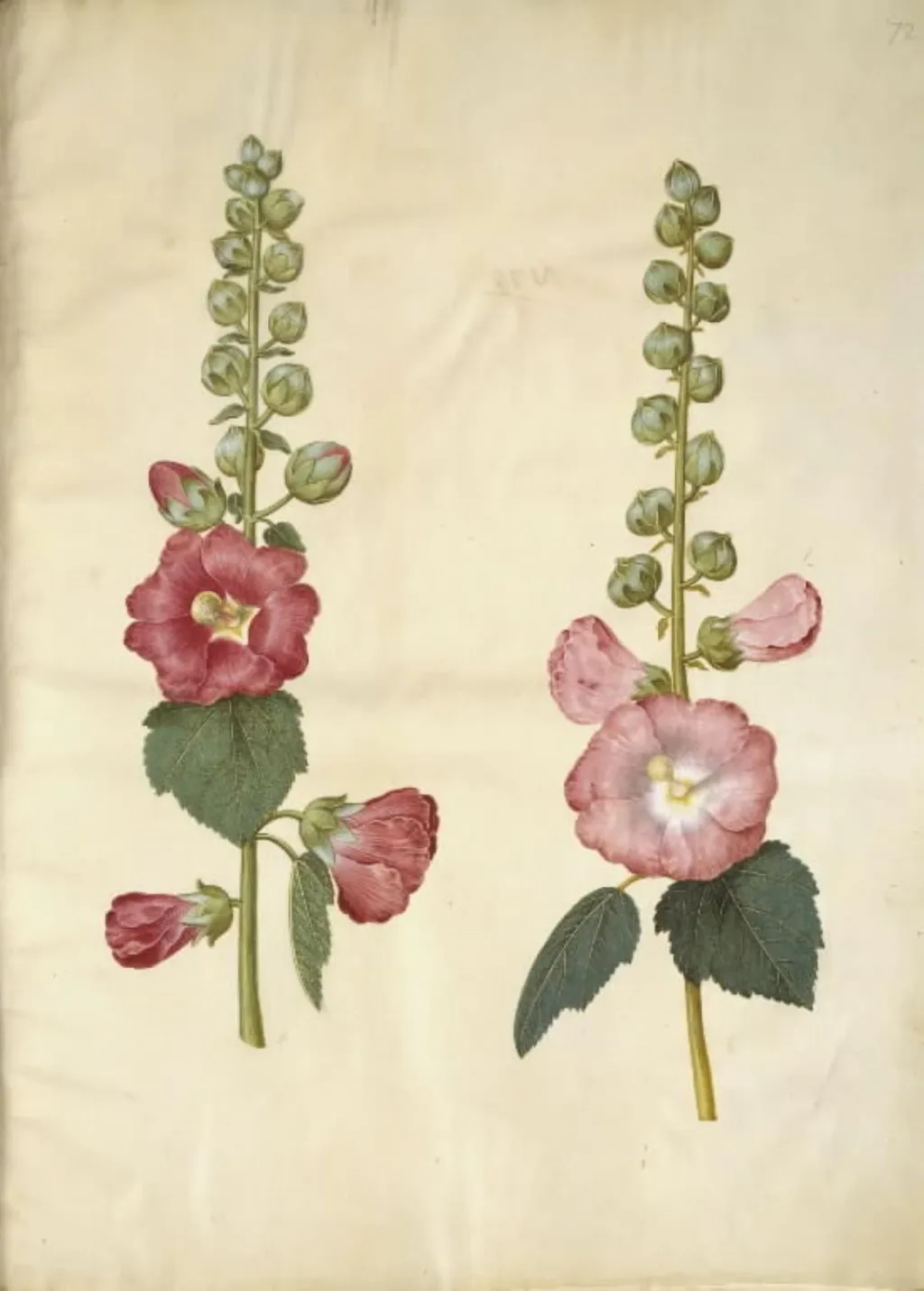
Alcea rosea (have-stokrose) is an unspecified work on paper by Unknown. It dates from 1654 and is held in the collection of the Statens Museum for Kunst. This work, dated around 1654, is a botanical illustration of two hollyhock flowers rendered in watercolor on light-brown paper.
About this work
Overview
This work, dated around 1654, is a botanical illustration of two hollyhock flowers rendered in watercolor on light-brown paper. Attributed to 35199_person, it is part of the collection at the Museum of Ethnography. The composition is minimal, focusing solely on the plants without background or contextual elements, emphasizing close observation over decorative flourish.
Subject & Meaning
The painting depicts two hollyhock blooms in varying stages of development—one deep red with unopened buds, the other pale pink with a white center. The inclusion of stems, leaves, and buds suggests an interest in the plant’s full life cycle. The absence of human or symbolic elements points to a scientific or observational intent, likely tied to natural study rather than allegory.
Technique & Style
The artist employed delicate watercolor glazing to build subtle color transitions, avoiding bold outlines. Fine details—such as the fine hairs on buds and the network of leaf veins—are rendered with precision. The palette is muted and naturalistic, with soft gradients that mimic the plant’s actual texture and light absorption, reflecting a methodical approach to visual documentation.
History & Provenance
The work was created in the mid-seventeenth century and entered the Museum of Ethnography’s holdings at an unknown date. Its attribution to 35199_person remains based on archival records, though little is known about the artist’s broader practice. The piece likely originated as part of a private collection of botanical studies, common among European naturalists of the period.
Context
During the 1650s, detailed plant illustrations were increasingly valued in scientific circles, particularly as European collectors and scholars sought to classify global flora. This work aligns with a broader trend of observational art that prioritized accuracy over ornamentation, serving as visual records for botanical study before the widespread use of photography.
Legacy
Though not widely exhibited, the piece contributes to a body of early modern botanical art that influenced later scientific illustration. Its restrained technique and attention to minute detail reflect a transitional phase in natural history documentation, where artistic skill served empirical inquiry rather than aesthetic display.
Artist & collection

 Domestic Scene
 Giacomo and Cardinal Marco, investing Andrea, Abbot of San Zeno, with his Benefice
 The Nymph of Fontainebleau
 Portrait of a Woman
 Madonna and Child with Saints in the Enclosed Garden
 Venus and Minerva
 Family Group of Four on Sofa
 Wall painting from Room H of the Villa of P. Fannius Synistor at Boscoreale
 Lavatera trimestris (mamelukærme)
 Lunaria annua (judaspenge)
 Papaver somniferum (opium-valmue)
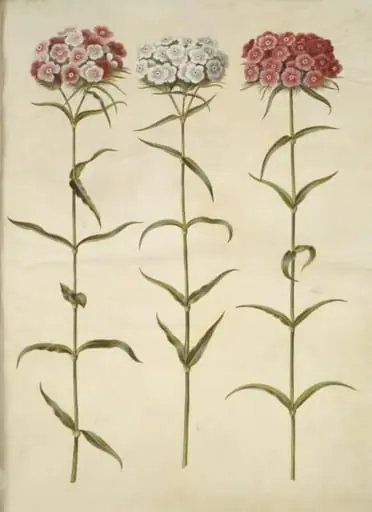 Dianthus barbatus (studenter-nellike)
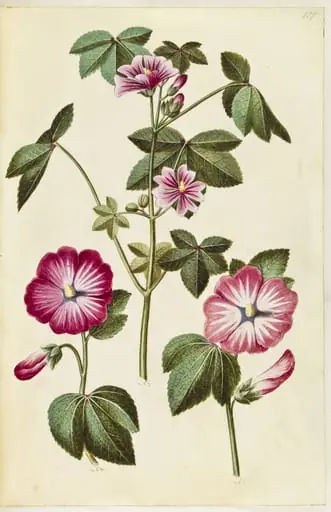 Malva sylvestris (almindelig katost); Lavatera trimestris (mamelukærme)
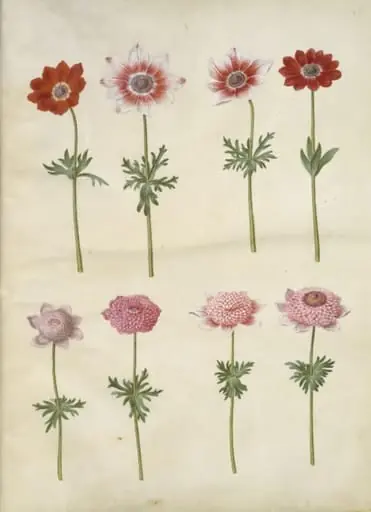 Anemone coronaria L. (fransk anemone); Anemone pavonina (påfugle-anemone)
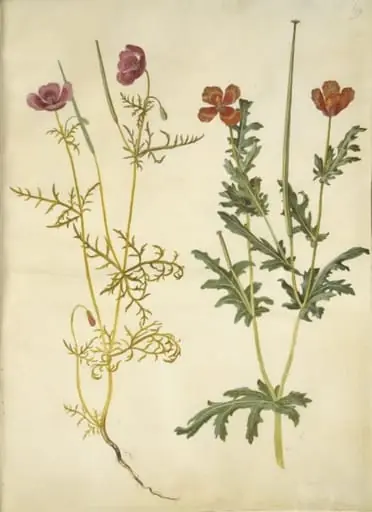 Roemeria hybrida (violet hornvalmue); Glaucium corniculatum (rød hornskulpe)
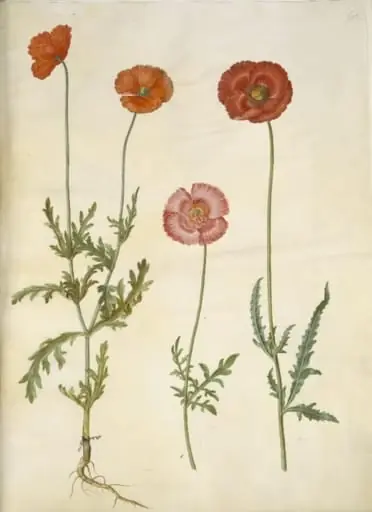 Papaver dubium (gærde-valmue); Papaver rhoeas (korn-valmue)
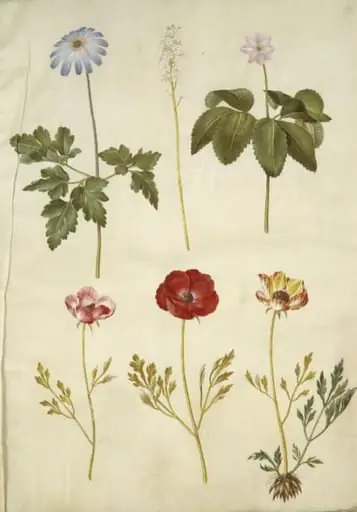 Anemone apennina (appenniner-anemone); Tiarella cordifolia (almindelig skumblomst); Anemone trifolia (trilling-anemone); Ranunculus asiaticus (have-ranunkel)
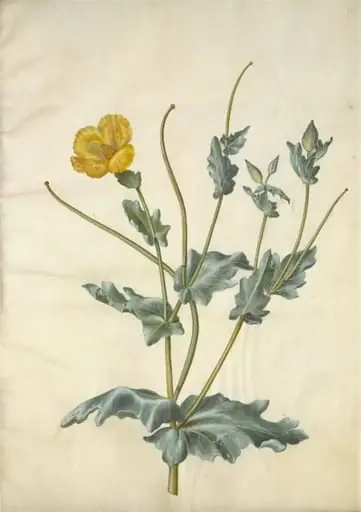 Glaucium flavum (strand-hornskulpe)
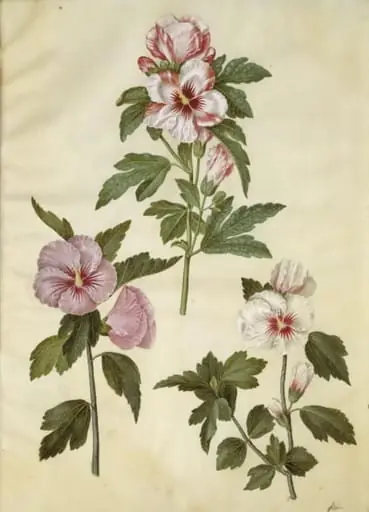 Hibiscus syriacus (syrisk rose)
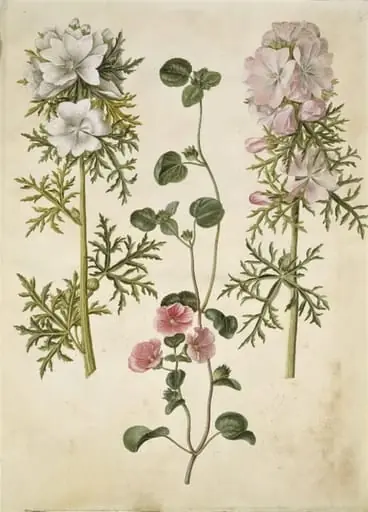 Malva moschata (moskus-katost); Malva eller Malope (art af katost eller malope)