Artwork
Melia azedarach (paternostertræ)
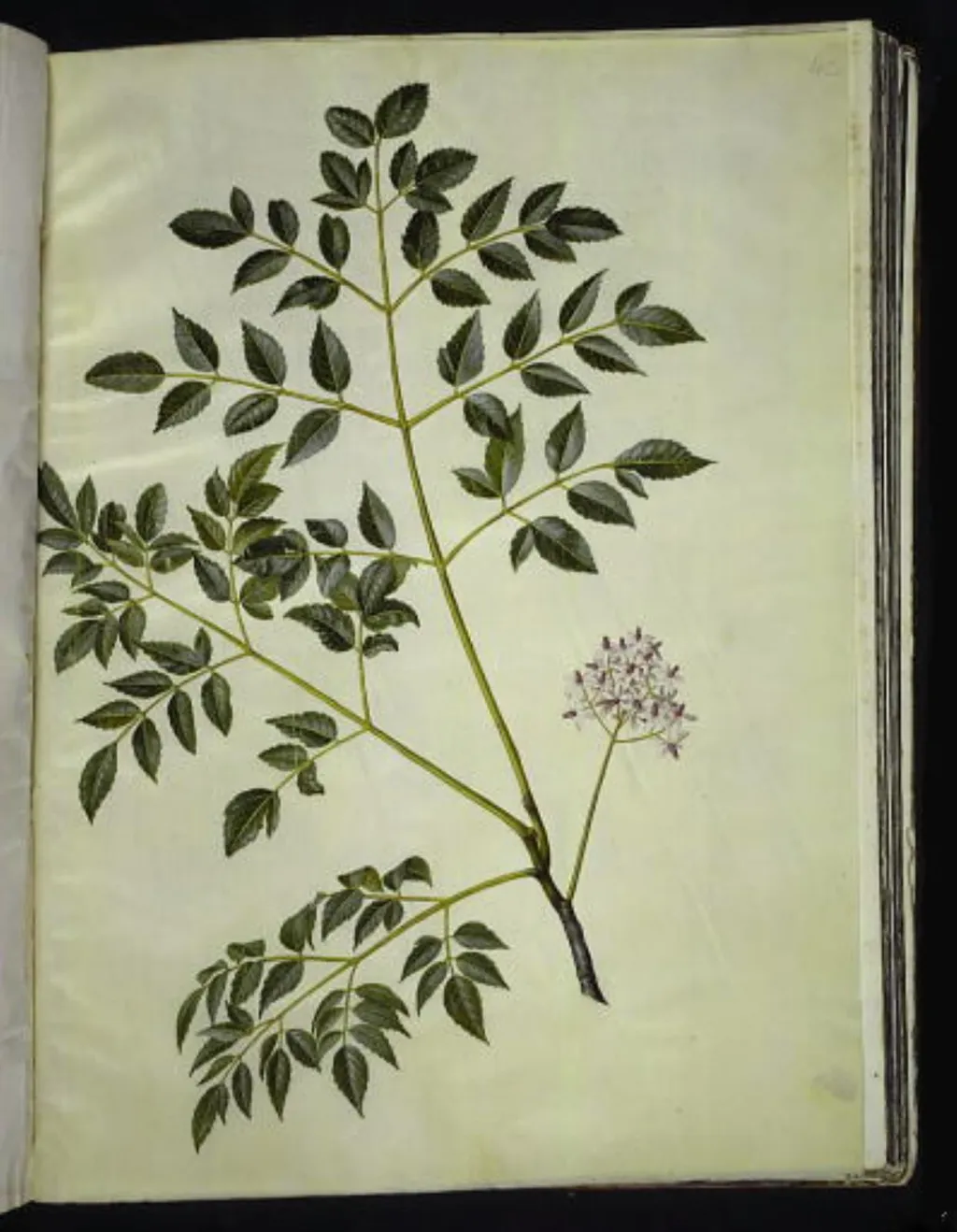
Melia azedarach (paternostertræ) is an unspecified work on paper by Unknown. It dates from 1654 and is held in the collection of the Statens Museum for Kunst. This botanical illustration, dated around 1654, depicts a branch of Melia azedarach, commonly known as the paternoster tree.
About this work
Overview
This botanical illustration, dated around 1654, depicts a branch of Melia azedarach, commonly known as the paternoster tree.
This botanical illustration, dated around 1654, depicts a branch of Melia azedarach, commonly known as the paternoster tree. Rendered in watercolor on paper, it is part of the collection at the Museum of Ethnography. The composition isolates the plant against a blank background, emphasizing precise observation over decorative elements. The work reflects a scientific interest in plant morphology common in mid-17th-century natural history studies.
Subject & Meaning
The subject is a single branch of Melia azedarach, showing its characteristic pinnate leaves and small, clustered purple blossoms. The plant’s structure is presented without context, suggesting an intent to document its form rather than convey symbolic meaning. Its inclusion in a museum collection implies value as a specimen of regional flora, possibly collected during early ethnographic or botanical expeditions.
Technique & Style
The artist employed watercolor to render fine details with subtlety, building color in translucent layers to suggest the soft fuzz on leaves and the delicate texture of flowers. Brushwork is light and controlled, avoiding bold outlines. The pale background ensures visual clarity, allowing the natural hues and spatial arrangement of the branch to dominate. This method prioritizes accuracy over artistic flourish.
History & Provenance
The work’s origin is tied to a collector or naturalist active in the mid-1600s, though the artist’s identity remains unrecorded. It entered the Museum of Ethnography’s holdings through institutional acquisitions, likely as part of a broader collection of plant specimens used for study or display. Its preservation suggests it was valued for its observational fidelity rather than aesthetic appeal.
Context
Created during a period when European naturalists systematically documented global flora, this illustration aligns with contemporary efforts to classify plants through visual record. Such works often accompanied travel accounts or botanical manuscripts, serving as references for scholars unfamiliar with non-European species. The absence of scale or habitat hints at its use as a standardized specimen image.
Legacy
Though unsigned and unattributed, the illustration endures as an example of early scientific botany in watercolor. It contributes to the historical record of how plants were visually understood before photography. Its presence in a museum underscores the transition from artistic representation to empirical documentation in natural history.
Artist & collection

 Domestic Scene
 Giacomo and Cardinal Marco, investing Andrea, Abbot of San Zeno, with his Benefice
 The Nymph of Fontainebleau
 Portrait of a Woman
 Madonna and Child with Saints in the Enclosed Garden
 Venus and Minerva
 Family Group of Four on Sofa
 Wall painting from Room H of the Villa of P. Fannius Synistor at Boscoreale
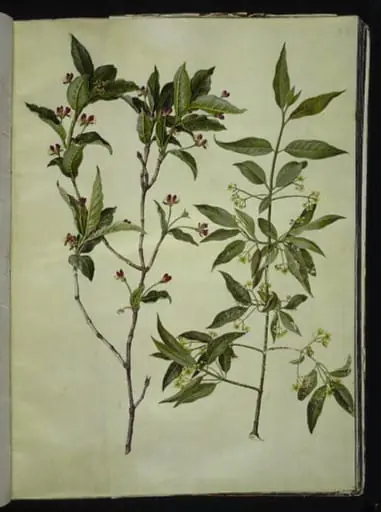 Lonicera alpigena (alpe-gedeblad); Euonymus europaeus (almindelig benved)
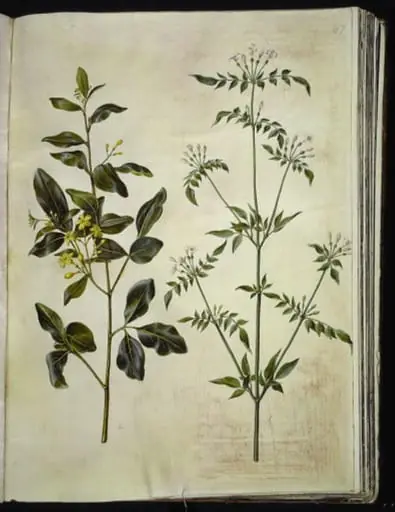 Jasminum odoratissimum (stue-jasmin); Jasminum officinale (læge-jasmin)
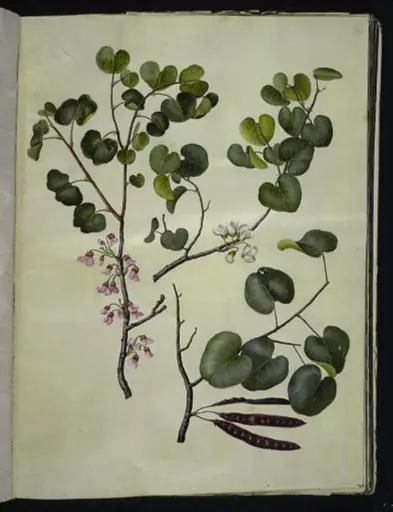 Cercis siliquastrum (almindelig judastræ)
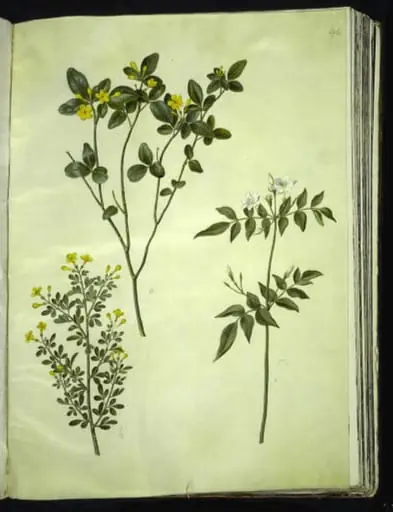 Jasminum odoratissimum (stue-jasmin); Jasminum fruticans (busk-jasmin); Jasminum grandiflorum (duft-jasmin)
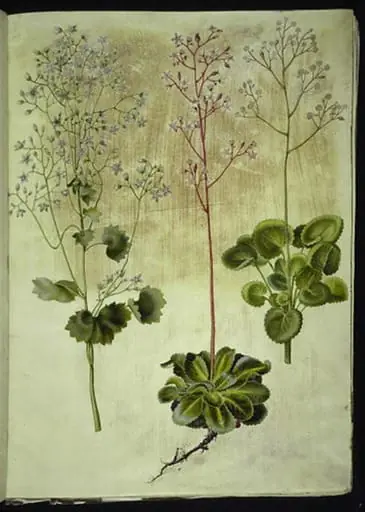 Saxifraga rotundifolia (rundbladet stenbræk); Saxifraga umbrosa (skygge-stenbræk); Saxifraga geum (porcelænsblomst)
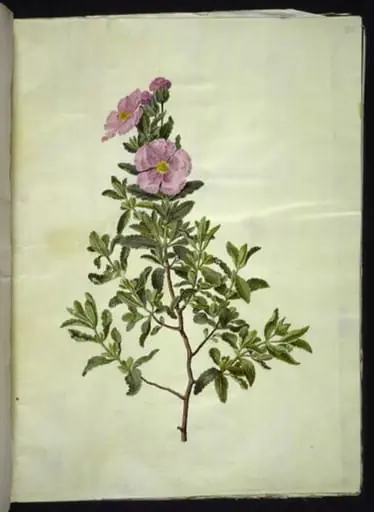 Cistus creticus (kreta-soløjetræ)