Artwork
Muscari botryoides (almindelig perlehyacint); Muscari racemosum (muskat-perlehyacint); Muscari neglectum
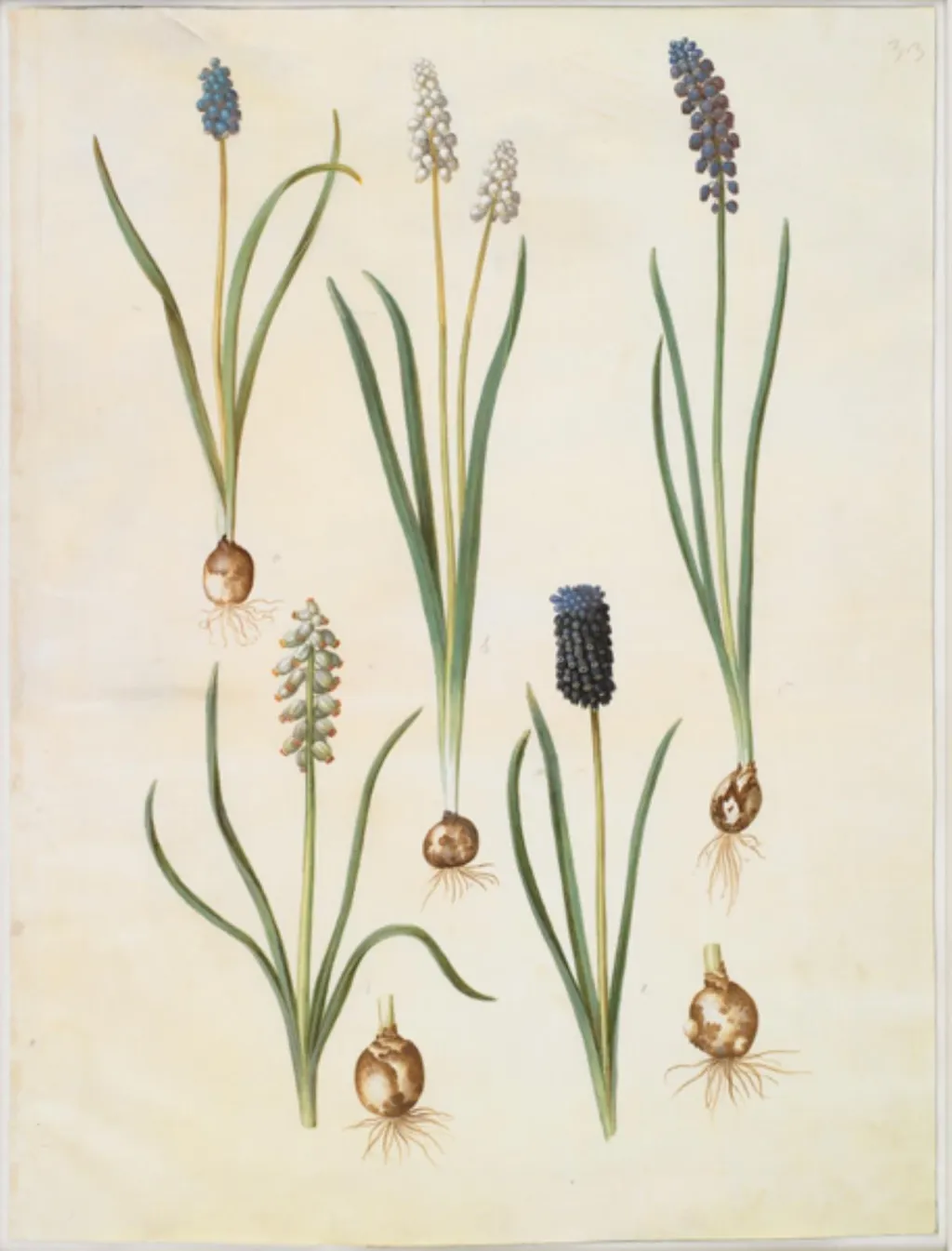
Muscari botryoides (almindelig perlehyacint); Muscari racemosum (muskat-perlehyacint); Muscari neglectum is an unspecified work on paper by Unknown. It dates from 1654 and is held in the collection of the Statens Museum for Kunst.
About this work
Overview
Rendered in precise detail, the work belongs to a tradition of botanical illustration that prioritized scientific accuracy over decorative flourish.
This image, dated around 1654, depicts six species of grape hyacinths, including Muscari botryoides, Muscari racemosum, and Muscari neglectum. Rendered in precise detail, the work belongs to a tradition of botanical illustration that prioritized scientific accuracy over decorative flourish. The artist captured each plant with careful observation, emphasizing structural clarity. It is held in the collection of the Museum of Ethnography, where it serves as a record of early modern plant study.
Subject & Meaning
The painting focuses exclusively on the morphology of grape hyacinths, highlighting their clustered blooms, bulbous bases, and slender stems. By isolating these plants against a neutral background, the artist removes contextual distractions, directing attention to botanical features. This approach reflects a scholarly interest in classification and natural history, common among European naturalists of the period who sought to document and systematize plant life.
Technique & Style
The work employs fine, controlled linework and subtle washes to render the flowers and stems with clarity. Petals are depicted in tight, overlapping formations, while the bulbs are rendered with attention to texture and proportion. The use of muted blues, purples, and whites suggests a restrained palette typical of scientific illustration. The absence of shading or atmospheric effects underscores its function as a reference image rather than an aesthetic composition.
History & Provenance
Created circa 1654, the image is attributed to an unnamed artist identified only by the catalog number 35199_person. Its presence in the Museum of Ethnography indicates it was likely collected as part of a broader ethnographic or natural history archive. Though its original commission is unknown, its preservation suggests it was valued for its utility in botanical documentation during a time when visual records were essential to scientific exchange.
Context
In mid-17th century Europe, detailed plant illustrations flourished alongside the rise of herbaria and botanical gardens. Artists often worked alongside scientists to produce accurate depictions for study and publication. This image aligns with that movement, reflecting a growing emphasis on empirical observation. Such works were used in teaching, correspondence among scholars, and the development of early botanical taxonomy.
Legacy
Though not widely known outside institutional collections, this image contributes to a larger body of early modern botanical art that laid groundwork for modern plant science. Its methodical approach influenced later illustrators who sought to balance aesthetic precision with scientific utility. Today, it remains a quiet testament to the role of visual documentation in the history of natural history.
Artist & collection

 Domestic Scene
 Giacomo and Cardinal Marco, investing Andrea, Abbot of San Zeno, with his Benefice
 The Nymph of Fontainebleau
 Portrait of a Woman
 Madonna and Child with Saints in the Enclosed Garden
 Venus and Minerva
 Family Group of Four on Sofa
 Wall painting from Room H of the Villa of P. Fannius Synistor at Boscoreale
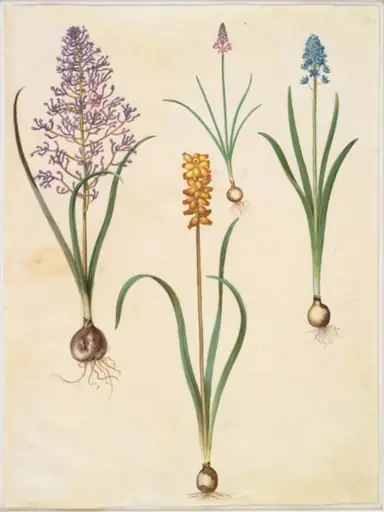 Muscari comosum (fjerhyacint); Scilla autumnalis (høst-skilla); Hyacinthoides italica (italiensk klokkeskilla); Muscari macrocarpum (gul perlehyacint)
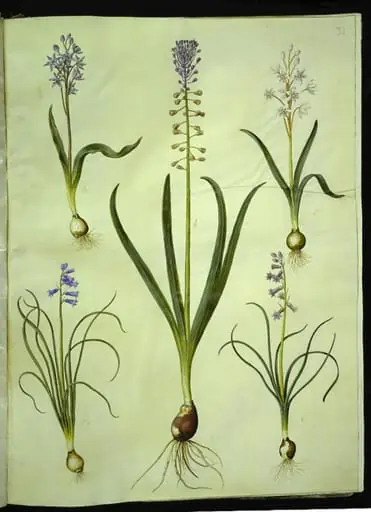 Scilla bifolia (tobladet skilla); Muscari comosum (duskhyacint); Brimeura amethystina (pyrenæisk hyacint)
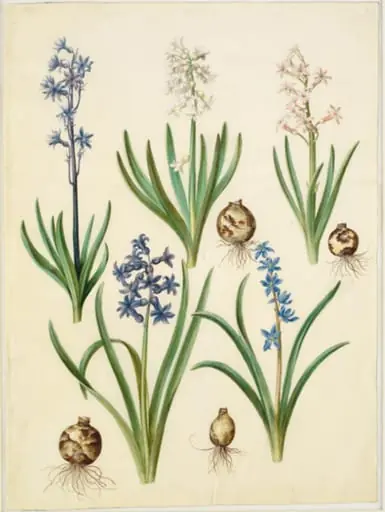 Hyacinthus orientalis (almindelig hyacint); Scilla amoena (himmelblå skilla)
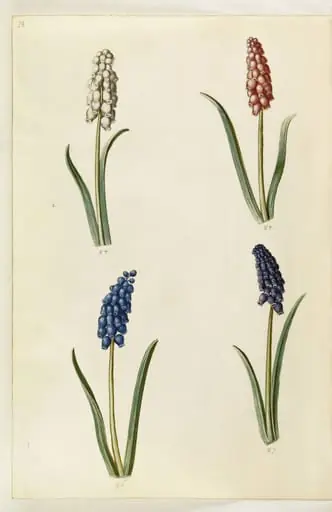 Muscari botryoides (almindelig perlehyacint)
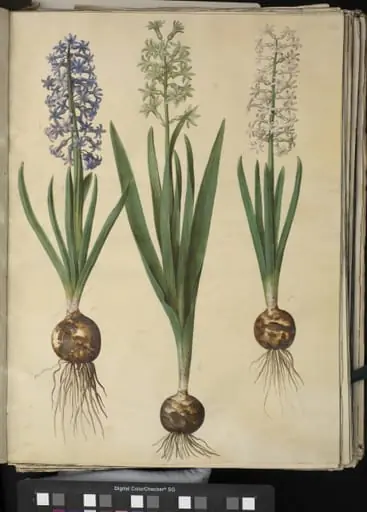 Hyacinthus orientalis (almindelig hyacint)
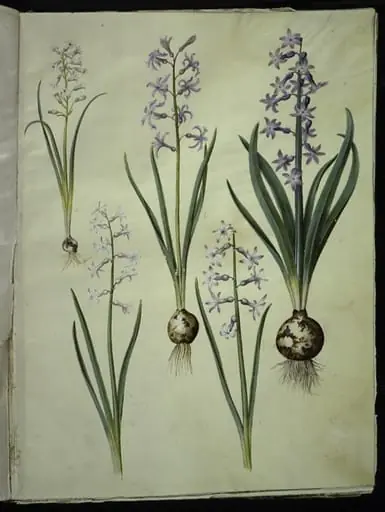 Brimeura amethystina (pyrenæisk hyacint); Hyacinthus orientalis (almindelig hyacint)
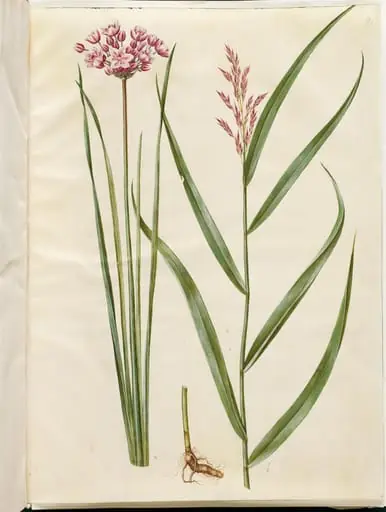 Butomus umbellatus (brudelys); Phragmites australis (almindelig tagrør)
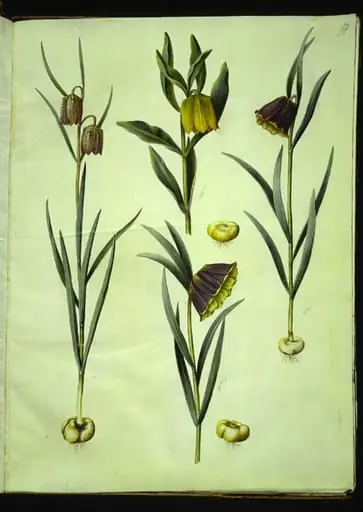 Fritillaria meleagris (almindelig vibeæg); Fritillaria aurea eller Fritillaria tubiformis & moggridgei (vibeæg); Fritillaria montana
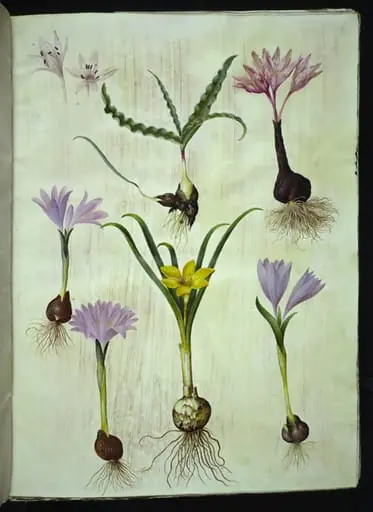 Colchicum variegatum (plettet tidløs); Bulbocodium vernum (vår-lysblomst); Sternbergia lutea (almindelig sternbergia)
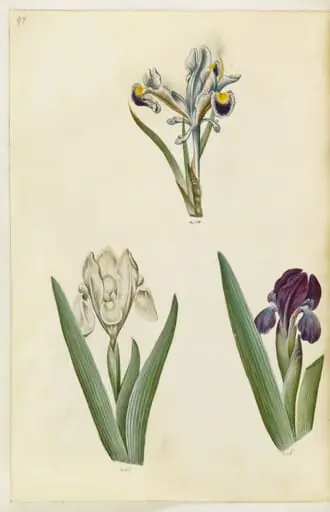 Iris persica (persisk iris); Iris lutescens eller Iris pumila (?) (dværg-iris eller lav iris)