Artwork
Brimeura amethystina (pyrenæisk hyacint); Hyacinthus orientalis (almindelig hyacint)
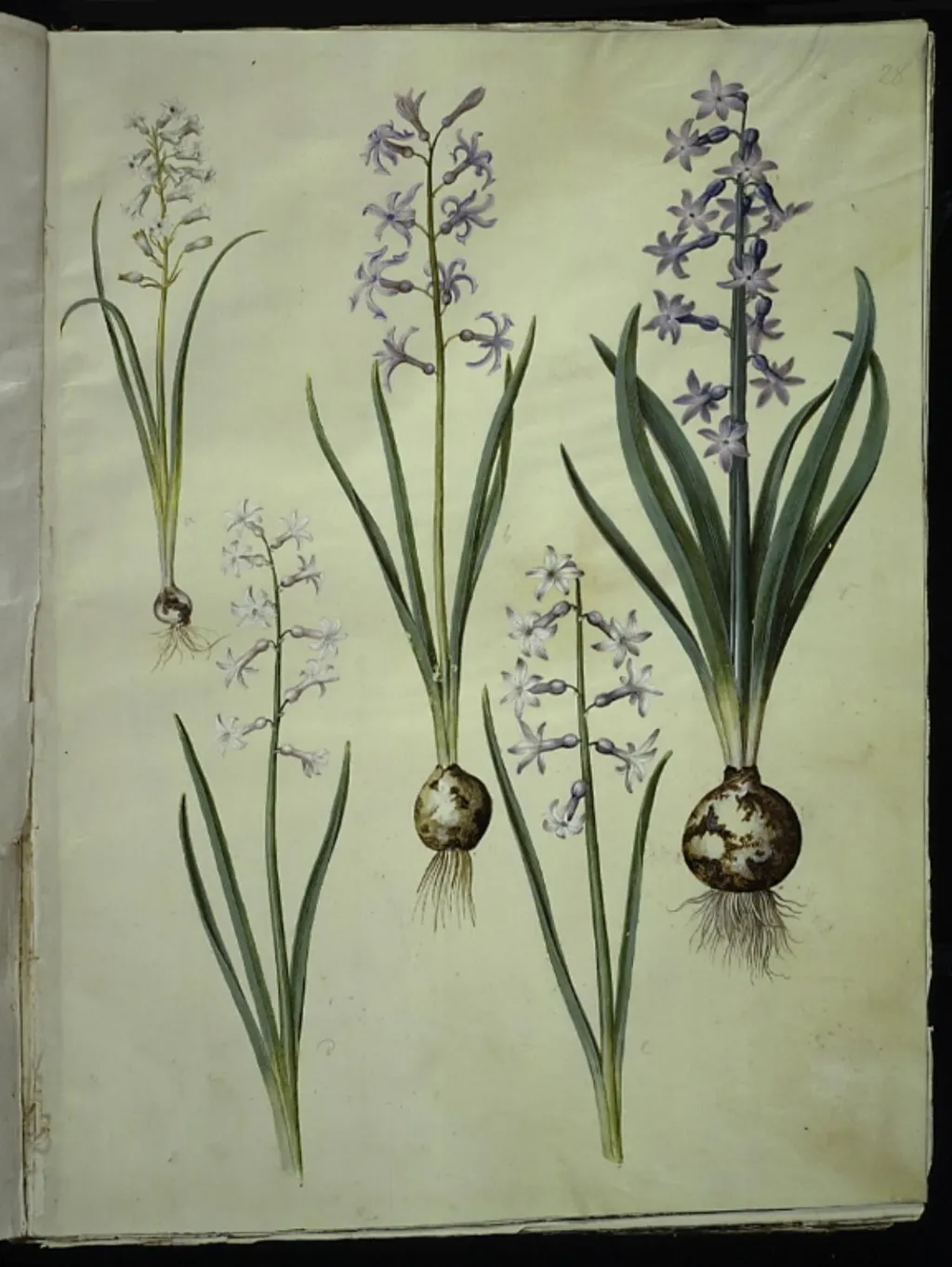
Brimeura amethystina (pyrenæisk hyacint); Hyacinthus orientalis (almindelig hyacint) is an unspecified work on paper by Unknown. It dates from 1654 and is held in the collection of the Statens Museum for Kunst.
About this work
Overview
This early‑modern illustration depicts three upright specimens of bulbous plants, each rendered with slender green foliage and compact clusters of blossoms. The flowers, chiefly in shades of violet and white, are arranged in orderly rows along the stems, while the bulbs rest at the base, their roots trailing beneath.
Subject & Meaning
The work juxtaposes two species: Brimeura amethystina, known as the Pyrenean hyacinth, and Hyacinthus orientalis, the common hyacinth. By presenting both side by side, the image highlights their morphological similarities and differences, serving as a comparative study for botanists and collectors of the period.
Technique & Style
Executed with meticulous line work and subtle washes, the illustration employs a delicate watercolor palette that renders soft, natural hues. Fine shading conveys volume in the petals and leaves, while the transparent layers suggest the translucency of the blossoms and the texture of the bulbous roots.
History & Provenance
Created around 1654, the piece is attributed to the artist catalogued as 35199_person. It entered the collection of the Museum of Ethnography, where it remains part of the institution’s holdings of historical botanical documentation.
Context
During the mid‑seventeenth century, botanical illustration was essential for the classification and exchange of plant knowledge across Europe. Works such as this one contributed to the growing scientific interest in horticulture and the systematic study of flora, aligning with the era’s emphasis on empirical observation.
Artist & collection

 Domestic Scene
 Giacomo and Cardinal Marco, investing Andrea, Abbot of San Zeno, with his Benefice
 The Nymph of Fontainebleau
 Portrait of a Woman
 Madonna and Child with Saints in the Enclosed Garden
 Venus and Minerva
 Family Group of Four on Sofa
 Wall painting from Room H of the Villa of P. Fannius Synistor at Boscoreale
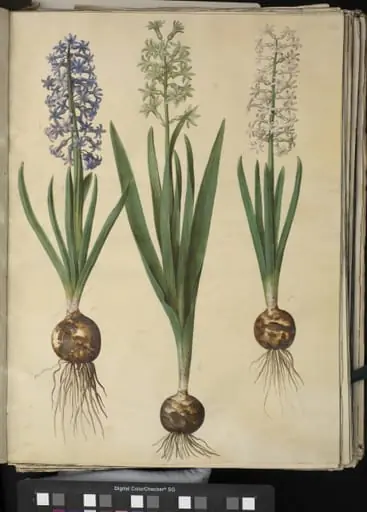 Hyacinthus orientalis (almindelig hyacint)
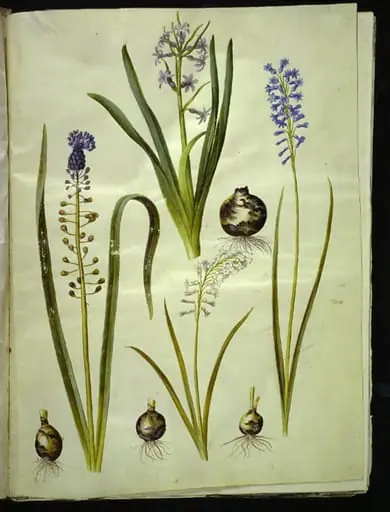 Hyacinthus orientalis (almindelig hyacint); Muscari comosum (duskhyacint); Brimeura amethystina (pyrenæisk hyacint)
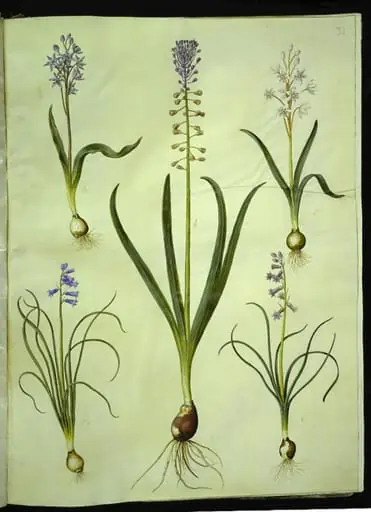 Scilla bifolia (tobladet skilla); Muscari comosum (duskhyacint); Brimeura amethystina (pyrenæisk hyacint)
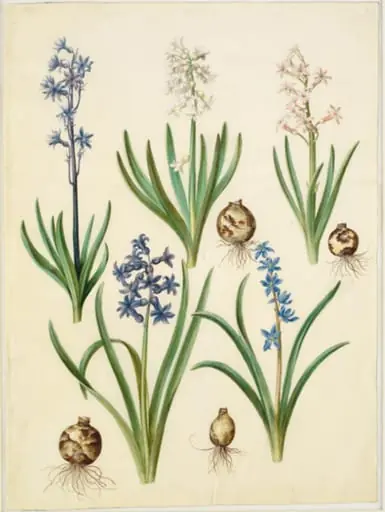 Hyacinthus orientalis (almindelig hyacint); Scilla amoena (himmelblå skilla)
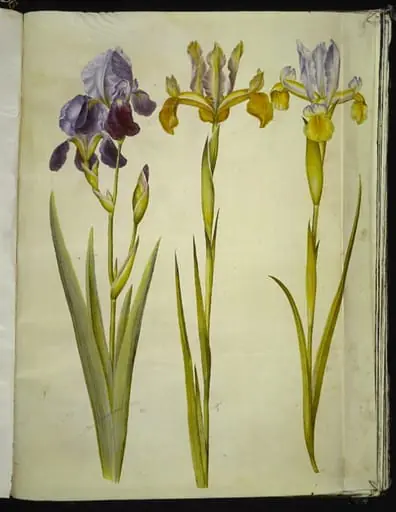 Iris ×sambucina (hylde-iris); Iris latifolia (engelsk iris)
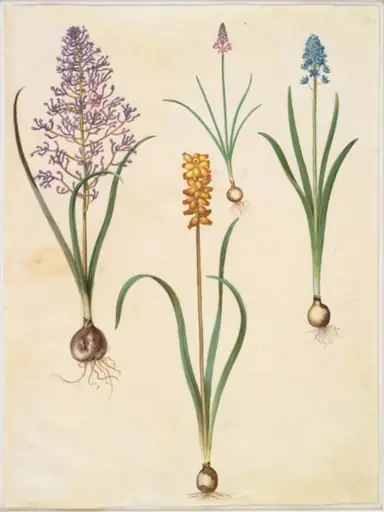 Muscari comosum (fjerhyacint); Scilla autumnalis (høst-skilla); Hyacinthoides italica (italiensk klokkeskilla); Muscari macrocarpum (gul perlehyacint)
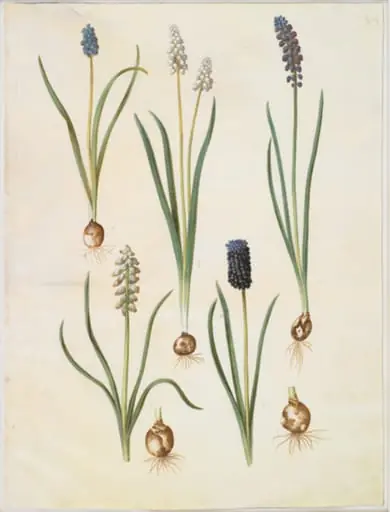 Muscari botryoides (almindelig perlehyacint); Muscari racemosum (muskat-perlehyacint); Muscari neglectum
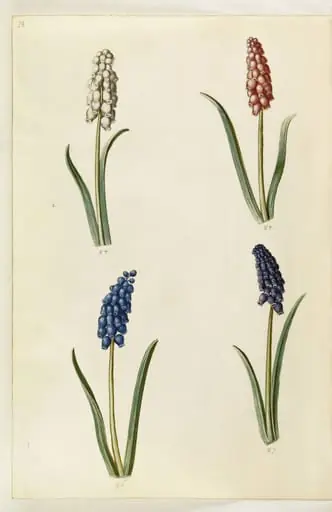 Muscari botryoides (almindelig perlehyacint)
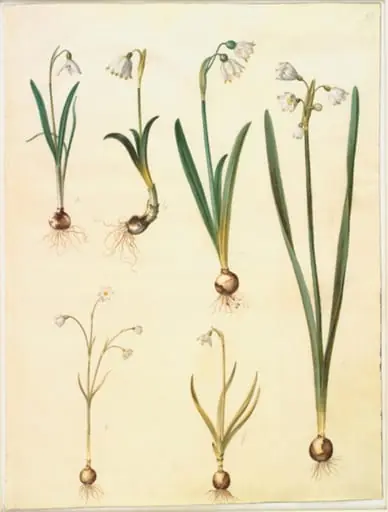 Galanthus nivalis (almindelig vintergæk); Leucojum vernum (dorotealilje); Leucojum aestivum (sommer-hvidblomme); Leucojum autumnale (høst-hvidblomme)
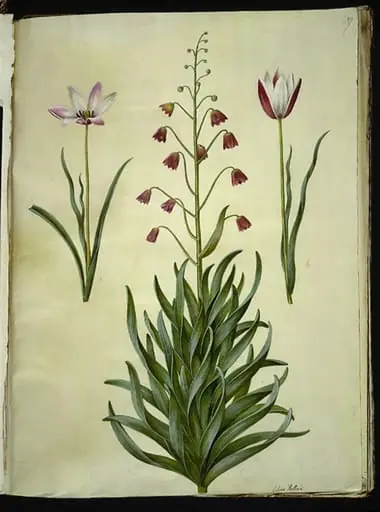 Tulipa clusiana (clusius-tulipan); Fritillaria persica (persisk fritillaria)