Artwork
Scilla peruviana (kæmpe-skilla)
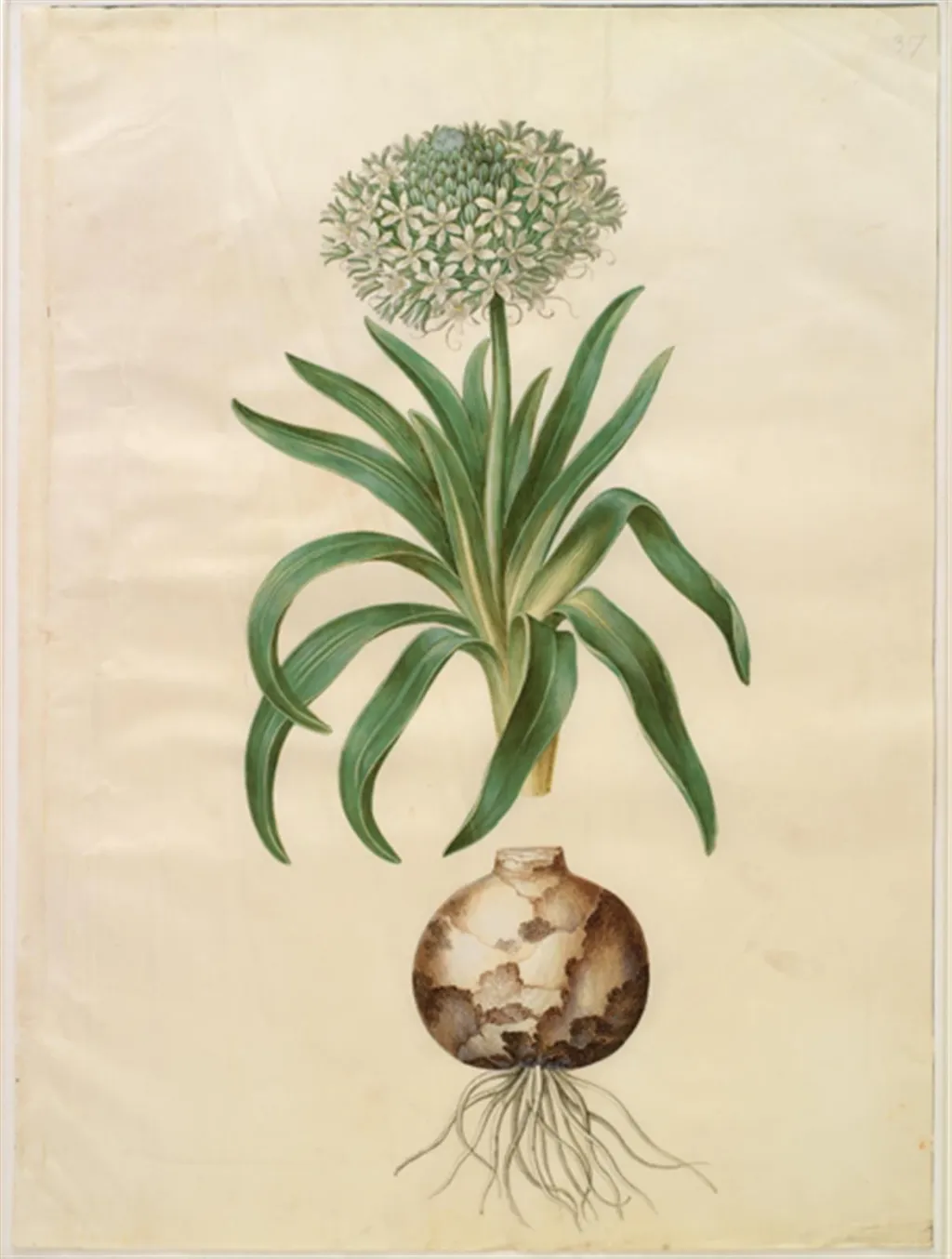
Scilla peruviana (kæmpe-skilla) is an unspecified work on paper by Unknown. It dates from 1654 and is held in the collection of the Statens Museum for Kunst. This botanical illustration, dated around 1654, depicts Scilla peruviana, a flowering plant commonly known as the Peruvian squill.
About this work
Overview
This botanical illustration, dated around 1654, depicts Scilla peruviana, a flowering plant commonly known as the Peruvian squill. Rendered in a detailed, observational style, the work is part of a collection at the Museum of Ethnography. The composition centers on the plant in a ceramic pot, set against a pale yellow background, emphasizing its form without decorative distraction.
Subject & Meaning
The painting presents Scilla peruviana with scientific precision, likely intended for study or documentation rather than ornamentation.
The painting presents Scilla peruviana with scientific precision, likely intended for study or documentation rather than ornamentation. The plant’s upright cluster of small white blooms and arching green leaves reflect its natural growth pattern. Its inclusion in a domestic pot suggests an interest in cultivated specimens, possibly tied to early modern European curiosity about exotic flora from distant regions.
Technique & Style
The artist employed fine brushwork to capture the texture of leaves and petals, using subtle tonal shifts to suggest volume and light. The deep green foliage contrasts with the pale, almost translucent petals, while the pot’s dark brown decorative motifs are rendered with careful line work. The background is uniformly light, directing focus entirely to the plant and container.
History & Provenance
The work is attributed to an artist identified only as 35199_person, a designation likely used in institutional cataloging where the creator’s identity remains unverified. It entered the Museum of Ethnography’s holdings at an unspecified date, possibly as part of a broader collection of botanical studies from the 17th century, though its original context of creation is undocumented.
Context
In mid-17th-century Europe, detailed plant illustrations were increasingly produced by naturalists and collectors documenting newly introduced species. This painting aligns with that trend, reflecting a growing interest in taxonomy and the cultivation of foreign plants in private gardens and scholarly circles, even as accurate depictions remained rare outside scientific circles.
Legacy
Though the artist’s identity is lost, the work endures as a quiet record of early botanical observation. Its preservation in a museum setting underscores its value as a historical artifact of natural history illustration, offering insight into how plants from distant lands were visually recorded before the advent of photography or standardized scientific publishing.
Artist & collection

 Domestic Scene
 Giacomo and Cardinal Marco, investing Andrea, Abbot of San Zeno, with his Benefice
 The Nymph of Fontainebleau
 Portrait of a Woman
 Madonna and Child with Saints in the Enclosed Garden
 Venus and Minerva
 Family Group of Four on Sofa
 Wall painting from Room H of the Villa of P. Fannius Synistor at Boscoreale
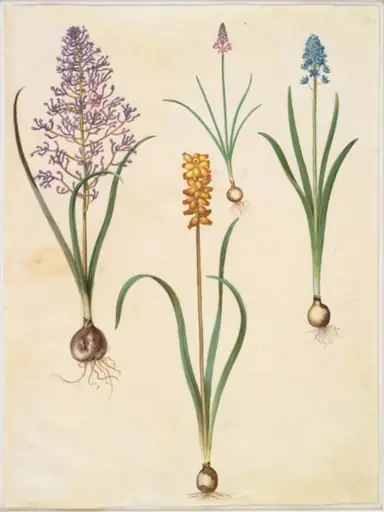 Muscari comosum (fjerhyacint); Scilla autumnalis (høst-skilla); Hyacinthoides italica (italiensk klokkeskilla); Muscari macrocarpum (gul perlehyacint)
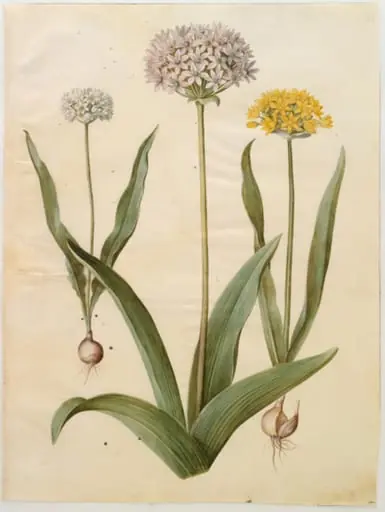 Allium moly (guld-løg); Allium nigrum (sort løg)
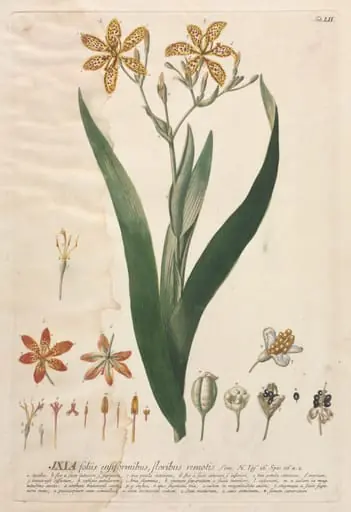 Plantae Selectae: No. 52 - Ixia
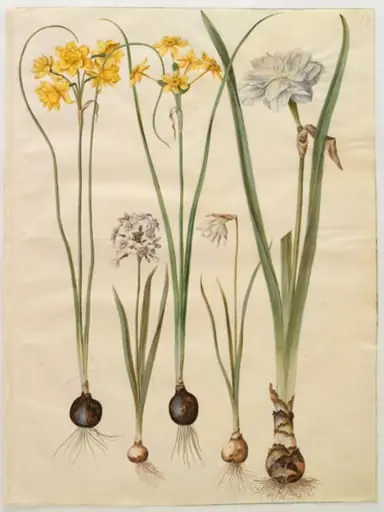 Narcissus jonquilla (siv-narcis); Narcissus tazetta (tazet); Narcissus pseudonarcissus moschatus (moskus-narcis); Narcissus poeticus (pinselilje)
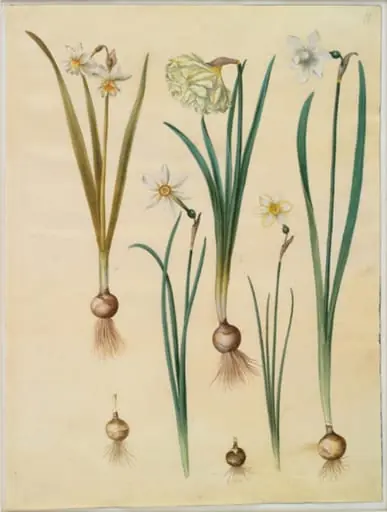 Narcissus ×medioluteus (toblomstret narcis); Narcissus pseudonarcissus; Narcissus (narcis); Narcissus poeticus (pinselilje); Narcissus ×tenuior
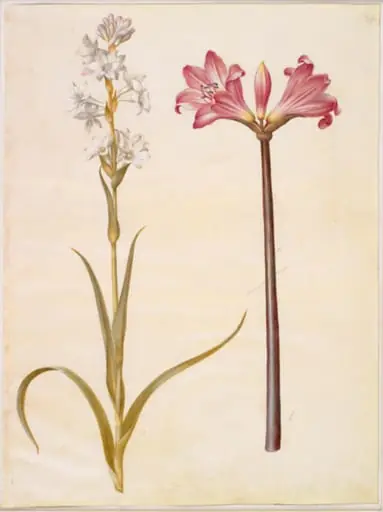 Polianthes tuberosa (tuberose); Amaryllis belladonna (belladonnalilje)
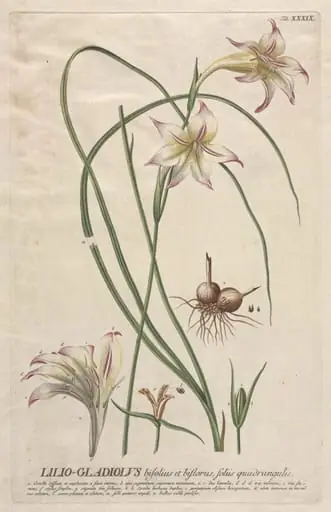 Plantae Selectae: No. 39 - Lilio-Gladiolus
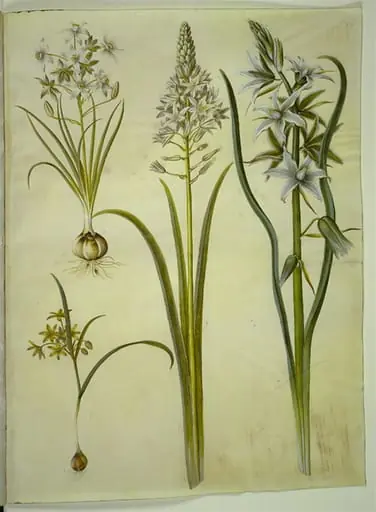 Ornithogalum umbellatum (kost-fuglemælk); Ornithogalum pyramidale (pyramide-fuglemælk); Gagea lutea (almindelig guldstjerne); Ornithogalum nutans (nikkende fuglemælk)