Artwork
Narcissus jonquilla (siv-narcis); Narcissus tazetta (tazet); Narcissus pseudonarcissus moschatus (moskus-narcis); Narcissus poeticus (pinselilje)
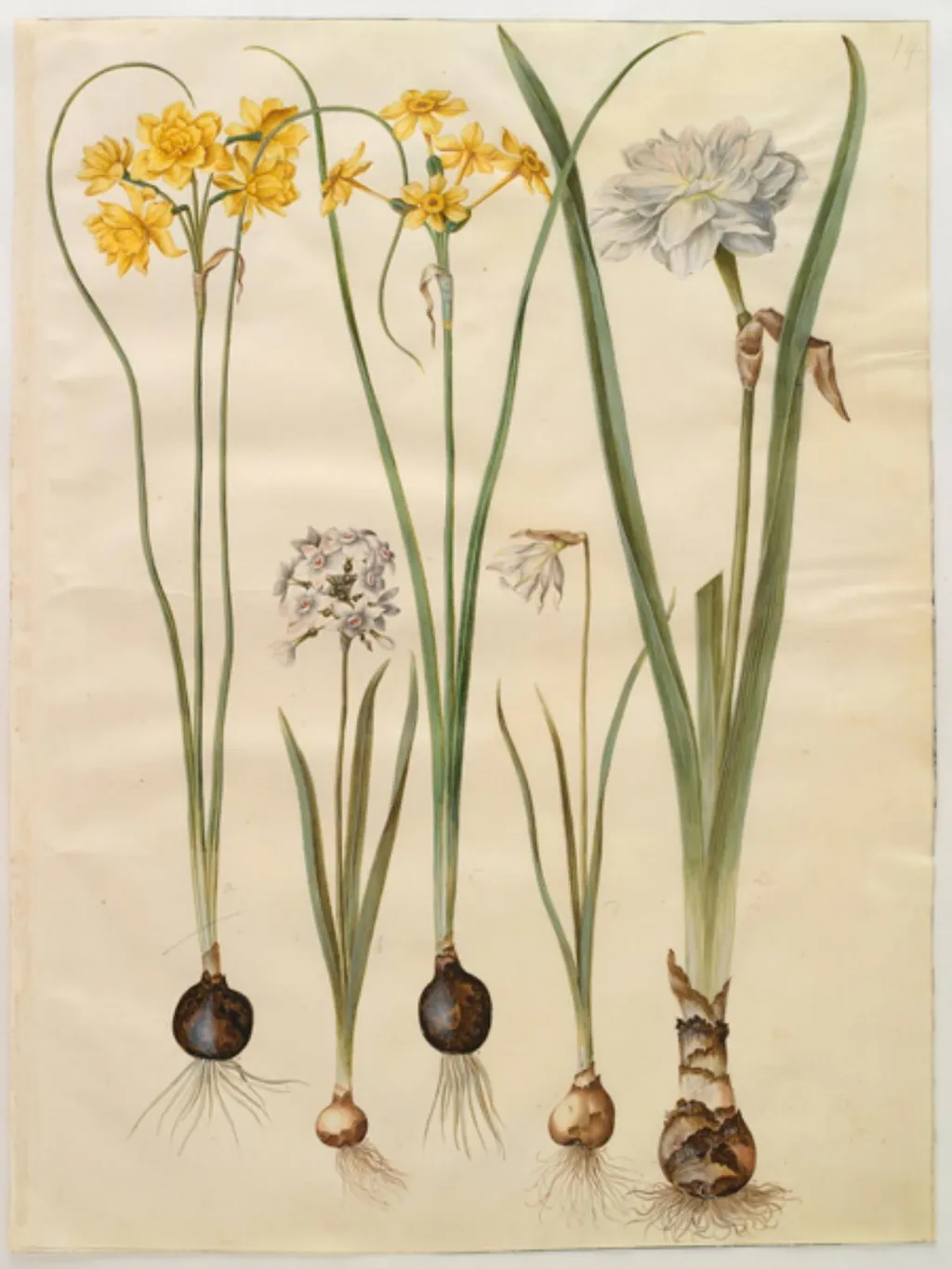
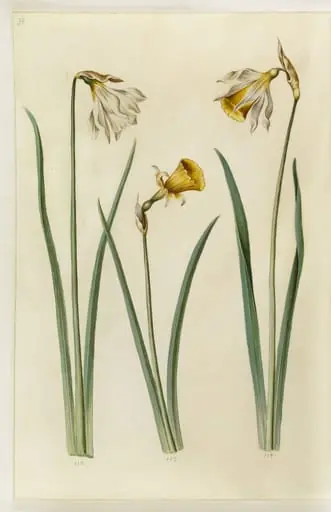
Narcissus jonquilla (siv-narcis); Narcissus tazetta (tazet); Narcissus pseudonarcissus moschatus (moskus-narcis); Narcissus poeticus (pinselilje) is an unspecified work on paper by Unknown. It dates from 1654 and is held in the collection of the Statens Museum for Kunst. This image, dated around 1654, depicts five species of narcissus flowers, each rendered with botanical precision.
About this work
Overview
This image, dated around 1654, depicts five species of narcissus flowers, each rendered with botanical precision. Created by an anonymous artist, the work is part of the Museum of Ethnography’s collection. The composition emphasizes the structural diversity of the plants, highlighting their bulbs, stems, and blooms in a manner that suggests scientific documentation rather than decorative intent.
Subject & Meaning
Rather than symbolizing myth or emotion, the focus is on botanical classification.
The painting presents cultivated narcissus varieties—Narcissus jonquilla, tazetta, pseudonarcissus moschatus, and poeticus—each identified by its scientific name. Rather than symbolizing myth or emotion, the focus is on botanical classification. The inclusion of roots and bulbs underscores an interest in plant morphology, reflecting early modern efforts to systematize and record natural forms for scholarly use.
Technique & Style
Executed in watercolor, the work employs delicate layering to capture subtle variations in petal hue and bulb texture. The stems are rendered with fine, controlled lines, while the bulbs are distinguished by differences in surface tone—some papery and dark, others smooth and brown. The absence of background or decorative elements directs attention solely to the plants’ anatomical details.
History & Provenance
The painting’s origin is tied to 17th-century European botanical illustration, a field that flourished alongside scientific exploration. Though the artist’s identity remains unknown, the work likely served as a reference for horticulturists or naturalists. It entered the Museum of Ethnography’s holdings through later acquisitions, valued for its historical documentation of plant varieties rather than artistic fame.
Context
In mid-17th-century Europe, detailed plant illustrations were essential tools for botanists cataloging newly introduced species. Narcissus varieties, prized for their fragrance and cultivation, were frequently studied. This image aligns with contemporary practices of combining artistic skill with empirical observation, contributing to the growing body of scientific visual records before the advent of photography.
Legacy
The work stands as a quiet testament to pre-modern botanical documentation. Though not widely known outside specialized circles, it exemplifies the transition from ornamental flower painting to systematic plant study. Its preservation in a museum of ethnography reflects its role in understanding historical human engagement with cultivated flora, rather than its aesthetic impact.
Artist & collection

 Domestic Scene
 Giacomo and Cardinal Marco, investing Andrea, Abbot of San Zeno, with his Benefice
 The Nymph of Fontainebleau
 Portrait of a Woman
 Madonna and Child with Saints in the Enclosed Garden
 Venus and Minerva
 Family Group of Four on Sofa
 Wall painting from Room H of the Villa of P. Fannius Synistor at Boscoreale
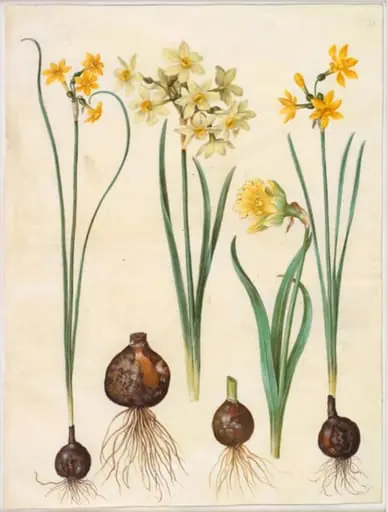 Narcissus jonquilla (siv-narcis); Narcissus tazetta aureus (guld-tazet); Narcissus pseudonarcissus bicolor (tofarvet påskelilje)
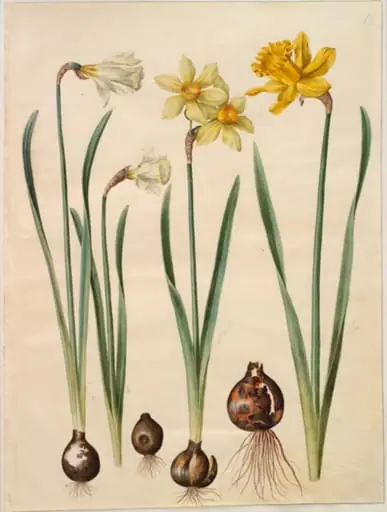 Narcissus pseudonarcissus moschatus (moskus-narcis); Narcissus ×medioluteus (toblomstret narcis); Narcissus pseudonarcissus major (stor påskelilje)
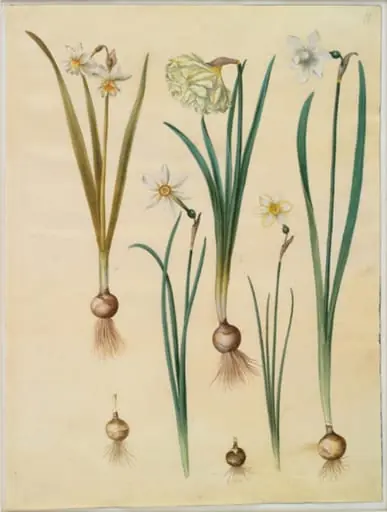 Narcissus ×medioluteus (toblomstret narcis); Narcissus pseudonarcissus; Narcissus (narcis); Narcissus poeticus (pinselilje); Narcissus ×tenuior
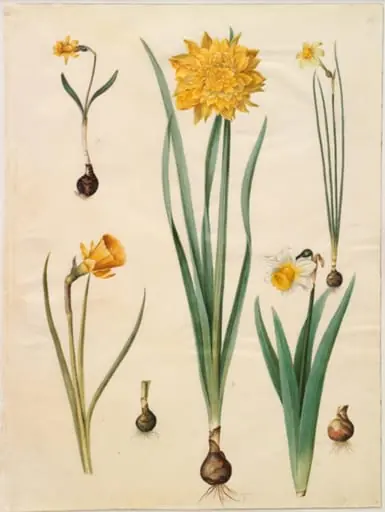 Narcissus pseudonarcissus minor; Narcissus pseudonarcissus (påskelilje); Narcissus ×tenuior; Narcissus bulbocodium (krinoline-narcis); Narcissus pseudonarcissus bicolor (tofarvet påskelilje)
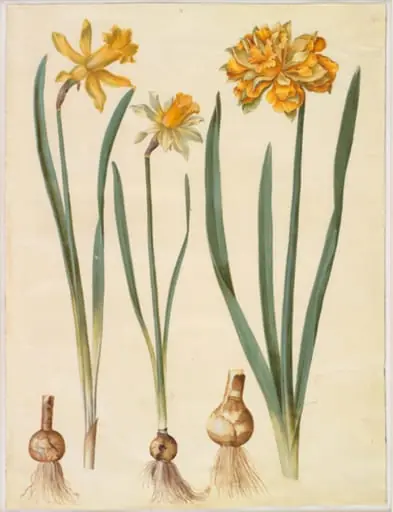 Narcissus pseudonarcissus major (stor påskelilje); Narcissus pseudonarcissus bicolor (tofarvet påskelilje); Narcissus pseudonarcissus
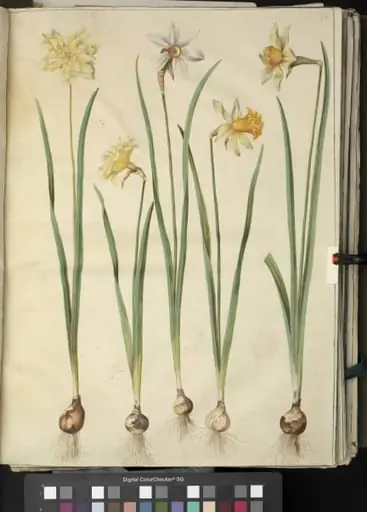 Narcissus pseudonarcissus; Narcissus poeticus (pinselilje); Narcissus ×incomparabilis (have-narcis)
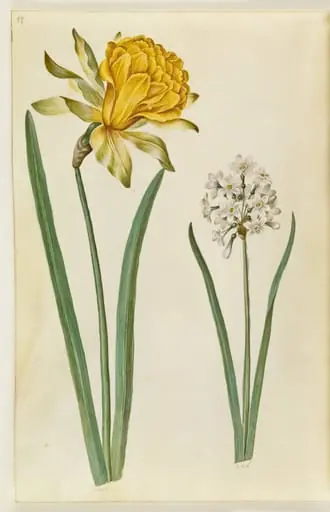 Narcissus pseudonarcissus (påskelilje); Narcissus tazetta (tazet)
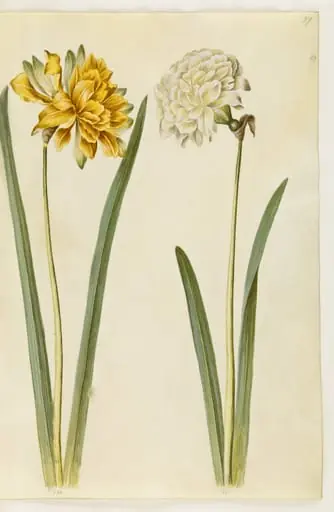 Narcissus pseudonarcissus (påskelilje)
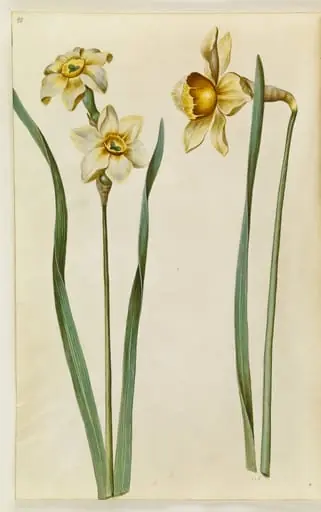 Narcissus ×medioluteus (toblomstret narcis); Narcissus ×incomparabilis (have-narcis)
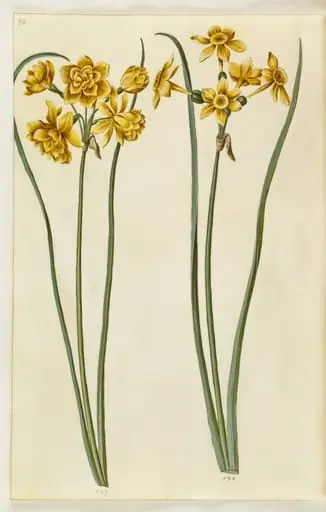 Narcissus jonquilla (siv-narcis)
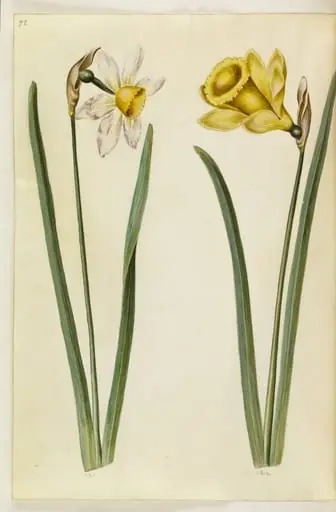 Narcissus ×incomparabilis (have-narcis); Narcissus pseudonarcissus (påskelilje)
 Narcissus pseudonarcissus moschatus (moskus-narcis); Narcissus bulbocodium (krinoline-narcis); Narcissus pseudonarcissus (påskelilje)