Artwork
Den danske eskadre under sejl på Københavns rhed
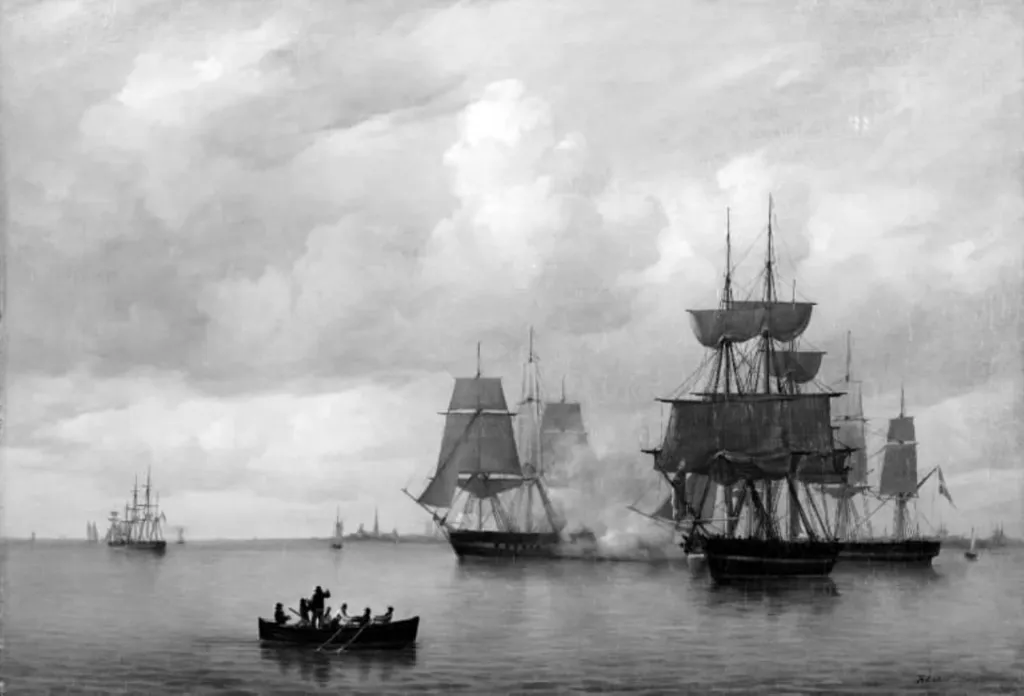
Den danske eskadre under sejl på Københavns rhed is a photography by the Romanticist artist Unknown. It dates from 1837 and is held in the collection of the Statens Museum for Kunst. Painted in 1837, this work depicts a Danish naval squadron sailing near Copenhagen’s harbor.
About this work
Overview
A small rowboat in the foreground, manned by five figures, contrasts the scale of the warships and anchors the viewer in the moment.
Painted in 1837, this work depicts a Danish naval squadron sailing near Copenhagen’s harbor. The scene captures the fleet under sail amid turbulent weather, with masts rising sharply against a leaden sky. A small rowboat in the foreground, manned by five figures, contrasts the scale of the warships and anchors the viewer in the moment. The image is held in the collection of the Museum of Ethnography, though its subject is naval rather than ethnographic.
Subject & Meaning
The painting portrays a moment of naval movement, not battle, emphasizing the fleet’s resilience against natural forces. The rowboat, perhaps a pilot or supply vessel, suggests human labor operating within the larger machinery of state power. The stormy sea and furled sails imply urgency or adaptation, evoking themes of duty and endurance rather than triumph or glory.
Technique & Style
The artist uses muted grays and deep browns to convey atmospheric tension, with loose brushwork suggesting wind and spray. Light is diffused through mist, softening the ships’ outlines and heightening the sense of motion. The composition directs the eye from the foreground boat toward the towering masts, using scale and contrast to amplify the drama without overt sentimentality.
History & Provenance
Created in 1837, the painting entered the Museum of Ethnography’s collection, though its subject lies outside the institution’s typical focus on cultural artifacts. Its presence there may reflect 19th-century institutional practices that grouped visual records of national life under broad ethnographic headings. No record of prior ownership or exhibition history is widely documented.
Context
In the 1830s, Denmark was rebuilding its naval identity after territorial losses and financial strain. Naval scenes like this one reflected national pride in maritime tradition, even during decline. Romanticism’s emphasis on nature’s power and human perseverance aligned with this mood, though the work avoids overt nationalism, favoring quiet observation over heroism.
Legacy
The painting remains a quiet document of Danish naval life in the early 19th century, valued for its atmospheric realism rather than its artistic fame. It offers insight into how maritime institutions were visually represented during a period of transition, preserving a moment when sail still dominated naval operations before steam technology transformed them.
Artist & collection

 Domestic Scene
 Giacomo and Cardinal Marco, investing Andrea, Abbot of San Zeno, with his Benefice
 The Nymph of Fontainebleau
 Portrait of a Woman
 Madonna and Child with Saints in the Enclosed Garden
 Venus and Minerva
 Family Group of Four on Sofa
 Wall painting from Room H of the Villa of P. Fannius Synistor at Boscoreale
 Slaget på Rheden den 2. april 1801
 The Harbour at Nieuwe Diep in North Holland
 Slaget på Rheden den 2. april 1801
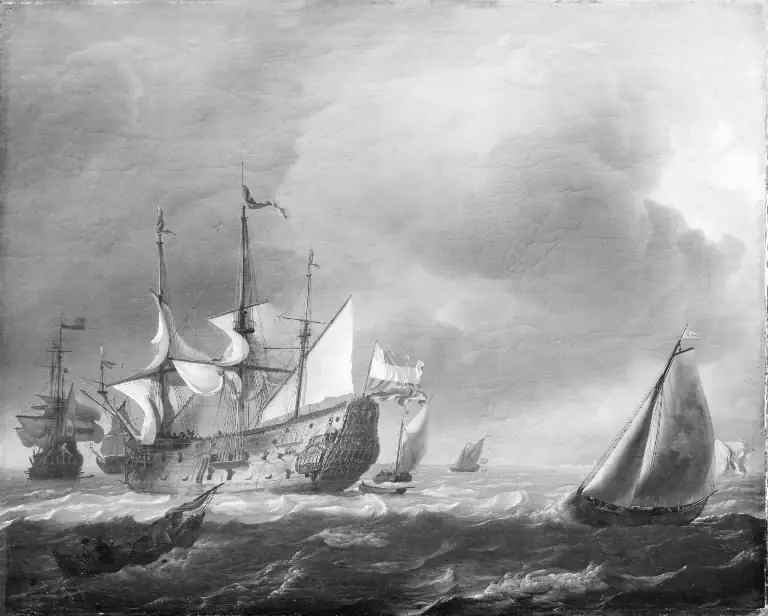 Seascape with Dutch Men-of-War and Fishing Boats
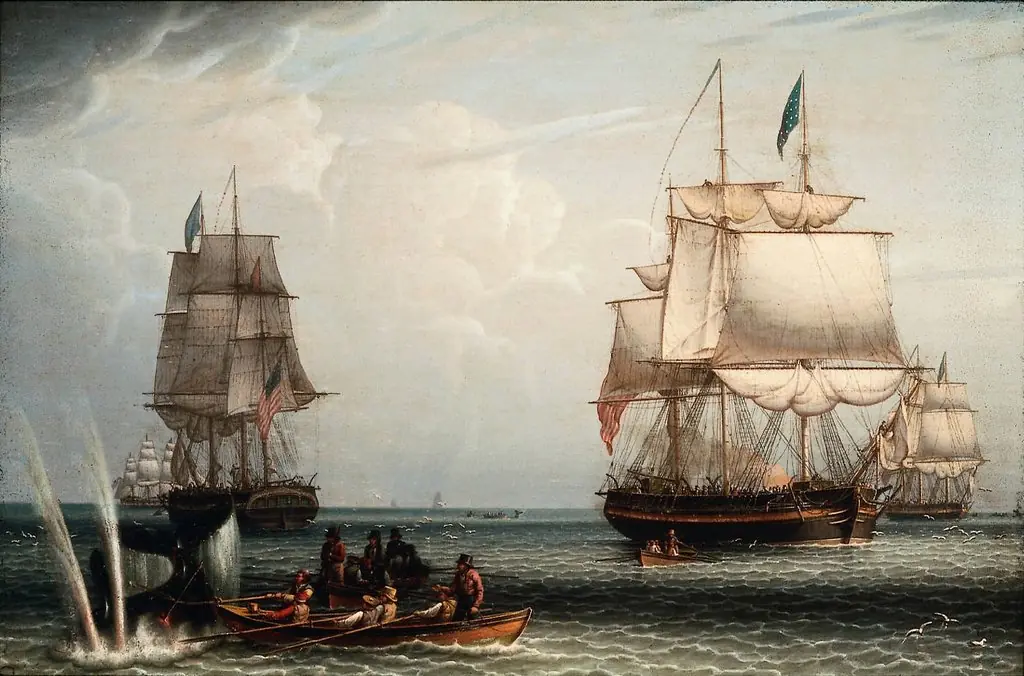 South Sea Whale Fishing II
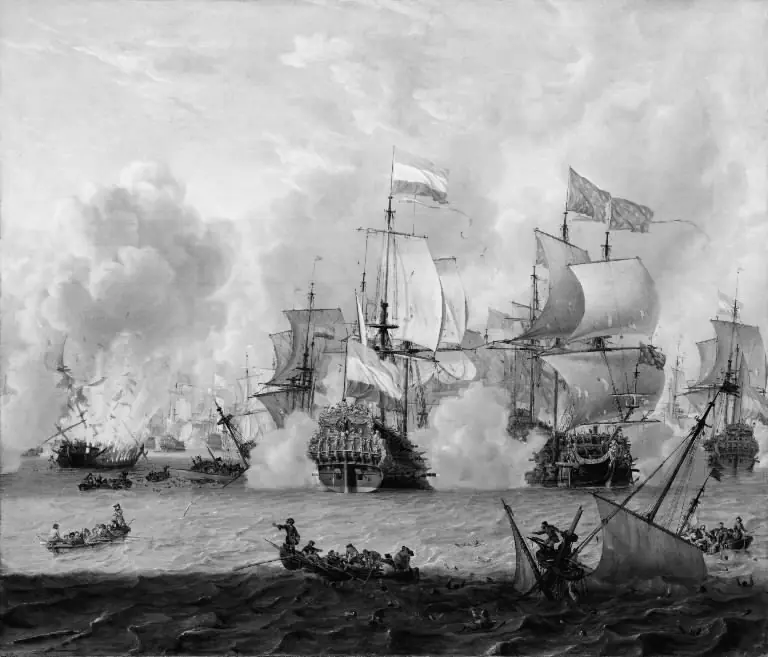 Encounter between the English and the Dutch Fleets at La Hogue 29th May 1692
 Encounter between the English and the Dutch Fleets at La Hogue 29th May 1692
 Sailing-ships in the Mouth of a River
 The Harbour at Nieuwe Diep in North Holland