Artwork
The Harbour at Nieuwe Diep in North Holland
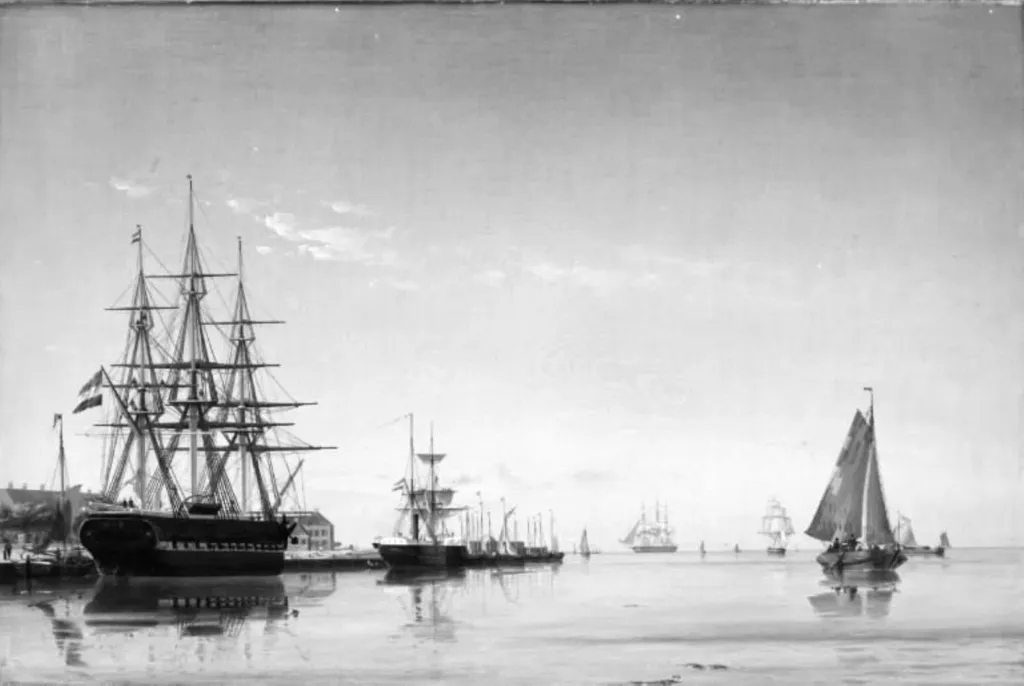
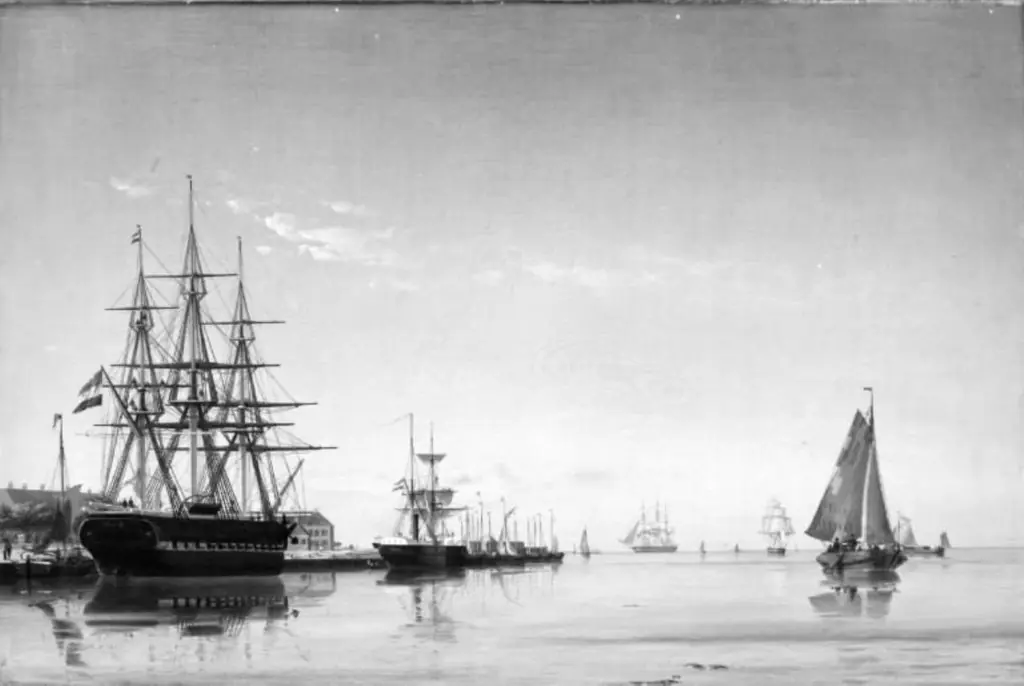
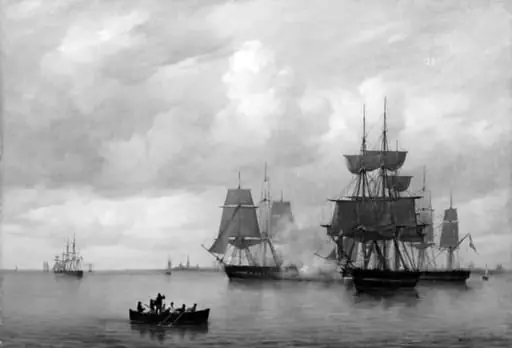
The Harbour at Nieuwe Diep in North Holland is a photography by the Impressionist artist Unknown. It dates from 1853 and is held in the collection of the Statens Museum for Kunst. Painted in 1853, this marine work captures the quiet activity of Nieuwe Diep, a harbor in North Holland.
About this work
Overview
Though often associated with later movements, the painting reflects a tradition of Dutch maritime observation rooted in realism.
Painted in 1853, this marine work captures the quiet activity of Nieuwe Diep, a harbor in North Holland. The scene centers on a large vessel at rest, its sails lowered and flags visible, surrounded by smaller boats. The composition emphasizes stillness, with calm water and a muted sky contributing to a contemplative mood. Though often associated with later movements, the painting reflects a tradition of Dutch maritime observation rooted in realism.
Subject & Meaning
The painting portrays a moment of pause in maritime life—ships idle, one vessel departing, others anchored. No human figures are present, shifting focus to the architecture of the harbor and the rhythm of the sea. The absence of drama or labor suggests an appreciation for quiet routine, perhaps reflecting the steady pace of coastal commerce in mid-19th century Holland.
Technique & Style
The artist employs a restrained palette of soft grays, blues, and earth tones to evoke atmospheric stillness. Brushwork is precise yet unobtrusive, rendering surfaces with subtle texture—water, wood, and canvas—without overt detail. Light is diffused evenly across the scene, avoiding strong contrasts, which reinforces the tranquil tone and aligns with observational traditions of Dutch landscape painting.
History & Provenance
The painting was completed in 1853 and entered the collection of the Museum of Ethnography, where it remains today. Its presence in an ethnographic institution, rather than a fine arts museum, suggests an early interest in documenting everyday maritime culture as part of regional life. The artist’s identity, though recorded as 550_person in some sources, remains unverified in scholarly records.
Context
In the mid-1800s, Dutch artists increasingly turned to coastal scenes as industrialization reshaped the nation’s economy. Nieuwe Diep, a working harbor, was a common subject for painters seeking to record the transition from sail to steam. This work reflects a broader trend of documenting maritime infrastructure with quiet precision, before the rise of Impressionist light studies.
Legacy
Though not widely exhibited outside its current institution, the painting contributes to a lesser-known body of Dutch marine works that prioritize atmosphere over spectacle. Its inclusion in an ethnographic collection underscores its value as a record of daily life, offering insight into the visual culture of 19th-century coastal communities without romanticizing their labor.
Artist & collection

 Domestic Scene
 Giacomo and Cardinal Marco, investing Andrea, Abbot of San Zeno, with his Benefice
 The Nymph of Fontainebleau
 Portrait of a Woman
 Madonna and Child with Saints in the Enclosed Garden
 Venus and Minerva
 Family Group of Four on Sofa
 Wall painting from Room H of the Villa of P. Fannius Synistor at Boscoreale
 Evening. Amsterdam in the background
 Bay and Harbor of New York from Bedlow's Island
 View of New York from Hoboken
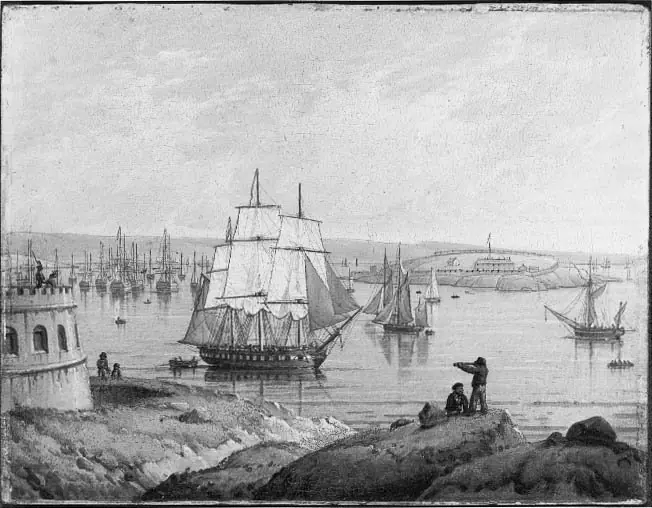 Plimouth Sound
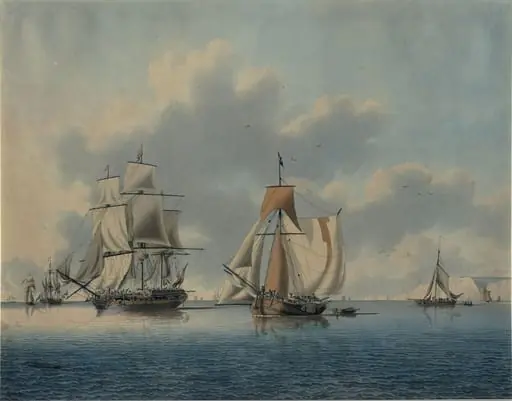 A frigate and Dutch fishing boats off the Isle of Wight
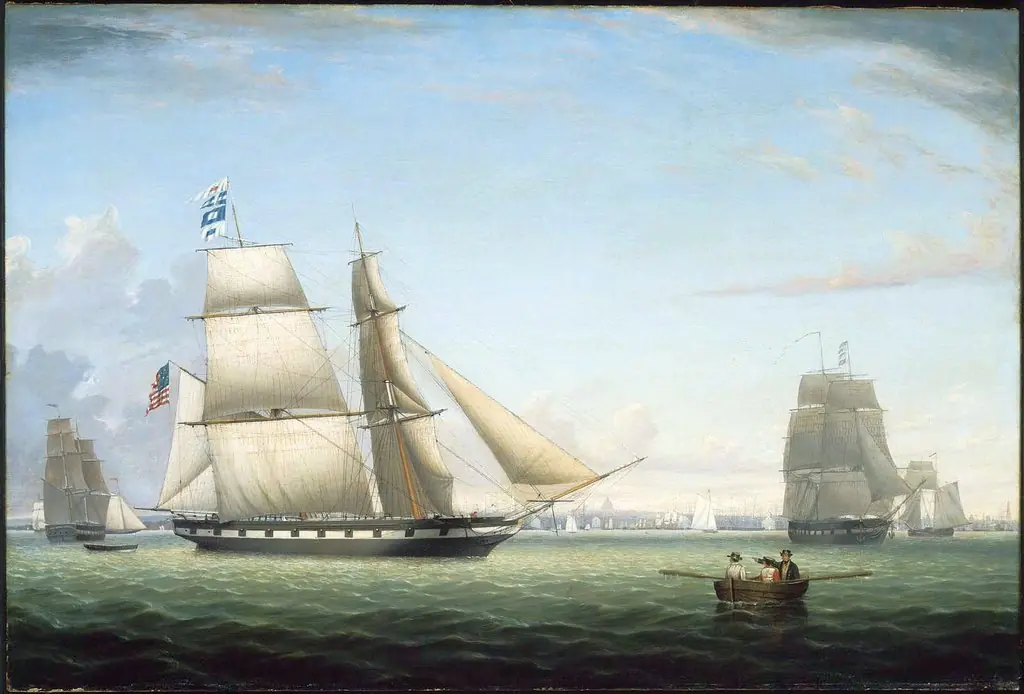 Brig "Antelope" in Boston Harbor
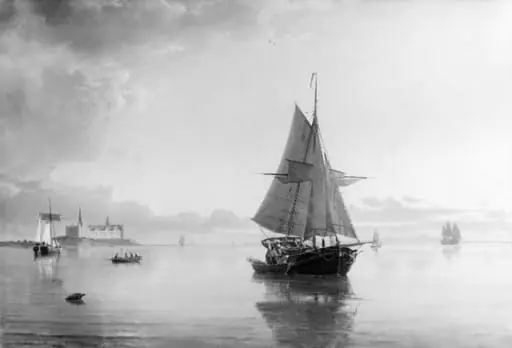 An Early Summer Morning in the Roads of Elsinore
 Ships by a Wharf
 River with Shipping
 The New Ship "Duncan"
 The Harbour at Nieuwe Diep in North Holland
 Den danske eskadre under sejl på Københavns rhed