Artwork
The Eruption of the Great Geyser in Iceland in 1834
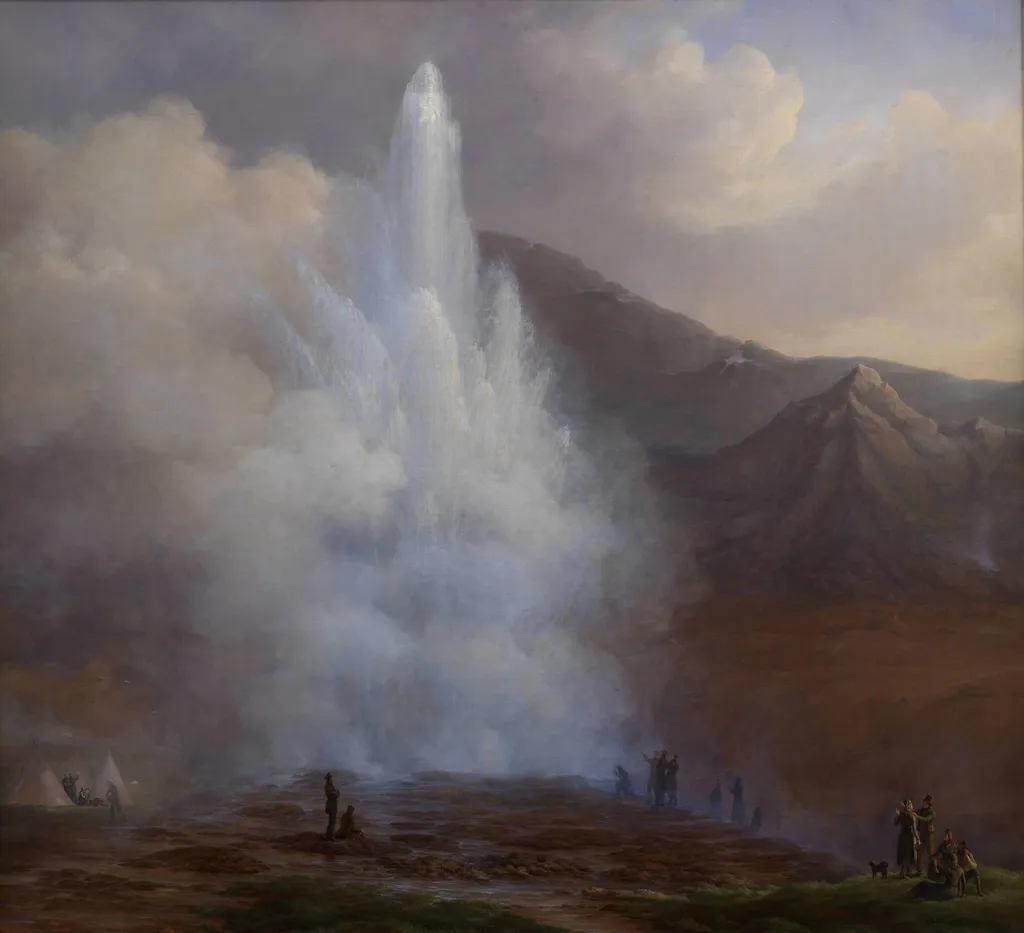
The Eruption of the Great Geyser in Iceland in 1834 is a photography by the Romanticist artist Unknown. It dates from 1835 and is held in the collection of the Statens Museum for Kunst. Painted in 1835, this work depicts the violent eruption of a geothermal spring in Iceland, observed during a rare natural event.
About this work
Overview
Painted in 1835, this work depicts the violent eruption of a geothermal spring in Iceland, observed during a rare natural event. The artist captured the moment with attention to atmospheric detail and human reaction. It resides in the Museum of Ethnography, where it serves as both a record of natural phenomena and an example of 19th-century European engagement with remote landscapes.
Subject & Meaning
Figures in the foreground, small in scale, gaze upward in quiet astonishment, emphasizing nature’s power over human presence.
The scene centers on a towering plume of steam and water, rising from the earth amid a barren Icelandic terrain. Figures in the foreground, small in scale, gaze upward in quiet astonishment, emphasizing nature’s power over human presence. The composition suggests reverence for the sublime forces of the natural world, reflecting a broader cultural fascination with untamed environments during the early 1800s.
Technique & Style
The painting employs a restrained palette of grays, browns, and muted whites, enhancing the austere atmosphere of the Icelandic landscape. Brushwork is controlled yet expressive, particularly in rendering the geyser’s rising vapor and the diffuse light filtering through overcast skies. The dramatic contrast between the white plume and the dark earth aligns with Romantic tendencies to evoke awe through natural spectacle.
History & Provenance
Created shortly after the 1834 eruption, the painting likely stems from firsthand accounts or sketches made by travelers to Iceland. It entered the Museum of Ethnography’s collection in the 19th century, possibly as part of a broader effort to document global natural phenomena. Its preservation reflects institutional interest in visual records of non-European environments during the age of exploration.
Context
In the 1830s, European audiences were increasingly captivated by distant lands and their dramatic geologies. Iceland, long mythologized in Northern lore, became a symbol of primal nature. This work aligns with scientific curiosity and Romantic aesthetics, where nature was neither merely picturesque nor domesticated, but formidable and spiritually significant.
Legacy
Though not widely reproduced, the painting contributes to a visual archive of early scientific observation through art. It stands as a quiet testament to how natural events were interpreted before modern photography, blending empirical detail with emotional resonance. Its presence in an ethnographic museum underscores its role as cultural documentation rather than purely decorative art.
Artist & collection

 Domestic Scene
 Giacomo and Cardinal Marco, investing Andrea, Abbot of San Zeno, with his Benefice
 The Nymph of Fontainebleau
 Portrait of a Woman
 Madonna and Child with Saints in the Enclosed Garden
 Venus and Minerva
 Family Group of Four on Sofa
 Wall painting from Room H of the Villa of P. Fannius Synistor at Boscoreale
 The Eruption of the Great Geyser in Iceland in 1834
 Eruption of the Volcano Vesuvius
 Eruption of the Volcano Vesuvius, 1820
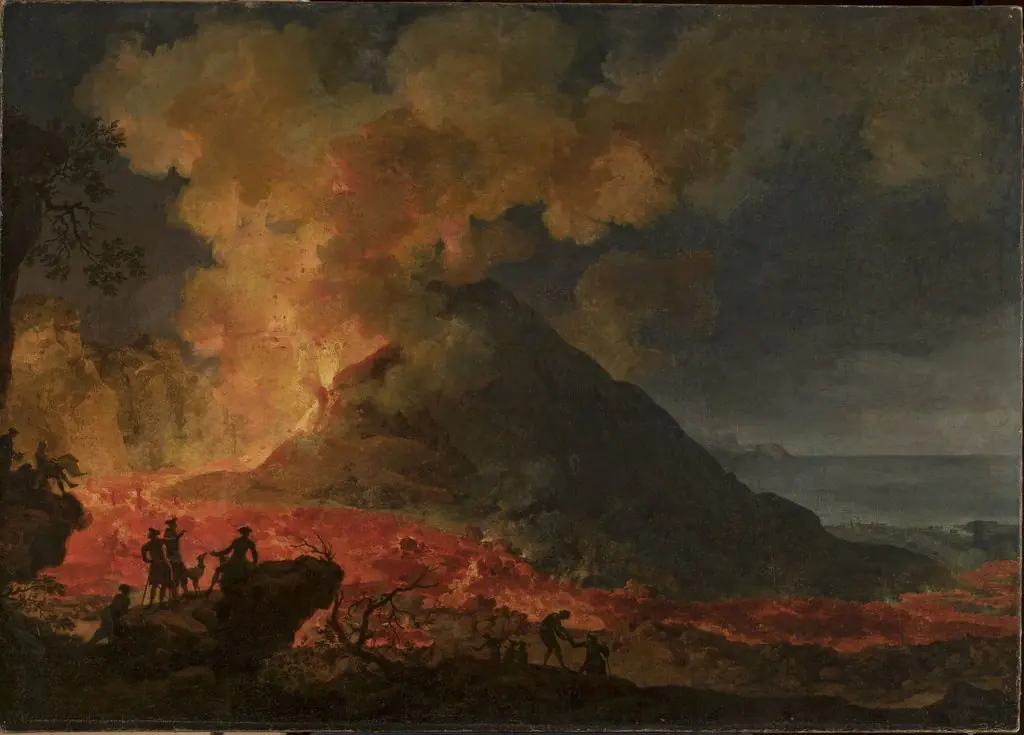 Eruption of Vesuvius
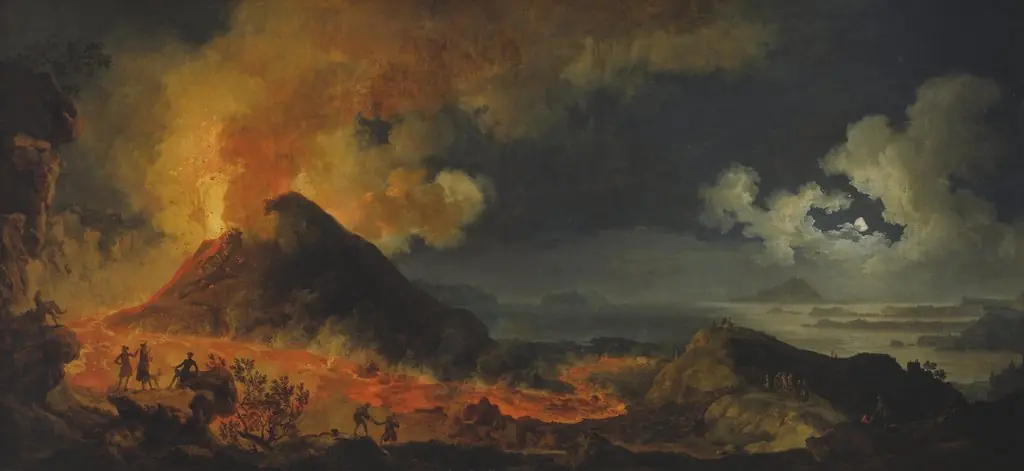 The Eruption of Vesuvius
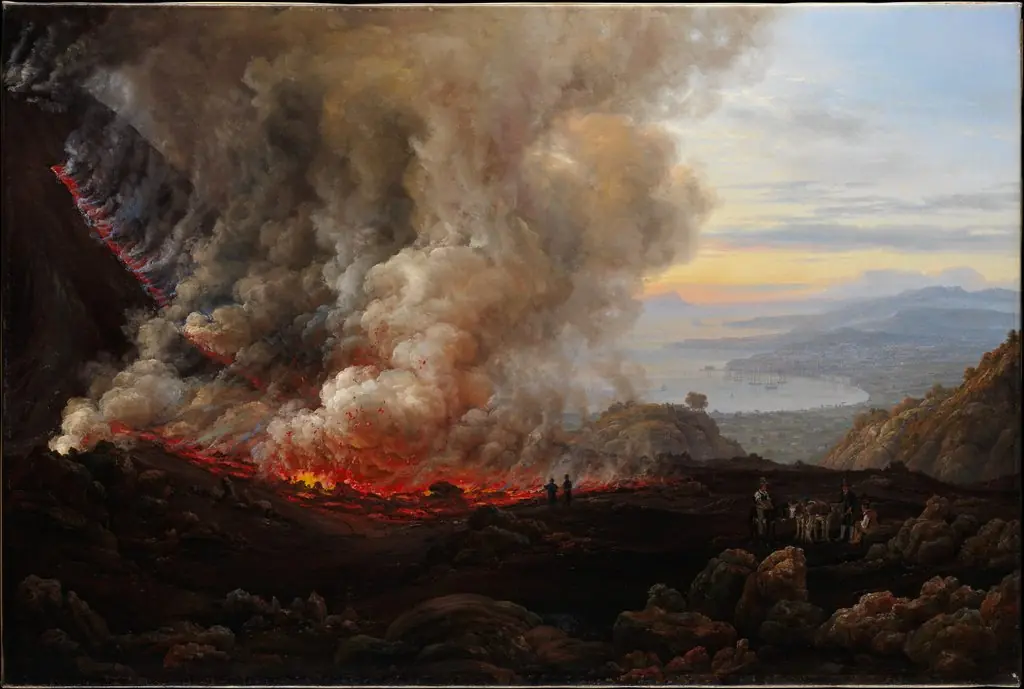 An Eruption of Vesuvius
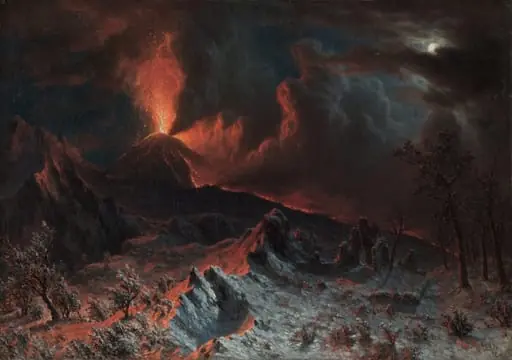 Mount Vesuvius at Midnight
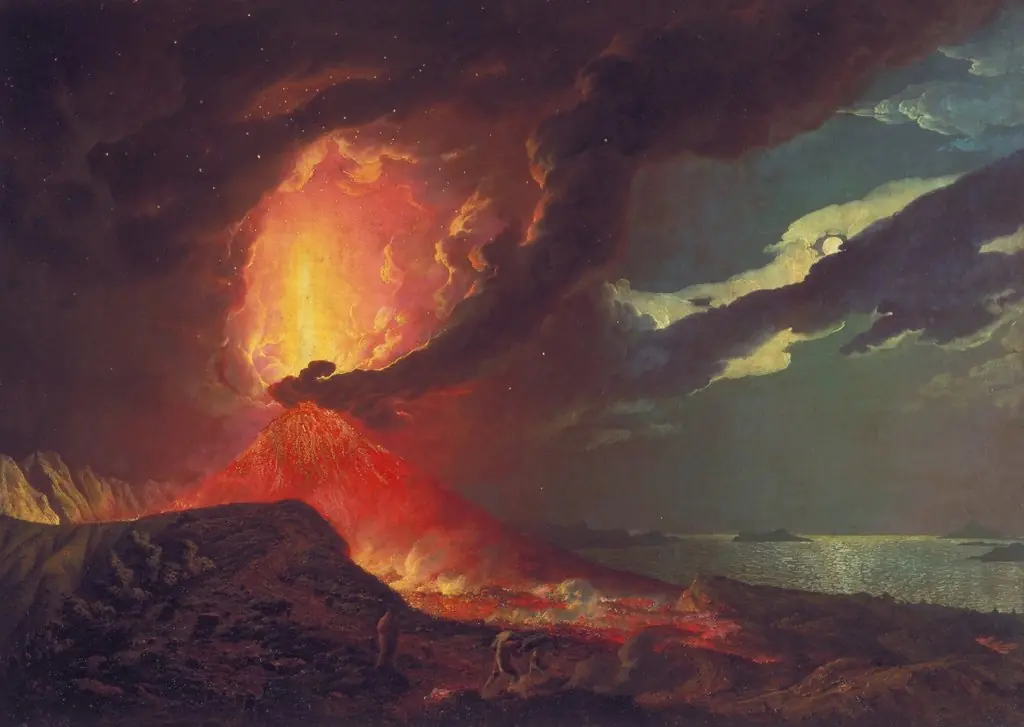 Vesuvius in Eruption, with a View over the Islands in the Bay of Naples
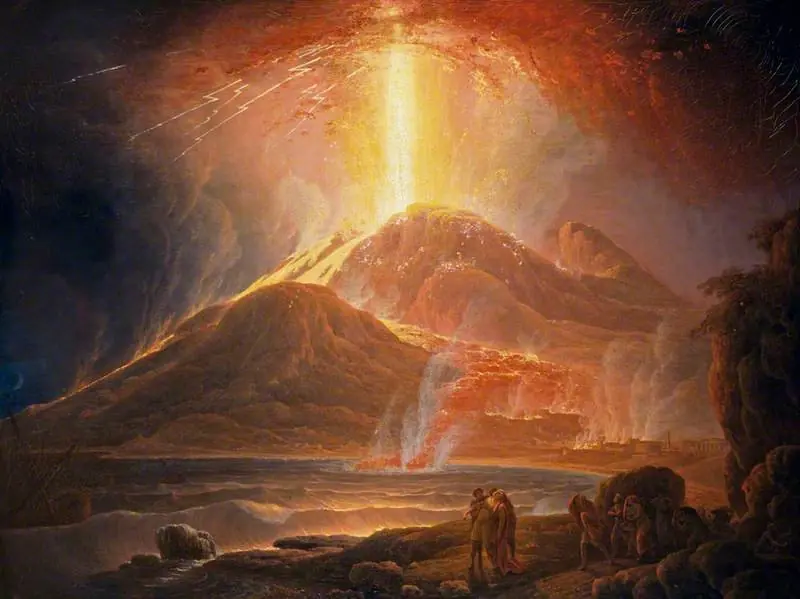 Mount Vesuvius in Eruption
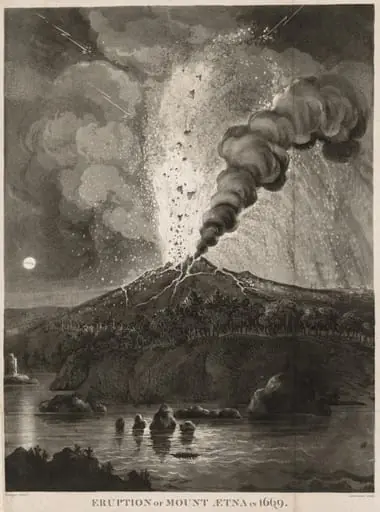 Eruption of Mount Aetna in 1669
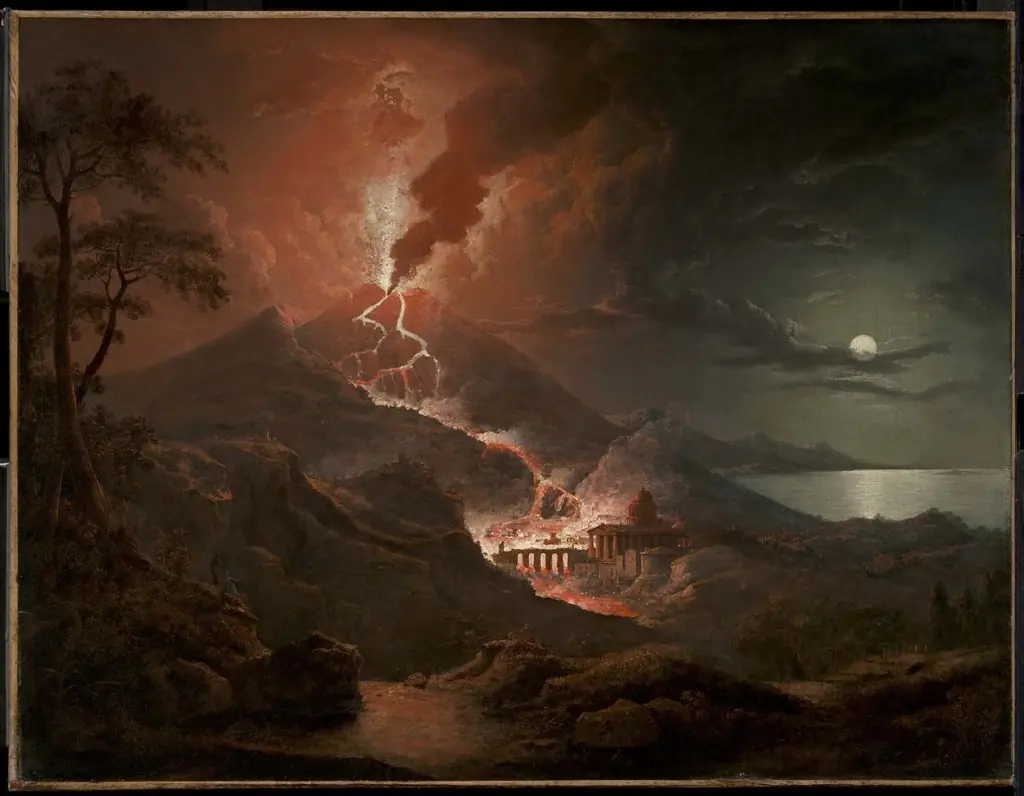 Eruption of Vesuvius with Destruction of a Roman City
 Vesuvius in Eruption, Italy