Artwork
Eruption of Mount Aetna in 1669
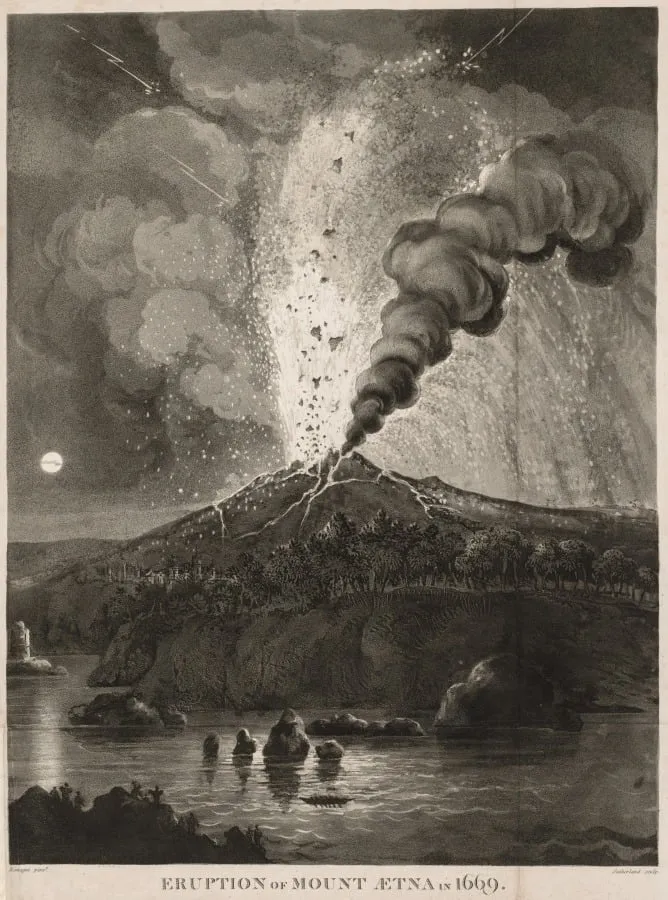
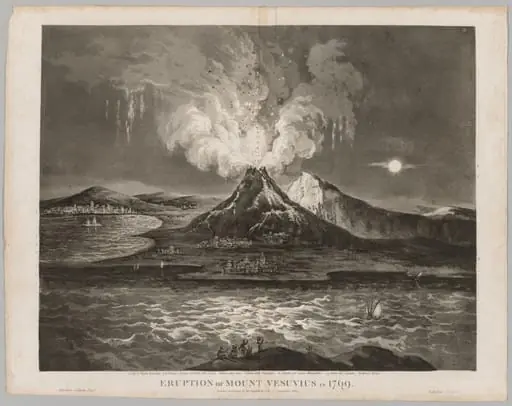
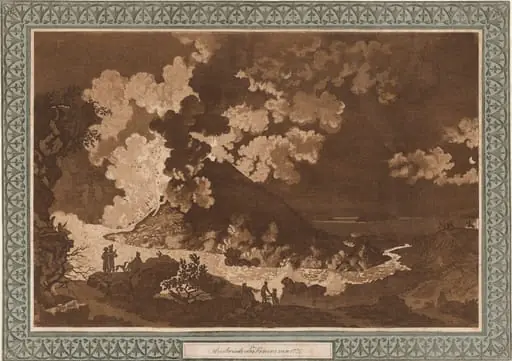
Eruption of Mount Aetna in 1669 is a print by the Romanticist artist Thomas Sutherland. It dates from 1809 and is held in the collection of the Cleveland Museum of Art. The print portrays the 1669 eruption of Mount Etna, showing a nocturnal blaze of lava flowing down dark slopes under a sky filled with ash.
About this work
Look up how artists used chiaroscuro—the contrast of light and shadow—to make scenes like this feel alive.
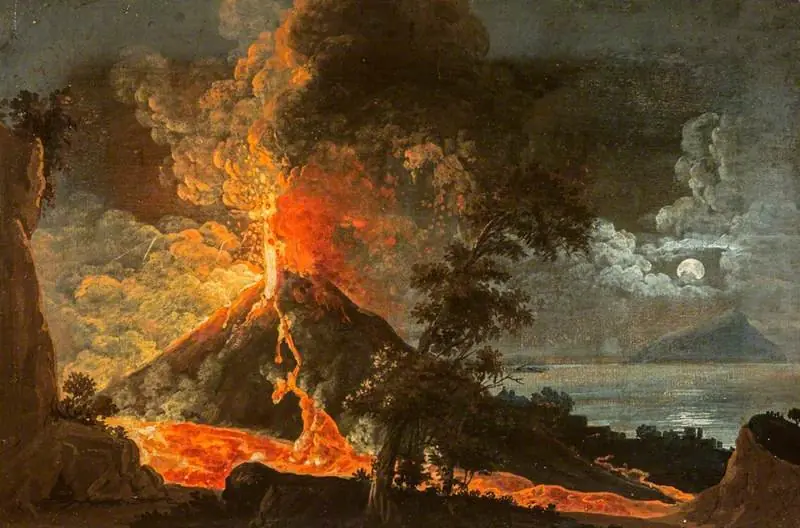
You see a fiery mountain exploding at night, rivers of lava glowing red against dark hills.
This painting shows Mount Etna in 1669, but Sutherland painted it over a century later. He never saw the eruption—he worked from old traveler accounts and sketches. The drama feels real, but it’s imagined.
Look up how artists used chiaroscuro—the contrast of light and shadow—to make scenes like this feel alive.
Overview
The print portrays the 1669 eruption of Mount Etna, showing a nocturnal blaze of lava flowing down dark slopes under a sky filled with ash. Though the scene appears immediate, the image was created long after the event, relying on written travelogues and earlier sketches rather than direct observation.
Subject & Meaning
The work captures the volatile power of volcanic activity, reflecting Enlightenment fascination with natural phenomena. By dramatizing the eruption, it conveys both the awe inspired by such forces and the emerging scientific curiosity about their causes, echoing contemporary debates among philosophers and naturalists.
Technique & Style
Executed in aquatint, the print exploits a broad tonal spectrum, using deep shadows and bright highlights to suggest molten rock and billowing smoke. The contrast of dark paper and luminous white areas creates a chiaroscuro effect that heightens the sense of movement and danger within the volcanic landscape.
History & Provenance
Created by the British printmaker James Sutherland in the late 18th century, the image was produced more than a hundred years after the Etna eruption it depicts. Sutherland never witnessed the event; his composition derives from travelers’ reports and earlier visual records, illustrating the period’s reliance on secondary sources for distant spectacles.
Context
The print belongs to a broader European trend of representing volcanic eruptions, spurred by the 1700s eruptions of Etna and Vesuvius and the archaeological revelations at Herculaneum and Pompeii. Such images catered to a public eager for dramatic natural scenes that also served as visual material for scientific inquiry.
Artist & collection
Artist
Thomas Sutherland (1785–1838) was a British engraver and aquatinter. As well as contributing illustrations to Rudolf Ackermann's The Microcosm of London, he also produced a series of prints based on the Peninsular War.

 Eruption of Vesuvius
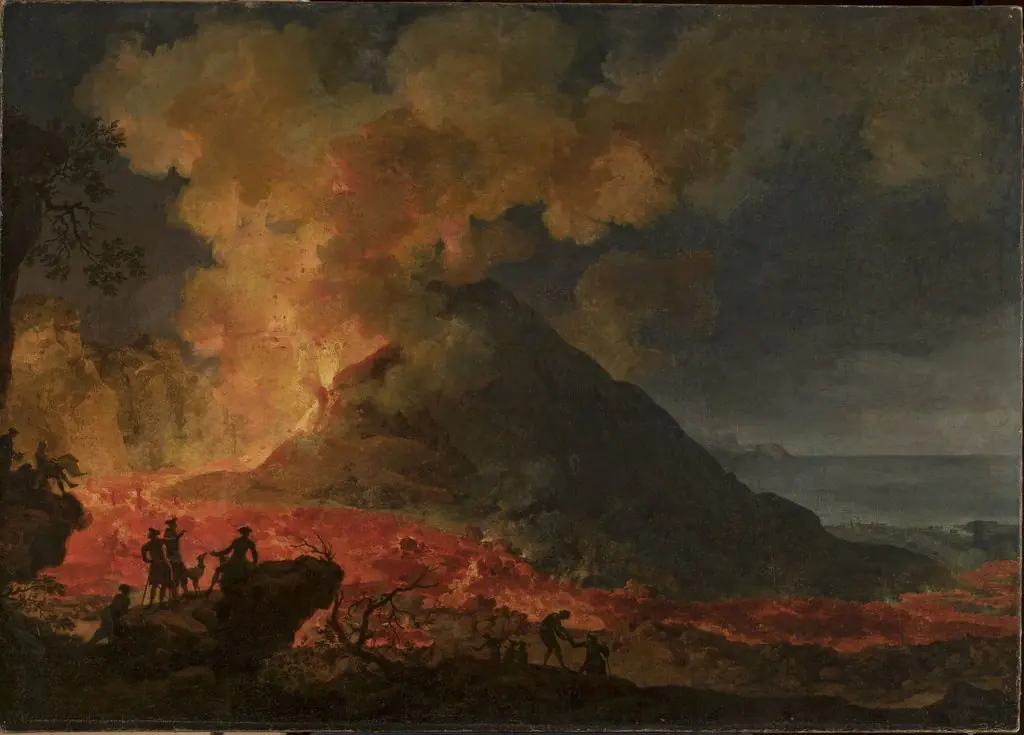 Eruption of Vesuvius
 The Eruption of Vesuvius
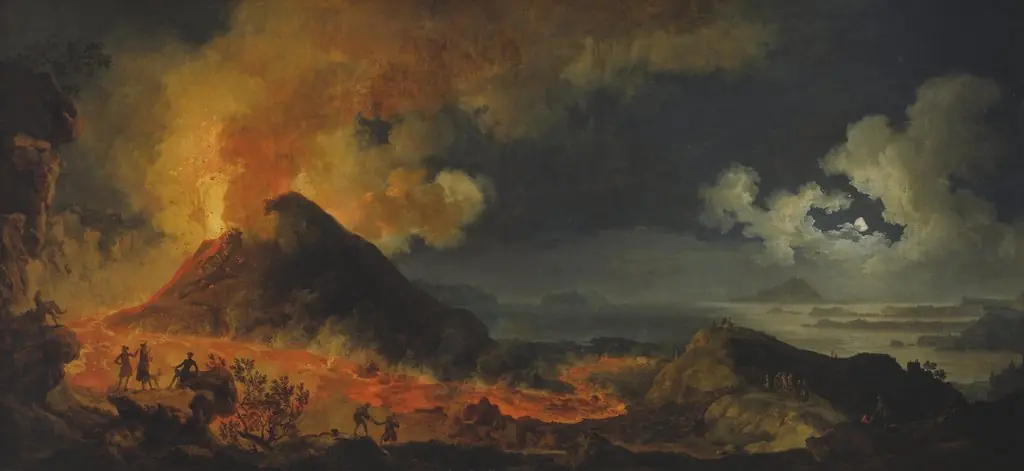 The Eruption of Vesuvius
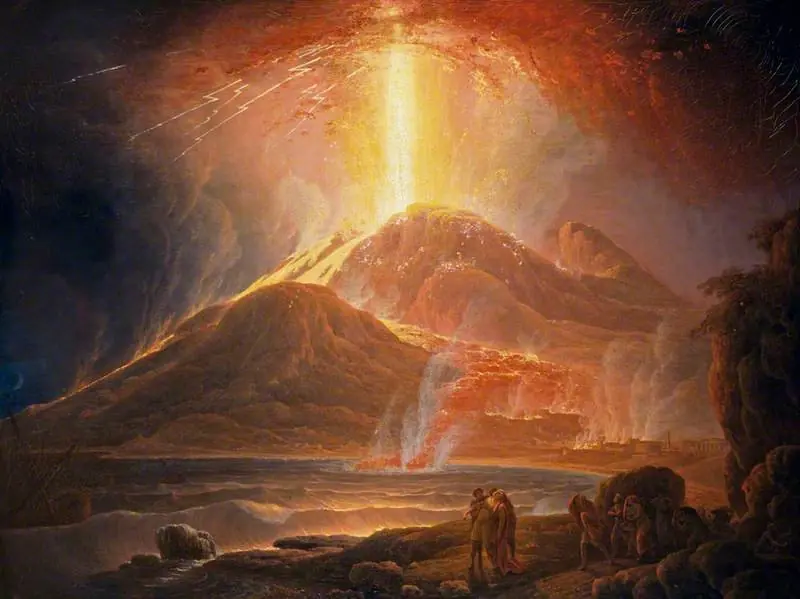 Mount Vesuvius in Eruption
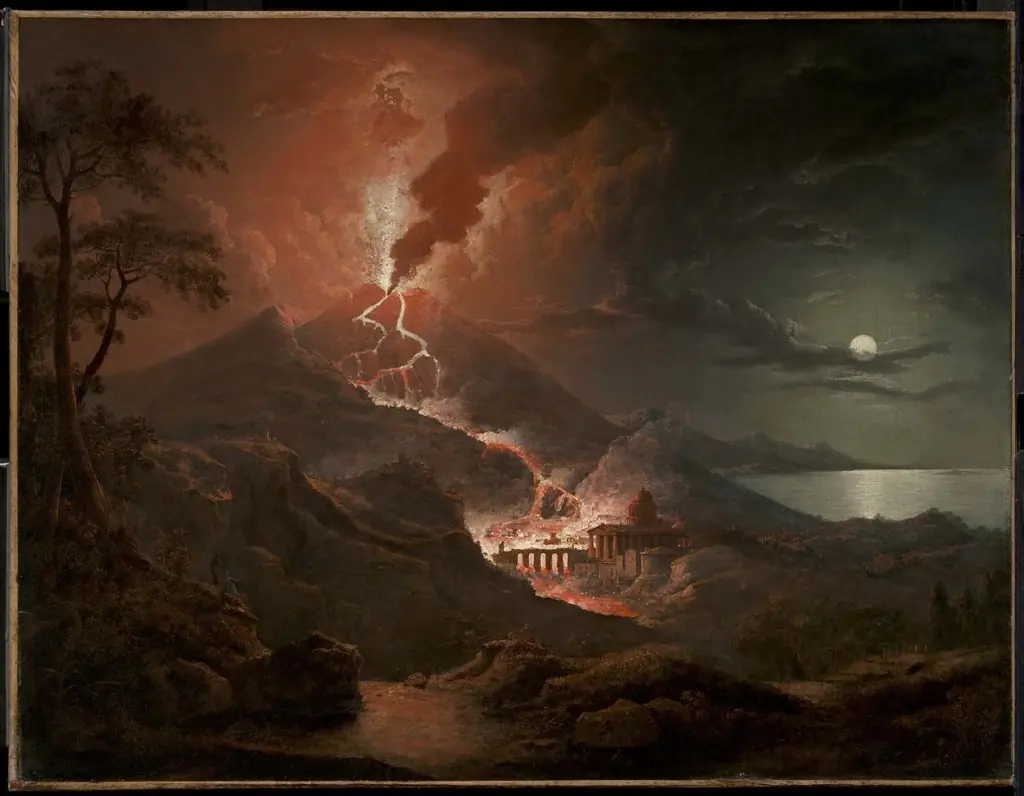 Eruption of Vesuvius with Destruction of a Roman City
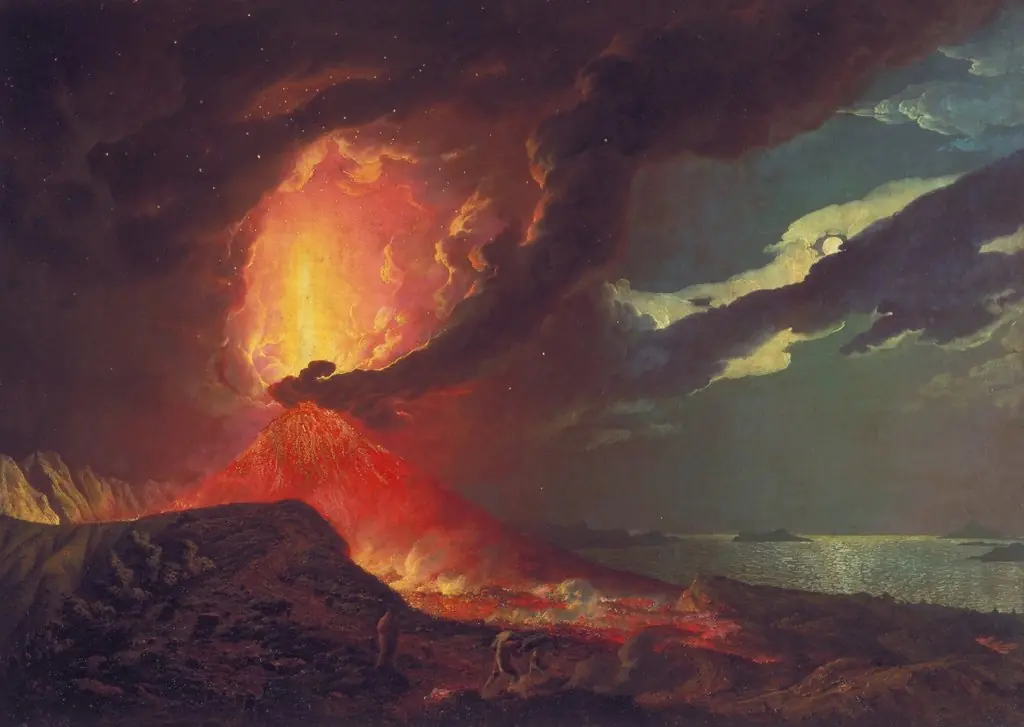 Vesuvius in Eruption, with a View over the Islands in the Bay of Naples
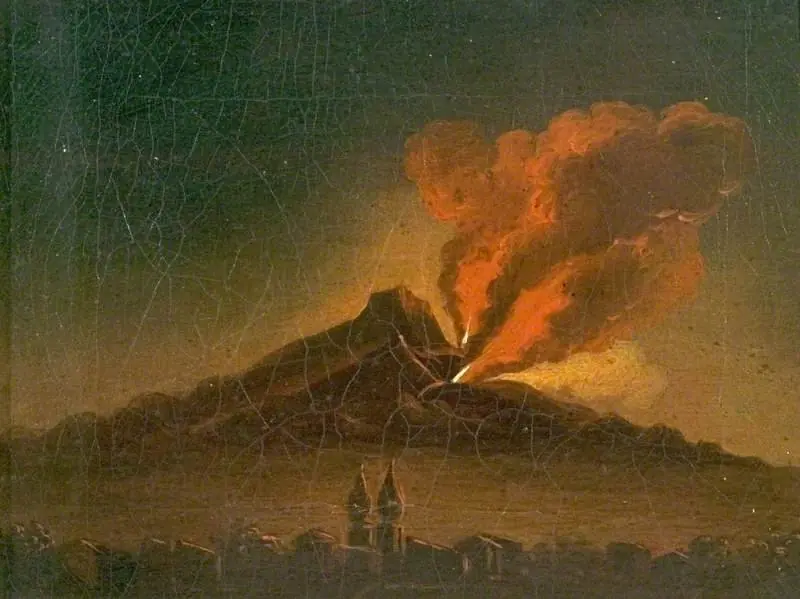 Vesuvius in Eruption, Italy
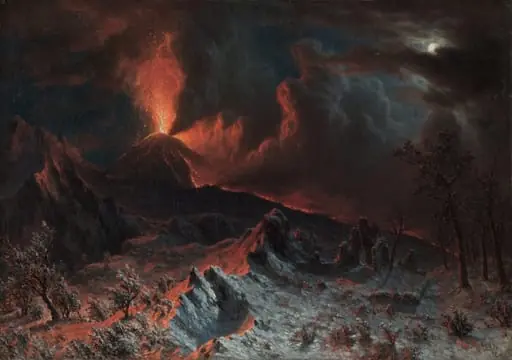 Mount Vesuvius at Midnight
 Vesuvausbruch von 1771 (The Eruption of Mount Vesuvius in 1771)
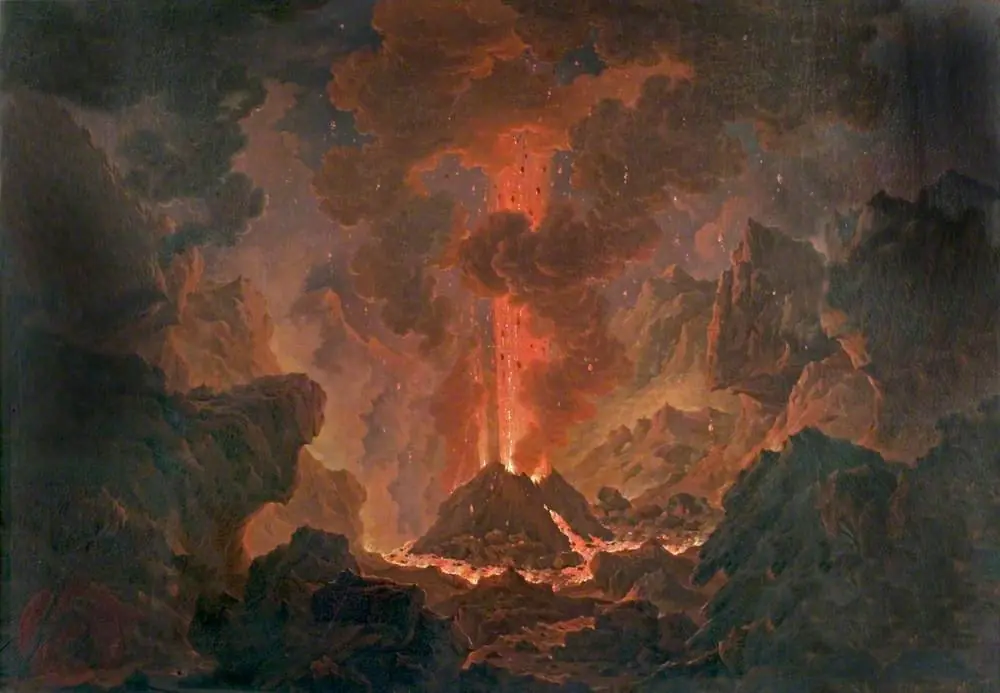 Vesuvius in Eruption, Italy