Artwork
Mountain Landscape with a Watermill and Castle Ruins
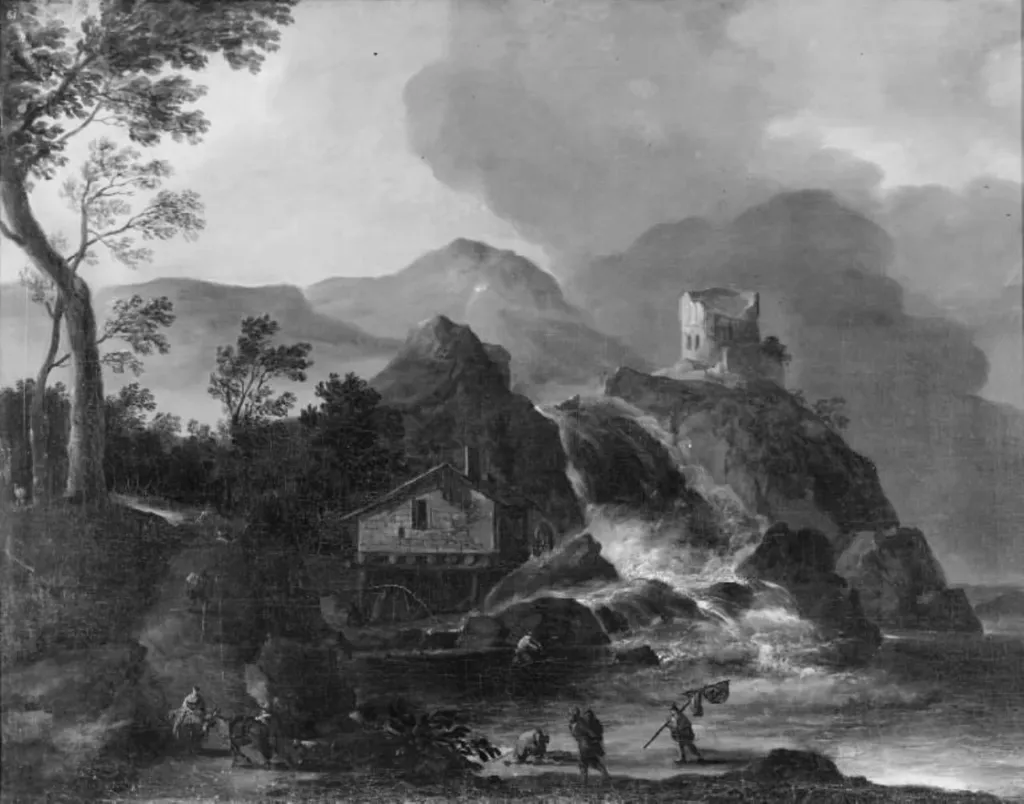
Mountain Landscape with a Watermill and Castle Ruins is an unspecified painting by Unknown. It dates from 1676 and is held in the collection of the Statens Museum for Kunst.
About this work
Overview
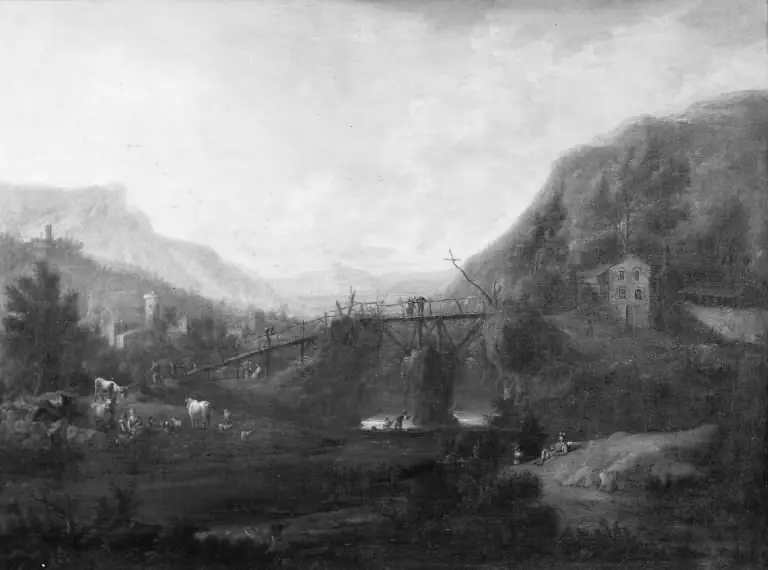
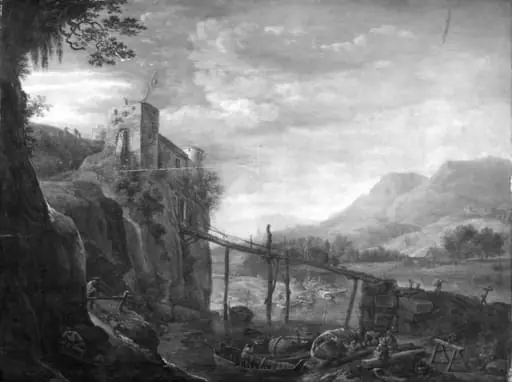
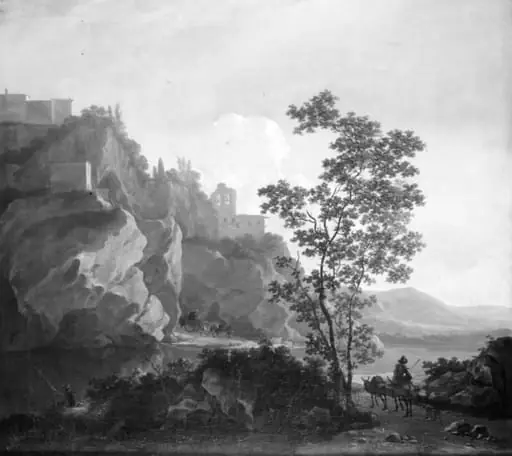
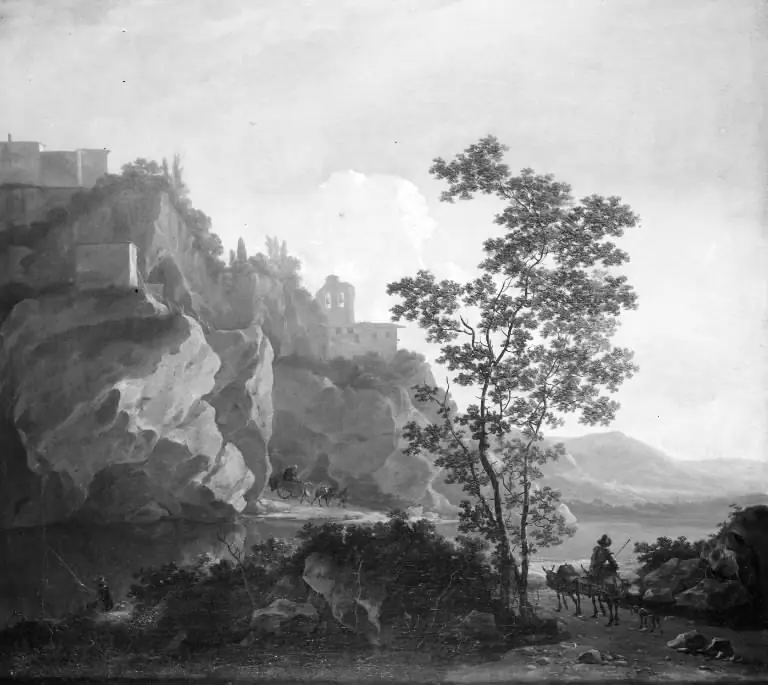
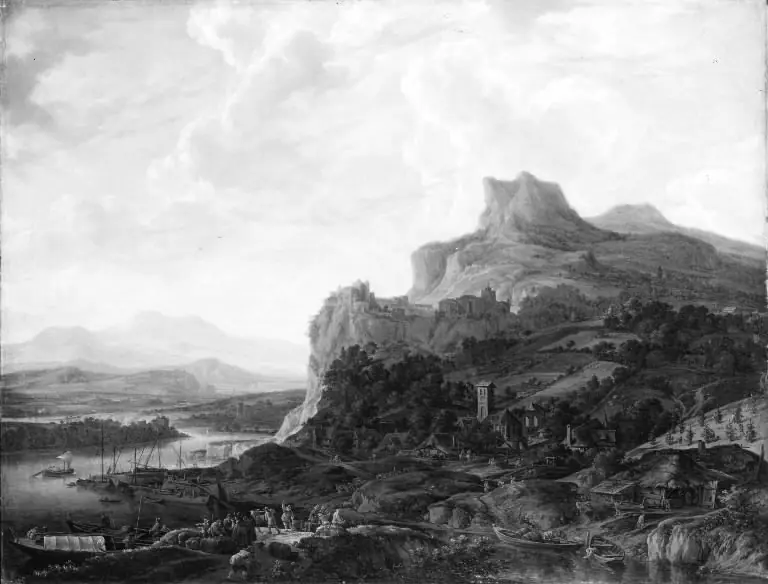
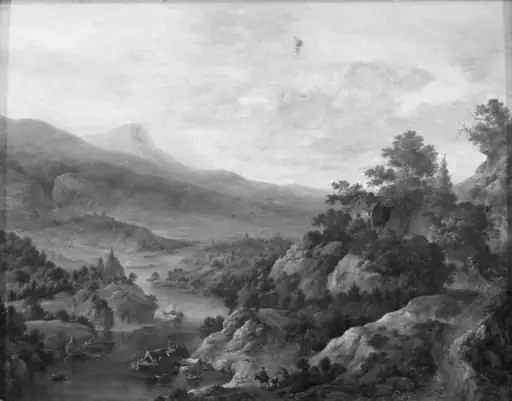
Painted around 1676, this landscape depicts a secluded mountain valley with a watermill and the remnants of a castle perched on a distant cliff.
Painted around 1676, this landscape depicts a secluded mountain valley with a watermill and the remnants of a castle perched on a distant cliff. The scene is rendered in muted tones, with dark foliage and rocky outcrops contrasting against a soft, overcast sky. It is currently held in the collection of the Museum of Ethnography, though its origins lie outside the museum’s typical ethnographic focus.
Subject & Meaning
The composition centers on quiet human presence: two figures near a riverbank, one holding a faded flag, the other resting on a staff. The castle ruins and weathered mill suggest a past of activity now abandoned. The flag, worn and low in the frame, may hint at lost identity or forgotten authority, while the stillness of the scene invites contemplation of time’s erosion on human endeavors.
Technique & Style
The artist employs a restrained palette dominated by grays and deep browns, with minimal color variation. Forms are simplified, and textures are suggested rather than detailed, emphasizing mood over precision. The use of dark foreground elements against a pale sky creates a sense of depth and quiet tension, aligning with northern European landscape traditions of the period.
History & Provenance
The painting’s early history is undocumented, and its transition to the Museum of Ethnography remains unclear. It was likely acquired in the late 19th or early 20th century, possibly as part of a broader collection of European topographical works. Its classification within an ethnographic institution raises questions about its intended cultural interpretation.
Context
Created during a period when landscape painting in northern Europe increasingly emphasized atmosphere and solitude, this work reflects a shift from idealized scenery to more introspective, even melancholic views. The inclusion of ruins and a lone flag aligns with broader cultural interests in memory and decay, common in post-war regions of Central Europe.
Legacy
Though not widely exhibited or studied, the painting contributes to a quieter strand of 17th-century landscape art that values implication over narrative. Its placement in an ethnographic museum, rather than a fine arts collection, has encouraged alternative readings focused on cultural memory, subtly expanding its interpretive scope beyond traditional art historical frameworks.
Artist & collection

 Domestic Scene
 Giacomo and Cardinal Marco, investing Andrea, Abbot of San Zeno, with his Benefice
 The Nymph of Fontainebleau
 Portrait of a Woman
 Madonna and Child with Saints in the Enclosed Garden
 Venus and Minerva
 Family Group of Four on Sofa
 Wall painting from Room H of the Villa of P. Fannius Synistor at Boscoreale