Artwork
Landscape by the Rhine
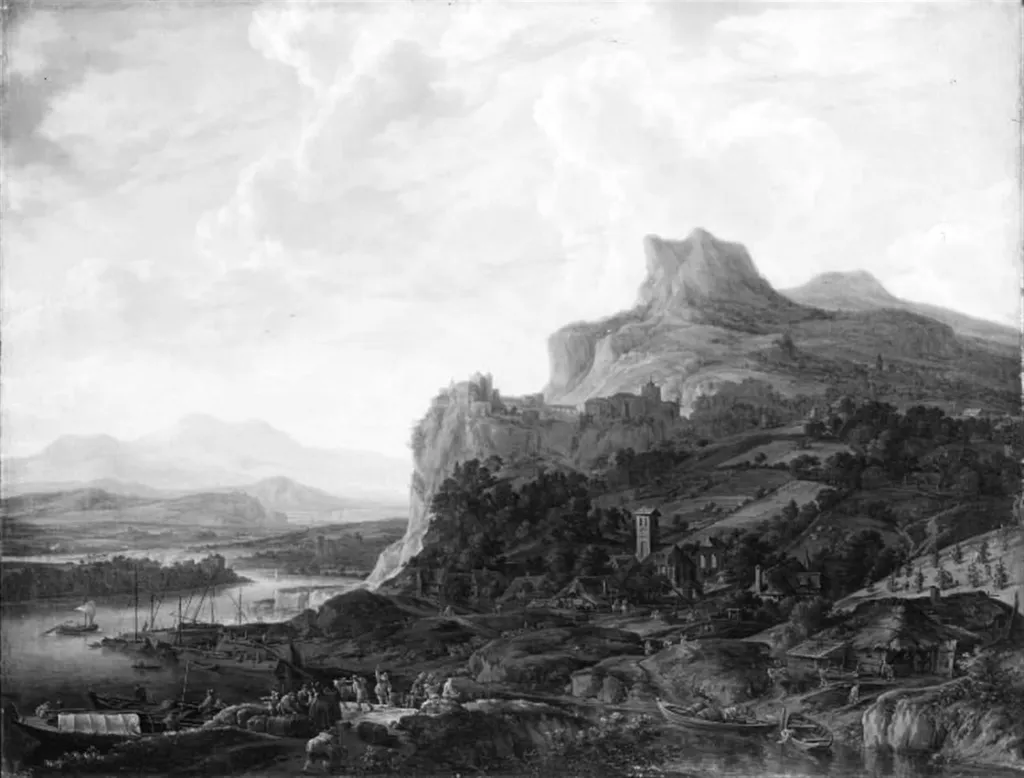
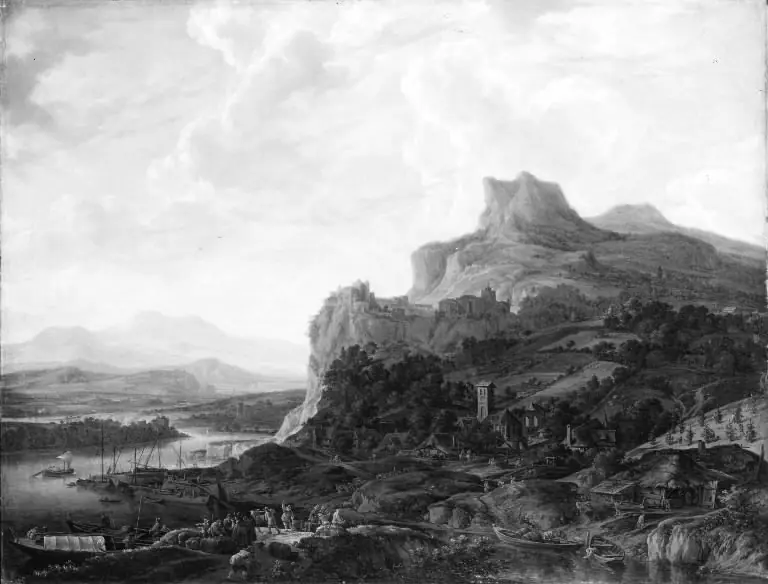
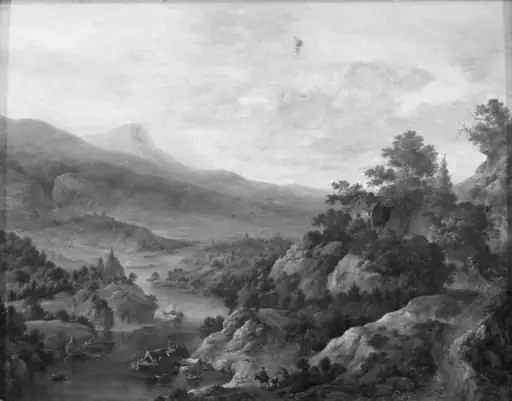
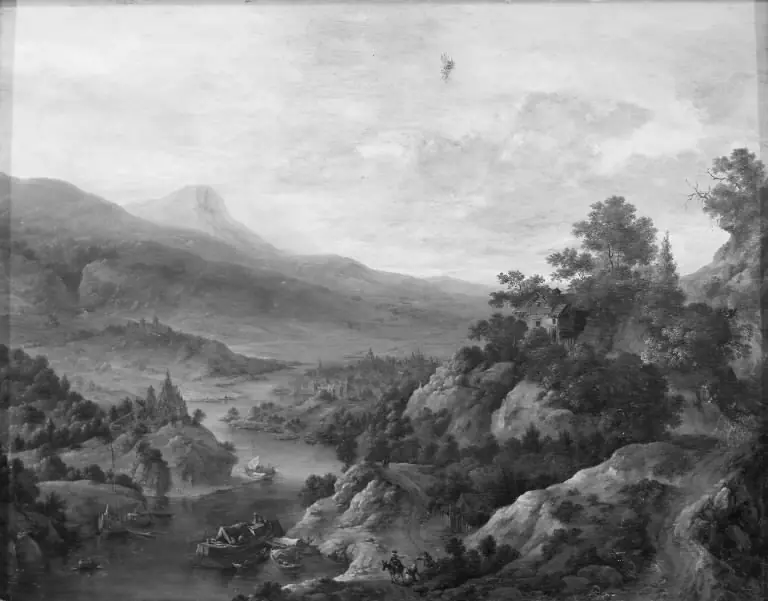
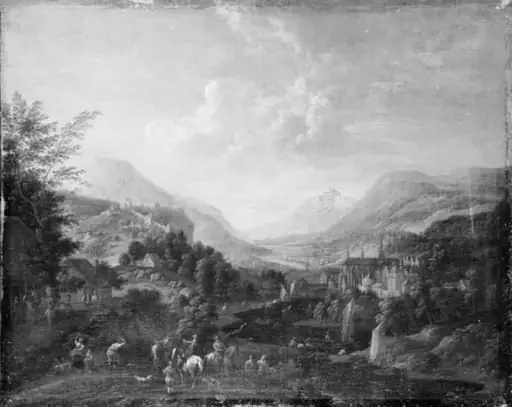
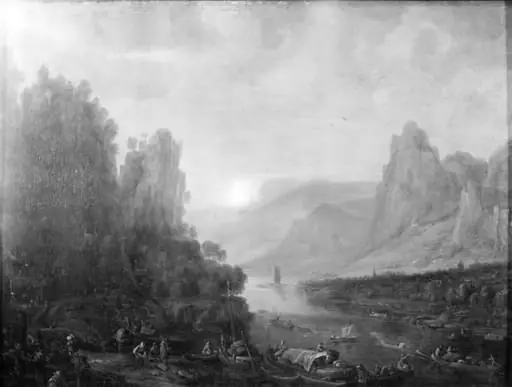
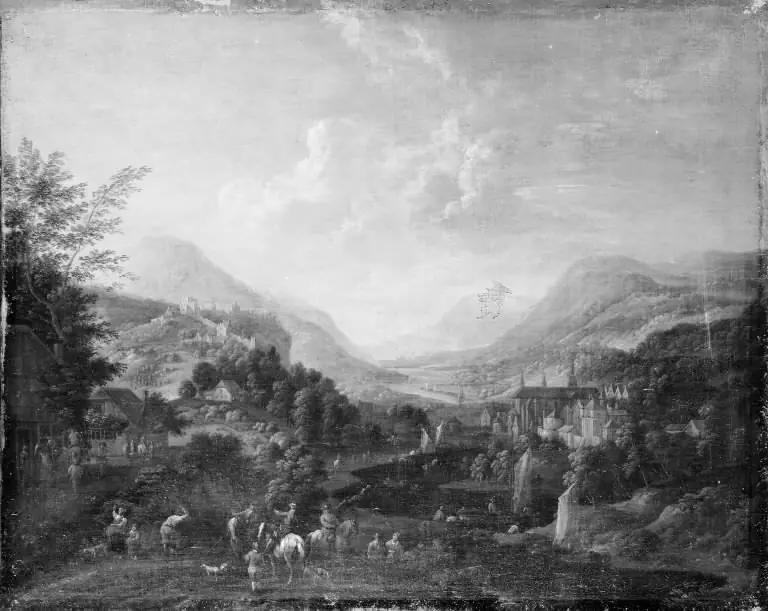
Landscape by the Rhine is an unspecified painting by Unknown. It dates from 1654 and is held in the collection of the Statens Museum for Kunst. Created around 1654, this landscape depicts a stretch of the Rhine River flanked by rolling hills and wooded slopes.
About this work
Overview
The composition emphasizes horizontal bands of land, water, and sky, with modest structures scattered along the elevated terrain.
Created around 1654, this landscape depicts a stretch of the Rhine River flanked by rolling hills and wooded slopes. The composition emphasizes horizontal bands of land, water, and sky, with modest structures scattered along the elevated terrain. Though the artist’s identity is not established in available records, the work reflects a quiet, observational approach to natural scenery common in mid-17th-century Northern European painting.
Subject & Meaning
The scene presents an unidealized view of the Rhine valley, focusing on everyday geography rather than mythological or historical narrative. The presence of small buildings suggests human habitation integrated into the landscape, but without emphasis on activity or drama. The work conveys a sense of place through subtle topographical detail, inviting contemplation of the relationship between land and settlement.
Technique & Style
The artist employs a restrained palette to differentiate spatial planes: lighter tones in the sky and distant hills contrast with darker, more saturated hues in the foreground trees and riverbank. Atmospheric perspective is achieved through gradual tonal shifts rather than sharp detail, creating depth without theatrical lighting. Brushwork is deliberate but unobtrusive, favoring harmony over dramatic contrast.
History & Provenance
The painting has been held by the Museum of Ethnography since at least the early 20th century, though its acquisition history prior to that remains undocumented. Its presence in an ethnographic institution, rather than a fine arts collection, suggests it may have been collected as a cultural artifact representing regional life rather than as a work of artistic significance.
Context
Produced during a period when Dutch and German artists increasingly turned to secular landscapes, this work aligns with a broader trend of depicting local topography with quiet realism. Unlike grander Baroque landscapes, it avoids idealization or symbolic content, reflecting a growing interest in the ordinary and the observed rather than the heroic or allegorical.
Legacy
Though not widely exhibited or studied in mainstream art history, the painting contributes to a lesser-known corpus of regional landscape works from the mid-1600s. Its preservation in an ethnographic context underscores how such images were once valued for their documentary qualities, offering insight into how landscapes were perceived as cultural environments rather than purely aesthetic subjects.
Artist & collection

 Domestic Scene
 Giacomo and Cardinal Marco, investing Andrea, Abbot of San Zeno, with his Benefice
 The Nymph of Fontainebleau
 Portrait of a Woman
 Madonna and Child with Saints in the Enclosed Garden
 Venus and Minerva
 Family Group of Four on Sofa
 Wall painting from Room H of the Villa of P. Fannius Synistor at Boscoreale