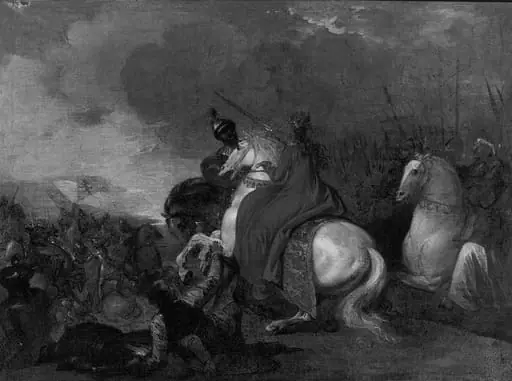
Artwork
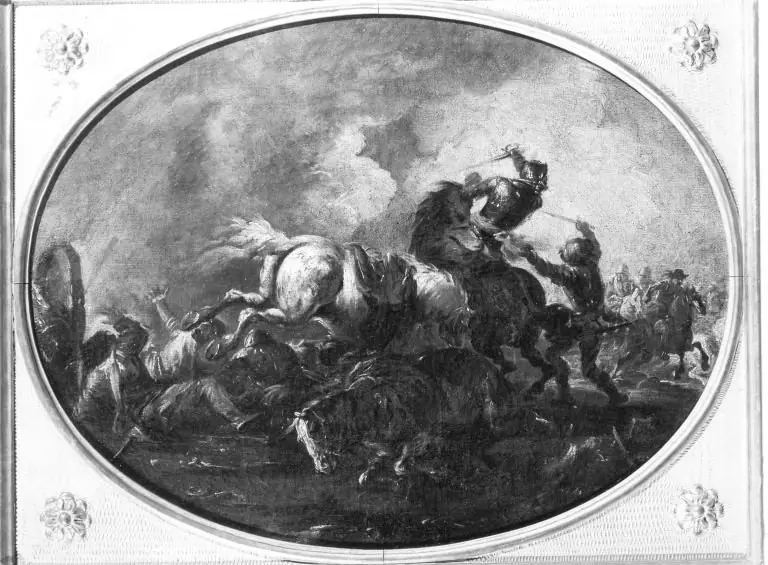
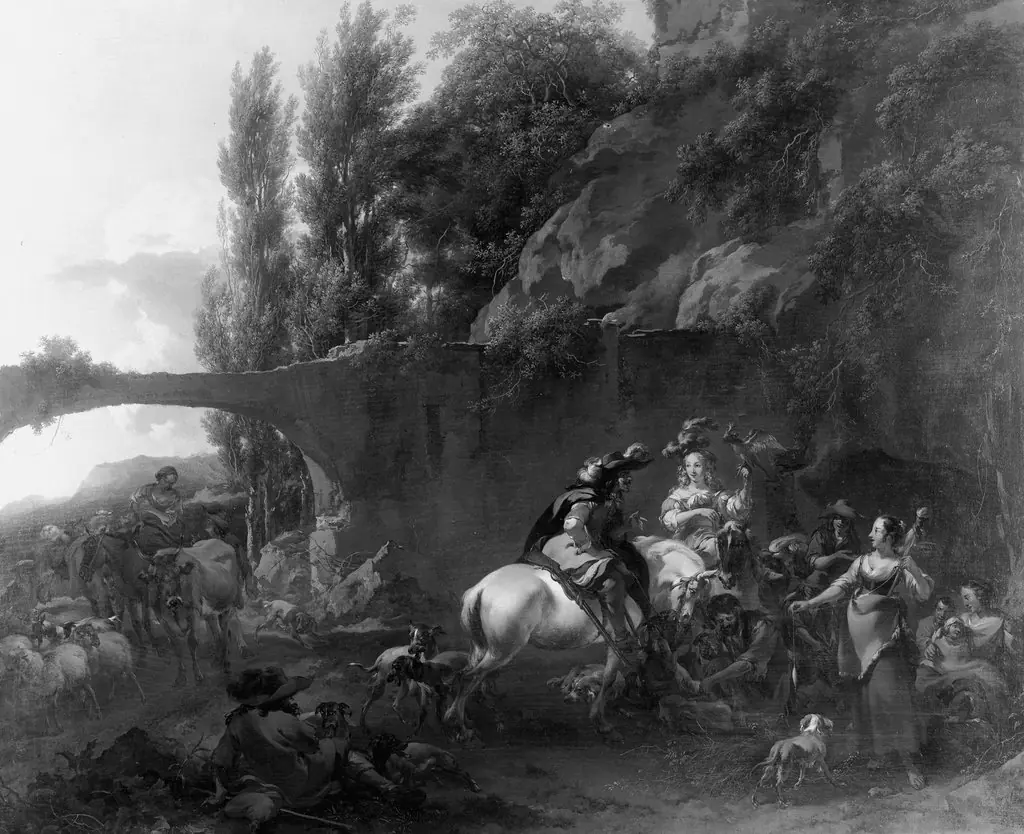
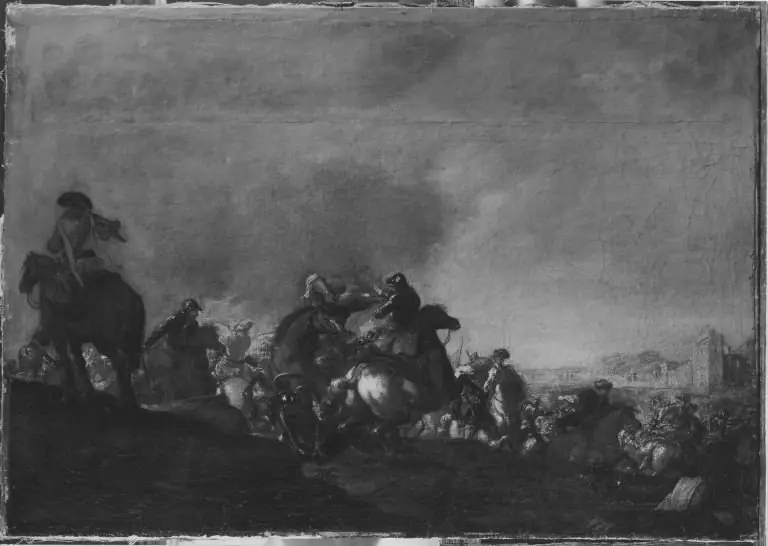
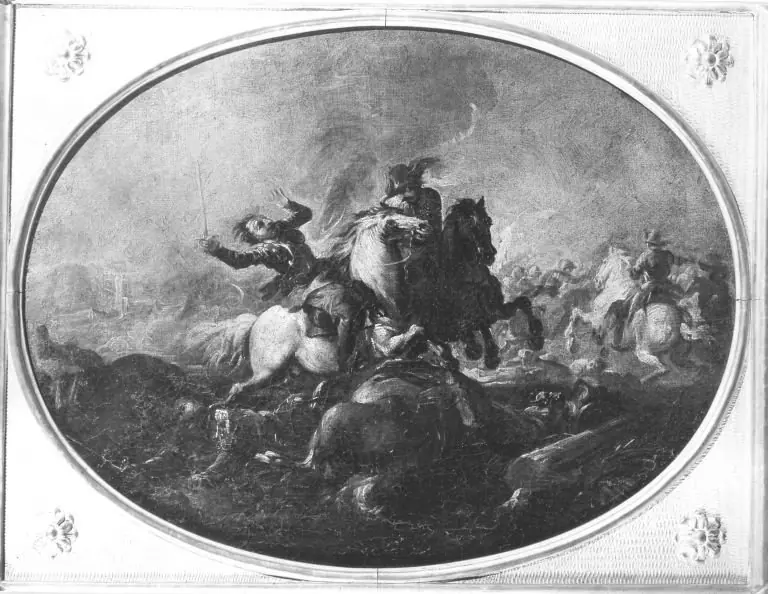
Rytterfægtning
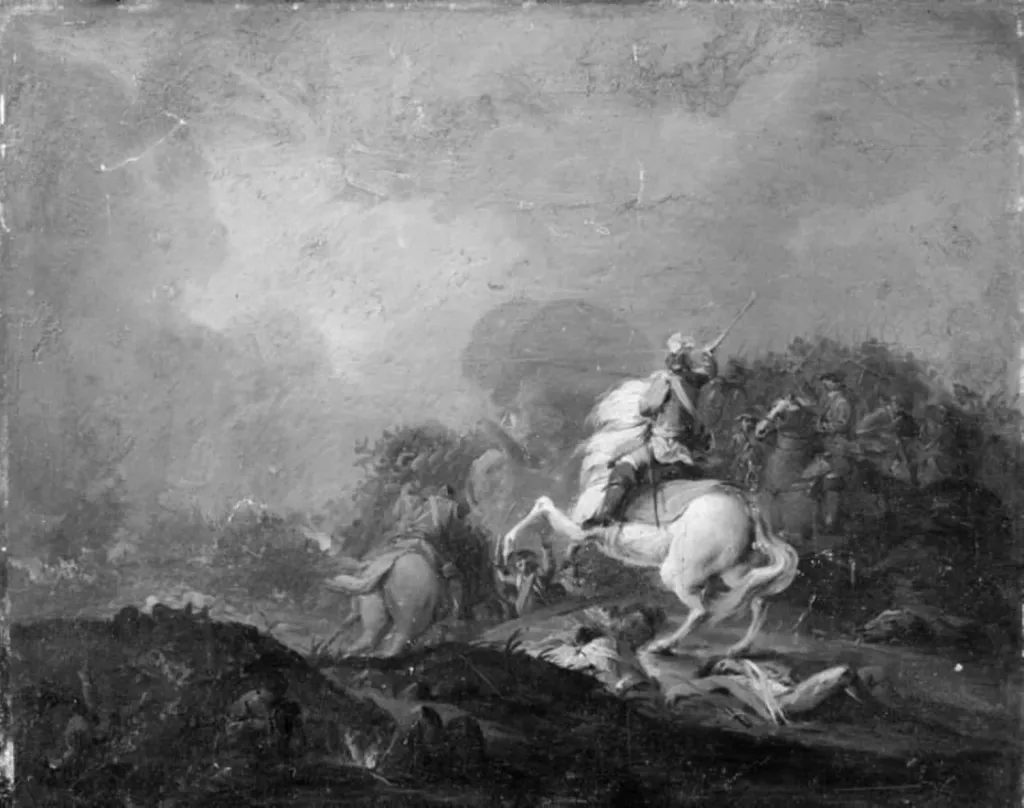
Rytterfægtning is a photography by Unknown. It dates from 1750 and is held in the collection of the Statens Museum for Kunst.
About this work
Overview
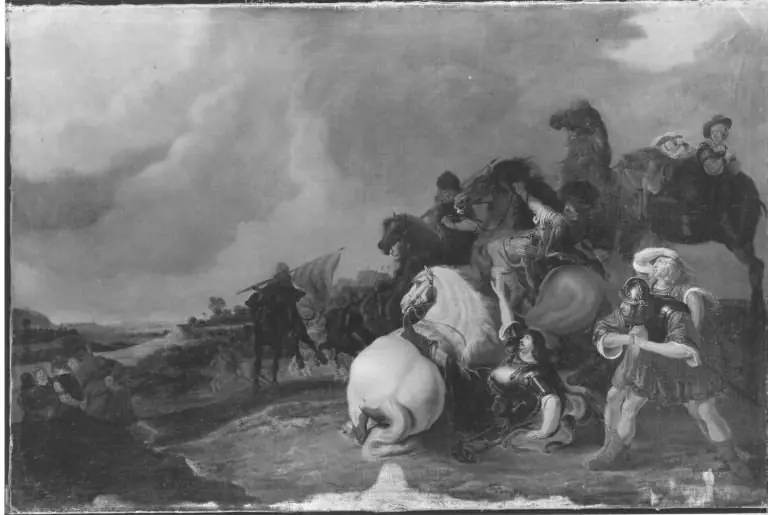
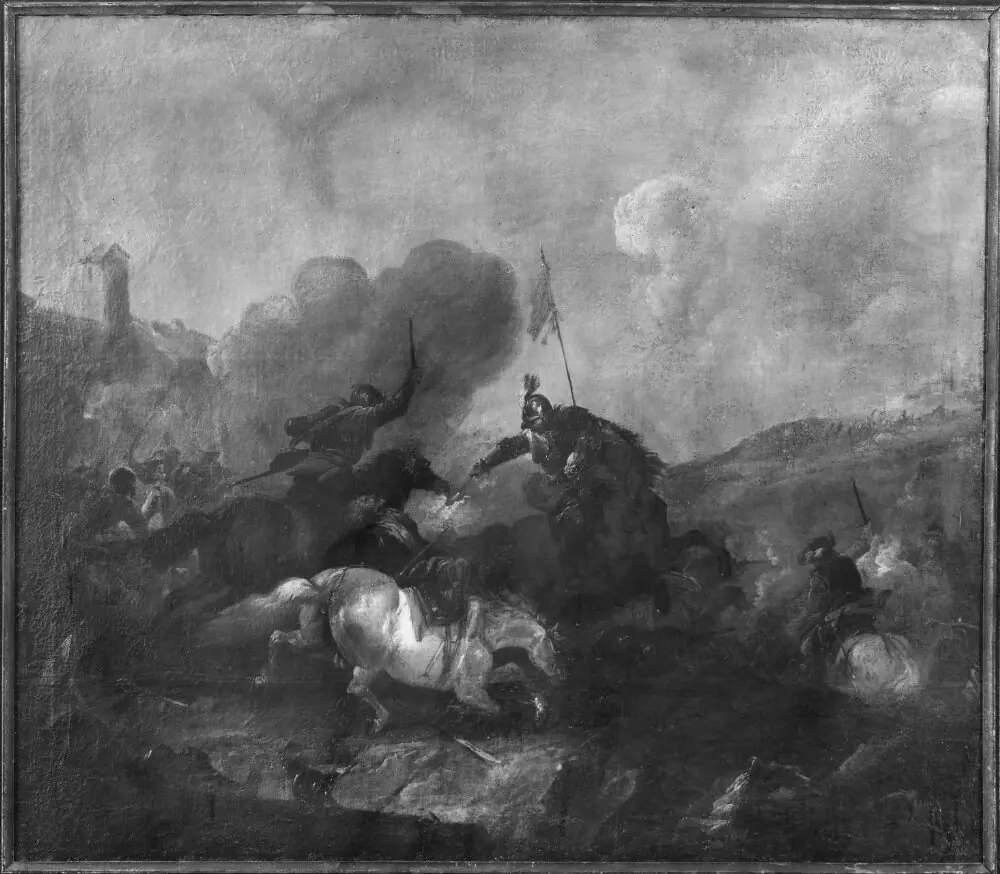
The work captures a moment of intense motion on horseback, rendered without color, relying on tonal contrast and dynamic brushwork to convey drama.
Rytterfægtning, dated around 1750, is a monochromatic image attributed to an artist identified as 37280_person. It is part of the collection at the Museum of Ethnography. The work captures a moment of intense motion on horseback, rendered without color, relying on tonal contrast and dynamic brushwork to convey drama. Its format and subject suggest it may have originated as a preparatory study or illustrative piece rather than a finished painting.
Subject & Meaning
The scene portrays a mounted figure in a white robe, spear raised, during a violent encounter with a fallen opponent. Behind them, a group of armed individuals observes or participates in the action. The lack of clear cultural markers makes precise interpretation difficult, but the composition evokes themes of conflict, honor, or ritual combat. The rider’s elevated posture and the rearing horse suggest a moment of triumph or decisive action.
Technique & Style
Executed in grayscale, the image uses broad, energetic brushstrokes to define form and movement. The contrast between the pale rider and the darker background enhances the sense of motion. The horse’s muscular tension and the fluidity of the robe are rendered with immediacy, suggesting a focus on gesture over detail. The style aligns with 18th-century European traditions of expressive draftsmanship, though the subject matter remains culturally ambiguous.
History & Provenance
The work entered the Museum of Ethnography’s holdings without clear documentation of its origin or commission. Its attribution to 37280_person is based on stylistic comparison and archival fragments, but no definitive records of its creation or early ownership exist. The absence of inscriptions or contextual materials leaves its original purpose—whether decorative, instructional, or ceremonial—uncertain.
Context
Created in the mid-18th century, the image reflects a period when European artists increasingly depicted non-Western or imagined martial scenes, often filtered through colonial or romanticized lenses. While the attire and setting do not clearly correspond to any known culture, the composition echoes contemporary European equestrian battle imagery, suggesting the artist may have drawn from prints, literature, or traveler accounts rather than direct observation.
Legacy
Rytterfægtning remains a singular work in the museum’s collection due to its unresolved cultural context and stylistic hybridity. It is occasionally referenced in studies of 18th-century visual representation of conflict, particularly in discussions of how artists interpreted unfamiliar subjects through familiar formal conventions. Its ambiguity continues to invite scholarly inquiry without yielding definitive conclusions.
Artist & collection

 Domestic Scene
 Giacomo and Cardinal Marco, investing Andrea, Abbot of San Zeno, with his Benefice
 The Nymph of Fontainebleau
 Portrait of a Woman
 Madonna and Child with Saints in the Enclosed Garden
 Venus and Minerva
 Family Group of Four on Sofa
 Wall painting from Room H of the Villa of P. Fannius Synistor at Boscoreale