Artwork
Mother with her Children
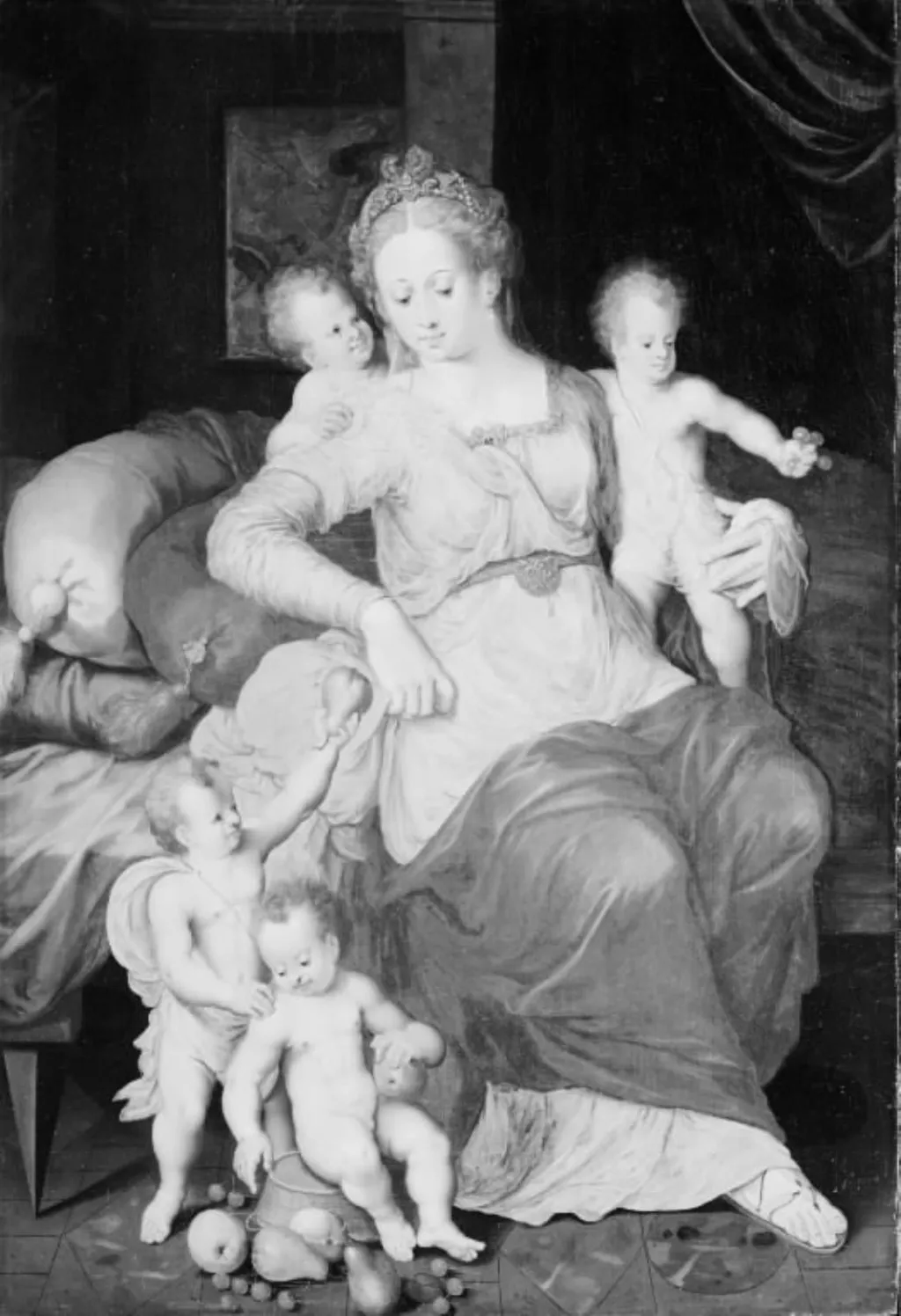
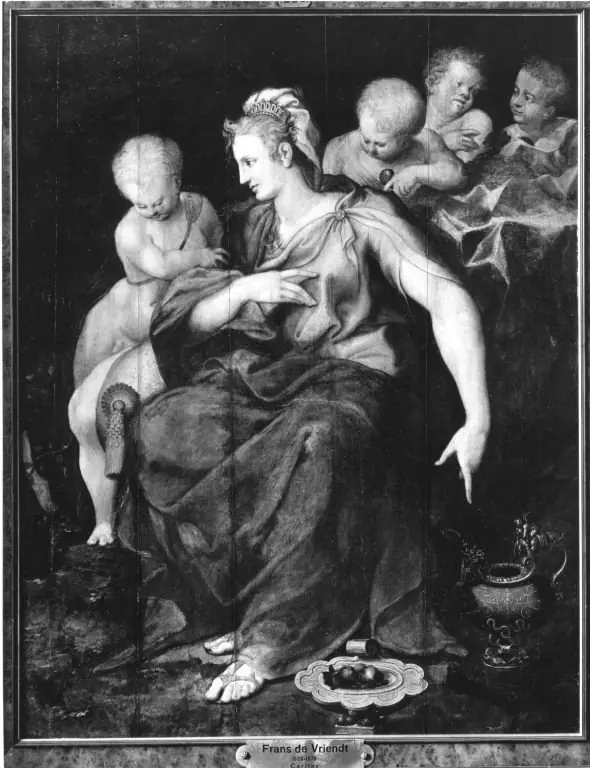
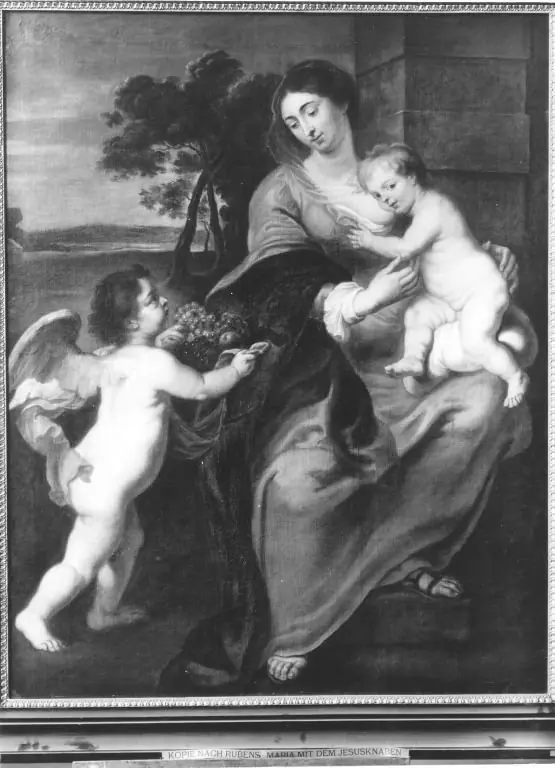
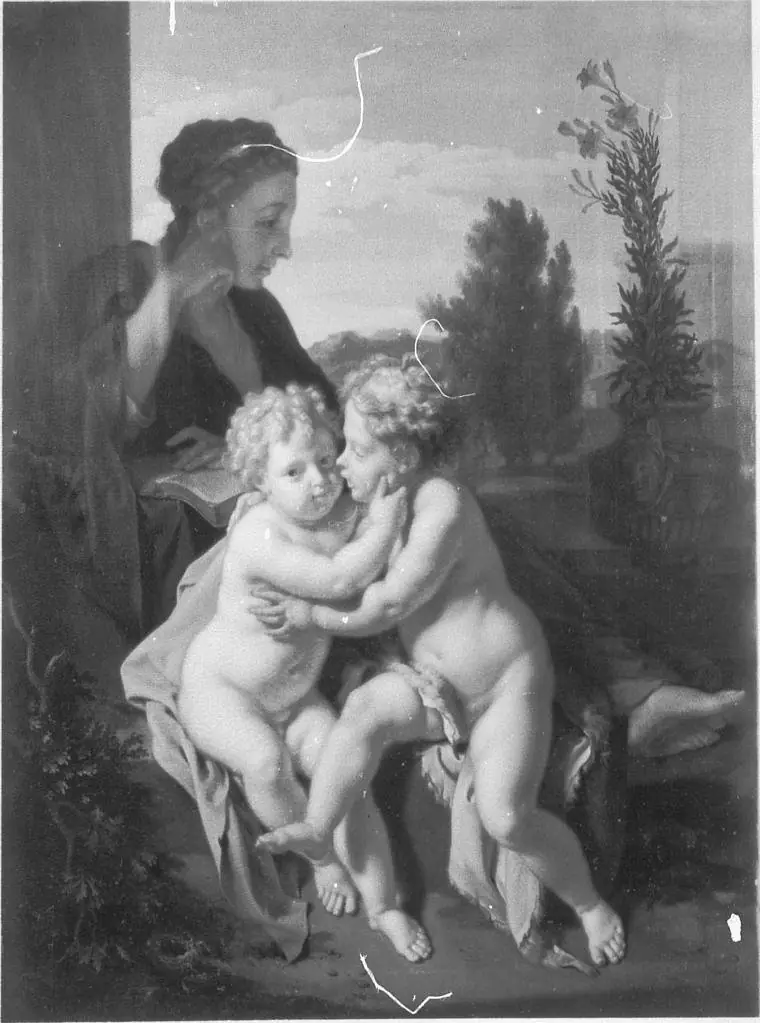
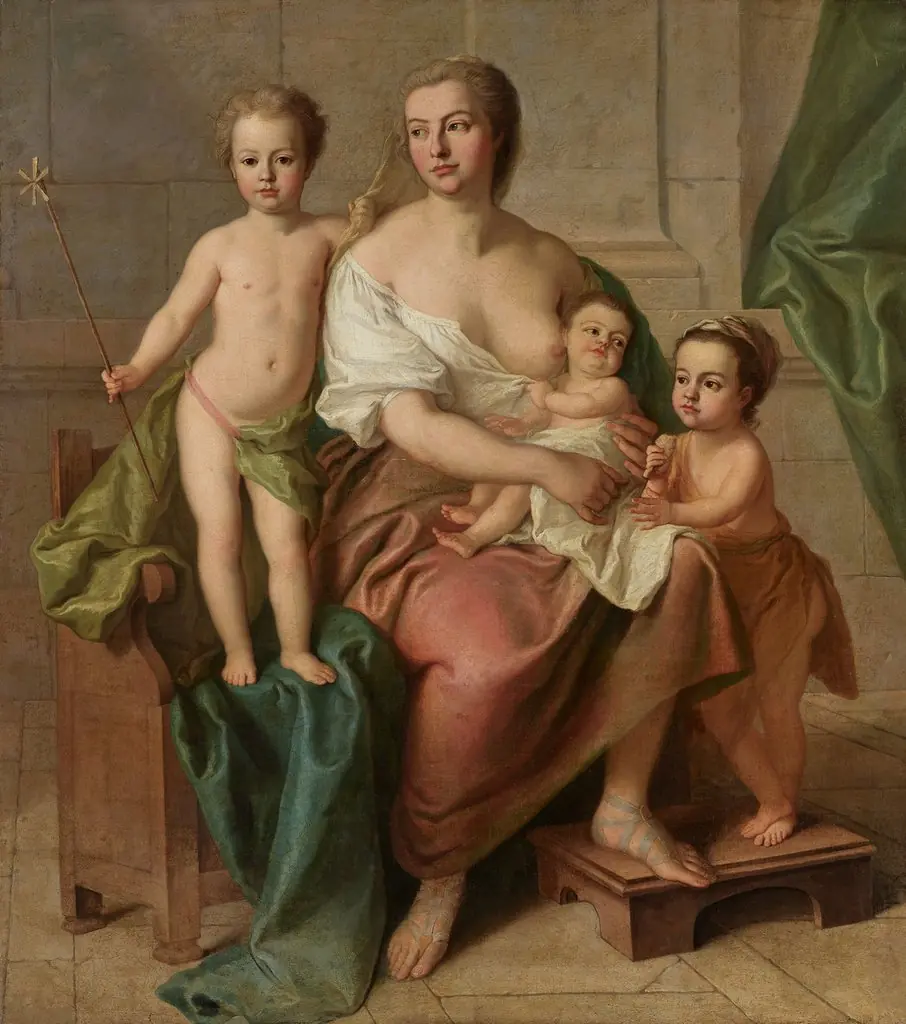
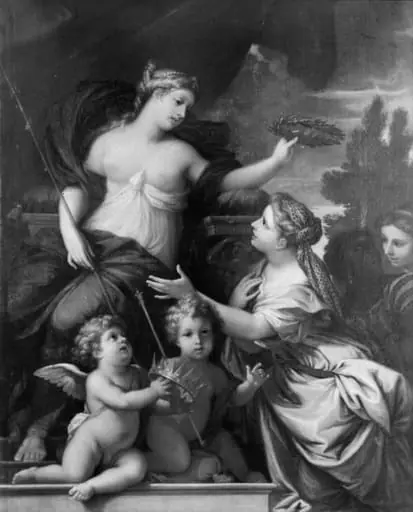
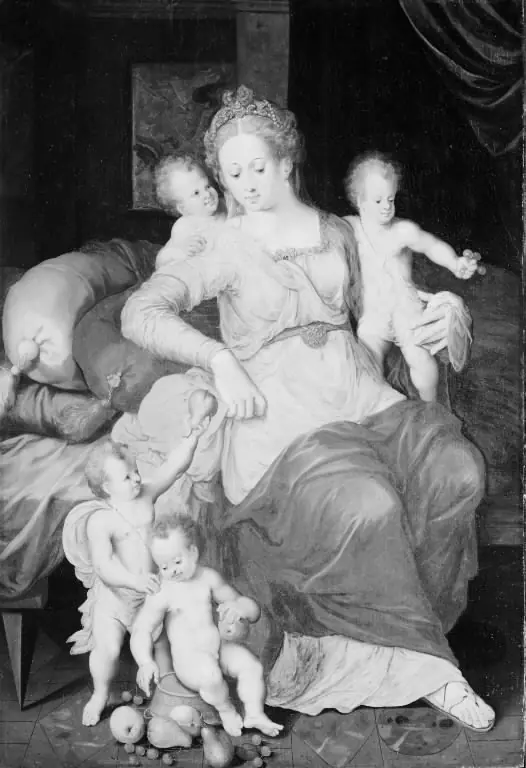
Mother with her Children is a photography by Unknown. It dates from 1550 and is held in the collection of the Statens Museum for Kunst. Created around 1550, this image portrays a seated woman with four children in a dimly lit interior.
About this work
Overview
Created around 1550, this image portrays a seated woman with four children in a dimly lit interior. Though labeled as an artwork, its origin and authorship remain unverified. It resides in the Museum of Ethnography, where it is presented as a cultural artifact rather than a canonical painting. The composition centers on maternal presence, framed by domestic furnishings and subdued lighting.
Subject & Meaning
The central figure, adorned with a crown and flowing garment, is depicted in a nurturing posture, holding one child while three others interact nearby. The children are rendered nude, suggesting symbolic rather than literal representation. The scene evokes quiet intimacy, possibly referencing ideals of maternal care or divine maternity, though no religious iconography is explicitly present.
Technique & Style
The image employs soft contrasts between light and shadow to model forms, creating a sense of depth within a confined space. The figures are rendered with simplified contours, and the background features minimal detail—only a couch and table suggest a domestic setting. The style leans toward stylized representation rather than naturalism, with emphasis on harmony over anatomical precision.
History & Provenance
The work’s creator is unidentified, and no documentation links it to a known artist or school. It entered the Museum of Ethnography’s collection without clear provenance, raising questions about its origin. Its classification as an 'image' rather than a painting suggests it may derive from a manuscript, textile, or decorative object, though its exact medium remains unspecified.
Context
Made during the mid-16th century, the image reflects broader European visual traditions that idealized motherhood, often blending secular and sacred motifs. The crown and nudity of the children may allude to allegorical or mythological themes, common in Renaissance iconography. Yet its ethnographic placement implies it was collected as an example of cultural expression, not fine art.
Legacy
The image continues to be studied for its depiction of familial bonds within a non-Western museum context. Its ambiguous authorship and stylistic hybridity invite interpretation beyond traditional art-historical frameworks. It remains a quiet object of contemplation, valued for its emotional resonance rather than its artistic pedigree.
Artist & collection

 Domestic Scene
 Giacomo and Cardinal Marco, investing Andrea, Abbot of San Zeno, with his Benefice
 The Nymph of Fontainebleau
 Portrait of a Woman
 Madonna and Child with Saints in the Enclosed Garden
 Venus and Minerva
 Family Group of Four on Sofa
 Wall painting from Room H of the Villa of P. Fannius Synistor at Boscoreale