Artwork
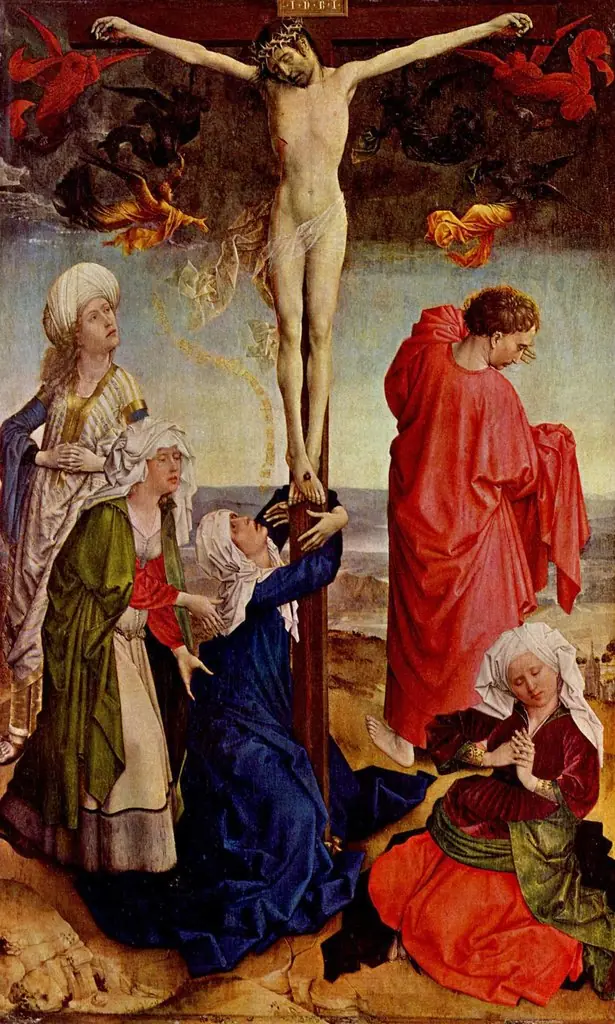
Christ on the Cross between the Virgin Mary and St John
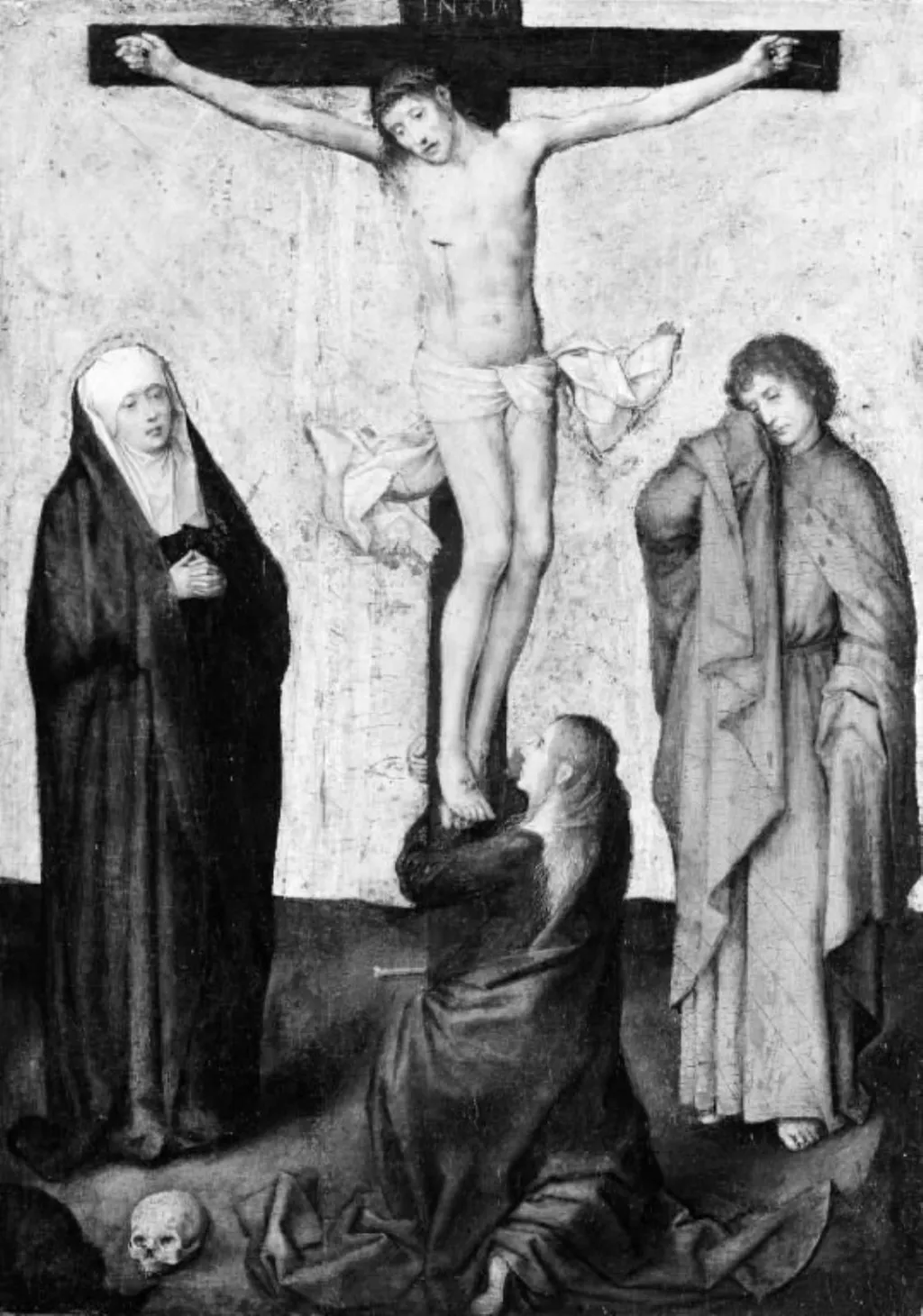
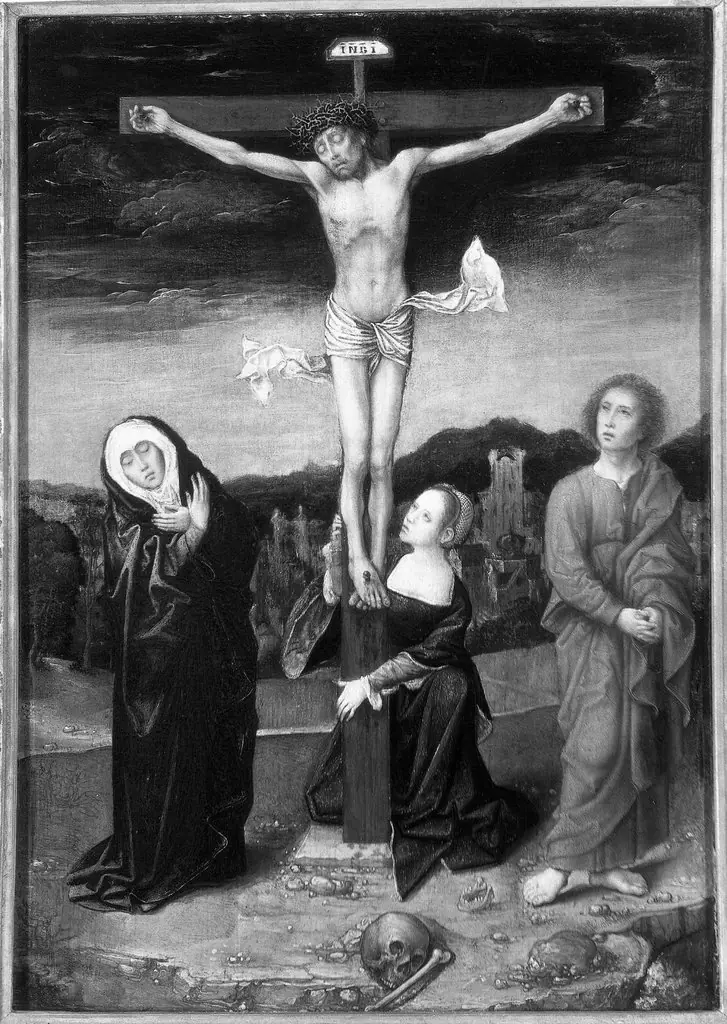
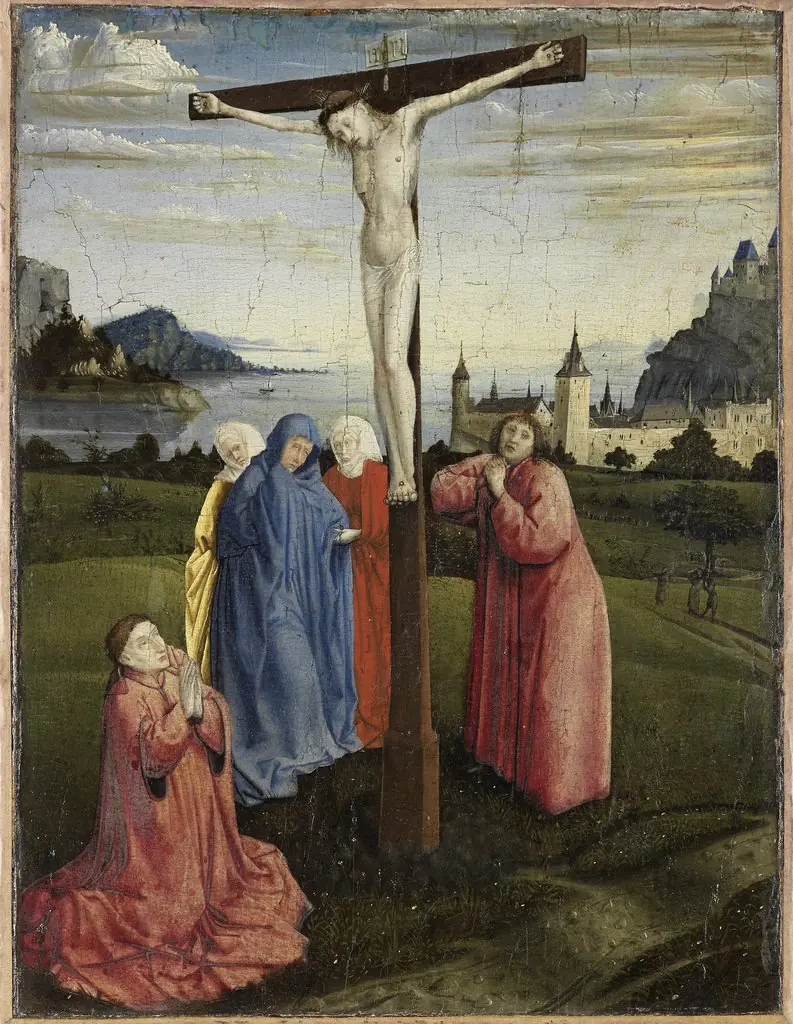
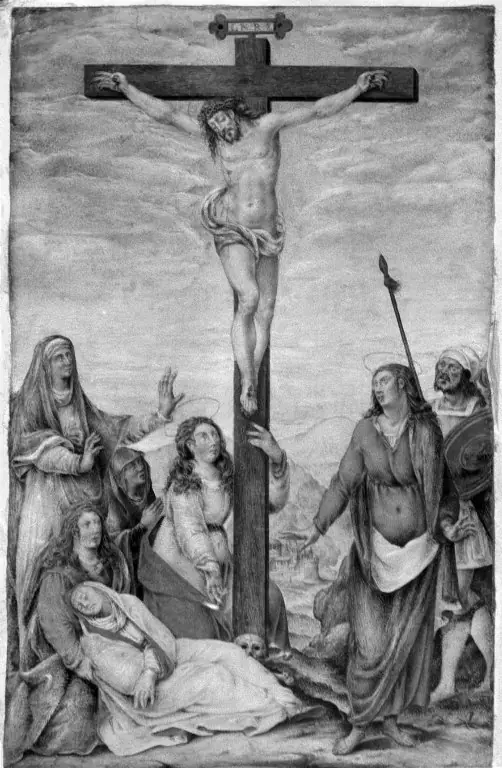
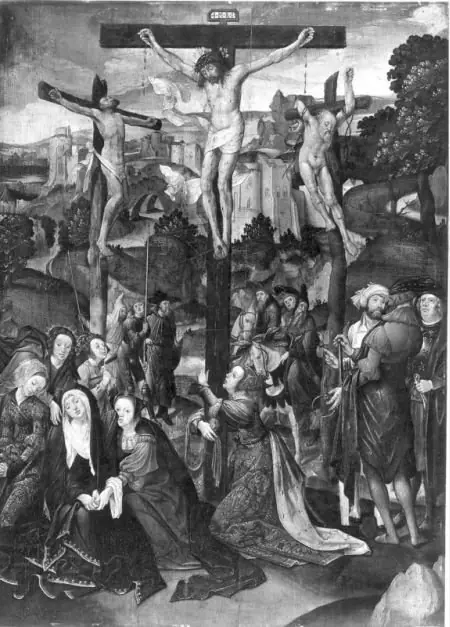
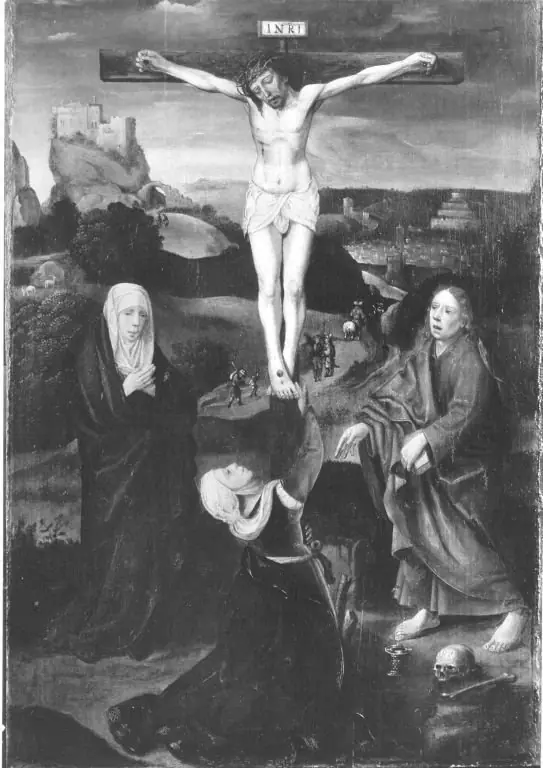
Christ on the Cross between the Virgin Mary and St John is a photography by Unknown. It dates from 1450 and is held in the collection of the Statens Museum for Kunst. Created around 1450, this panel depicts the crucifixion scene with Christ on the cross flanked by the Virgin Mary and St.
About this work
Overview
Created around 1450, this panel depicts the crucifixion scene with Christ on the cross flanked by the Virgin Mary and St. John. The work is part of the collection of the Museum of Ethnography and is attributed to the artist recorded as 37313_person. Rendered in a monochrome palette, the composition centers on the suffering figure of Christ, surrounded by mournful companions and symbolic elements.
Subject & Meaning
The central figure of Christ is shown nailed to the cross, his head inclined backward, conveying the moment of death.
The central figure of Christ is shown nailed to the cross, his head inclined backward, conveying the moment of death. To his left, a cloaked woman—identified as the Virgin Mary—stands with clasped hands, while St. John kneels on the right, reaching toward the crucified body. A third figure bows nearby, and a skull rests at the foot of the cross, referencing the traditional “skull of Adam” motif that links humanity’s original sin with Christ’s redemptive sacrifice.
Technique & Style
The image employs stark contrasts of light and dark, a visual strategy akin to chiaroscuro, to emphasize the drama of the scene. The limited tonal range heightens the emotional intensity, while the simplified forms and muted coloration reflect the devotional aesthetic of mid‑15th‑century religious painting.
History & Provenance
Attributed to the anonymous hand catalogued as 37313_person, the work dates to the mid‑15th century, a period of prolific devotional art in Europe. It entered the Museum of Ethnography’s holdings through acquisition in the early 20th century, though precise details of its earlier ownership remain undocumented.
Context
During the 1450s, crucifixion imagery was a central focus of liturgical art, intended to inspire contemplation of Christ’s passion. The inclusion of the skull at the base of the cross aligns with contemporary theological symbolism, reinforcing the connection between the fall of Adam and the salvific act of Jesus, a theme widely represented in Northern European panels of the era.
Artist & collection

 Domestic Scene
 Giacomo and Cardinal Marco, investing Andrea, Abbot of San Zeno, with his Benefice
 The Nymph of Fontainebleau
 Portrait of a Woman
 Madonna and Child with Saints in the Enclosed Garden
 Venus and Minerva
 Family Group of Four on Sofa
 Wall painting from Room H of the Villa of P. Fannius Synistor at Boscoreale