Artwork
The Crucifixion
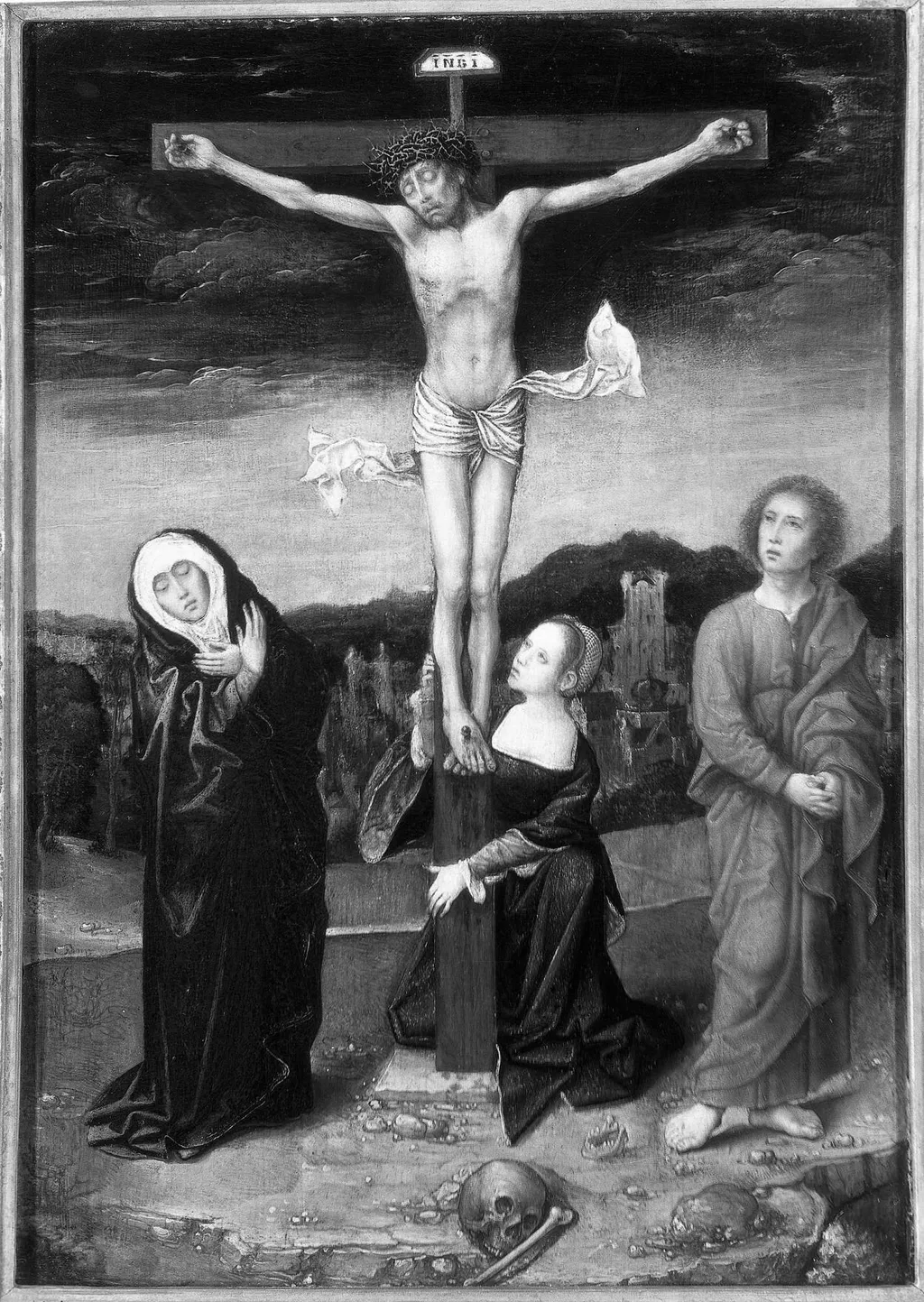
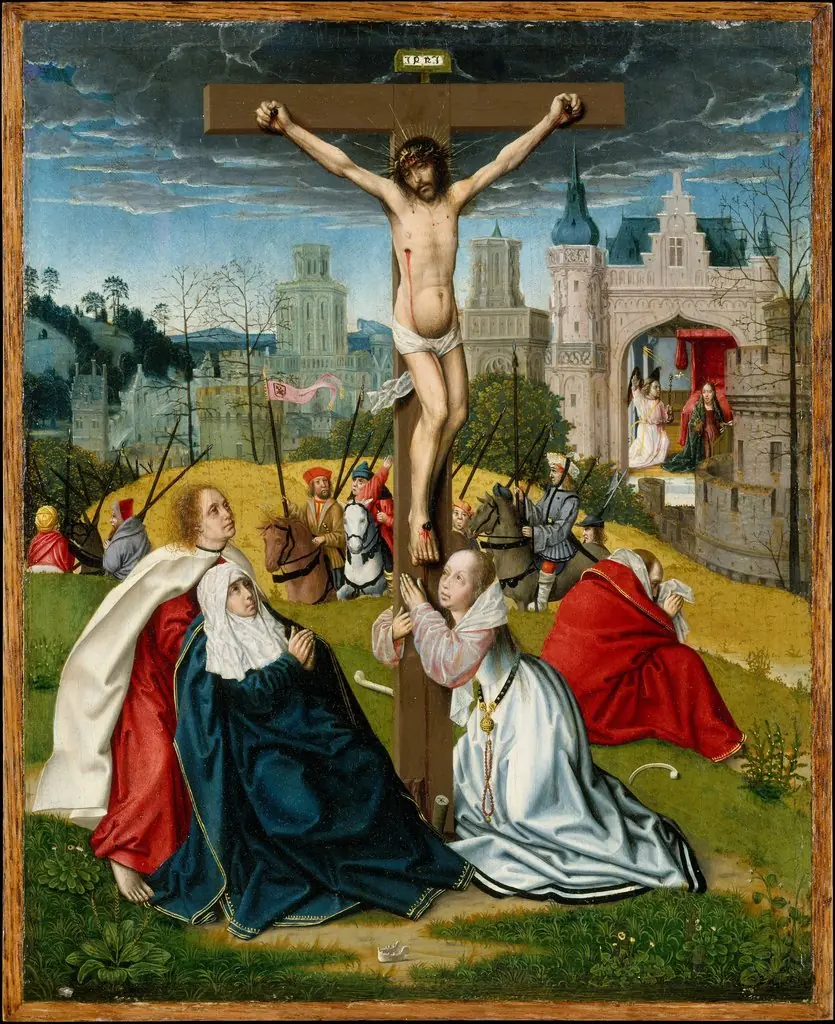
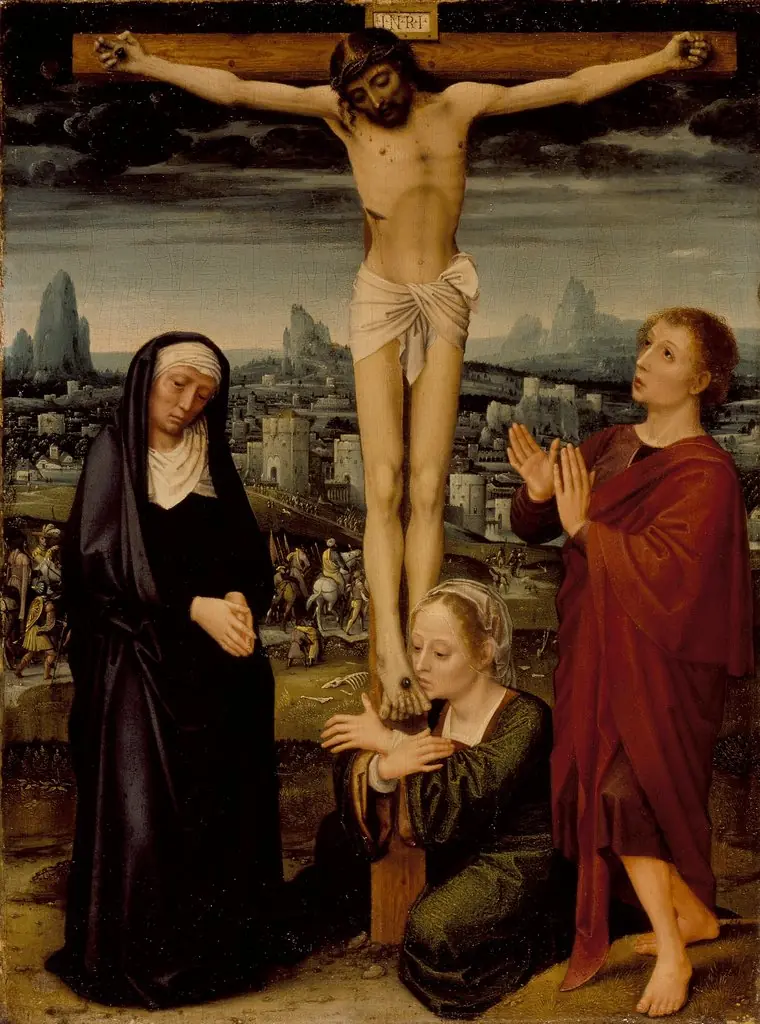
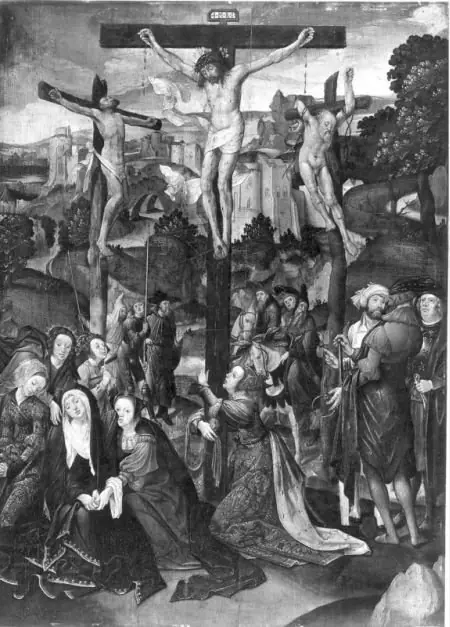
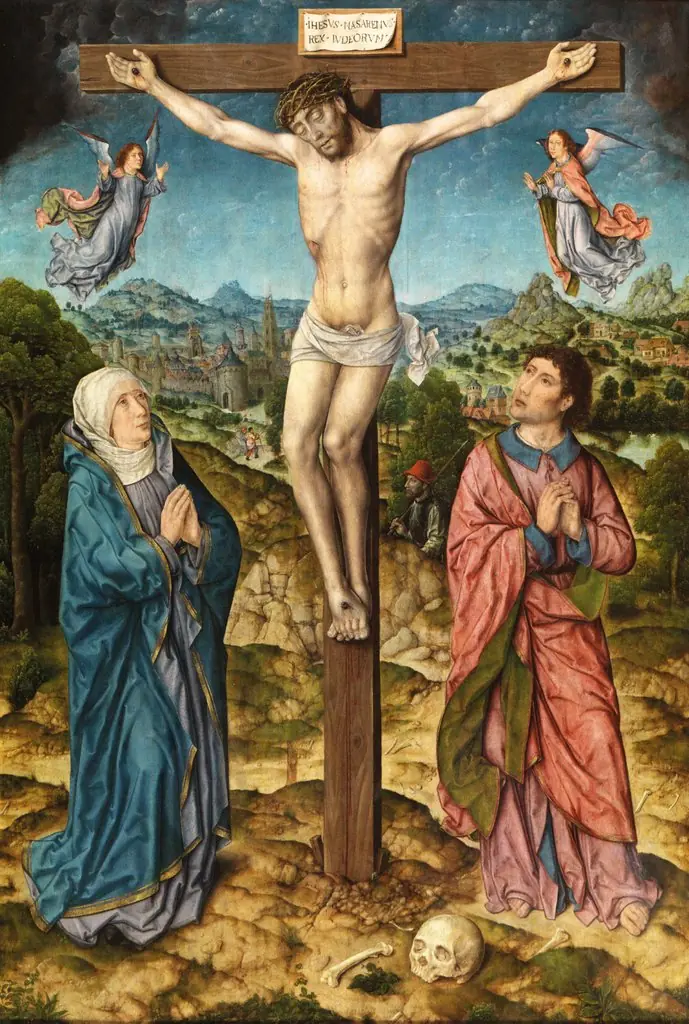
The Crucifixion is an unspecified painting by the Northern Renaissance artist Hans van Coninxloo. It dates from 1540 and is held in the collection of the Detroit Institute of Arts.
About this work
Overview
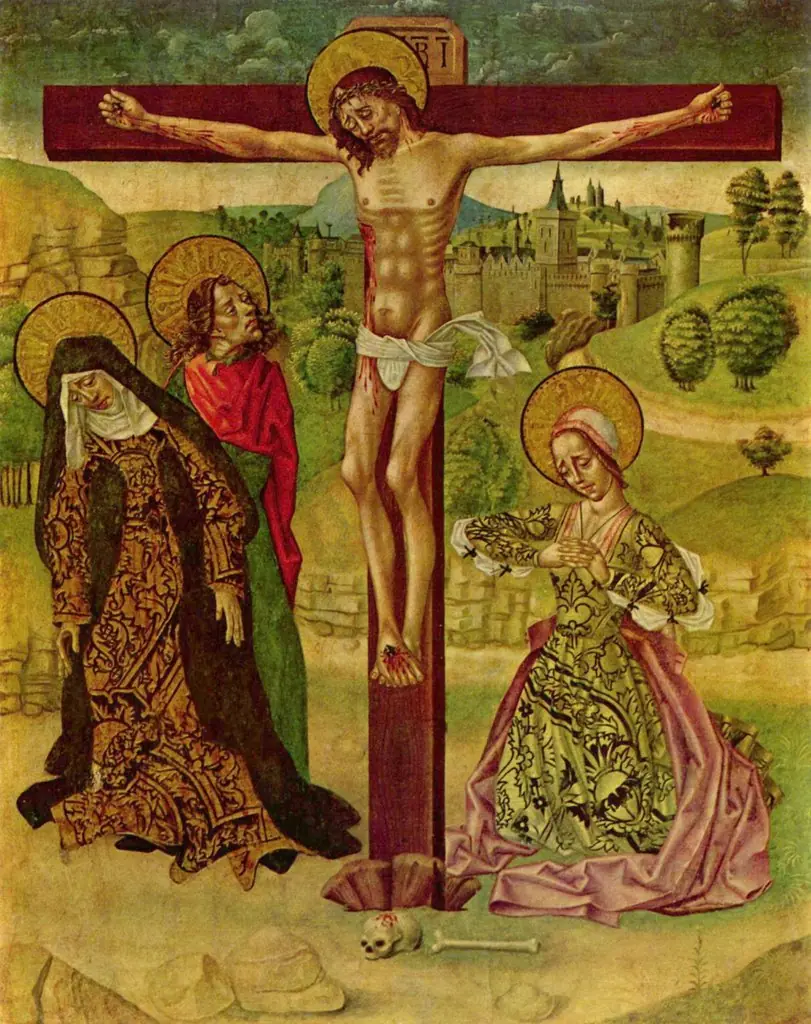
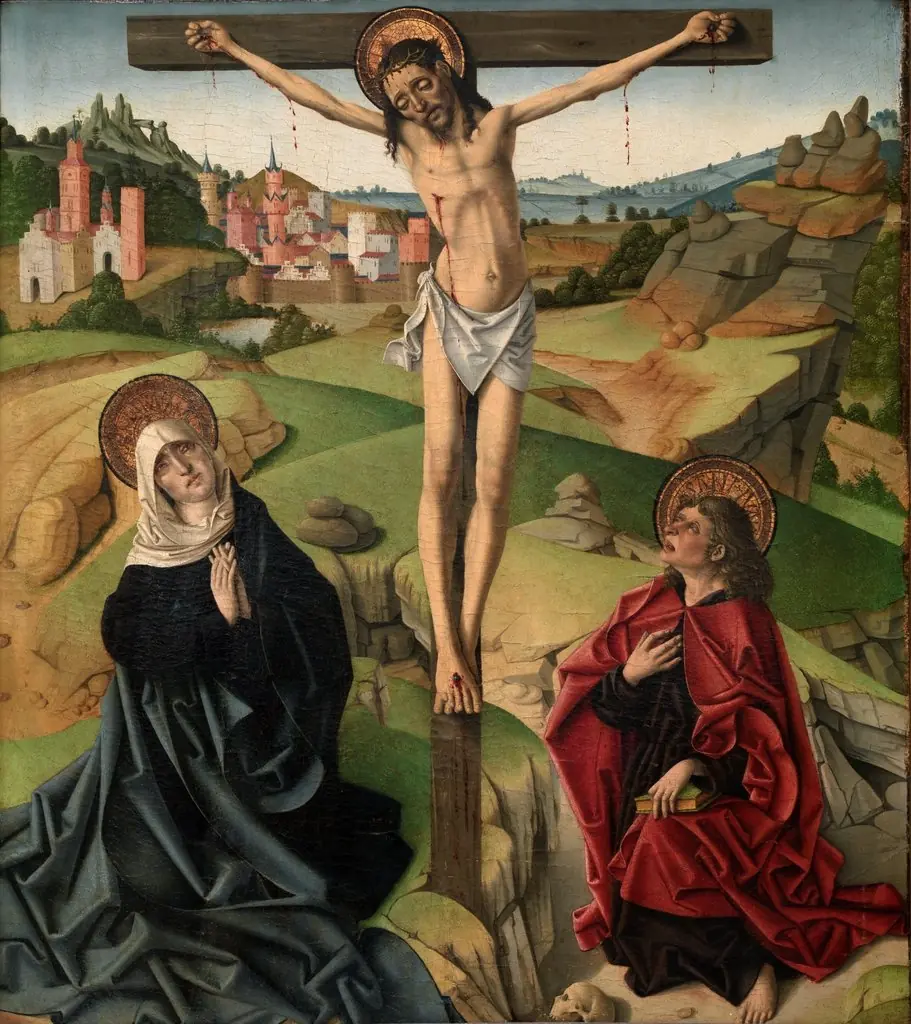
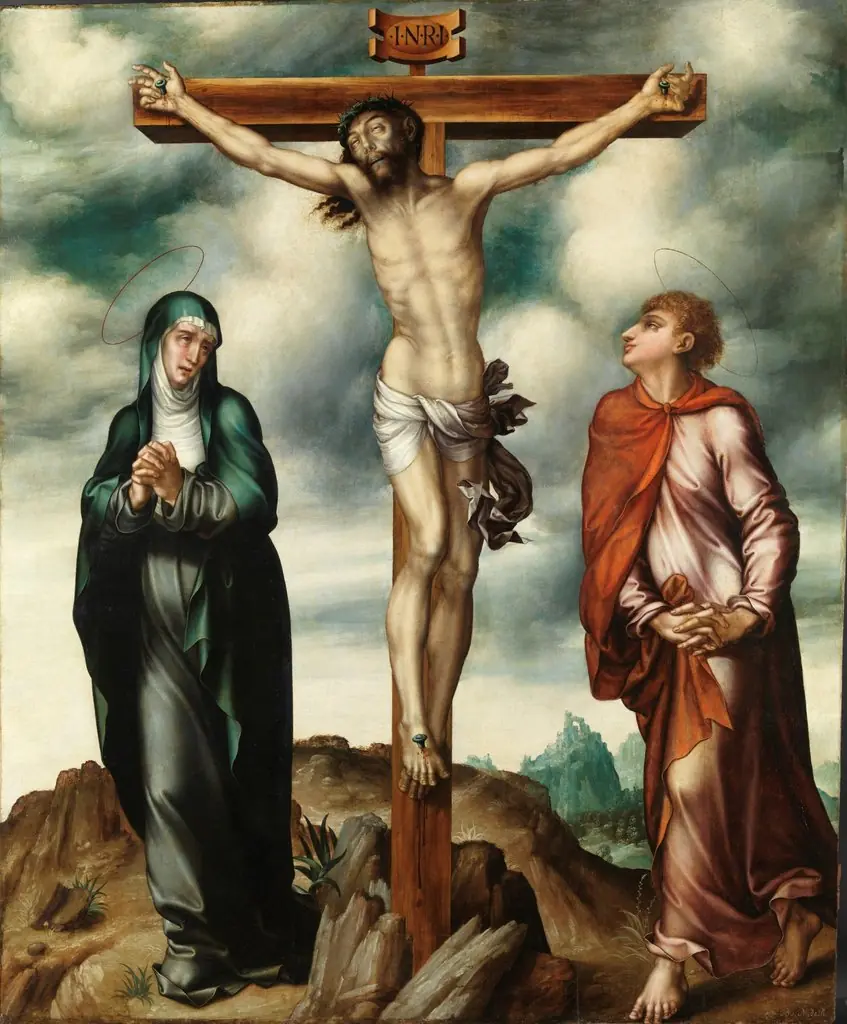
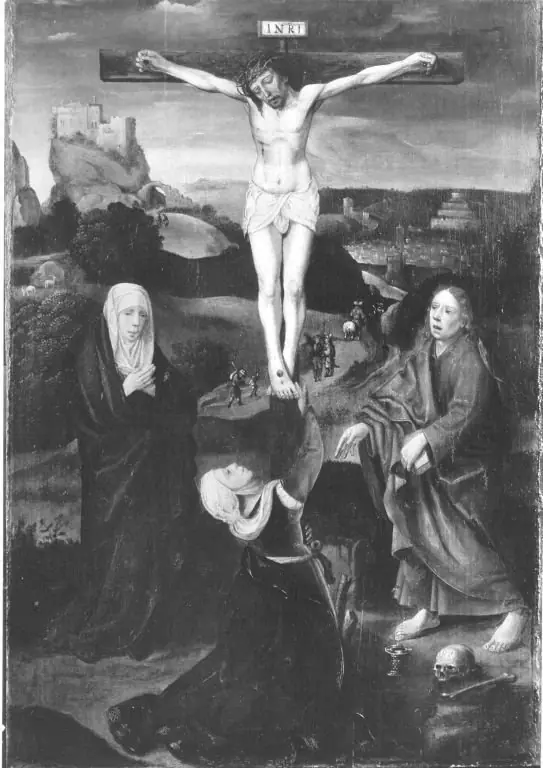
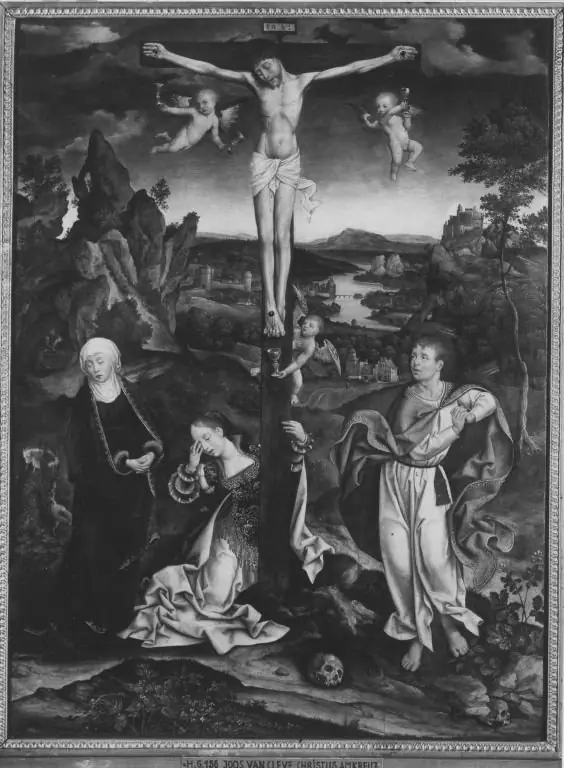
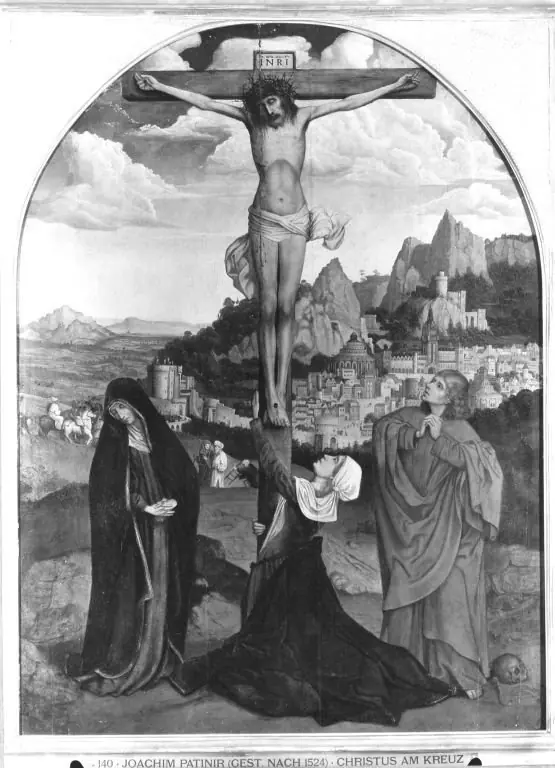
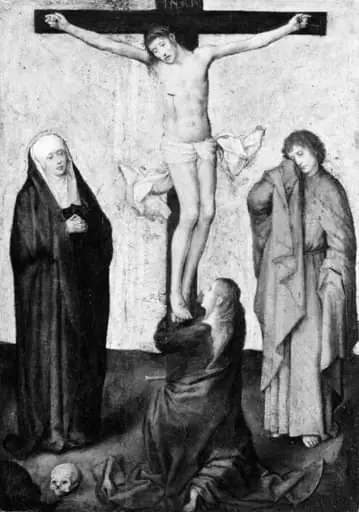
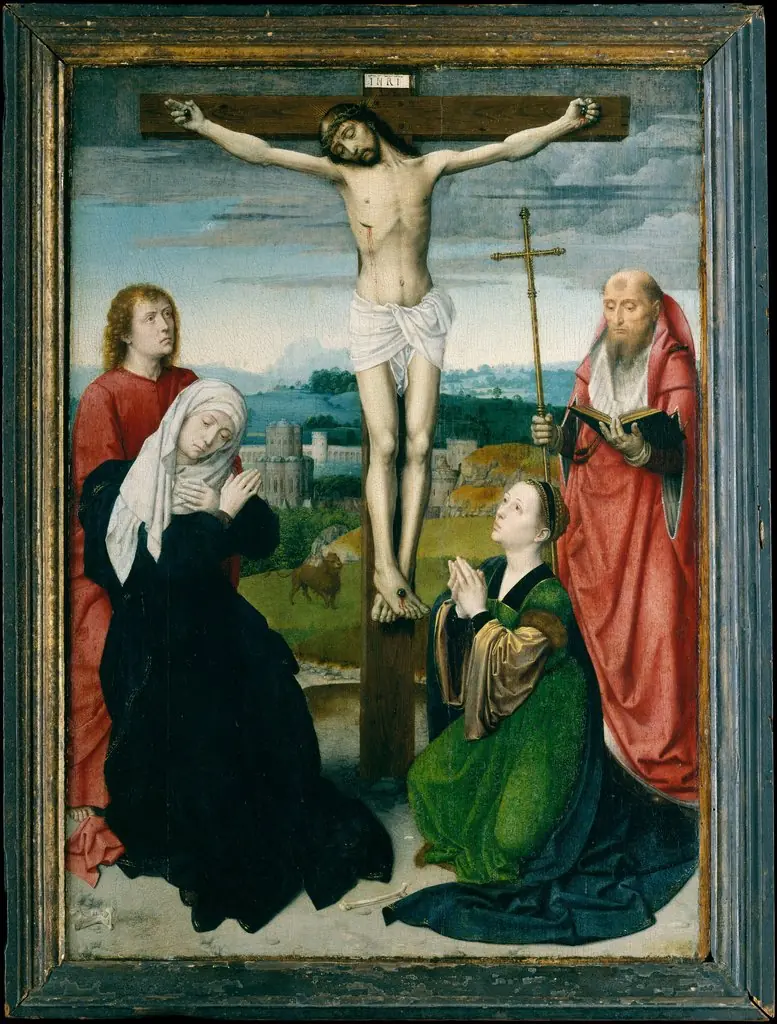
Hans van Coninxloo’s 1540 oil painting titled *The Crucifixion* presents the biblical moment of Christ on the cross. Executed in the mid‑sixteenth century, the work is part of the Detroit Institute of Arts collection and exemplifies the period’s devotional imagery.
Subject & Meaning
The central figure is Jesus, crowned with thorns and draped in a simple white loincloth. Flanking him are three mournful observers in dark robes, one of whom leans against the cross, emphasizing the human response to the sacrifice.
Technique & Style
Coninxloo employs a restrained palette, using deep, cloud‑filled skies to create a somber atmosphere. The contrast between the luminous white cloth and the surrounding darkness heightens the emotional intensity, while the figures are rendered with modest detail characteristic of Northern Renaissance religious works.
History & Provenance
Painted in 1540, the piece entered the Detroit Institute of Arts in the twentieth century, where it remains on display. Its documented provenance traces back to private collections before acquisition by the museum, confirming its attribution to Coninxloo.
Context
The work reflects the Counter‑Reformation’s emphasis on personal piety and the visual dramatization of Christ’s Passion. By focusing on a limited group of figures and a bleak sky, Coninxloo aligns with contemporary trends that sought to evoke contemplation and empathy among viewers.
Artist & collection

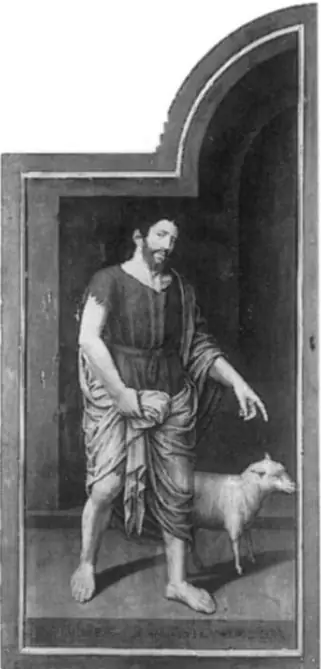 Johannes de Doper met het Lam Gods, linkerpaneel van een drieluik (dicht)
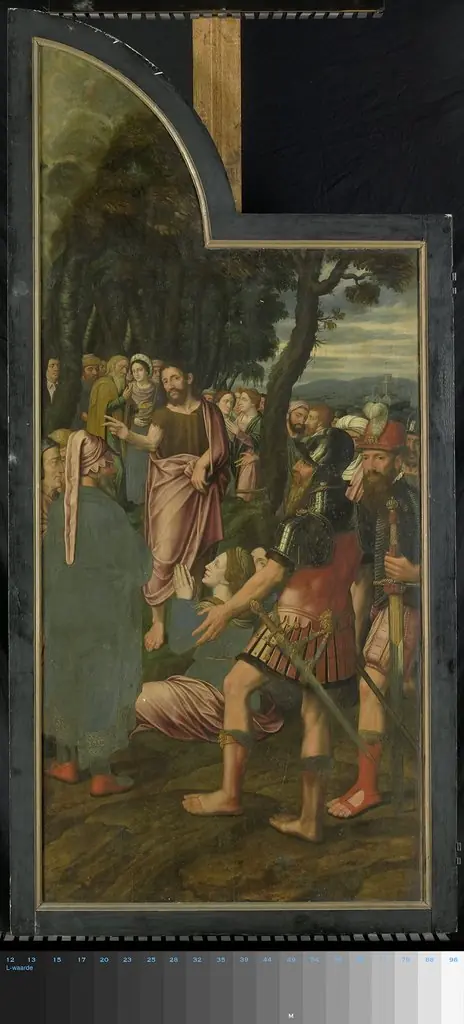 De prediking van Johannes de Doper, linkerpaneel van een drieluik
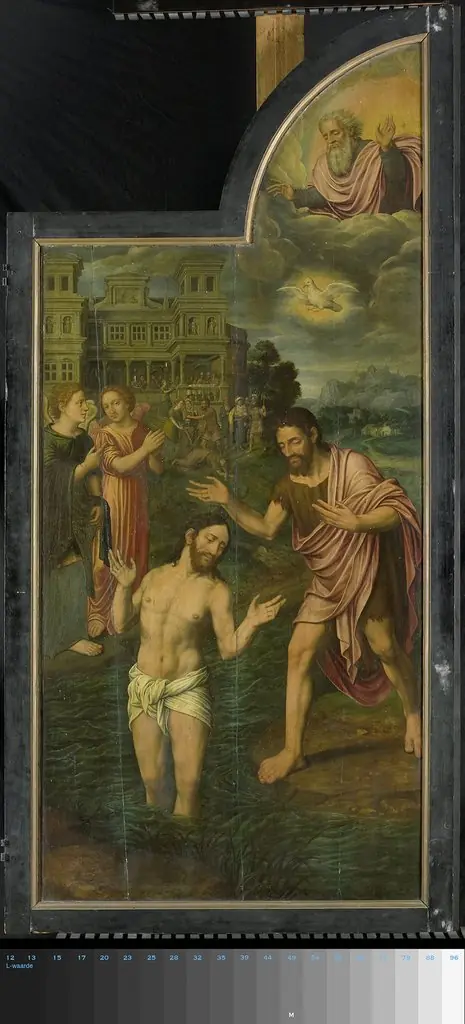 De doop van Christus in de Jordaan, rechter paneel van een drieluik (open)
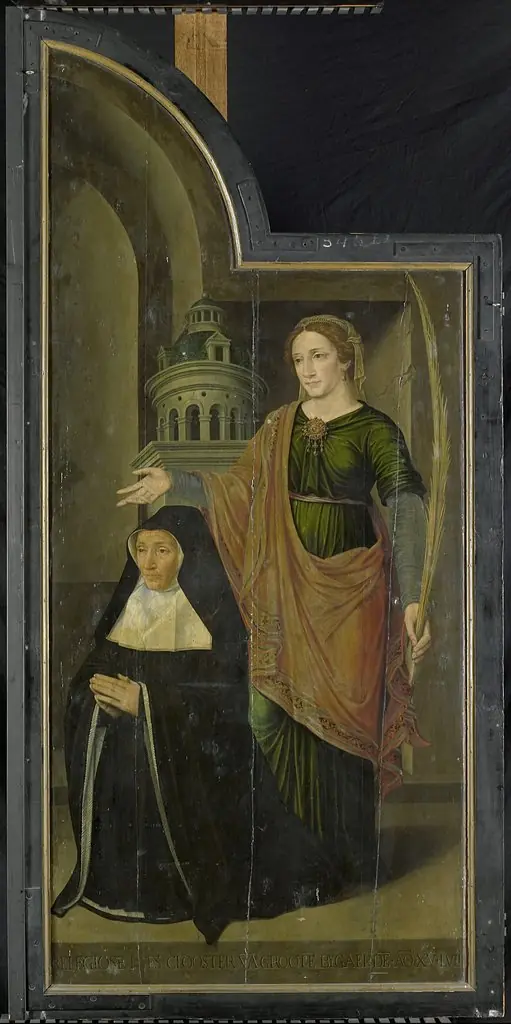 Triptych with Scenes from the Life of St John the Baptist
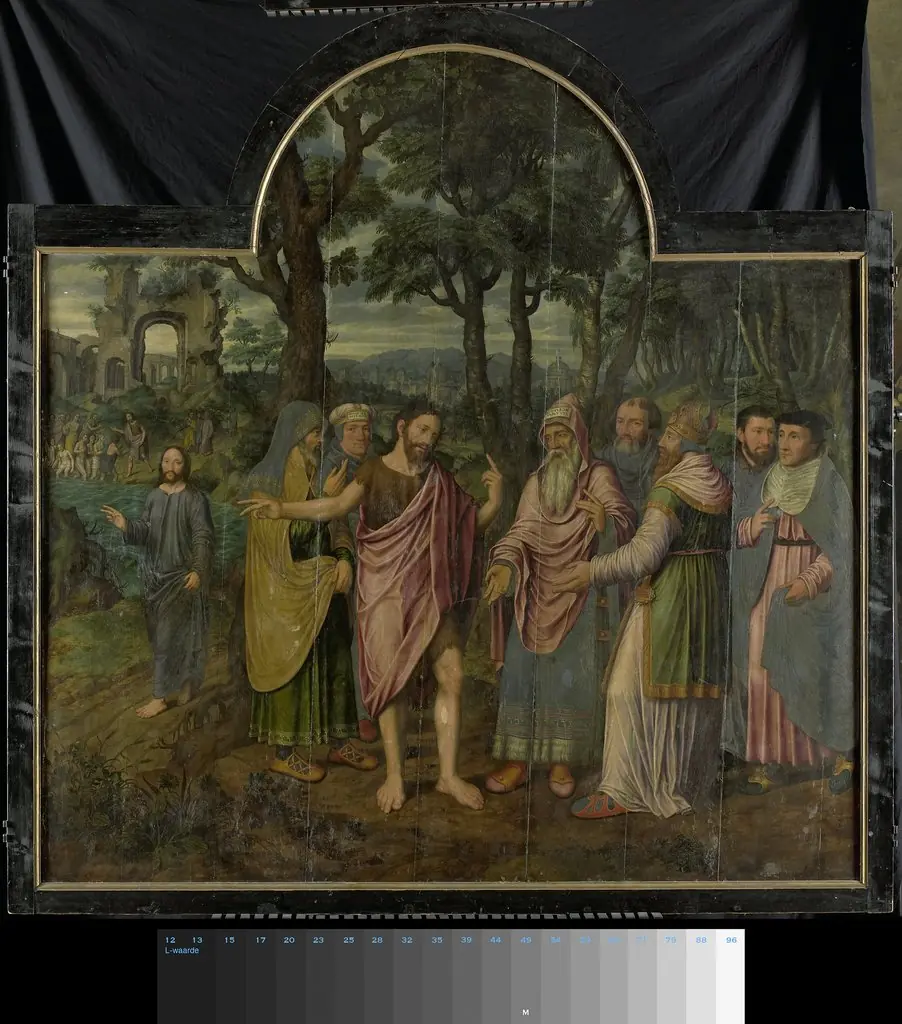 Johannes de Doper vermaant de Farizeeërs, middenpaneel van een drieluik
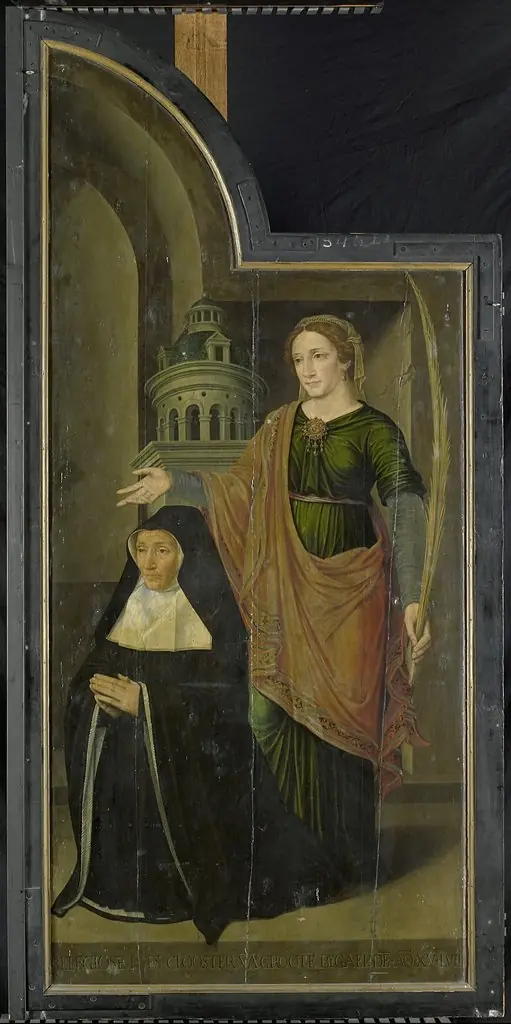 De knielende stichteres Berbel of Barbara van der Noot met de heilige Barbara, rechter paneel van een drieluik (dicht)