Artwork
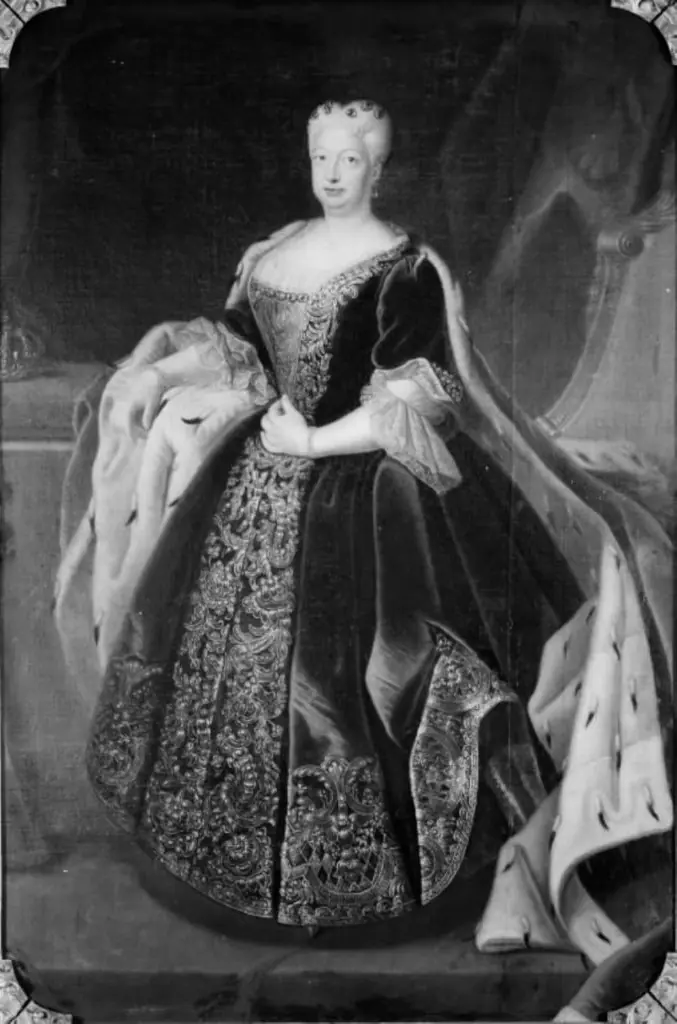
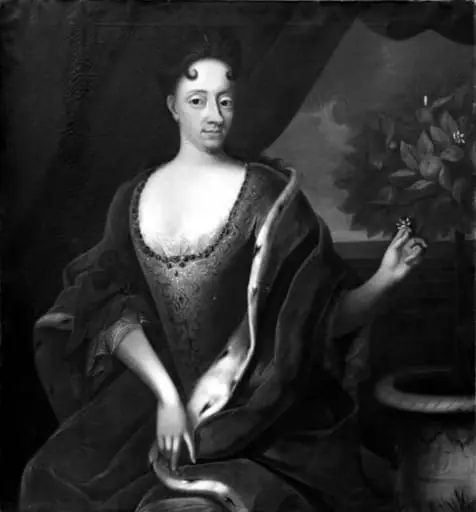
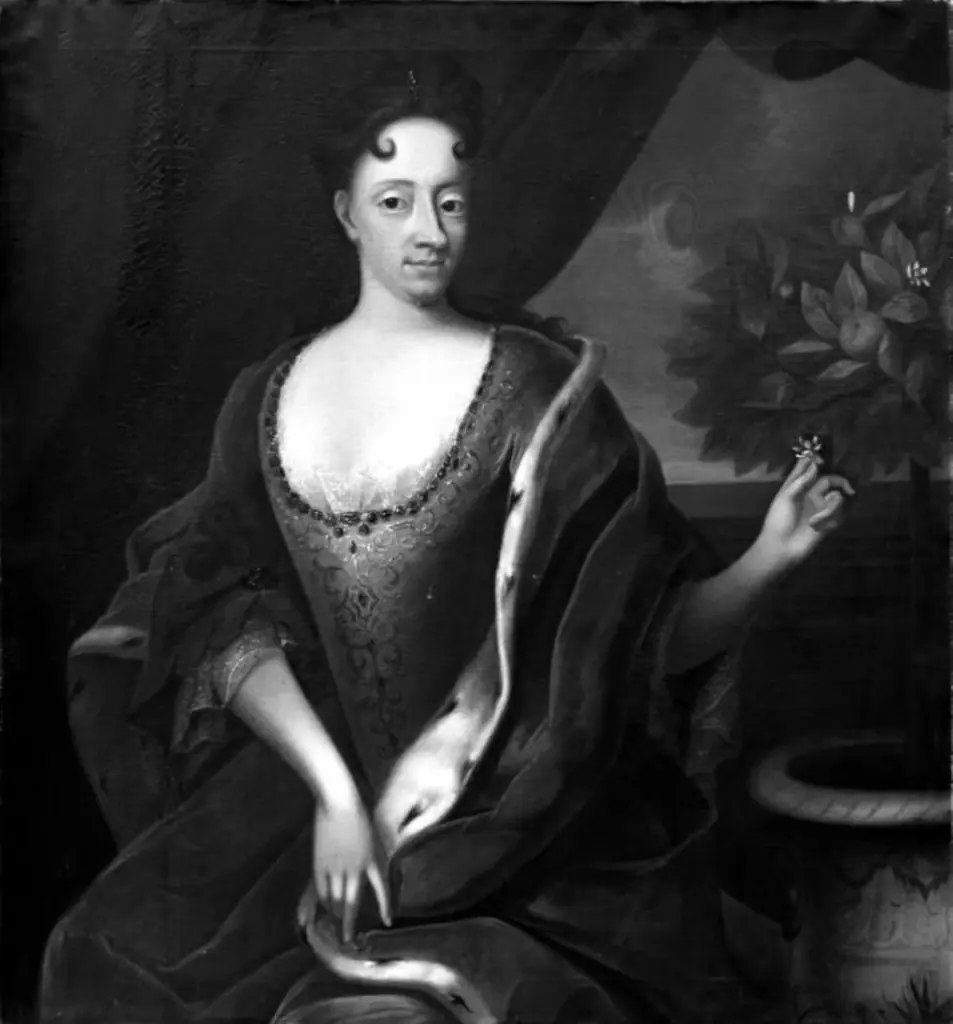
Vilhelm IV af Oraniens gemalinde Anna, datter af Georg II
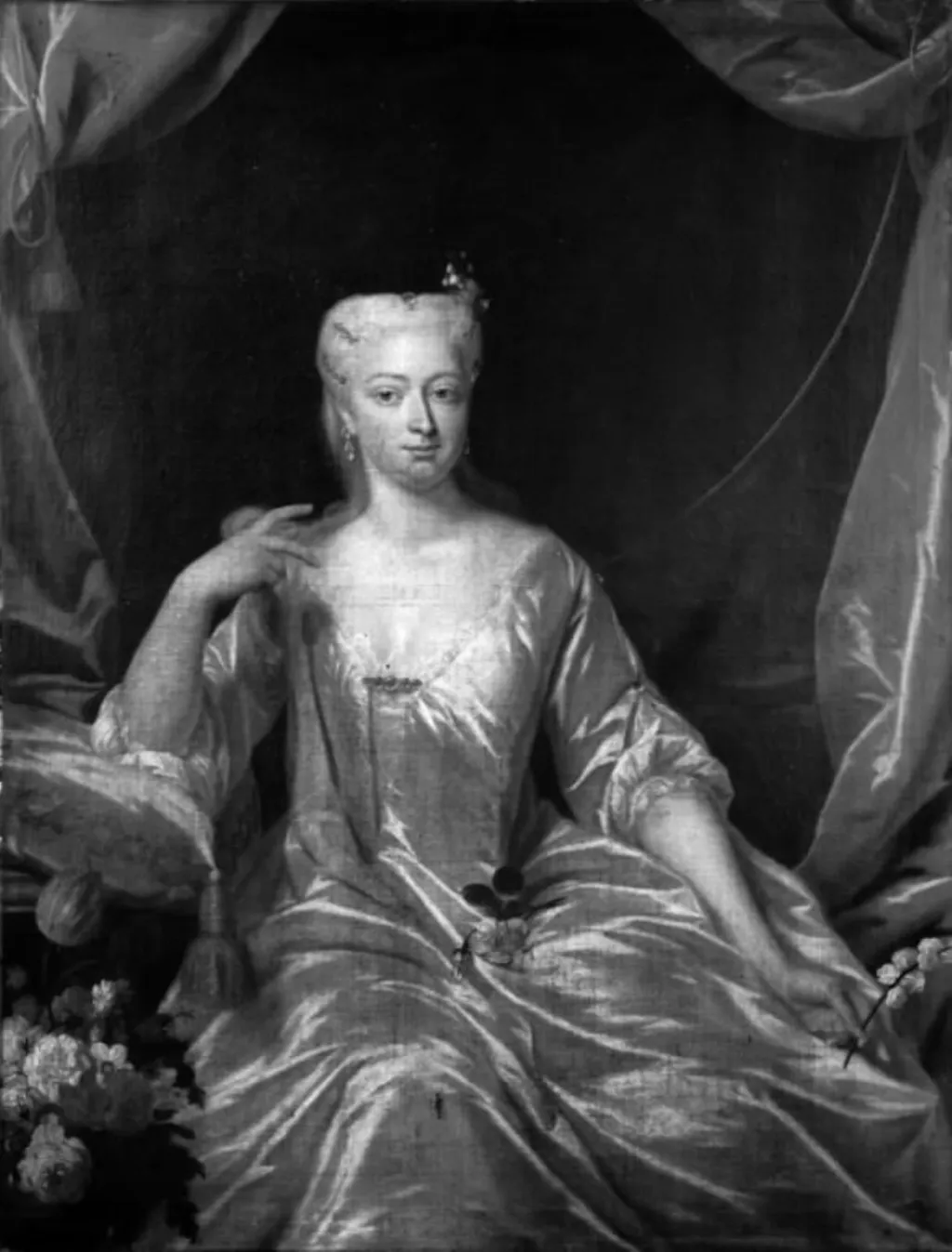
Vilhelm IV af Oraniens gemalinde Anna, datter af Georg II is a photography by Unknown. It dates from 1750 and is held in the collection of the Statens Museum for Kunst. This black-and-white photograph depicts Anna of Great Britain, consort of William IV of Orange, portrayed in an 18th-century formal pose.
About this work
This black-and-white photograph shows a woman in a lavish satin dress, possibly from the 18th century.
This black-and-white photograph shows a woman in a lavish satin dress, possibly from the 18th century. She sits with her left hand resting on her shoulder and her right hand on her lap. The dress features a low neckline and puffy sleeves, and she wears a crown or headpiece. The background is dark, with what appears to be a curtain or drapery behind her.
The woman's pose and attire suggest that she may be a member of royalty or nobility. The photograph's style and composition are reminiscent of formal portraits from the past.
To learn more about the artist behind this photograph, look up 37397_person.
Overview
This black-and-white photograph depicts Anna of Great Britain, consort of William IV of Orange, portrayed in an 18th-century formal pose. Created around 1750, the image is not a painting but a later photographic reproduction of an earlier portrait. It is held in the collection of the Museum of Ethnography, suggesting its use as a historical document rather than a fine art object.
Subject & Meaning
Anna, daughter of King George II of Great Britain, is shown as a royal consort, her attire and headpiece signaling her noble status. The composed posture—hand resting on the shoulder, the other gently placed—conveys dignity and restraint, typical of aristocratic portraiture. The image functions as a visual assertion of her lineage and position within European dynastic networks, emphasizing legitimacy and decorum.
Technique & Style
The photograph reproduces a painted portrait in monochrome, preserving the original’s dramatic lighting and rich textile details. The dark, draped background isolates the figure, directing focus to the elaborate satin gown with puffed sleeves and low neckline. The composition follows 18th-century conventions of formal portraiture, using symmetry and controlled lighting to project authority and refinement.
History & Provenance
The original portrait was likely painted in the mid-18th century, shortly after Anna’s marriage to William IV. The photograph, dated c. 1750, may be an early photographic copy made decades later, possibly for archival or educational purposes. Its current location in the Museum of Ethnography implies it was collected as part of a broader documentation of European nobility and cultural representation.
Context
Anna’s image reflects the transnational alliances among European royal families in the 1700s. As a British princess married into the Dutch stadtholderate, her portrayal served political and dynastic purposes. The persistence of her likeness in photographic form indicates ongoing interest in her role within the broader narrative of 18th-century European aristocracy and gendered representation.
Legacy
Though the original painting is lost or unlocated, this photographic reproduction preserves the visual identity of Anna of Orange. Its presence in an ethnographic collection underscores how royal imagery was repurposed over time as cultural artifact. The image remains a quiet testament to the ways noble women were visually codified across generations, beyond their lifetimes.
Artist & collection

 Domestic Scene
 Giacomo and Cardinal Marco, investing Andrea, Abbot of San Zeno, with his Benefice
 The Nymph of Fontainebleau
 Portrait of a Woman
 Madonna and Child with Saints in the Enclosed Garden
 Venus and Minerva
 Family Group of Four on Sofa
 Wall painting from Room H of the Villa of P. Fannius Synistor at Boscoreale