Artwork
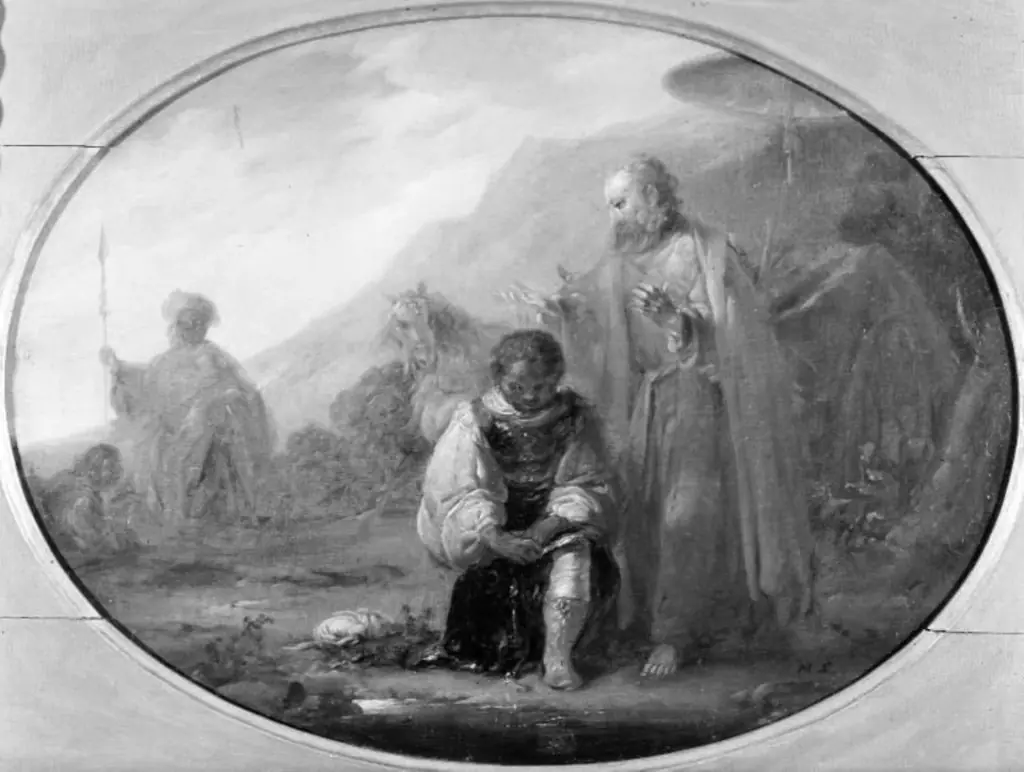
St Philip Baptising the Courtier of Queen Candauces
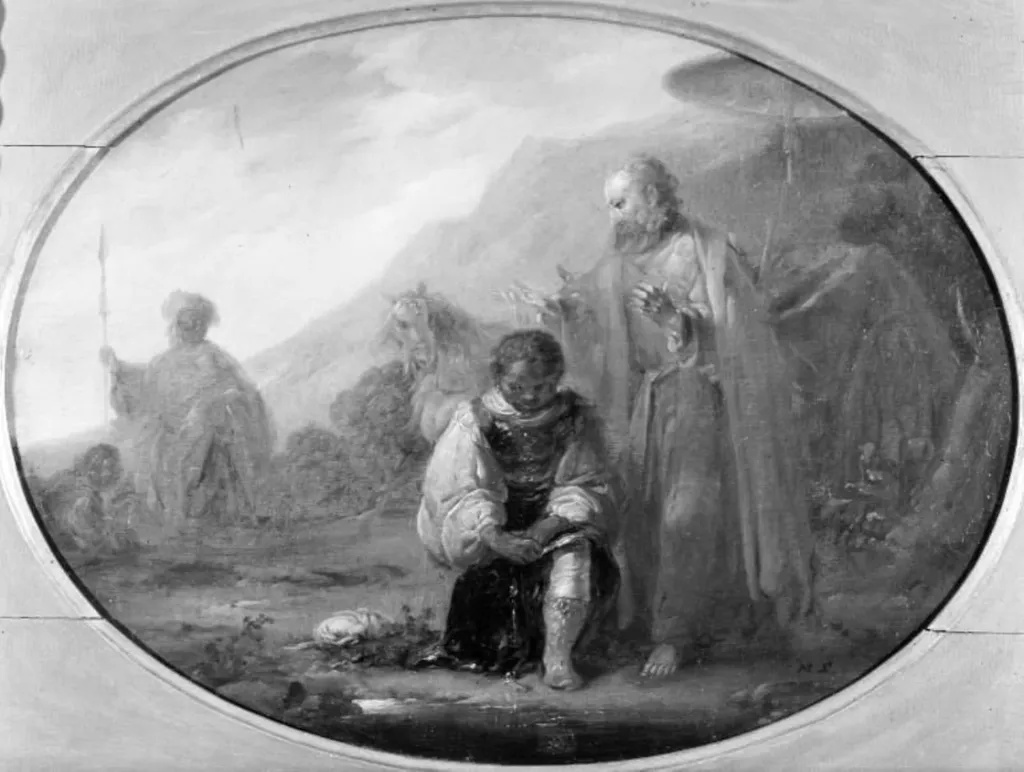
St Philip Baptising the Courtier of Queen Candauces is a photography by Unknown. It dates from 1750 and is held in the collection of the Statens Museum for Kunst. Created around 1750, this black-and-white image depicts a scene of baptism attributed to an artist identified only by a numerical code.
About this work
Overview
Created around 1750, this black-and-white image depicts a scene of baptism attributed to an artist identified only by a numerical code.
Created around 1750, this black-and-white image depicts a scene of baptism attributed to an artist identified only by a numerical code. The work is part of the collection at the Museum of Ethnography. Its composition centers on a ritual moment between two figures, with a third observer in the distance. The image’s stark tonal contrast and focused lighting suggest an intentional dramatization of the event, though its exact origin and cultural context remain unclear.
Subject & Meaning
The scene illustrates the baptism of a courtier from the court of Queen Candauces by the apostle Philip, a narrative drawn from early Christian tradition. The kneeling figure, head bowed, receives the rite, while the standing figure, clad in robes, performs the act with a small object—possibly a cross or cloth—held in hand. The presence of a third figure in the background implies witness or authority, reinforcing the ritual’s significance within a royal or elite context.
Technique & Style
The image employs strong chiaroscuro, using sharp contrasts between light and shadow to model the figures and define their forms. The rocky shoreline and drapery are rendered with minimal detail, directing focus to the interaction between the two central figures. The blurred background figure adds depth without distraction, while the lighting emphasizes facial expressions and the texture of clothing, suggesting a theatrical, almost stage-like composition.
History & Provenance
The work’s creator is recorded only as a numerical identifier, with no known name or biographical details. It entered the Museum of Ethnography’s collection without clear documentation of its origin or commission. The image likely originated as a preparatory study, devotional illustration, or reproduction from a larger painted work, but its precise path from creation to museum acquisition remains undocumented.
Context
This image reflects 18th-century European interest in biblical narratives set in non-Western locales, often blending scriptural accounts with imagined Eastern settings. The figure of Queen Candauces, likely a fictional or misattributed royal name, points to a conflation of biblical tradition with exoticized geography. Such depictions were common in missionary and scholarly circles seeking to visualize early Christian expansion beyond the Roman world.
Legacy
Though not widely exhibited or studied, the image serves as an example of how religious themes were visually interpreted in the 18th century through simplified, dramatic formats. Its presence in an ethnographic museum suggests an early attempt to categorize biblical scenes as cultural artifacts rather than purely theological ones, reflecting shifting attitudes toward religion and representation in museum practice.
Artist & collection

 Domestic Scene
 Giacomo and Cardinal Marco, investing Andrea, Abbot of San Zeno, with his Benefice
 The Nymph of Fontainebleau
 Portrait of a Woman
 Madonna and Child with Saints in the Enclosed Garden
 Venus and Minerva
 Family Group of Four on Sofa
 Wall painting from Room H of the Villa of P. Fannius Synistor at Boscoreale
 Christus am Ölberg
 Landscape with Ruth and Boaz
 Isaak segnet Jakob (Kopie nach)
 Die Opferung Isaaks (Replik?)
 Der blinde Wahrsager
 Profeten Elias, i rød kjortel, violet gevandt og hvid turban, taler til den sunamitiske kvinde
 Alter Bauer
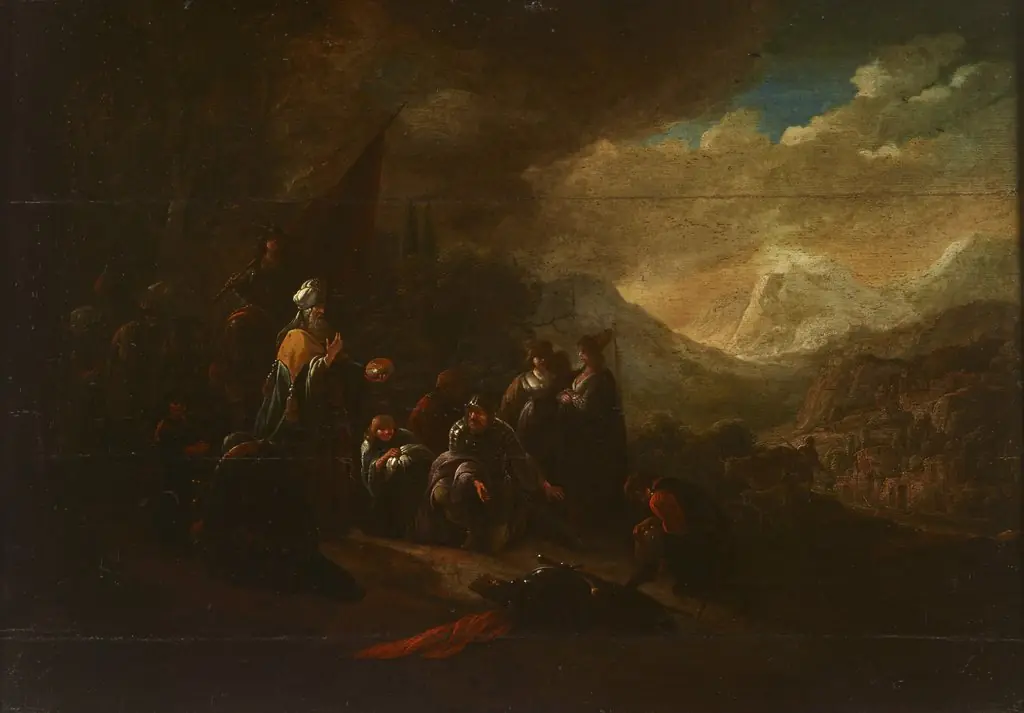 Melchizedek and Abraham
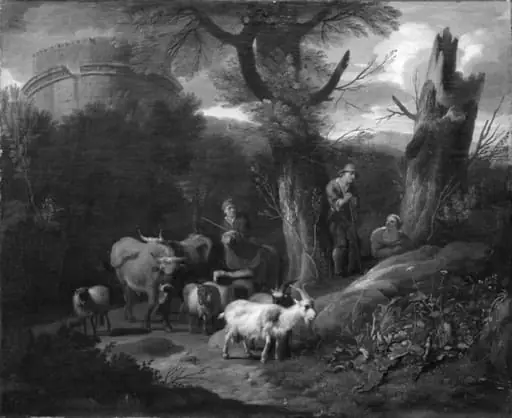 Italian Scenery with Cattle
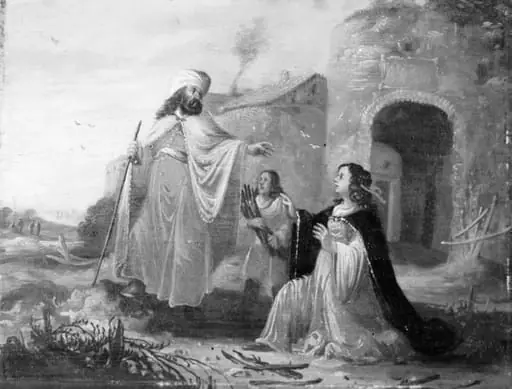 Profeten Elias, i rød kjortel, violet gevandt og hvid turban, taler til den sunamitiske kvinde
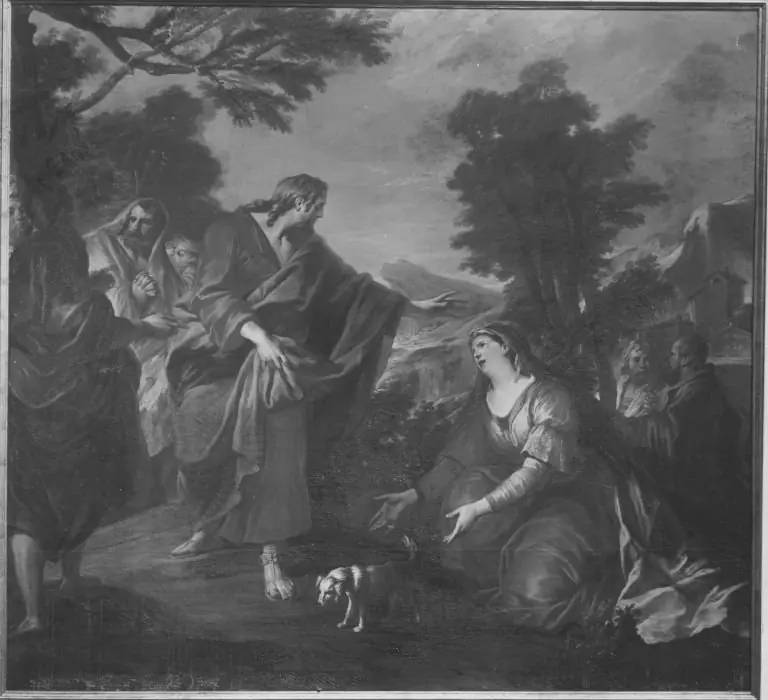 Christus und das kanaanitische Weib
 St Philip Baptising the Courtier of Queen Candauces