Artwork
Hagar i ørkenen
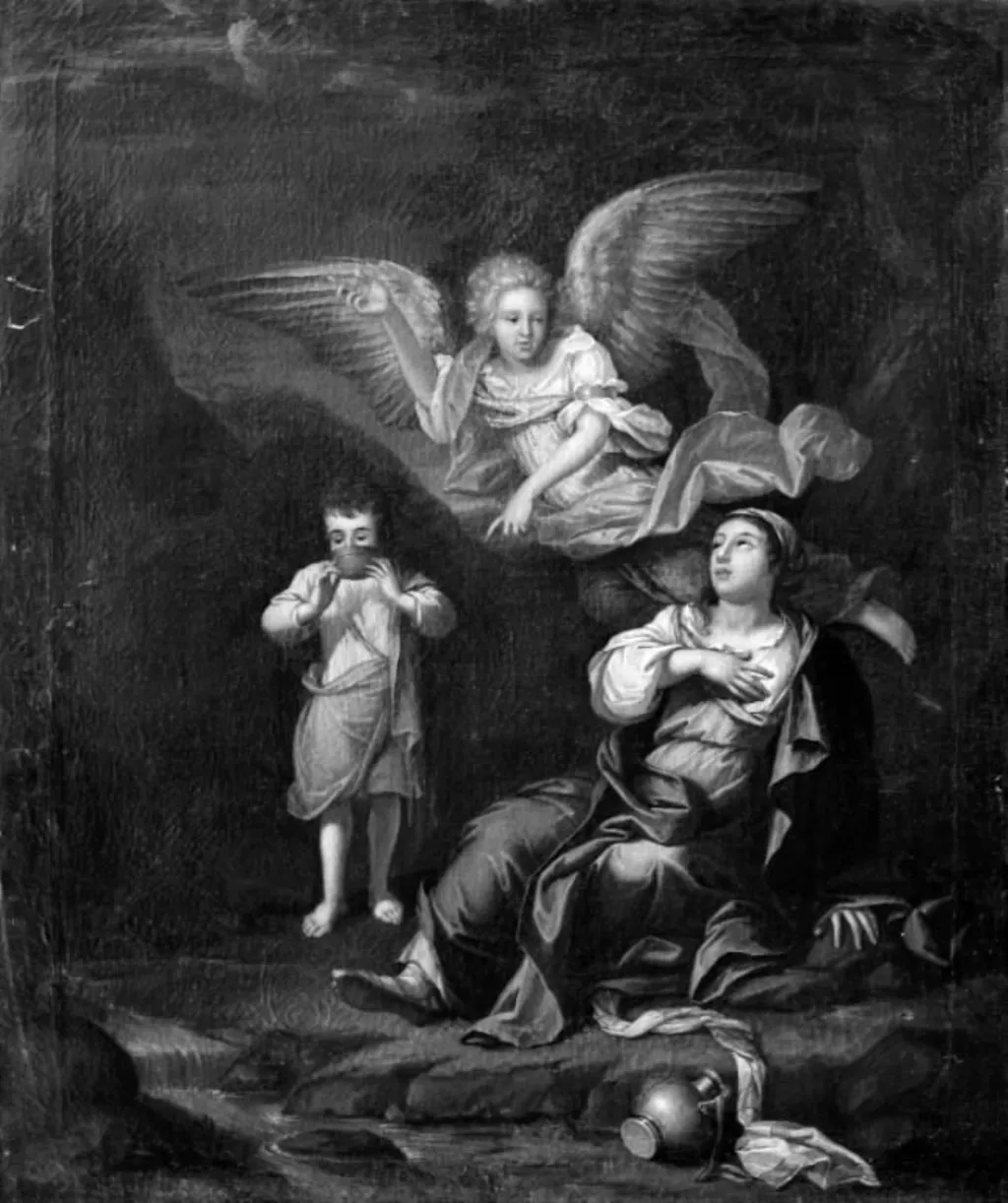
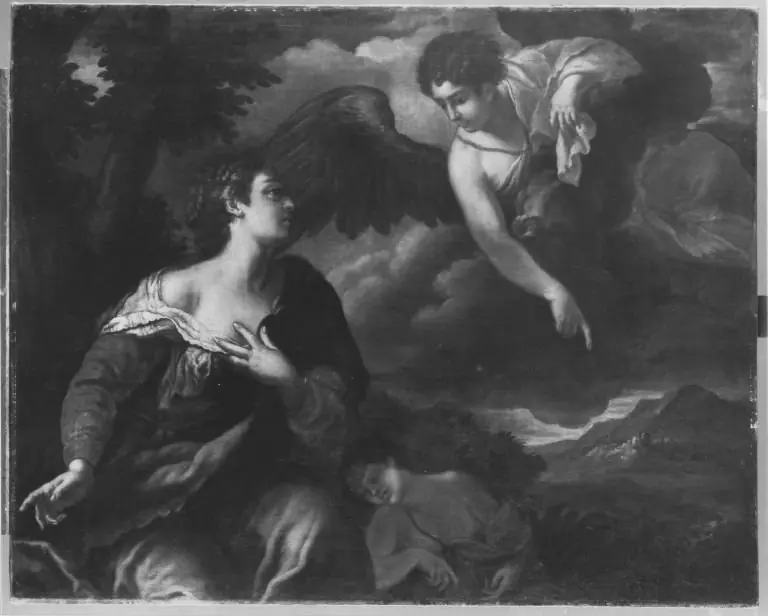
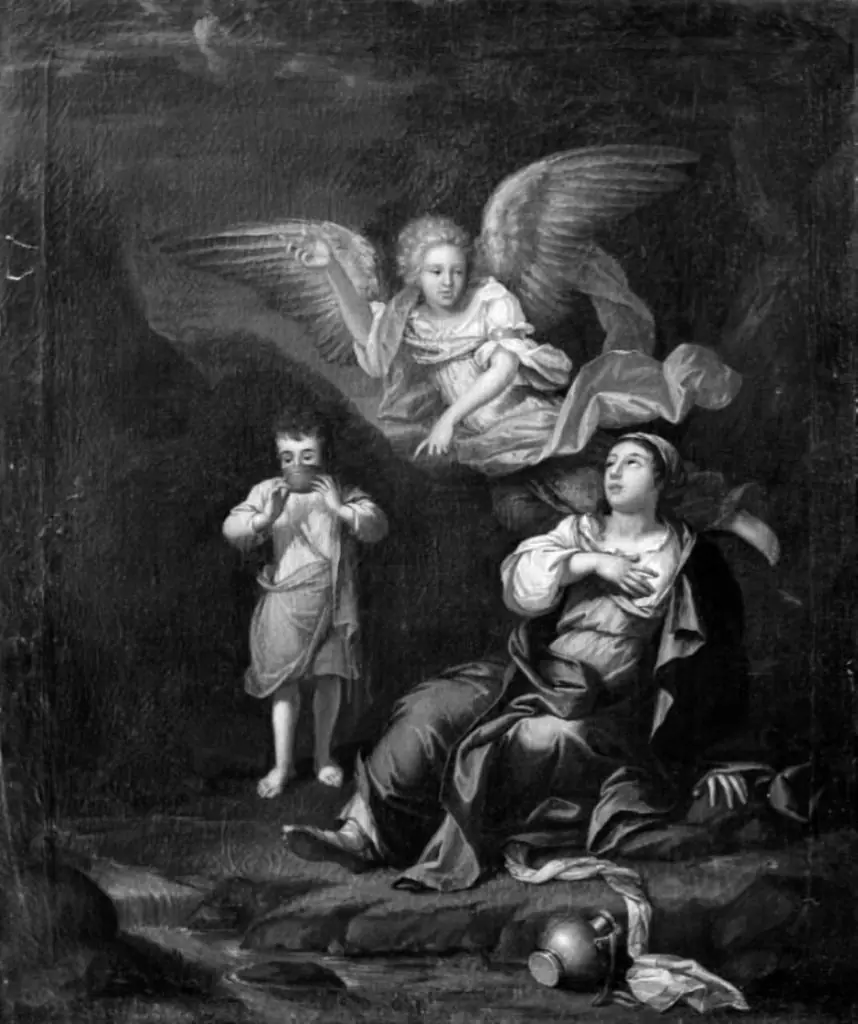
Hagar i ørkenen is a photography by Unknown. It dates from 1750 and is held in the collection of the Statens Museum for Kunst. This mid-18th-century work depicts three figures within a confined, dimly lit setting.
About this work
Overview
A woman kneels at the center, her posture conveying urgency or supplication, while a child stands nearby, holding an object resembling a staff.
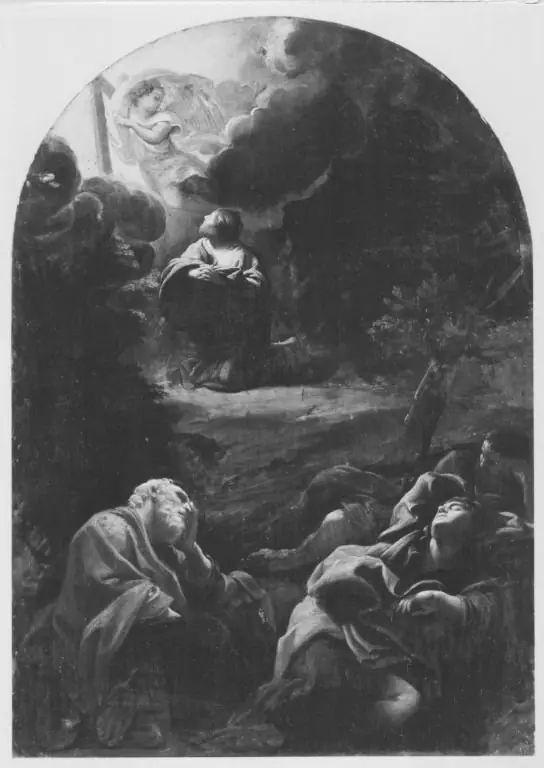
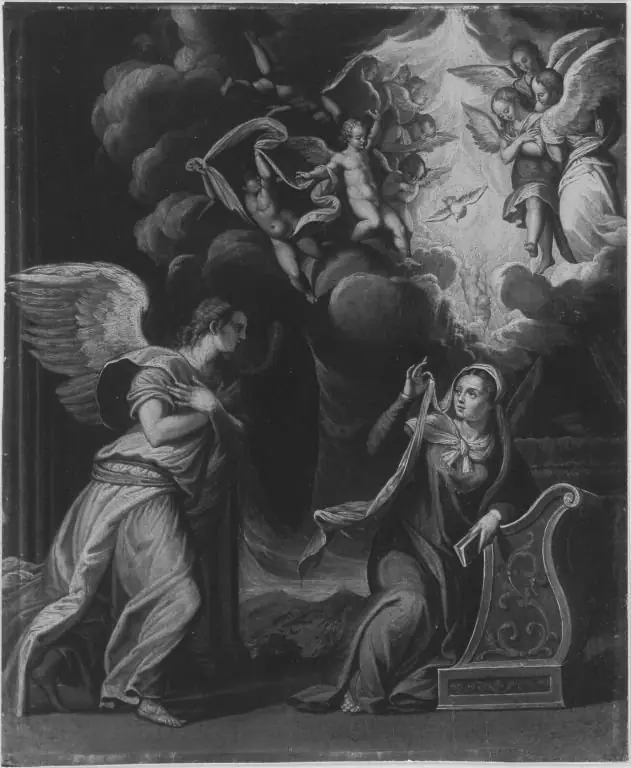
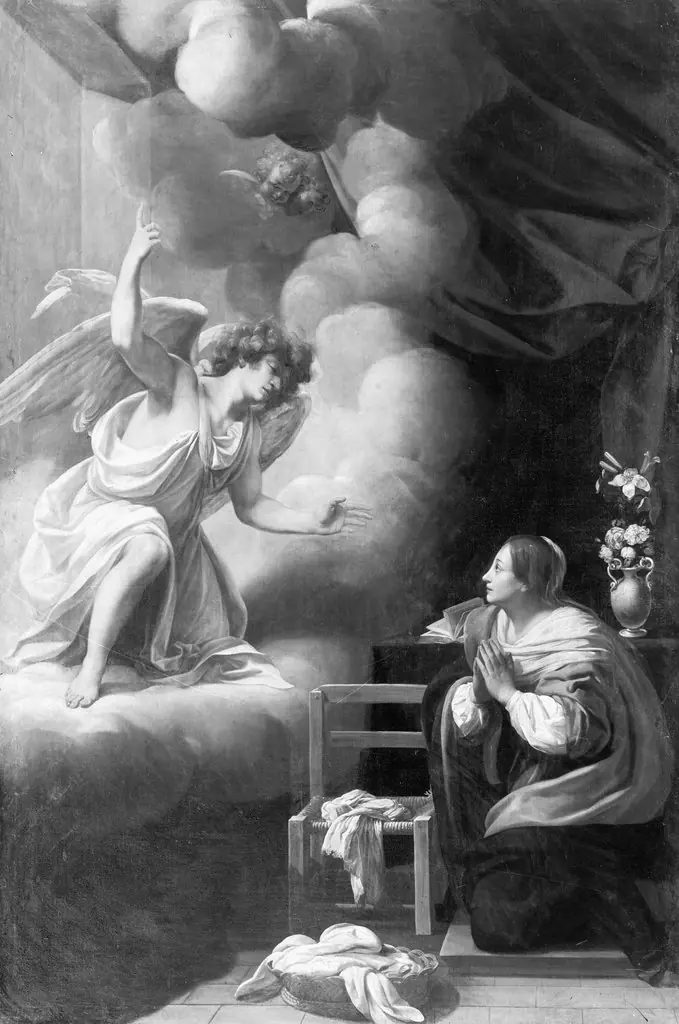
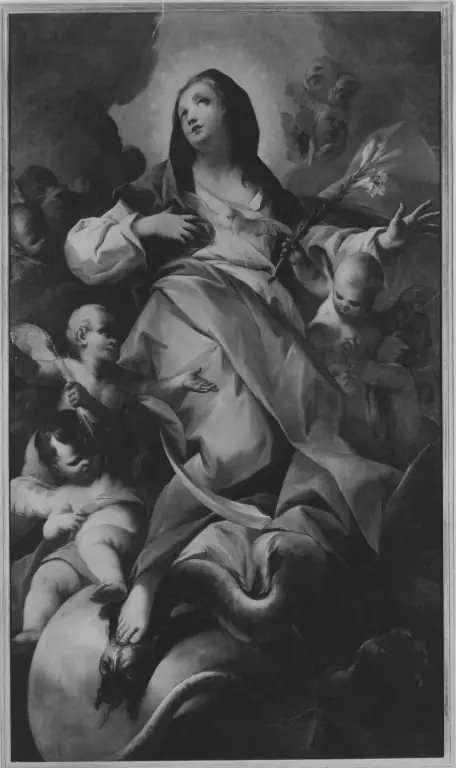
This mid-18th-century work depicts three figures within a confined, dimly lit setting. A woman kneels at the center, her posture conveying urgency or supplication, while a child stands nearby, holding an object resembling a staff. Above them hovers a winged figure, its robes and outspread wings rendered with a sense of weightlessness. The composition relies on stark contrasts between illumination and shadow to isolate the figures and heighten their emotional presence.
Subject & Meaning
The scene portrays a moment drawn from biblical narrative, specifically the story of Hagar and her son Ishmael, abandoned in the wilderness. The kneeling woman’s upward gaze and gesture toward her chest suggest despair or entreaty, while the hovering figure implies divine intervention. The child’s passive stance reinforces the vulnerability of the pair, emphasizing themes of abandonment, faith, and deliverance.
Technique & Style
The artist employs *chiaroscuro*, a method that exploits extreme tonal contrasts to model forms and direct attention. Light is concentrated on the central figures, leaving the surrounding space in deep shadow, a device that intensifies the drama. The fluid drapery of the winged figure and the precise rendering of gestures reflect a controlled, academic approach to composition, balancing naturalism with symbolic clarity.
History & Provenance
Created around 1750, the work has been part of the Museum of Ethnography’s collection. Little documentation survives regarding its early ownership or the circumstances of its commission. Its current status within an ethnographic institution suggests a later recontextualization, though its original function—whether devotional, decorative, or instructional—remains unclear.
Context
The mid-18th century saw continued interest in biblical subjects among European artists, often as vehicles for exploring human emotion and moral dilemmas. Works like this one reflect the period’s engagement with religious narratives, filtered through conventions of academic painting. The use of *chiaroscuro* aligns with broader artistic trends that favored theatricality and psychological intensity.
Legacy
While not widely reproduced or discussed in major art-historical surveys, the painting exemplifies the enduring appeal of biblical themes in European art. Its presence in an ethnographic museum highlights shifting frameworks for interpreting such works, from religious or aesthetic objects to artifacts subject to anthropological inquiry. The composition’s dramatic use of light remains a point of interest for studies of 18th-century technique.
Artist & collection

 Domestic Scene
 Giacomo and Cardinal Marco, investing Andrea, Abbot of San Zeno, with his Benefice
 The Nymph of Fontainebleau
 Portrait of a Woman
 Madonna and Child with Saints in the Enclosed Garden
 Venus and Minerva
 Family Group of Four on Sofa
 Wall painting from Room H of the Villa of P. Fannius Synistor at Boscoreale