Artwork
Køkkenstykke
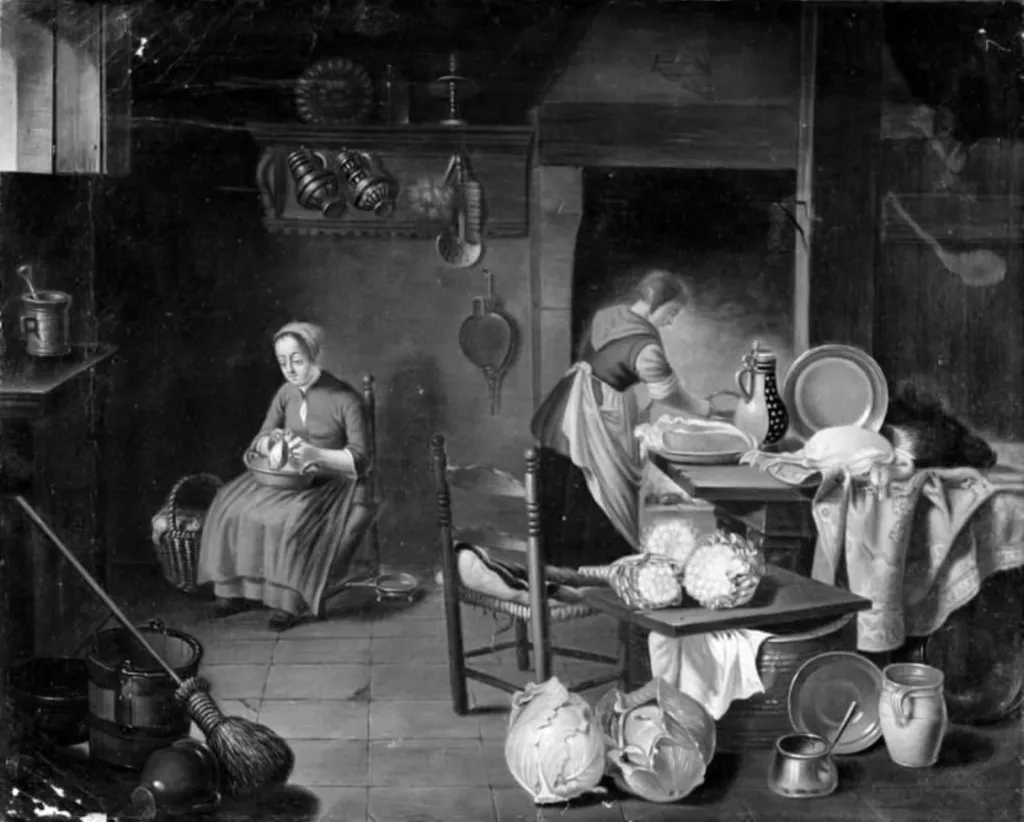
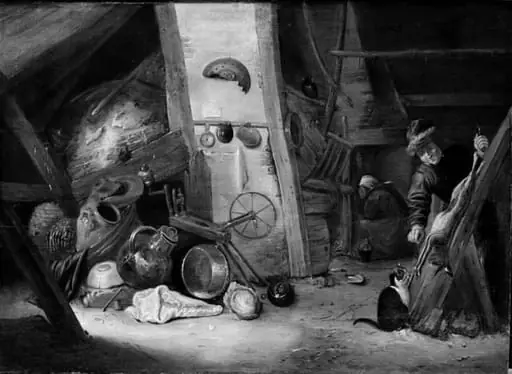
Køkkenstykke is a photography by the Impressionist artist Unknown. It dates from 1860 and is held in the collection of the Statens Museum for Kunst.
About this work
Overview
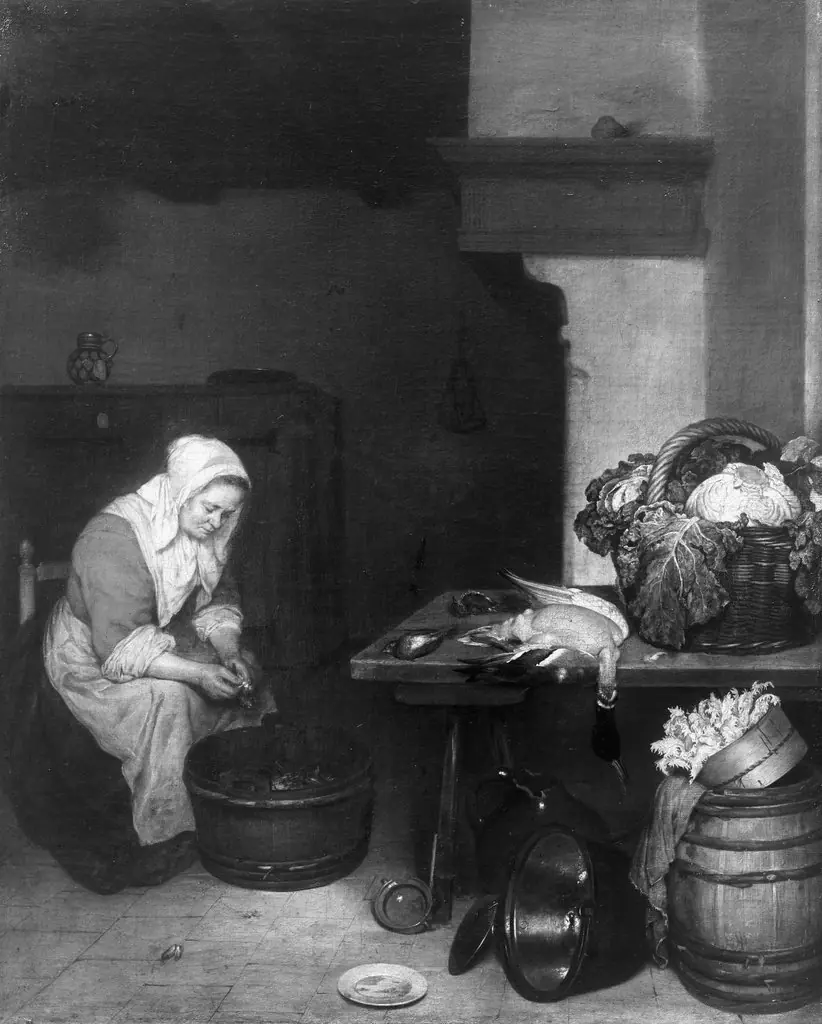
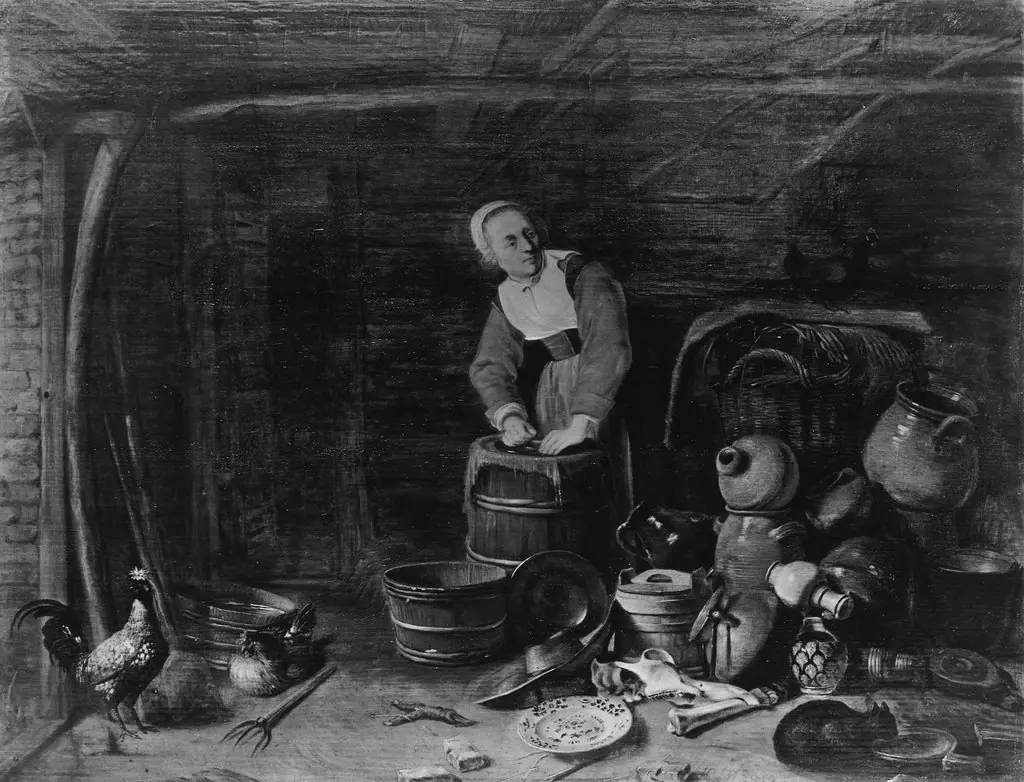
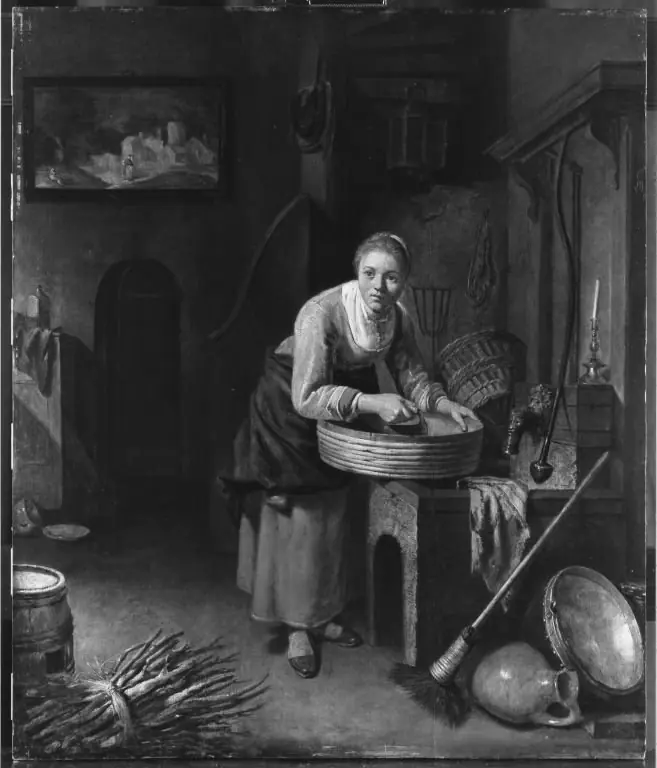
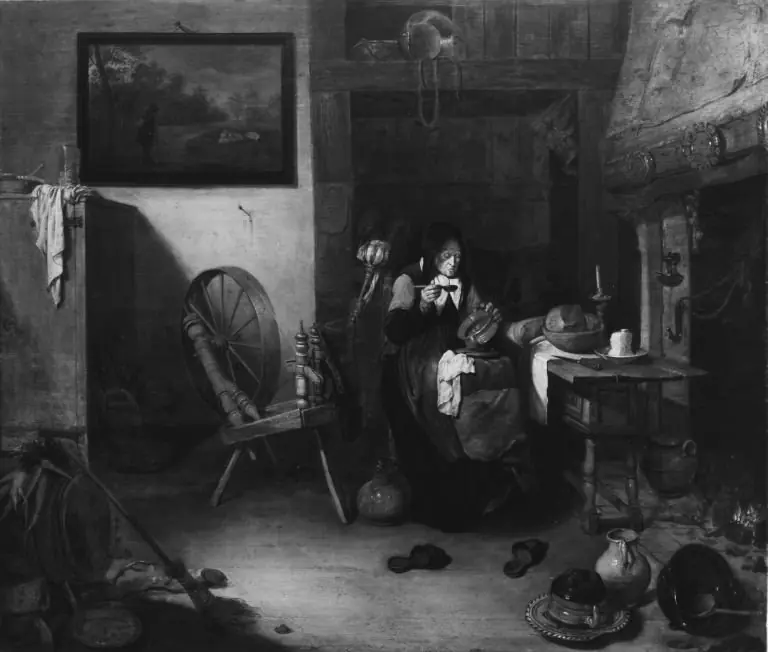
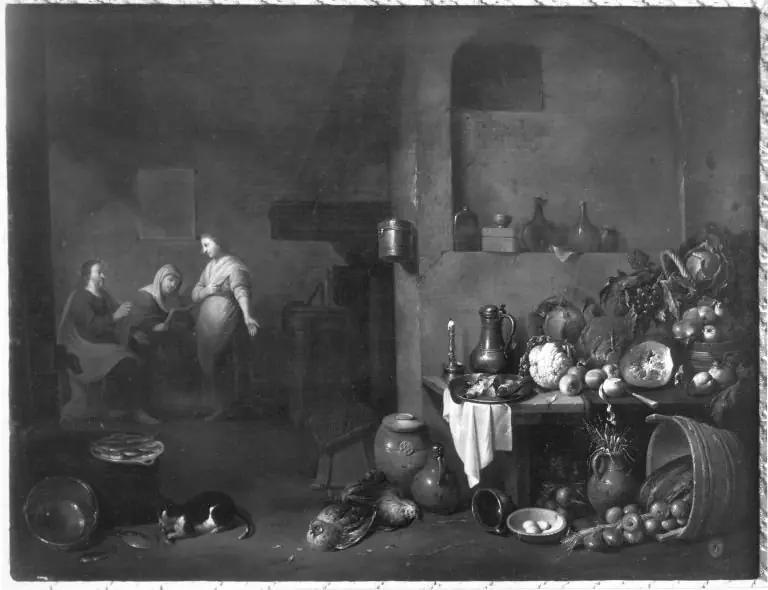
Køkkenstykke is a black-and-white photograph from 1860, depicting an ordinary domestic interior in Denmark. The image captures two women engaged in routine household tasks within a modest kitchen. It is part of the collection at the Museum of Ethnography, where it serves as a record of everyday life in the 19th century rather than a formal portrait or staged composition.
Subject & Meaning
The scene portrays two women performing daily chores—one sewing at a table, the other tending to a pot on the stove. Their quiet, unremarkable actions emphasize the rhythm of domestic labor. The cluttered space, filled with utilitarian objects, reflects the material reality of working-class homes, offering a quiet testament to the dignity of routine existence.
Technique & Style
Rendered in monochrome, the photograph relies on natural, low-light conditions to create a subdued, intimate atmosphere. The composition is unposed, with objects arranged organically across the floor and walls. The lack of theatrical lighting or staging aligns the work with early documentary practices, prioritizing authenticity over aesthetic embellishment.
History & Provenance
Created in 1860, the photograph was acquired by the Museum of Ethnography, where it has remained in its collection since the late 19th century. Its origins as a private or ethnographic record are unclear, but its preservation suggests an early recognition of domestic spaces as culturally significant subjects worthy of documentation.
Context
In mid-19th century Denmark, photography was beginning to be used beyond portraiture to capture social environments. Køkkenstykke reflects this shift, aligning with broader European movements that valued truthful representation of daily life. It predates formal Realist painting’s dominance but shares its commitment to depicting ordinary subjects without idealization.
Legacy
The photograph stands as an early example of ethnographic visual documentation, influencing later studies of domestic life in Northern Europe. Its unadorned realism offers scholars a tangible window into the material culture of working households, contributing to historical understandings of gender, labor, and domestic space in the 1800s.
Artist & collection

 Domestic Scene
 Giacomo and Cardinal Marco, investing Andrea, Abbot of San Zeno, with his Benefice
 The Nymph of Fontainebleau
 Portrait of a Woman
 Madonna and Child with Saints in the Enclosed Garden
 Venus and Minerva
 Family Group of Four on Sofa
 Wall painting from Room H of the Villa of P. Fannius Synistor at Boscoreale