Artwork
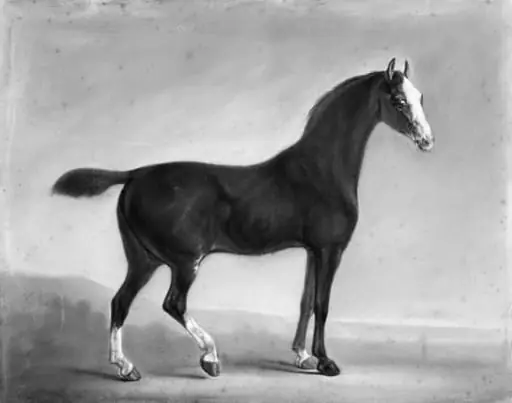
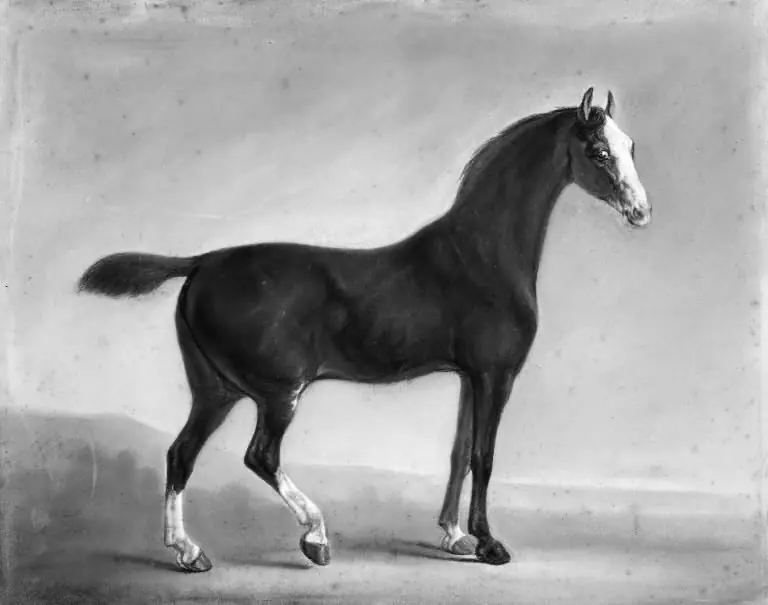
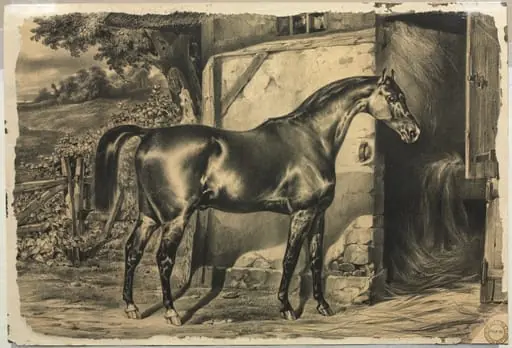
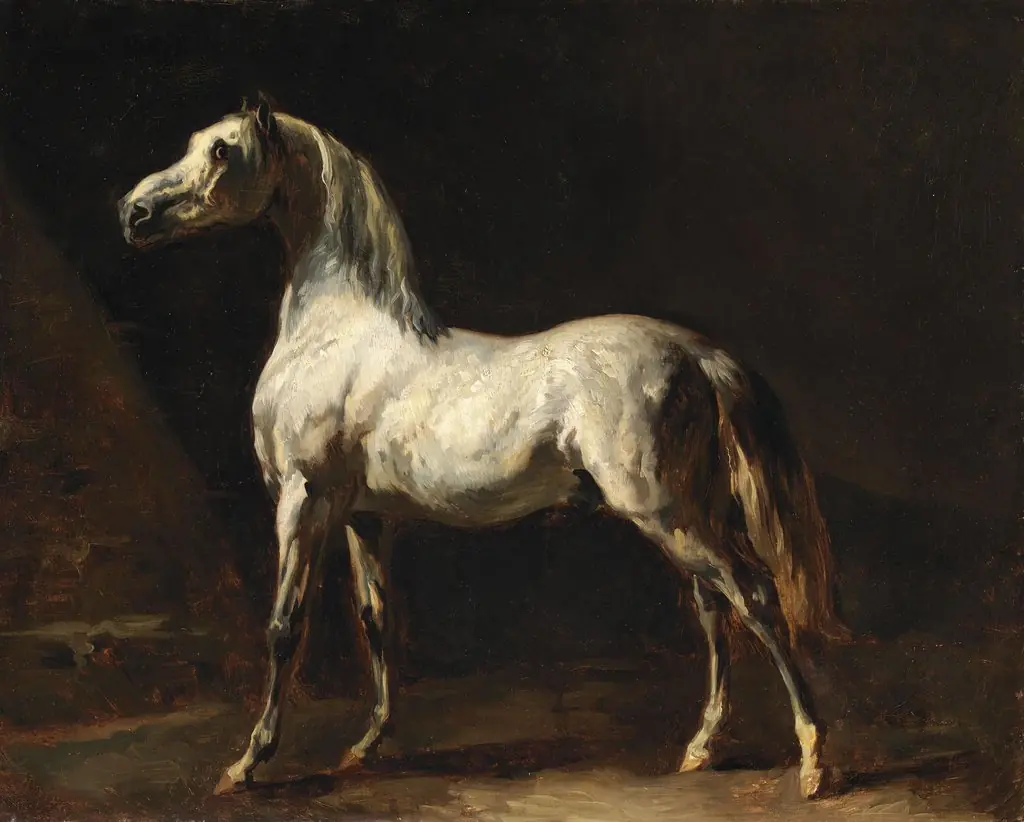
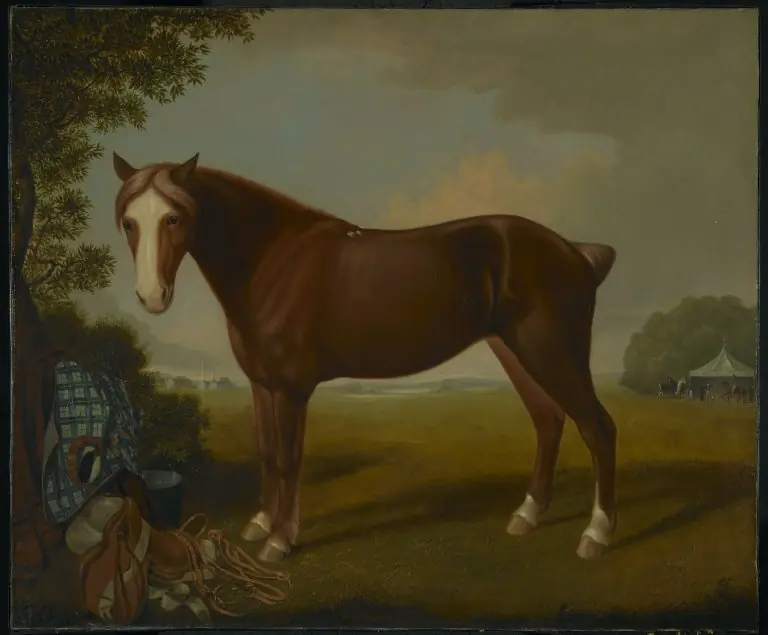
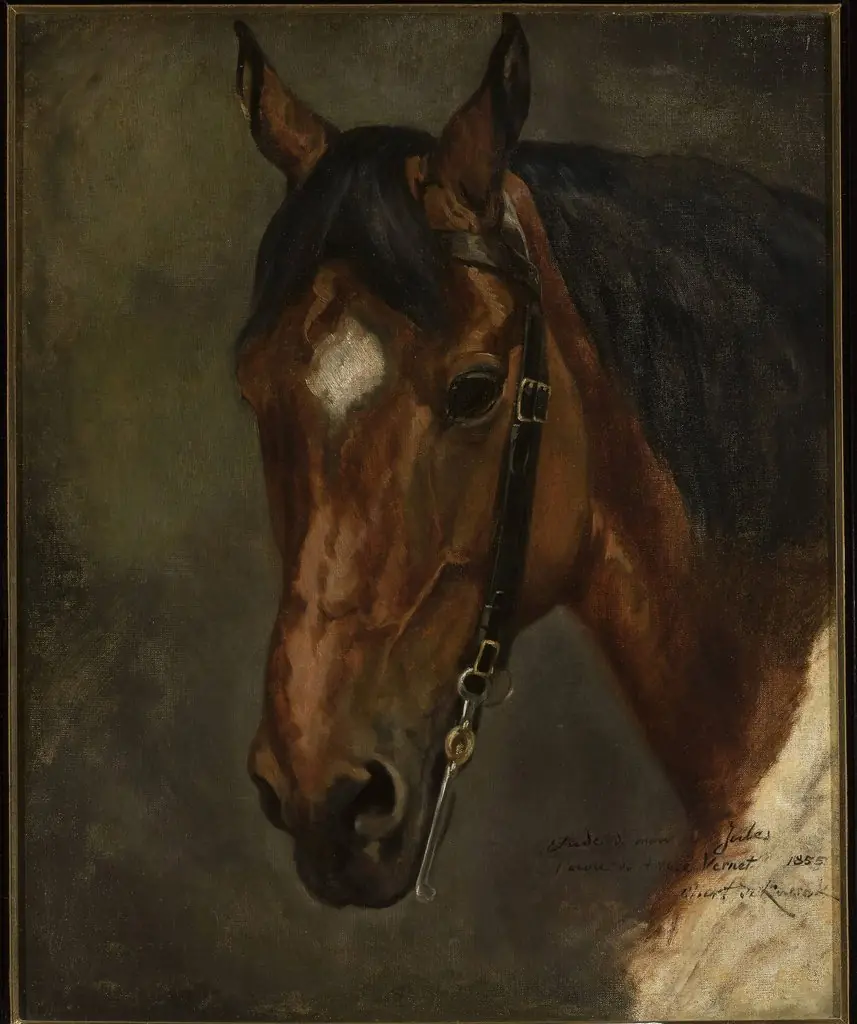
Standing Brown Horse
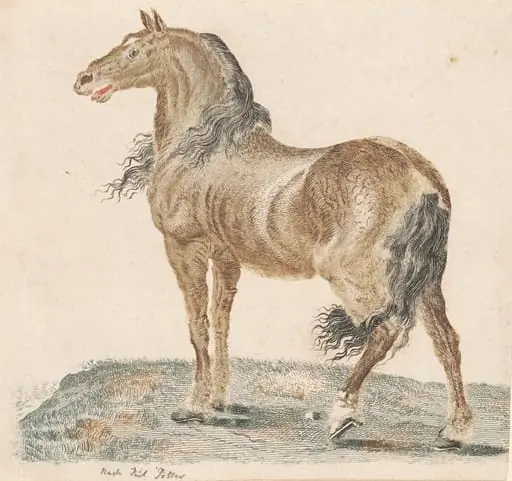
Standing Brown Horse is a photography by the Romanticist artist Unknown. It dates from 1795 and is held in the collection of the Statens Museum for Kunst.
About this work
Overview
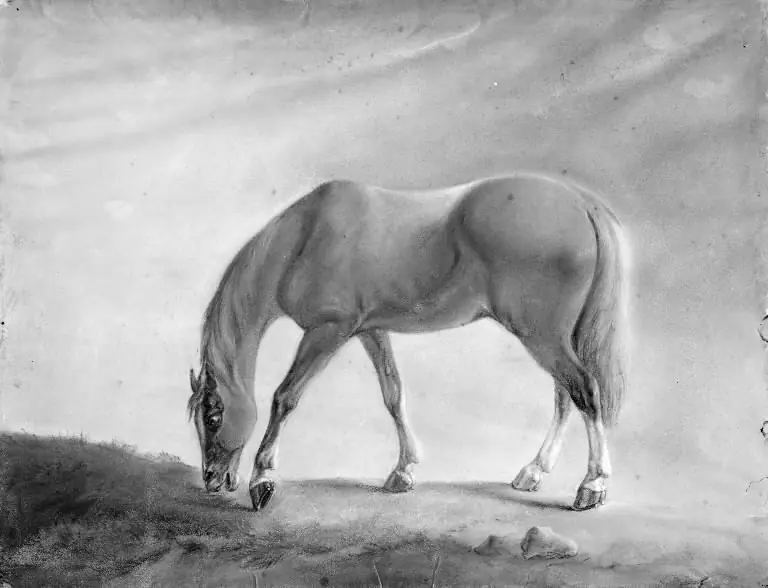
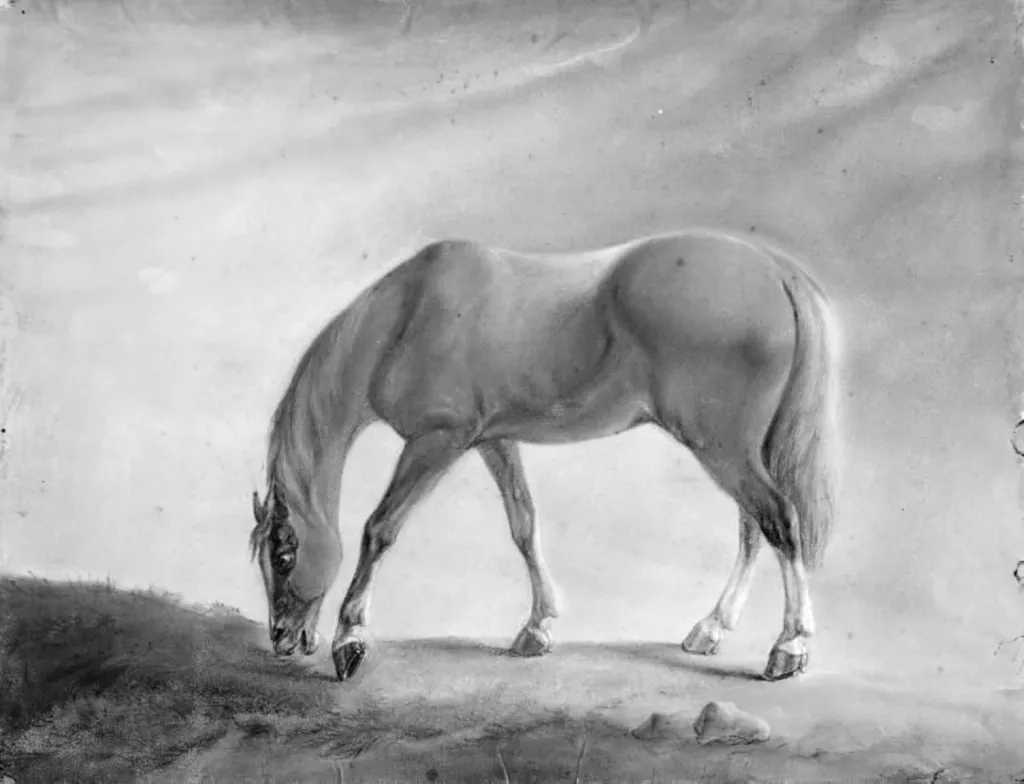
Created in 1795, this black-and-white image depicts a standing brown horse in a quiet, natural setting. The work is held by the Museum of Ethnography and appears to be a photographic or drawn record rather than a painted composition. Its simplicity and soft, blurred contours suggest an early attempt to capture an unposed moment in rural life, emphasizing stillness over drama.
Subject & Meaning
The horse is shown in a grazing posture, head lowered toward the earth, surrounded by scattered stones and open ground. There is no indication of human presence, harness, or movement. The focus on this ordinary, tranquil act suggests an interest in the animal’s daily existence, possibly reflecting an ethnographic aim to document rural livestock in its natural environment.
Technique & Style
The image employs muted tonal contrasts and blurred edges, creating a sense of calm and time-worn texture. The lack of sharp definition and the soft rendering of forms indicate either early photographic limitations or a deliberate stylistic choice to evoke quietude. Light falls evenly, avoiding dramatic chiaroscuro, reinforcing the scene’s serenity rather than its intensity.
History & Provenance
The work entered the collection of the Museum of Ethnography shortly after its creation, likely as part of a broader effort to record regional animal husbandry practices. Its origin as a field study by an unknown artist or observer remains undocumented, but its preservation suggests early recognition of its value as a cultural record rather than an artistic statement.
Context
In late 18th-century Europe, documentation of rural life was gaining traction among scholars and collectors. This image aligns with emerging ethnographic practices that sought to observe and preserve everyday scenes before industrialization altered them. The absence of human figures or tools underscores a focus on the animal as a natural element within its landscape.
Legacy
Though not widely exhibited or reproduced, the image remains a quiet example of early observational documentation. Its endurance in the museum’s collection reflects a shift toward valuing mundane, unembellished moments in cultural history. It stands as a precursor to later documentary approaches in both photography and ethnographic art.
Artist & collection

 Domestic Scene
 Giacomo and Cardinal Marco, investing Andrea, Abbot of San Zeno, with his Benefice
 The Nymph of Fontainebleau
 Portrait of a Woman
 Madonna and Child with Saints in the Enclosed Garden
 Venus and Minerva
 Family Group of Four on Sofa
 Wall painting from Room H of the Villa of P. Fannius Synistor at Boscoreale