Artwork
Horse in Front of a Barn (verso)
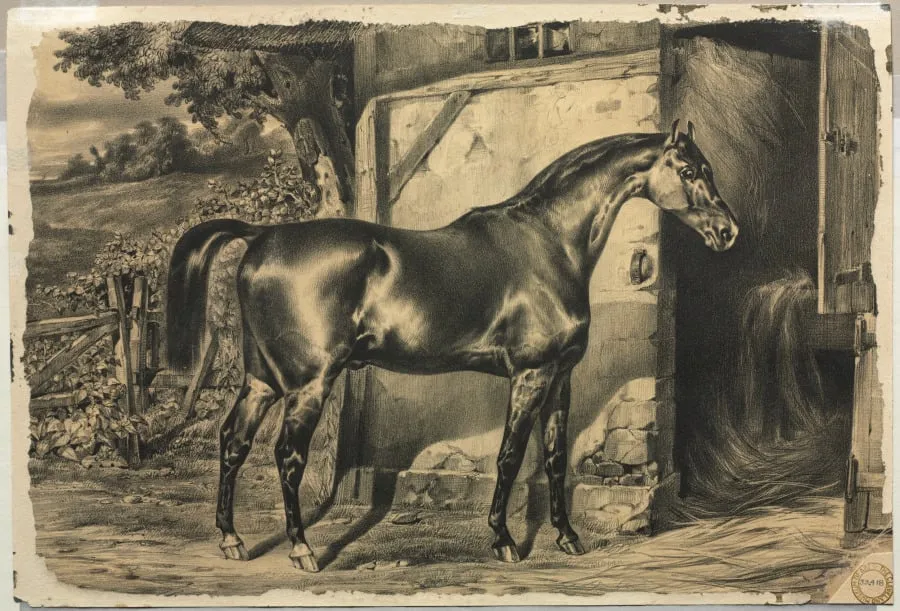
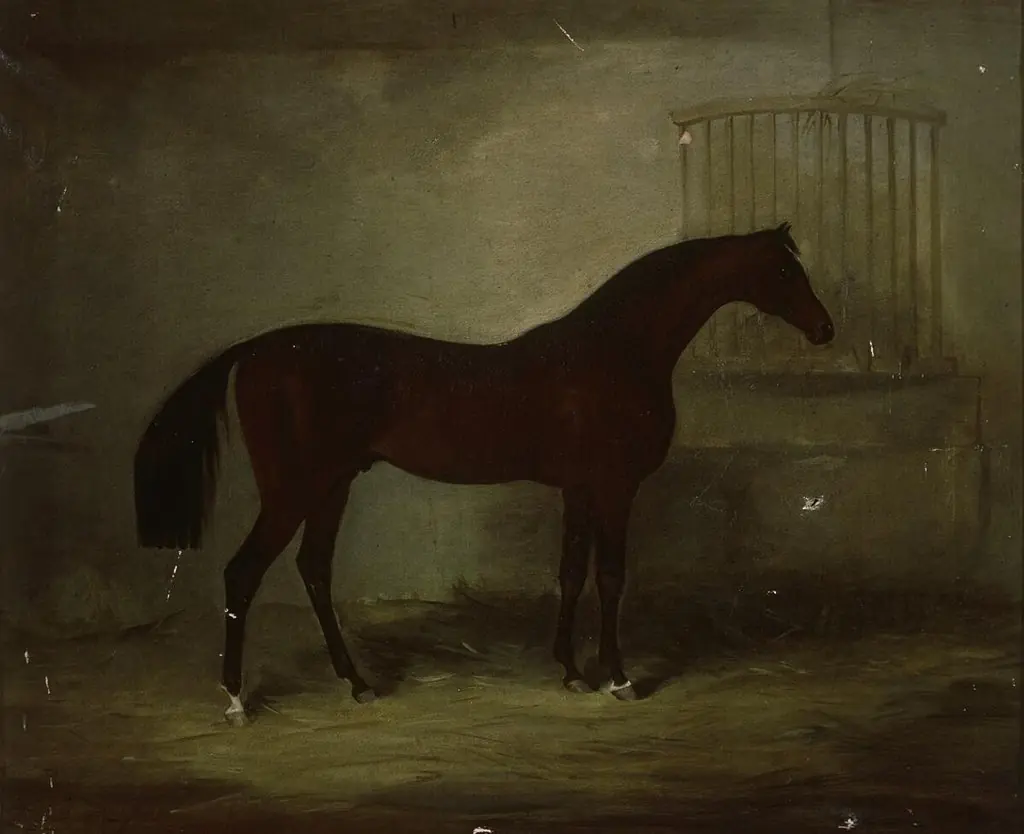
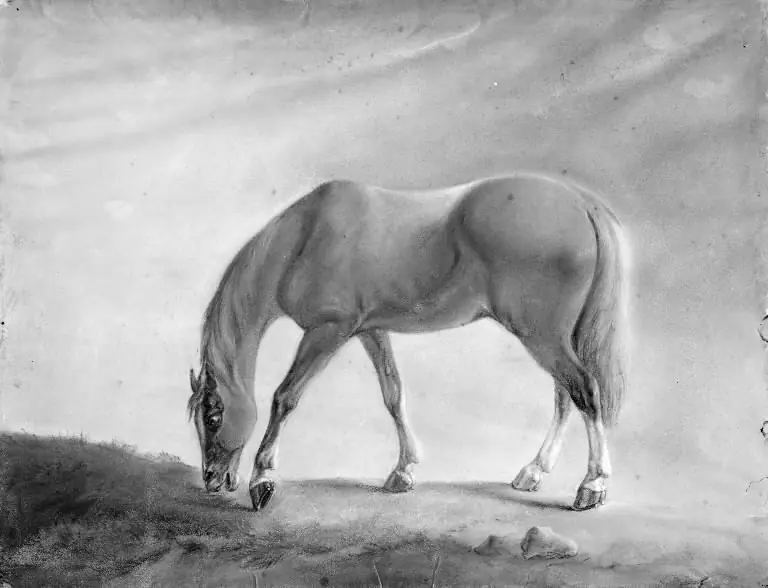
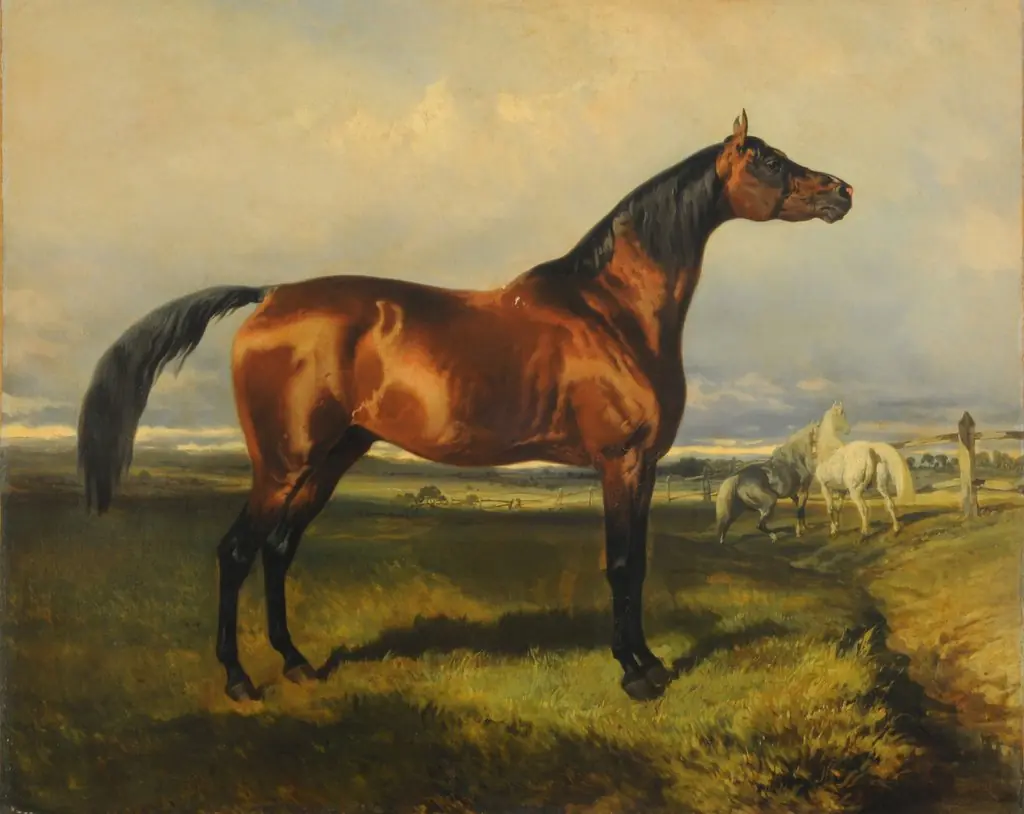
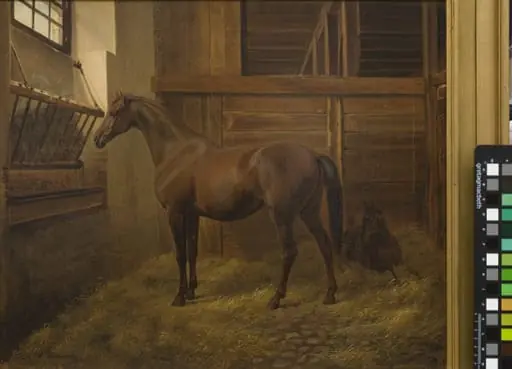
Horse in Front of a Barn (verso) is a print by the Romanticist artist Unknown. It dates from 1820 and is held in the collection of the Cleveland Museum of Art. This print presents a solitary horse positioned before a rural barn, captured in a moment of quiet stillness.
About this work
Overview
Background elements—a tree and a fence—frame the subject without distracting, reinforcing spatial depth through minimal but deliberate detail.
This print presents a solitary horse positioned before a rural barn, captured in a moment of quiet stillness. The animal’s head turns to the right, drawing the viewer’s gaze across the composition. Dark, rich tones dominate the figure, contrasted by subtle highlights that suggest surface sheen and volume. Background elements—a tree and a fence—frame the subject without distracting, reinforcing spatial depth through minimal but deliberate detail.
Subject & Meaning
The horse, a recurring symbol of strength and quiet dignity, is depicted without human presence, emphasizing its autonomy. The barn implies a pastoral setting, grounding the scene in rural life. The absence of narrative action invites contemplation rather than storytelling. The animal’s alert posture and reflective coat suggest awareness of its surroundings, evoking a sense of solitude and resilience common in 19th-century depictions of livestock.
Technique & Style
The artist employs chiaroscuro to model the horse’s form, using sharp contrasts between light and shadow to accentuate musculature and texture. The coat’s glossy appearance is achieved through careful gradations of tone, not line. Mane and tail are rendered with fine, controlled strokes, suggesting individual hairs without overdetailing. The background is subdued, allowing the horse to dominate visually through tonal weight and placement.
History & Provenance
The work is identified as the verso of a print, suggesting it was created on the reverse side of another image, possibly a study or reused material. Its origin is tied to a 19th-century artist working within regional traditions, though the specific creator remains unattributed. The piece likely circulated among collectors or students, valued for its technical precision rather than public exhibition.
Context
Produced during a period when rural life and animal subjects were frequently explored in European and American art, this print reflects broader interests in naturalism and emotional resonance. While not aligned with grand Romantic narratives, it shares the movement’s focus on individual dignity in nature. Its modest scale and medium suggest it was intended for private study or informal display, not public acclaim.
Legacy
Though not widely reproduced or cited in major art histories, the work exemplifies a quiet, observational tradition in 19th-century printmaking. Its attention to anatomical accuracy and atmospheric tone influenced later artists interested in animal portraiture outside the academic mainstream. It remains a modest but instructive example of how everyday subjects were elevated through disciplined technique.
Artist & collection

 Domestic Scene
 Giacomo and Cardinal Marco, investing Andrea, Abbot of San Zeno, with his Benefice
 The Nymph of Fontainebleau
 Portrait of a Woman
 Madonna and Child with Saints in the Enclosed Garden
 Venus and Minerva
 Family Group of Four on Sofa
 Wall painting from Room H of the Villa of P. Fannius Synistor at Boscoreale