Artwork
Dune Landscape with a Dilapidated Cottage
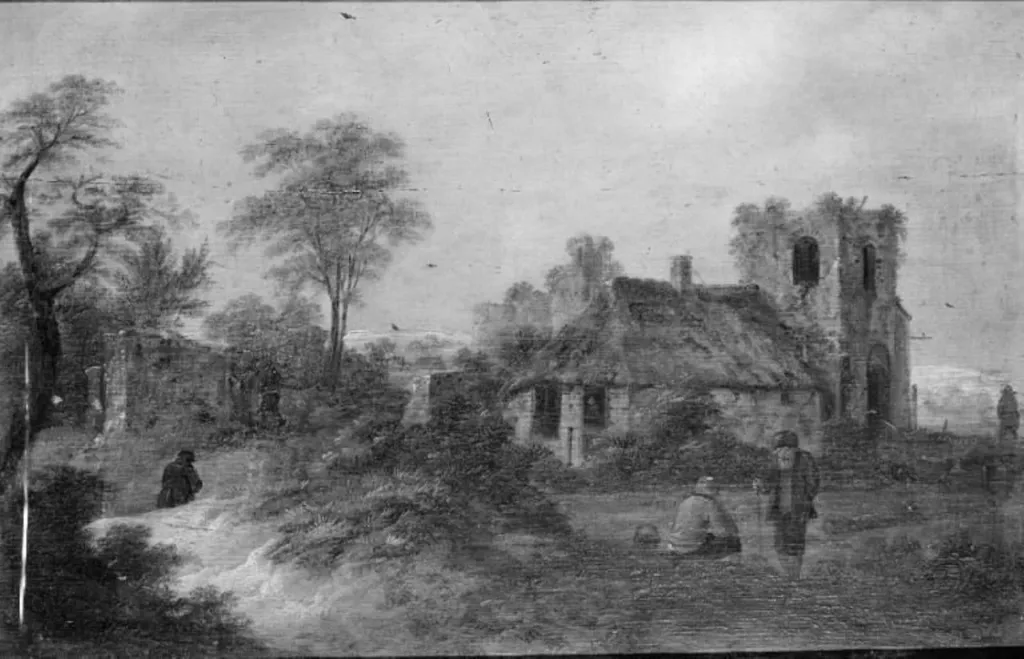
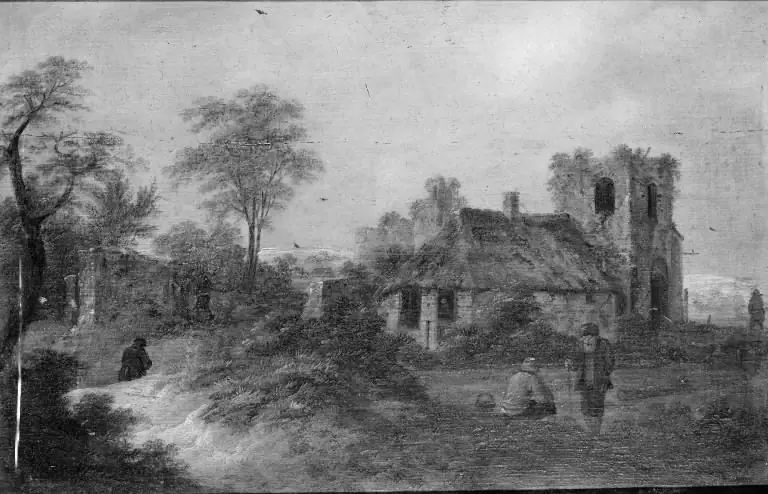
Dune Landscape with a Dilapidated Cottage is an unspecified painting by Unknown. It dates from 1750 and is held in the collection of the Statens Museum for Kunst. This landscape painting, dated around 1750, depicts a quiet stretch of coastal dunes with a crumbling cottage nestled among low vegetation.
About this work
Overview
The work is held in the collection of the Museum of Ethnography, where it is presented as an example of regional rural life in the mid-18th century.
This landscape painting, dated around 1750, depicts a quiet stretch of coastal dunes with a crumbling cottage nestled among low vegetation. The scene is spare and unembellished, emphasizing stillness over action. Three figures are present but isolated, their presence subtle and integrated into the natural setting. The work is held in the collection of the Museum of Ethnography, where it is presented as an example of regional rural life in the mid-18th century.
Subject & Meaning
The dilapidated cottage and its sparse surroundings suggest a life shaped by isolation and time. The figures—seated, standing, walking—do not interact, reinforcing a sense of solitude. The painting avoids narrative drama, instead conveying quiet endurance. The decay of the structure and the muted tones imply a world removed from urban or aristocratic concerns, reflecting a humble, unremarkable existence within the natural landscape.
Technique & Style
The artist employs restrained brushwork and a limited palette of earth tones and pale skies. Forms are simplified: trees and shrubs appear as dark silhouettes, while the cottage’s thatched roof and crumbling walls are rendered with minimal detail. Figures are indistinct, blending into the terrain rather than commanding attention. The composition favors horizontal calm, with no focal point, encouraging contemplation over immediate engagement.
History & Provenance
The painting’s origin and creator remain undocumented, though its style aligns with regional Dutch or Flemish landscape traditions of the mid-1700s. It entered the Museum of Ethnography’s collection in the late 19th or early 20th century, likely as part of a broader effort to preserve depictions of rural life. Its attribution to an unknown hand reflects the modest status of such works in their time, valued more for observation than artistic fame.
Context
In the 18th century, landscapes like this were often created not for elite patrons but for local audiences or as records of everyday environments. The focus on a decaying cottage and solitary figures aligns with a growing interest in the lives of rural laborers, distinct from idealized pastoral scenes. This work reflects a shift toward realism in regional art, capturing the quiet persistence of ordinary existence.
Legacy
Though unsigned and uncelebrated in its time, the painting endures as a quiet testament to overlooked rural life. Its inclusion in the Museum of Ethnography signals its value as a cultural document rather than a celebrated artwork. It contributes to a broader understanding of how ordinary landscapes were perceived and recorded in the 18th century, offering insight into social and environmental conditions beyond the reach of grand historical narratives.
Artist & collection

 Domestic Scene
 Giacomo and Cardinal Marco, investing Andrea, Abbot of San Zeno, with his Benefice
 The Nymph of Fontainebleau
 Portrait of a Woman
 Madonna and Child with Saints in the Enclosed Garden
 Venus and Minerva
 Family Group of Four on Sofa
 Wall painting from Room H of the Villa of P. Fannius Synistor at Boscoreale
 Italian Landscape with Antique Ruins
 Landscape with Farm House on a Hill
 Pige der sælger gæs
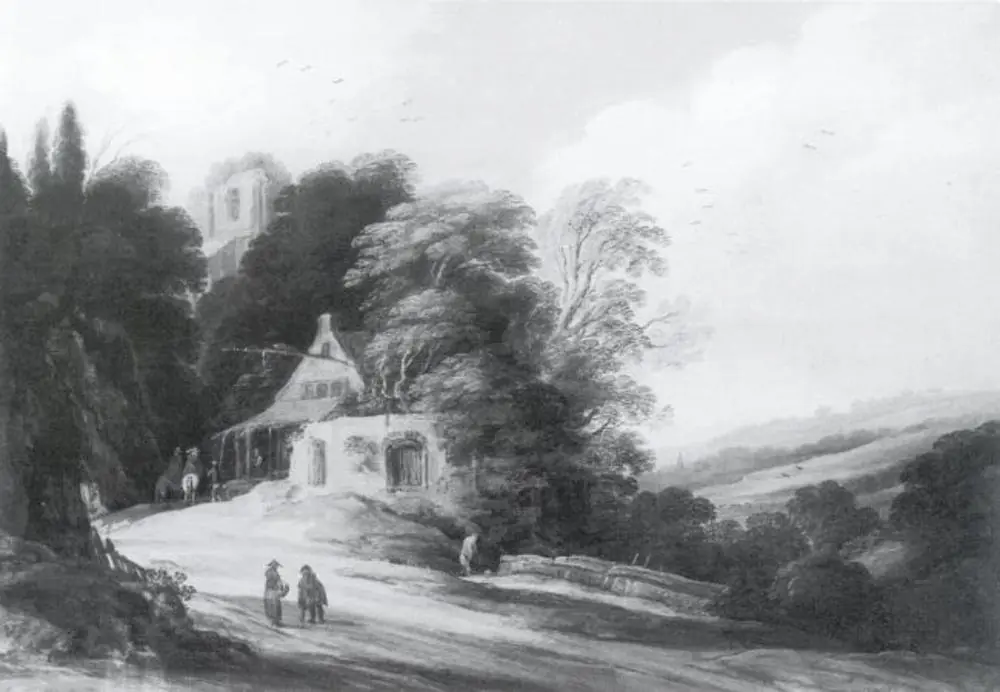 Wooded landscape with travellers outside a ruined inn, 1625
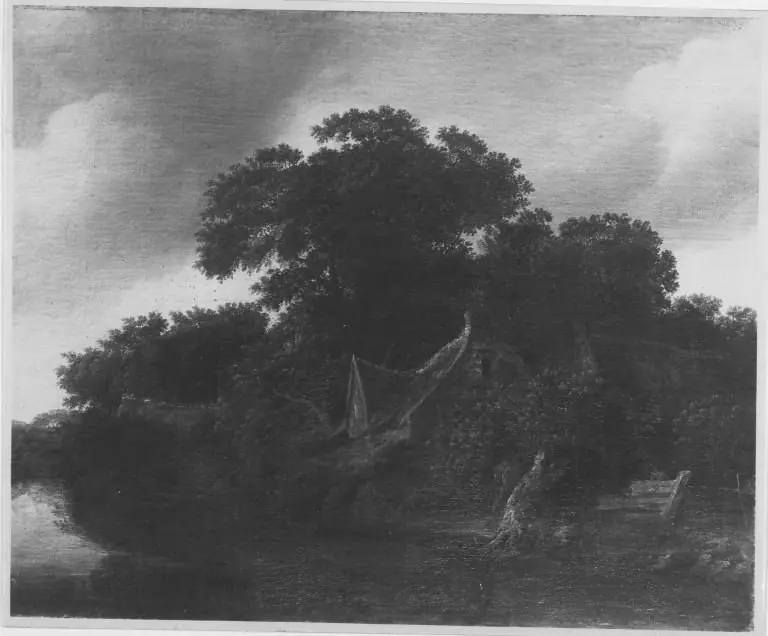 Baumlandschaft mit Bauernhof
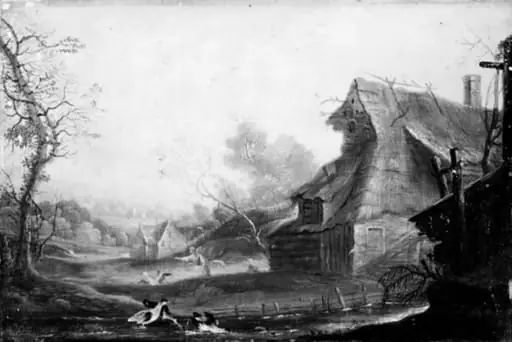 Pige der sælger gæs
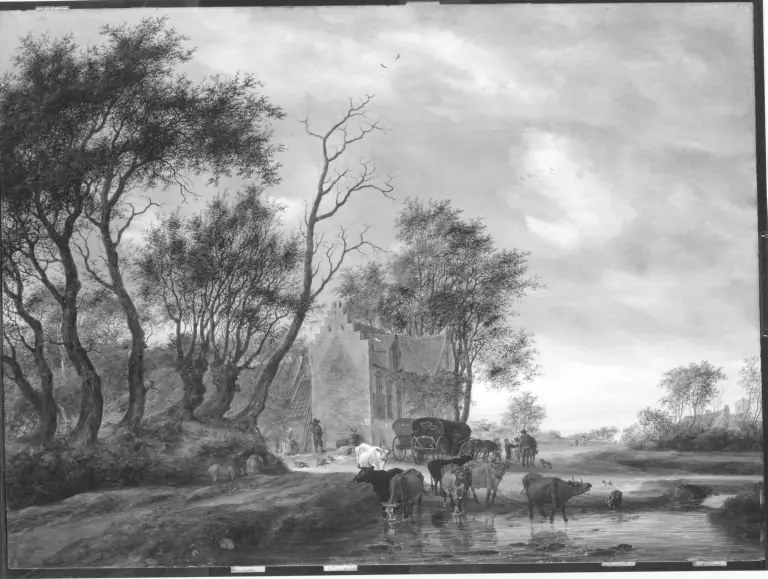 Halt vor der Herberge
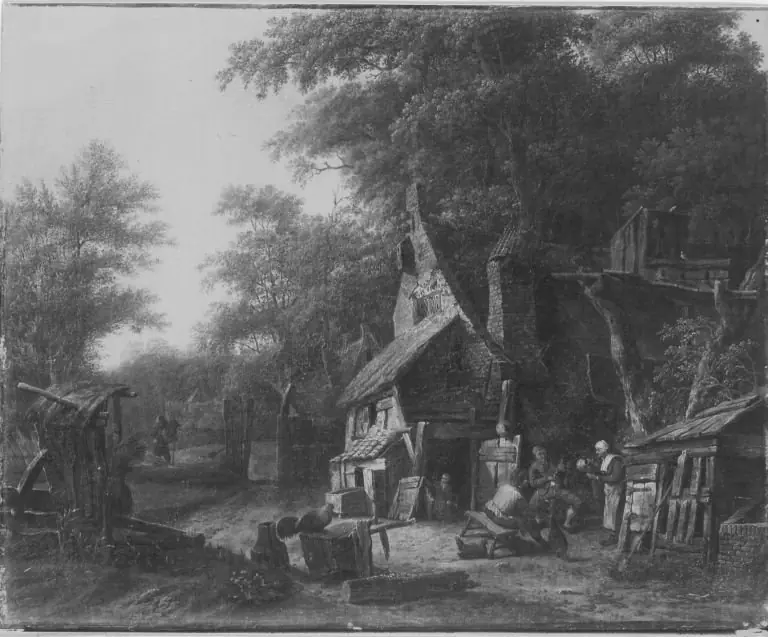 Baumlandschaft mit Bauernhof
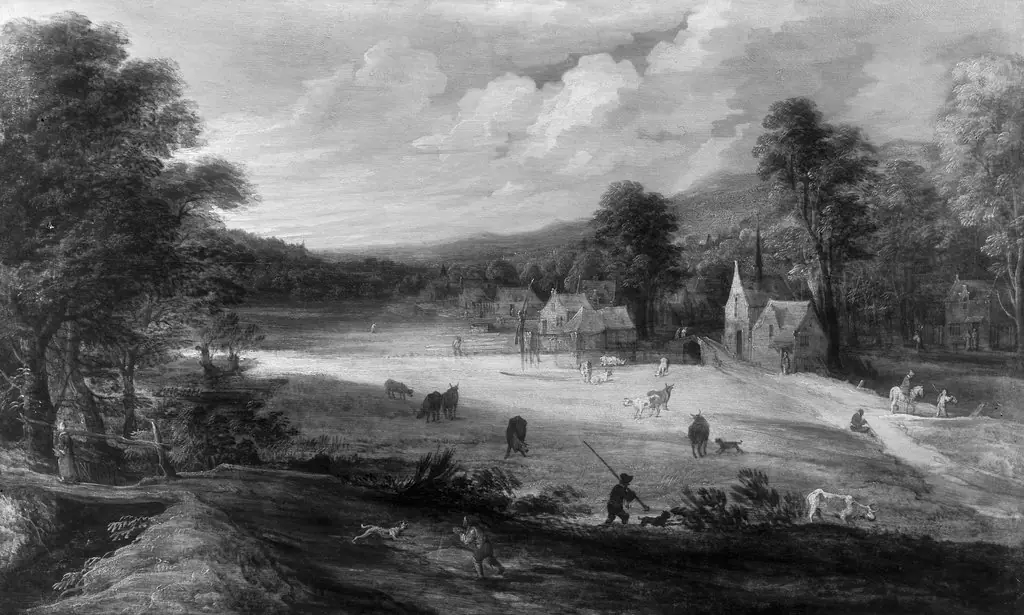 Landscape with village
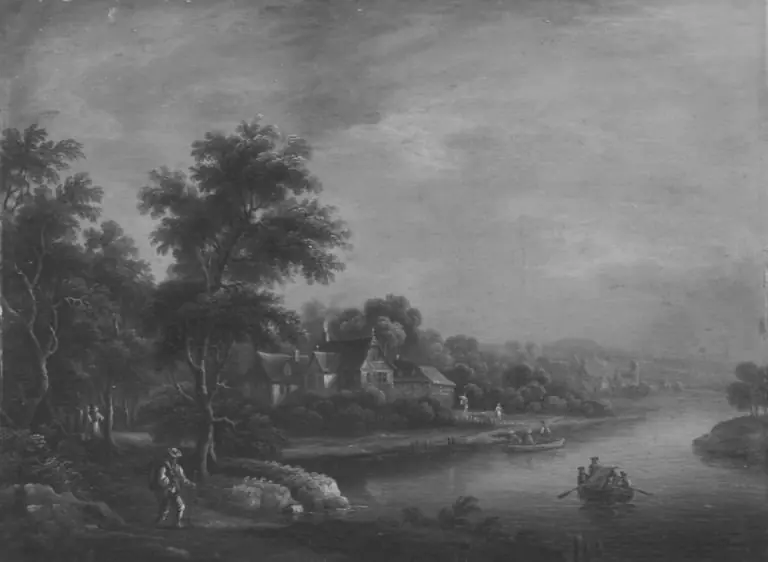 Flusslandschaft
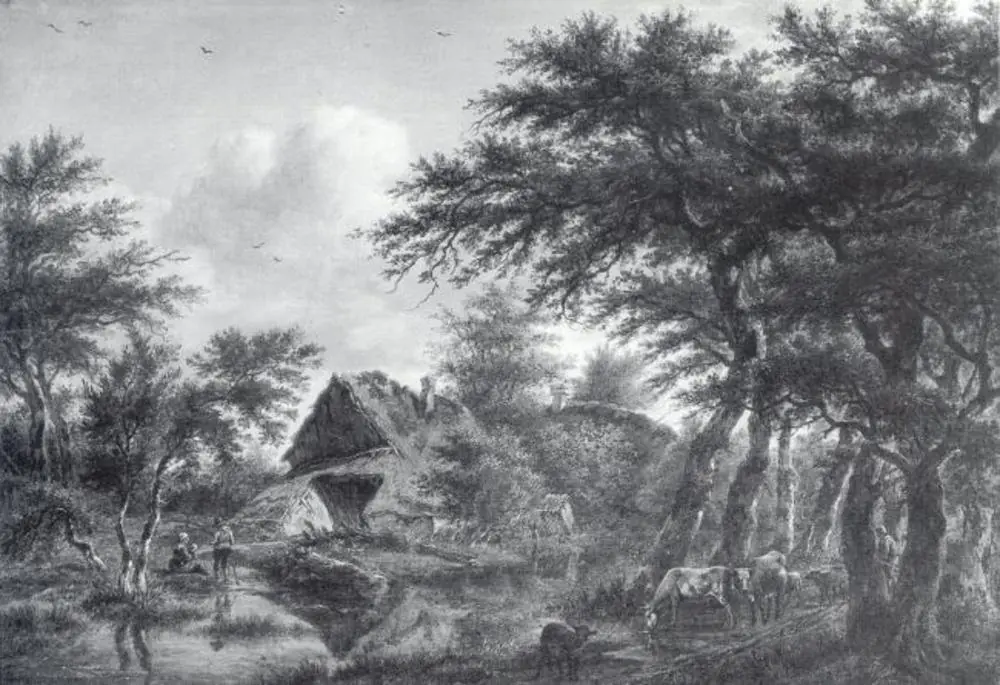 Landscape with Farm Amidst Trees
 Dune Landscape with a Dilapidated Cottage