Artwork
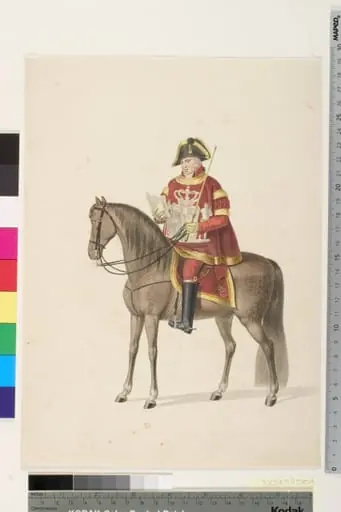
Kongelig kusk
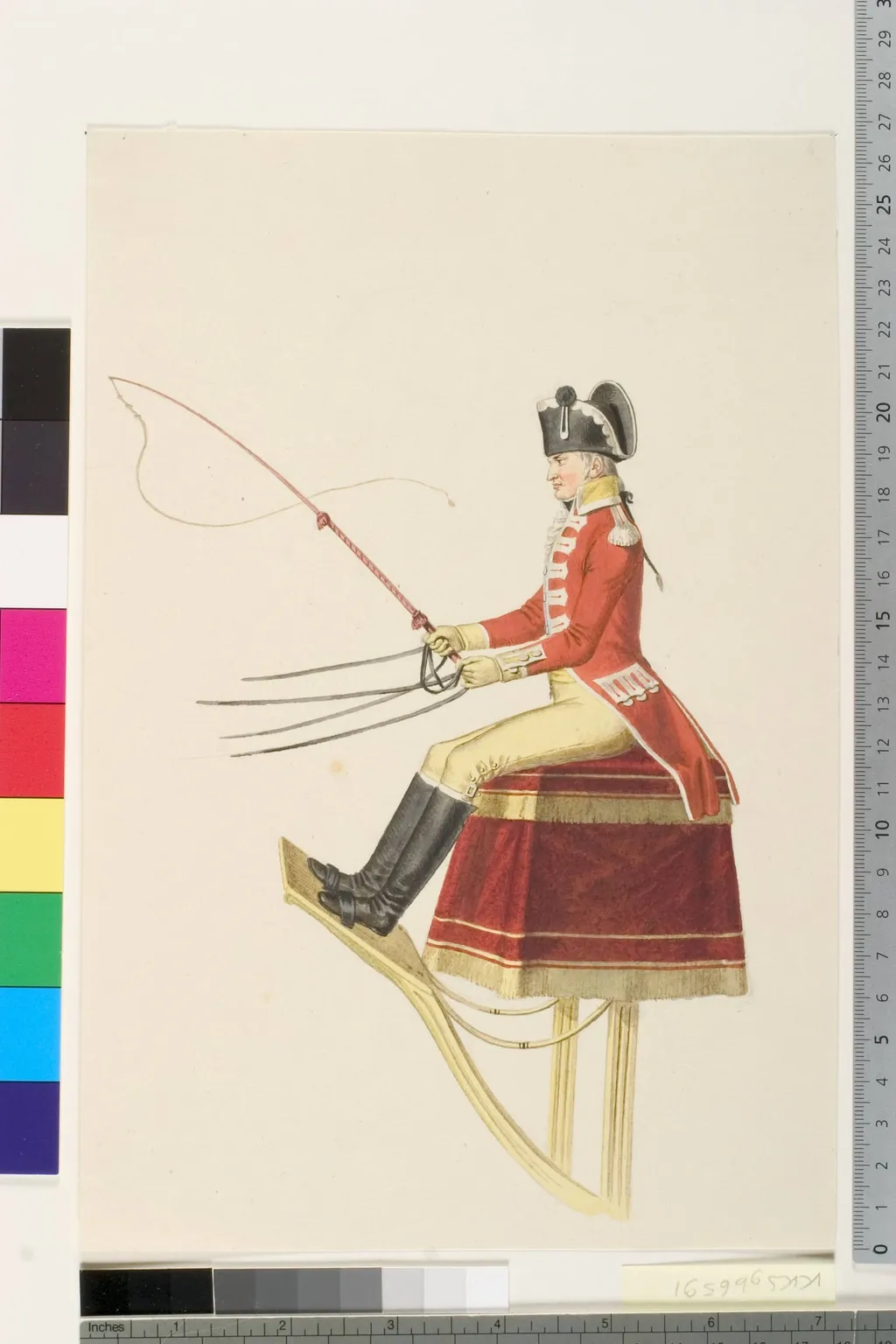
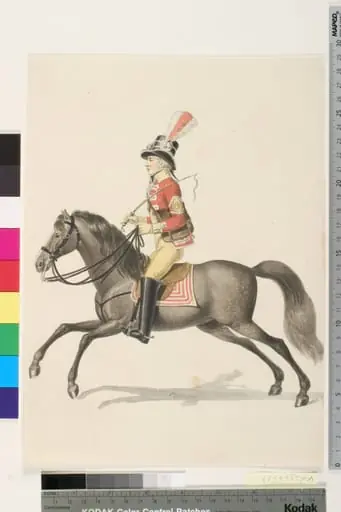
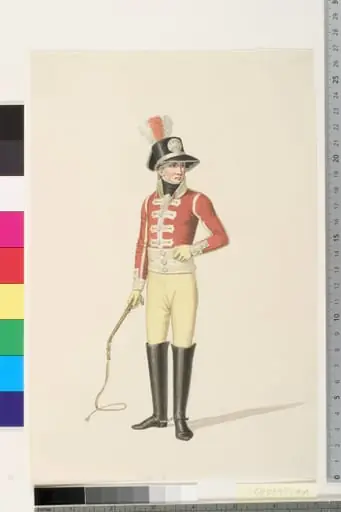
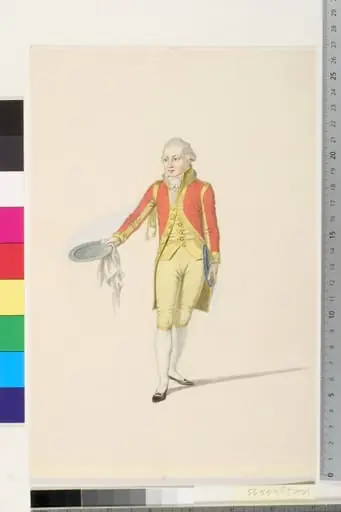
Kongelig kusk is an unspecified painting by the Biedermeier artist Unknown. It dates from 1807 and is held in the collection of the Statens Museum for Kunst.
About this work
Overview
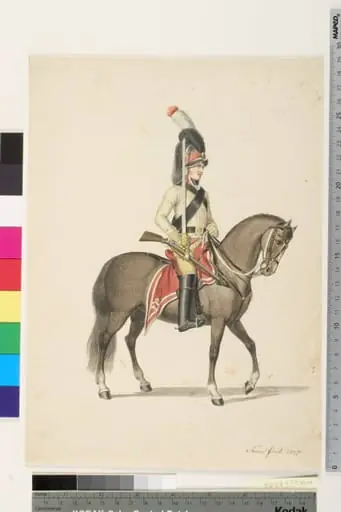
Its composition isolates the rider and horse against a neutral background, emphasizing form and costume over environmental detail.
Created in 1807 by 3871_person, Kongelig kusk is an oil painting depicting a mounted figure in ceremonial attire. The work is part of the collection at the Museum of Ethnography. Its composition isolates the rider and horse against a neutral background, emphasizing form and costume over environmental detail. The bold use of color and dynamic posture suggest a focus on presence and authority rather than narrative context.
Subject & Meaning
The figure is likely a royal courier or mounted attendant, identified by the red coat with gold embellishments and the sword. The tall black hat and polished boots reinforce a formal, official role. The pose, poised as if in motion, conveys readiness and vigilance. The absence of landscape or context directs attention to the individual’s status and function within a hierarchical system, possibly reflecting ideals of service and discipline.
Technique & Style
The painting employs flat, unmodulated areas of color with sharp contrasts—deep reds, gold accents, and black shadows—to define form. Brushwork is precise but not overly detailed, favoring clarity over texture. The lack of background depth and the centered composition reflect a deliberate simplification, aligning with early 19th-century tendencies to prioritize symbolic presence over naturalistic setting.
History & Provenance
The work entered the Museum of Ethnography’s collection in the early 20th century, though its origins prior to that remain undocumented. It was likely commissioned or produced for a specific institutional or royal context in Denmark or Norway, given the attire and title. No records of exhibition or ownership before the museum’s acquisition are publicly available.
Context
Created during the Napoleonic Wars, the image reflects a European emphasis on military and ceremonial order. While not overtly political, the figure’s attire echoes contemporary uniforms worn by royal guards or messengers. The painting’s stylistic restraint contrasts with the emotional intensity of Romanticism, yet shares its interest in individual dignity and controlled movement.
Legacy
Kongelig kusk remains a quiet example of early 19th-century portraiture focused on function over personality. It is rarely cited in broader art historical narratives but serves as a useful reference for studies of ceremonial dress and institutional representation in Nordic visual culture. Its preservation underscores the museum’s interest in documenting everyday figures of authority.
Artist & collection

 Domestic Scene
 Giacomo and Cardinal Marco, investing Andrea, Abbot of San Zeno, with his Benefice
 The Nymph of Fontainebleau
 Portrait of a Woman
 Madonna and Child with Saints in the Enclosed Garden
 Venus and Minerva
 Family Group of Four on Sofa
 Wall painting from Room H of the Villa of P. Fannius Synistor at Boscoreale