Artwork
Amor, der vækkes af Psyche
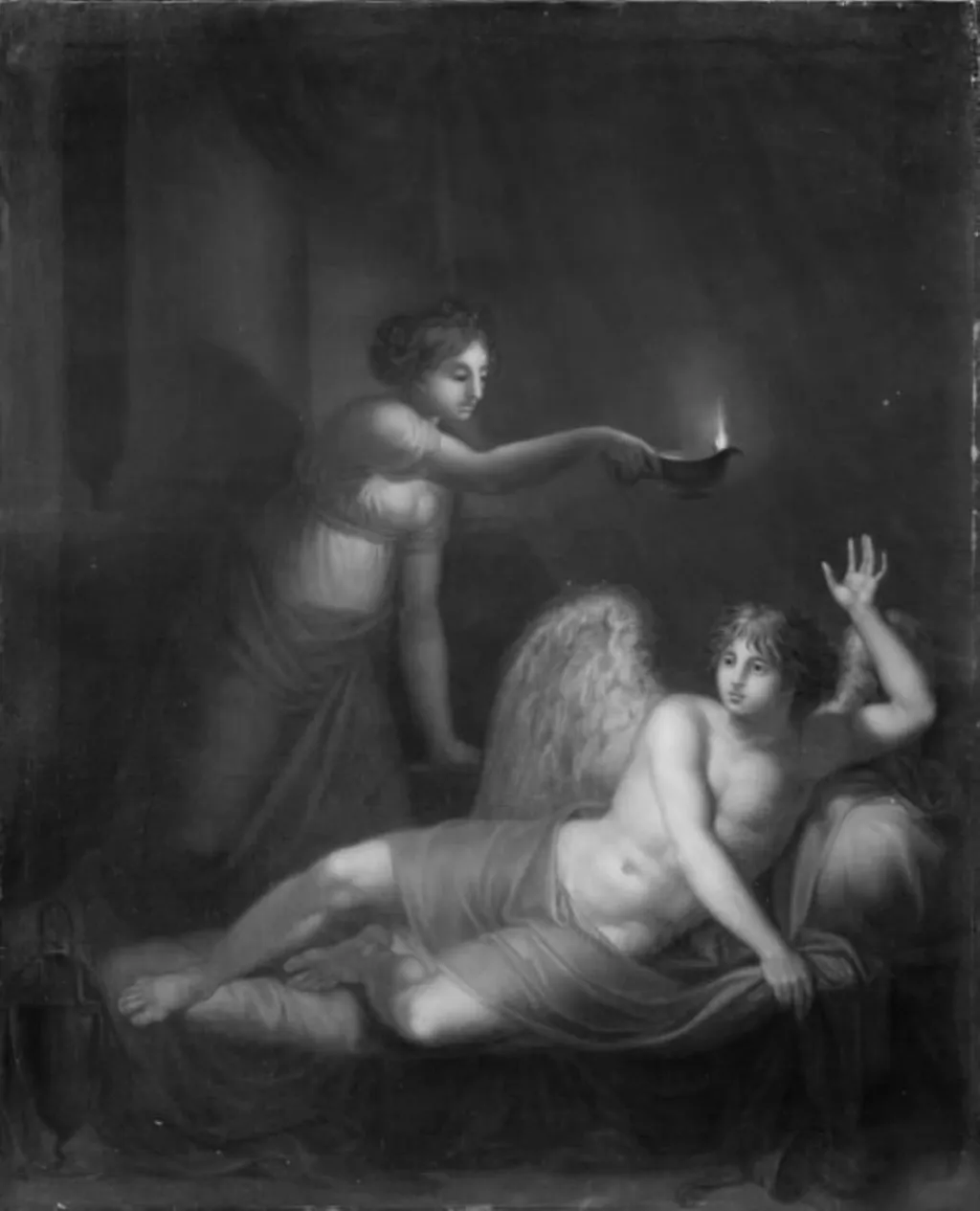
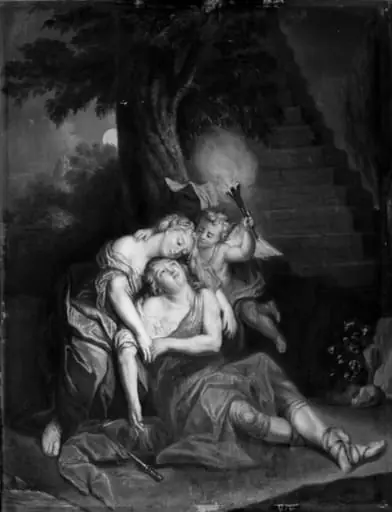
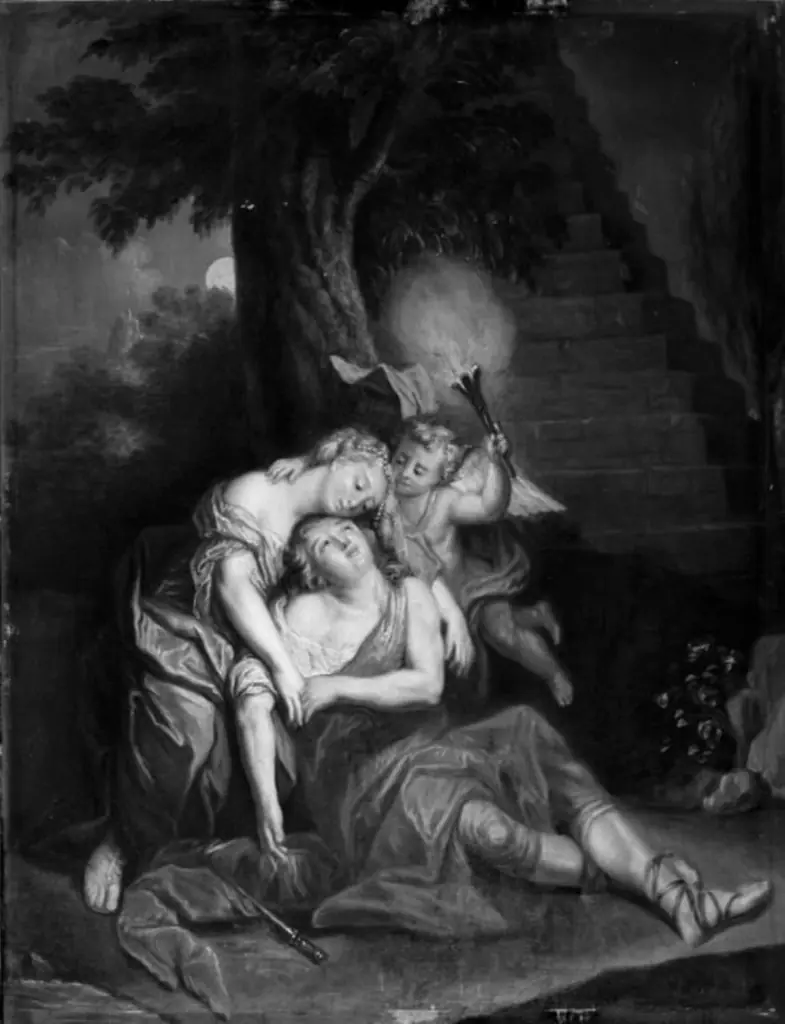
Amor, der vækkes af Psyche is a photography by the Romanticist artist Unknown. It dates from 1796 and is held in the collection of the Statens Museum for Kunst. Created in 1796, this black-and-white photograph depicts a scene from the myth of Cupid and Psyche.
About this work
Overview
Created in 1796, this black-and-white photograph depicts a scene from the myth of Cupid and Psyche. The image is held in the collection of the Museum of Ethnography. Though the original artwork’s medium is not specified, the photograph captures a dramatic interplay of light and shadow, emphasizing the emotional tension between two figures in a quiet, intimate moment.
Subject & Meaning
The scene illustrates Psyche awakening Cupid, a moment from ancient myth where love, long hidden, is revealed through vulnerability. Psyche, depicted reclining with flowing hair, represents the soul, while the standing figure, holding a mirror, may symbolize self-awareness or divine recognition. The act of awakening suggests the fragile, transformative power of love emerging from secrecy.
Technique & Style
The photograph employs chiaroscuro to heighten emotional depth, using stark contrasts between light and shadow to define the figures’ forms.
The photograph employs chiaroscuro to heighten emotional depth, using stark contrasts between light and shadow to define the figures’ forms. The lighting isolates their bodies against a dark background, drawing attention to gesture and posture. The loose drapery and exposed skin are rendered with clarity, suggesting a sculptural origin, though the photograph itself is a documentary record of that earlier work.
History & Provenance
The original artwork, likely a sculpture or painting, was created in 1796 by an artist associated with Neoclassical traditions. The photograph in the Museum of Ethnography’s collection serves as a preserved record of the piece, possibly made for study or dissemination. The museum’s acquisition reflects 19th-century efforts to document classical themes across global collections.
Context
In the late 18th century, interest in Greco-Roman mythology surged among European artists and collectors. The story of Cupid and Psyche, drawn from Apuleius’s The Golden Ass, was frequently revisited as an allegory of the soul’s journey toward divine love. This image aligns with broader cultural trends that idealized ancient narratives through refined, emotionally restrained compositions.
Legacy
Though the original artwork’s current location is unknown, the photograph ensures its visual narrative endures. It contributes to scholarly understanding of how classical myths were interpreted in the Neoclassical era and how photographic documentation preserved ephemeral or dispersed artworks for future study.
Artist & collection

 Domestic Scene
 Giacomo and Cardinal Marco, investing Andrea, Abbot of San Zeno, with his Benefice
 The Nymph of Fontainebleau
 Portrait of a Woman
 Madonna and Child with Saints in the Enclosed Garden
 Venus and Minerva
 Family Group of Four on Sofa
 Wall painting from Room H of the Villa of P. Fannius Synistor at Boscoreale