Artwork
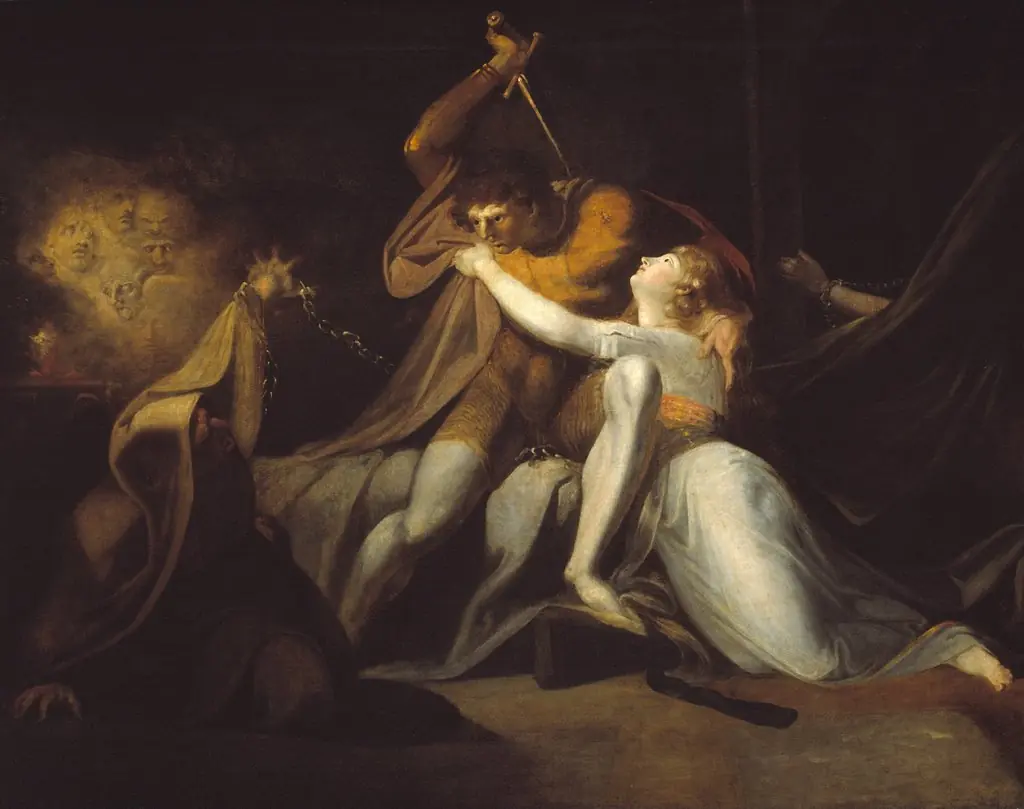
Belisane and Parcival under the Enchantment of Urma
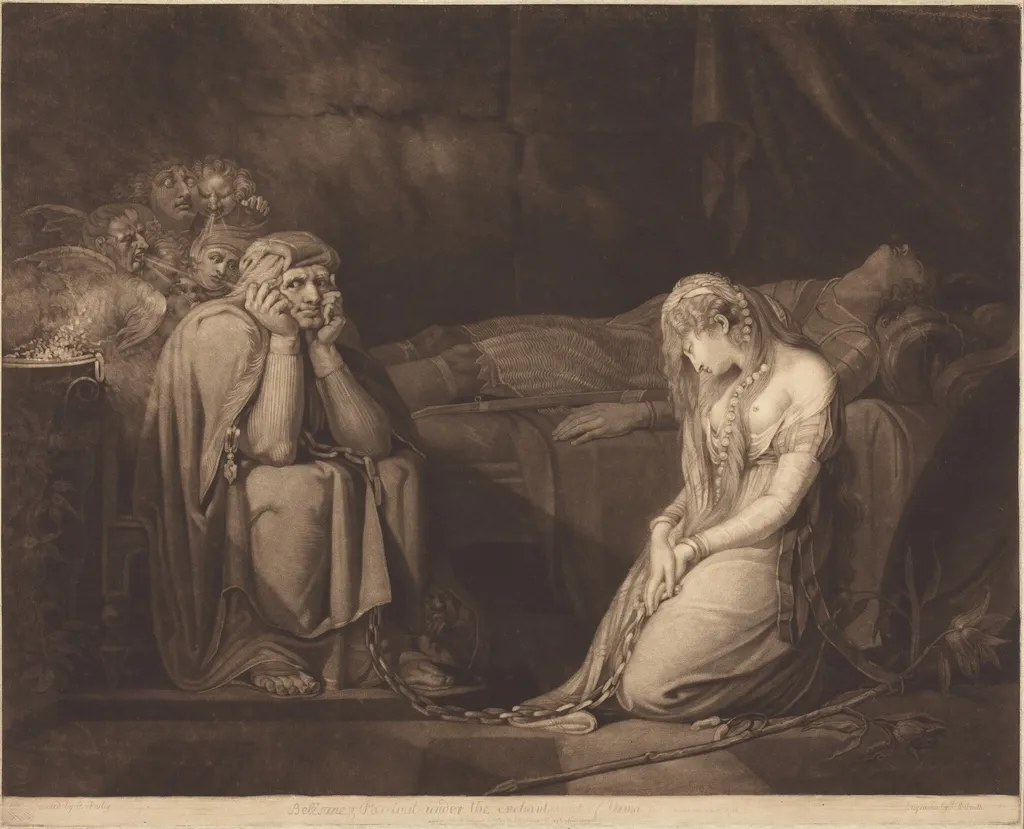
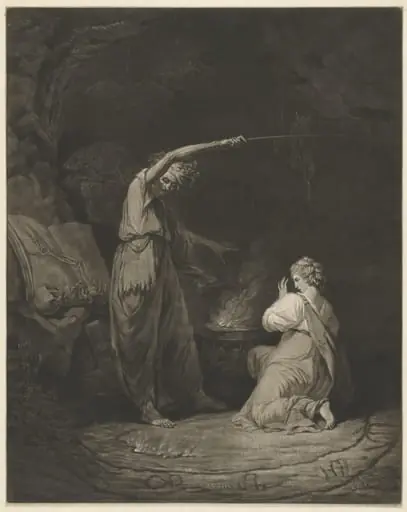
Belisane and Parcival under the Enchantment of Urma is an ink print by the Romanticist artist John Raphael Smith. It dates from 1782 and is held in the collection of the National Gallery of Art.
About this work
Overview
John Raphael Smith’s 1782 mezzotint, *Belisane and Parcival under the Enchantment of Urma*, presents a nocturnal, cavernous tableau in which two figures are caught in a spellbound moment. Executed in brown‑black ink on laid paper, the image combines deep shadows with subtle tonal gradations, characteristic of the mezzotint process.
Subject & Meaning
The composition draws on a medieval legend, portraying the enchanted encounter between the heroine Belisane and the knight Parcival under the influence of the sorceress Urma. The seated figure, draped in loose garments and a turban, leans on a hand, while the kneeling woman in a flowing dress bows her head, suggesting a narrative of submission or supplication within the magical setting.
Technique & Style
Smith employed mezzotint, a printmaking method that allows for rich, velvety blacks and delicate tonal transitions. By roughening the plate’s surface and then smoothing areas to hold less ink, he achieved the atmospheric depth seen in the dim, rocky space and the faintly illuminated objects—a bowl of fruit and a sword—within the scene.
History & Provenance
Born into a family of painters—son of landscape artist Thomas Smith and father of John Rubens Smith—John Raphael Smith was active during a period when mezzotint served as a primary means of reproducing images in Britain. The 1782 print reflects his engagement with literary and mythological subjects popular among contemporary patrons.
Context
In late‑18th‑century Britain, mezzotint was widely used for both portraiture and narrative prints, bridging the gap between fine art and popular illustration. Smith’s choice of a medieval legend aligns with the era’s fascination with chivalric romance and the Gothic revival, catering to an audience eager for visual storytelling.
Legacy
While not as frequently cited as his portrait work, this print exemplifies Smith’s skill in rendering complex atmospheric effects. It contributes to the broader understanding of mezzotint’s capacity to convey narrative drama and illustrates the continued appeal of medieval themes in British visual culture of the period.
Artist & collection
Artist
John Raphael Smith (25 May 1751 – 2 March 1812) was a British painter and mezzotinter. He was the son of the landscape painter Thomas Smith and the father of John Rubens Smith, a painter who emigrated to the United States.

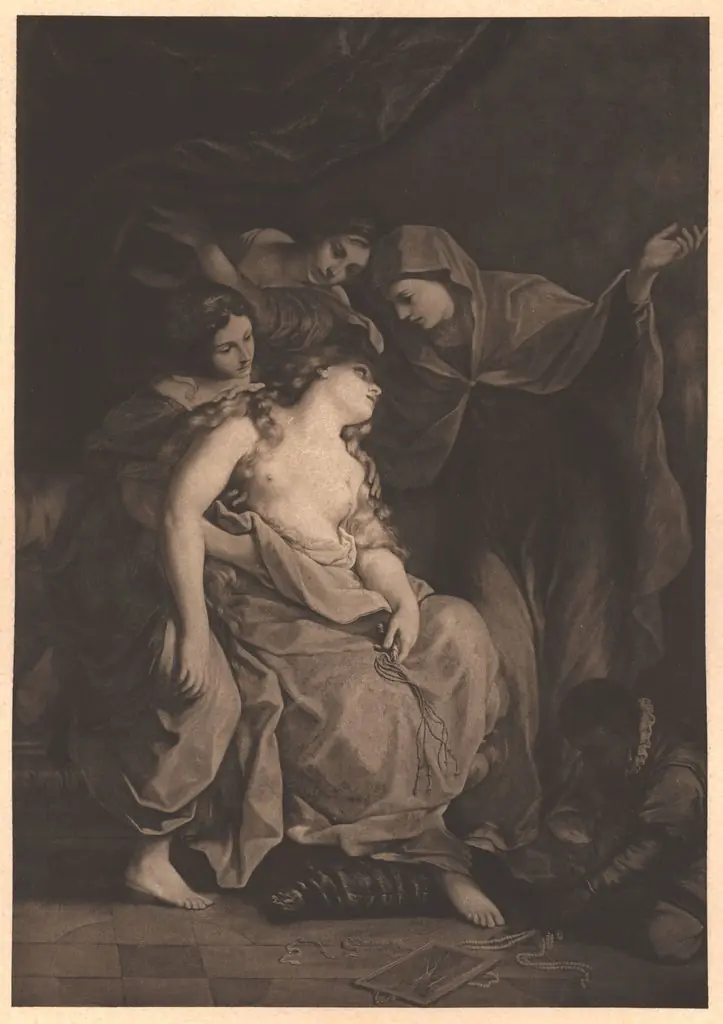 The Petitent Magdalen
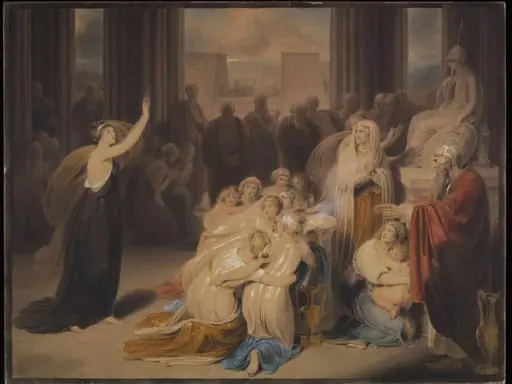 Cassandra in the Temple of Minerva
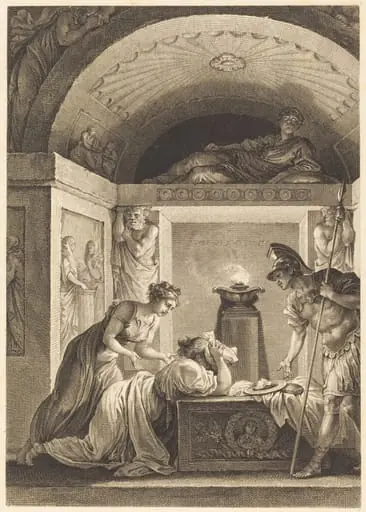 La matrone d'Ephese
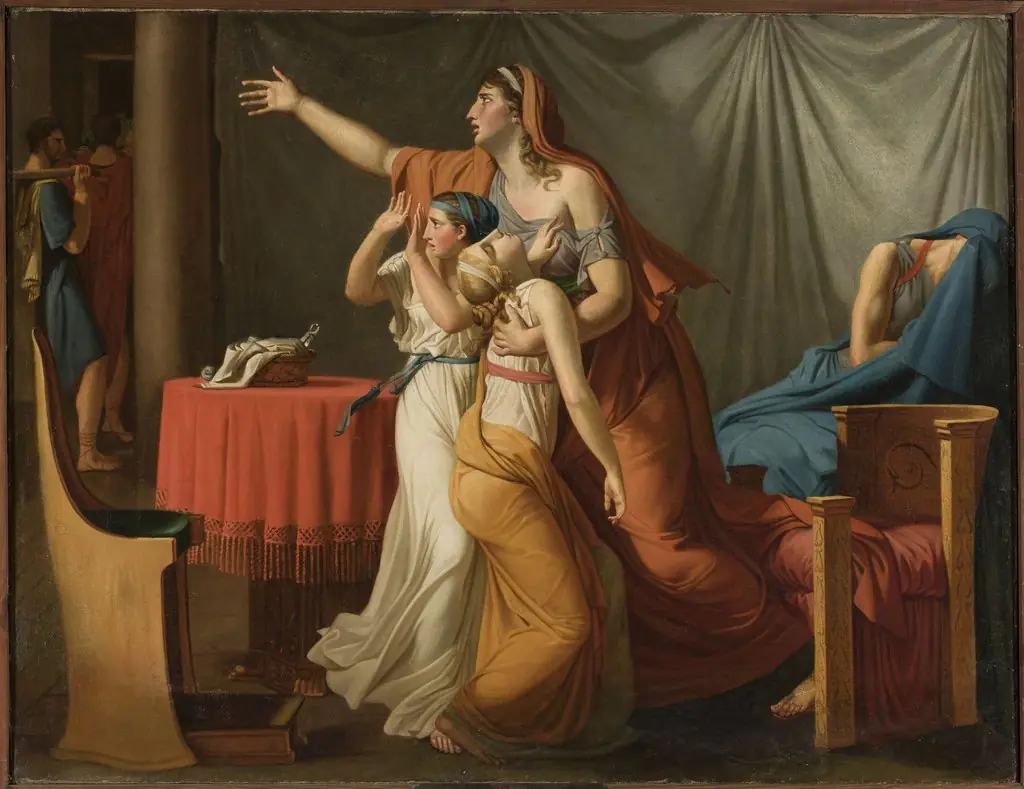 Lictors bring to Brutus the bodies of his sons
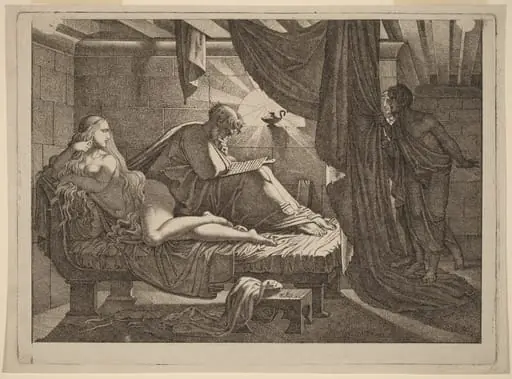 Xenocrates and Phryne
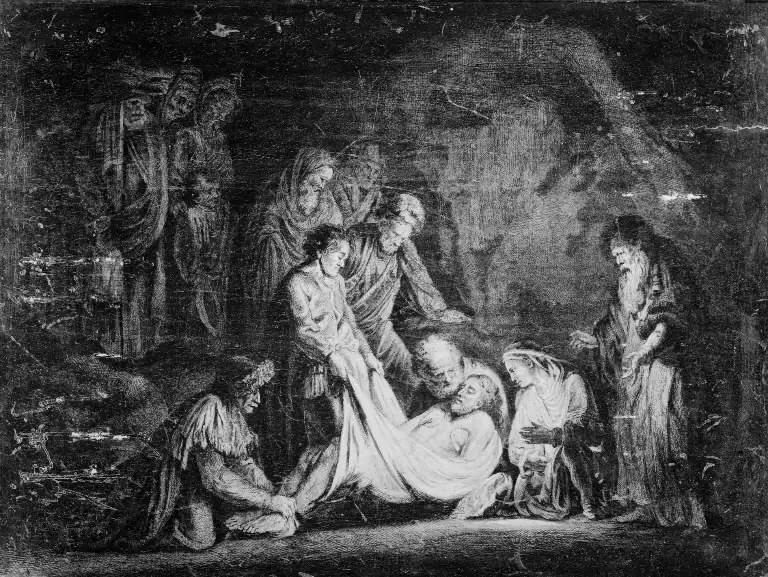 The Entombment of Christ
 Psyke, der nærmer sig den sovende Amor
 The Meeting of Orestes and Hermione
 Incantation
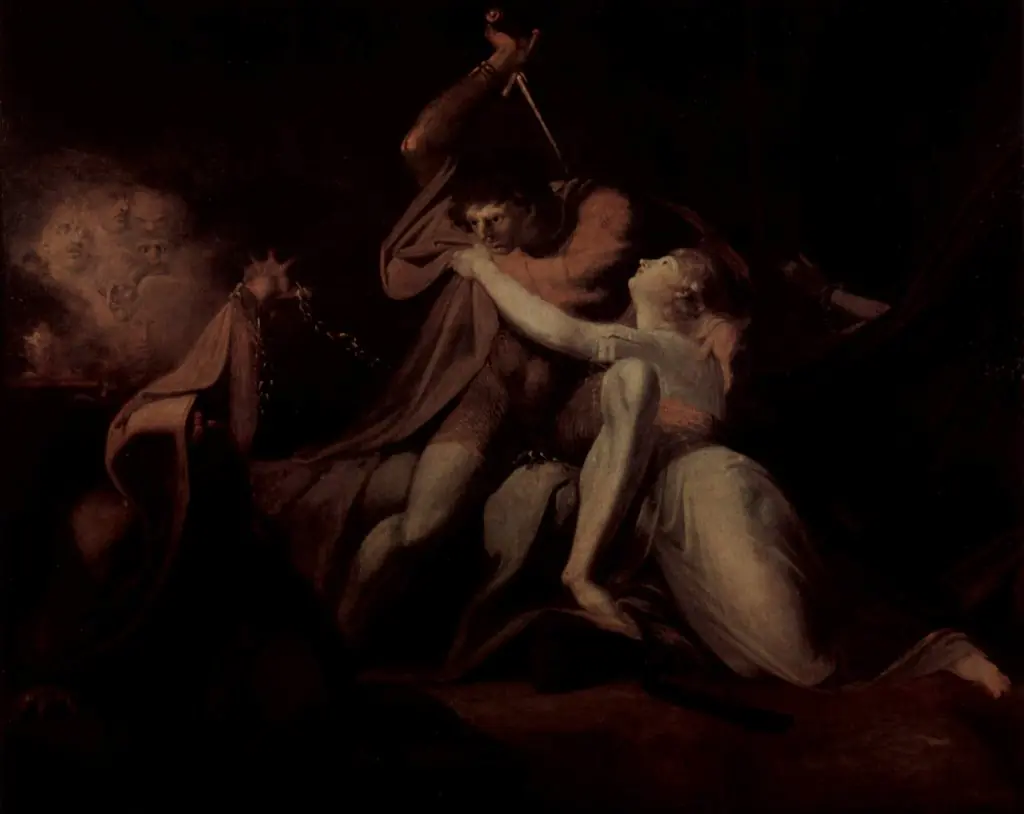 Parcival befreit Belisane von den Zaubereien des Urma
 Percival Delivering Belisane from the Enchantment of Urma