Artwork
Fader og søn
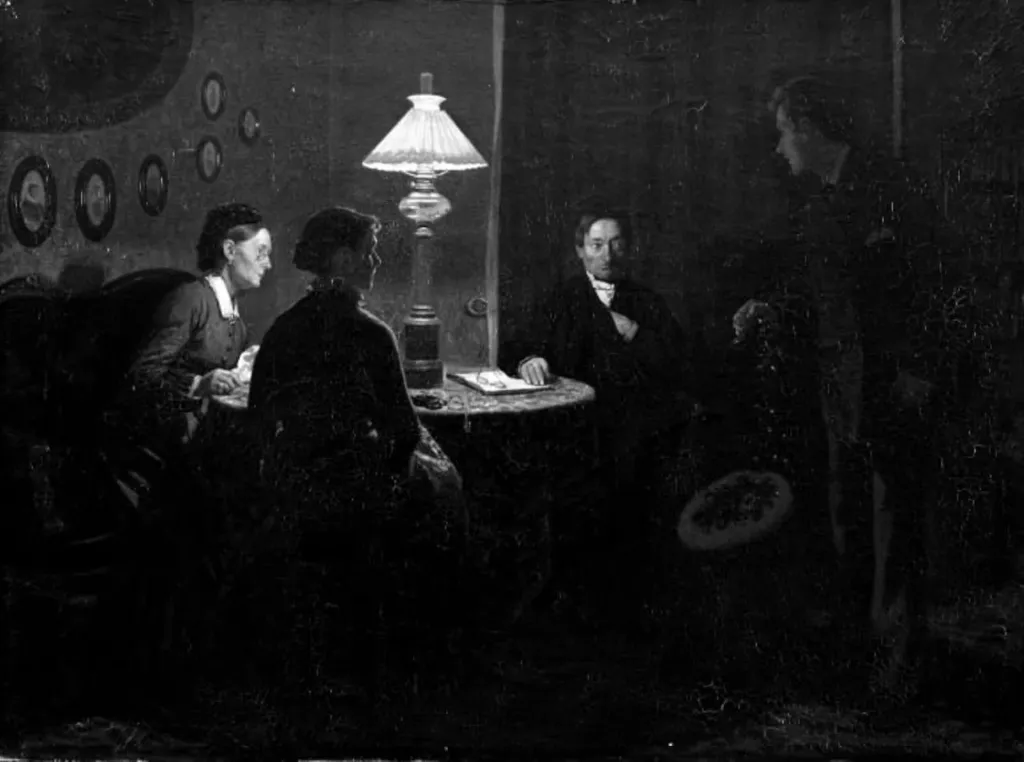
Fader og søn is a photography by the Impressionist artist Unknown. It dates from 1882 and is held in the collection of the Statens Museum for Kunst.
About this work
Overview
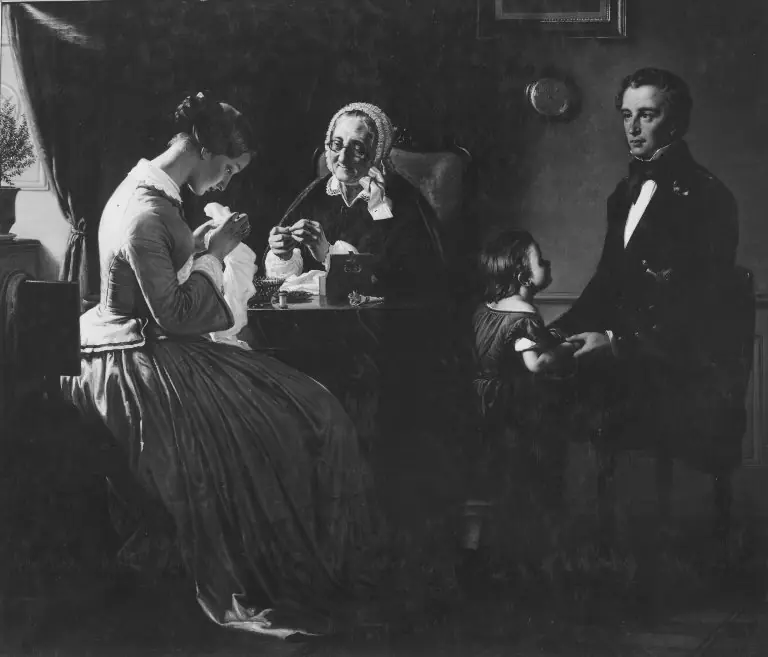
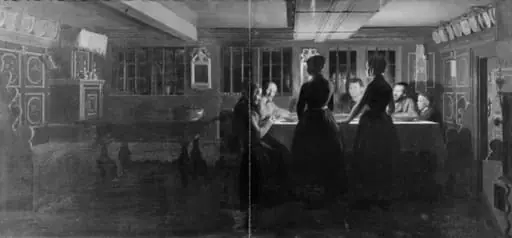
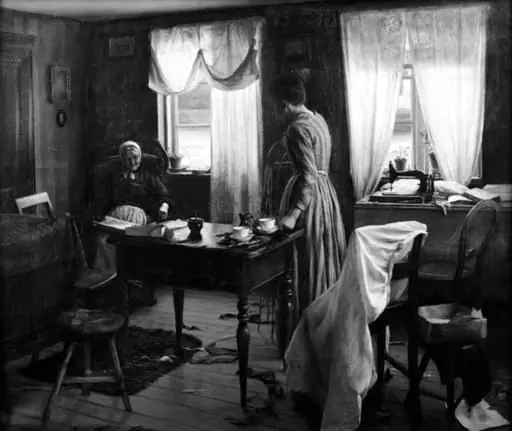
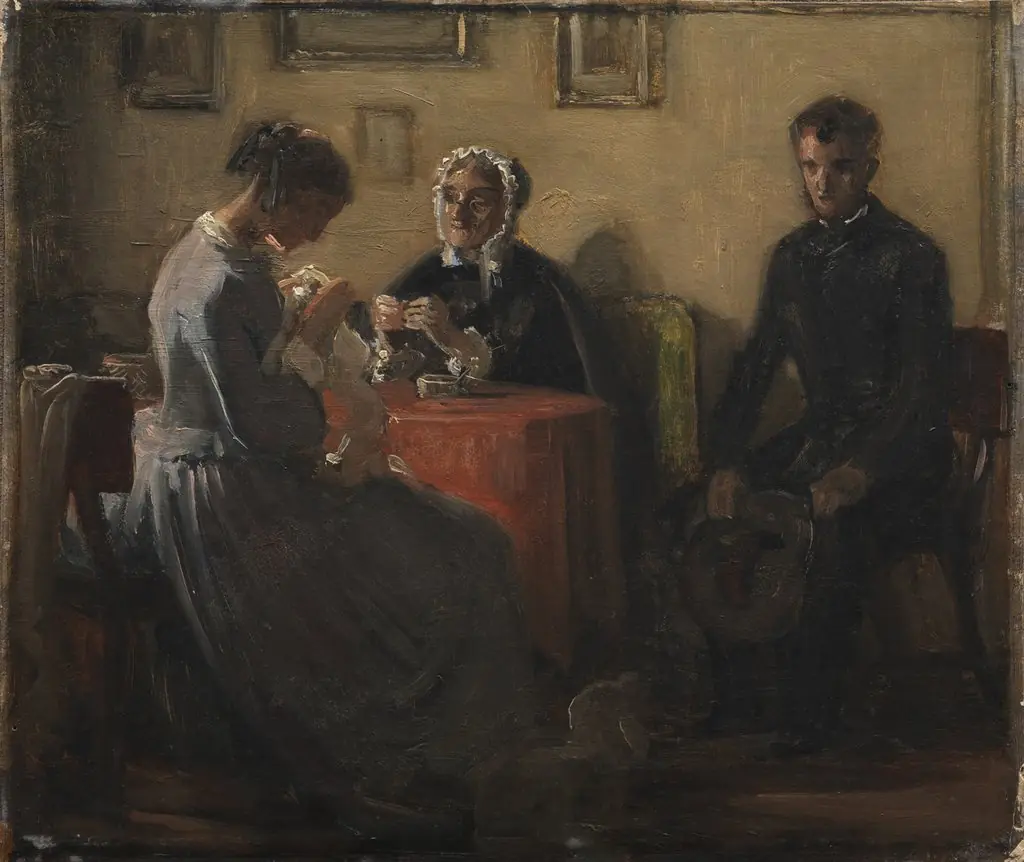
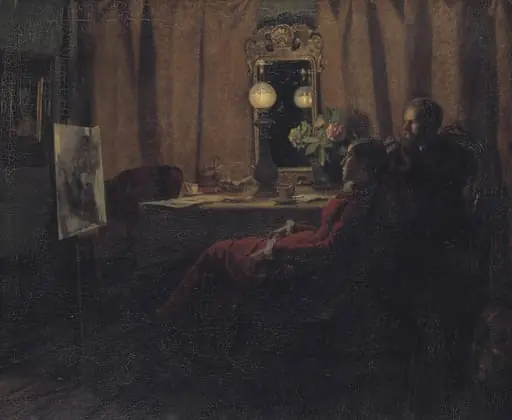
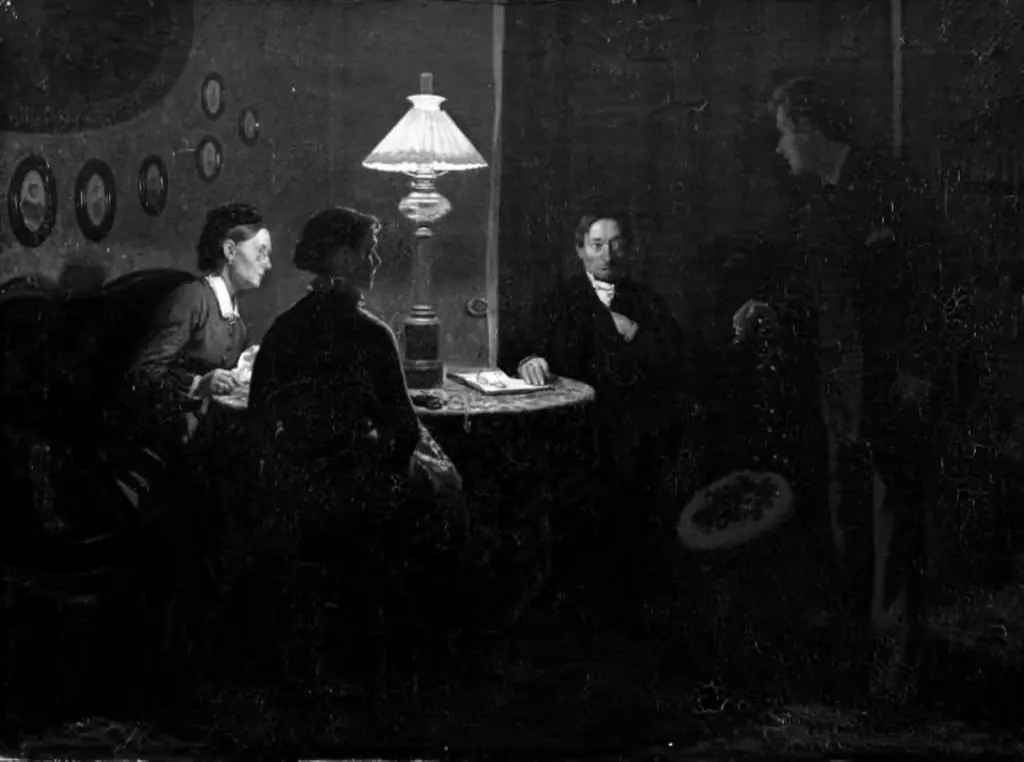
Fader og søn, painted in 1882 by 540_person, is a quiet interior scene depicting two figures seated at a round table. The work resides in the Museum of Ethnography and is rendered in oil on canvas. Its subdued palette and focused lighting emphasize intimacy over narrative, inviting attention to the unspoken dynamic between the figures rather than any explicit action.
Subject & Meaning
Though the title suggests a father and son, the figures’ genders and attire imply a different relationship—perhaps spouses or close relatives.
The painting shows a man and a woman in formal attire, facing each other across a table illuminated by a single lamp. Though the title suggests a father and son, the figures’ genders and attire imply a different relationship—perhaps spouses or close relatives. The stillness and direct gaze suggest a moment of private exchange, possibly reflective or solemn, with no overt signs of emotion, leaving interpretation open to the viewer.
Technique & Style
The artist employs chiaroscuro to model the figures with soft gradations of light and shadow, enhancing their three-dimensionality. Details in fabric, skin tone, and the lamp’s glow are rendered with restrained precision, avoiding theatricality. The background remains indistinct, with ambiguous round shapes possibly indicating wall hangings or ceramics, reinforcing the focus on the central pair through compositional economy.
History & Provenance
Created in 1882, the painting entered the collection of the Museum of Ethnography shortly after its completion. Its acquisition reflects the institution’s interest in domestic scenes that document everyday life in late 19th-century Scandinavia. No significant alterations or restorations are documented, and its provenance remains consistent within the museum’s holdings since the early 20th century.
Context
In the context of 1880s Nordic art, Fader og søn aligns with a growing interest in intimate, domestic subjects over grand historical or mythological themes. While not part of a formal movement, its realism and psychological restraint echo broader trends in Scandinavian painting that valued quiet observation and emotional subtlety over dramatic expression.
Legacy
The painting has not been widely reproduced or exhibited beyond the Museum of Ethnography, limiting its public recognition. Nevertheless, it remains a representative example of Nordic genre painting from the period, valued for its understated composition and sensitivity to light and human presence within a private space.
Artist & collection

 Domestic Scene
 Giacomo and Cardinal Marco, investing Andrea, Abbot of San Zeno, with his Benefice
 The Nymph of Fontainebleau
 Portrait of a Woman
 Madonna and Child with Saints in the Enclosed Garden
 Venus and Minerva
 Family Group of Four on Sofa
 Wall painting from Room H of the Villa of P. Fannius Synistor at Boscoreale