Artwork
Interior with two Persons
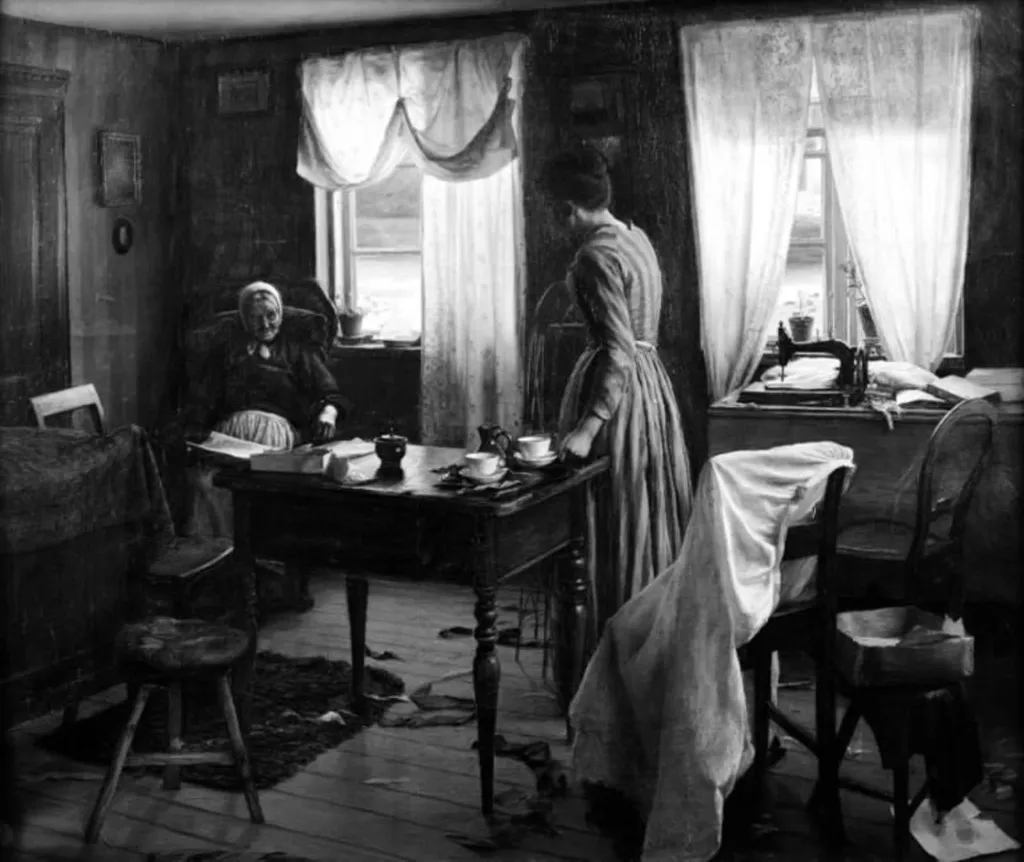
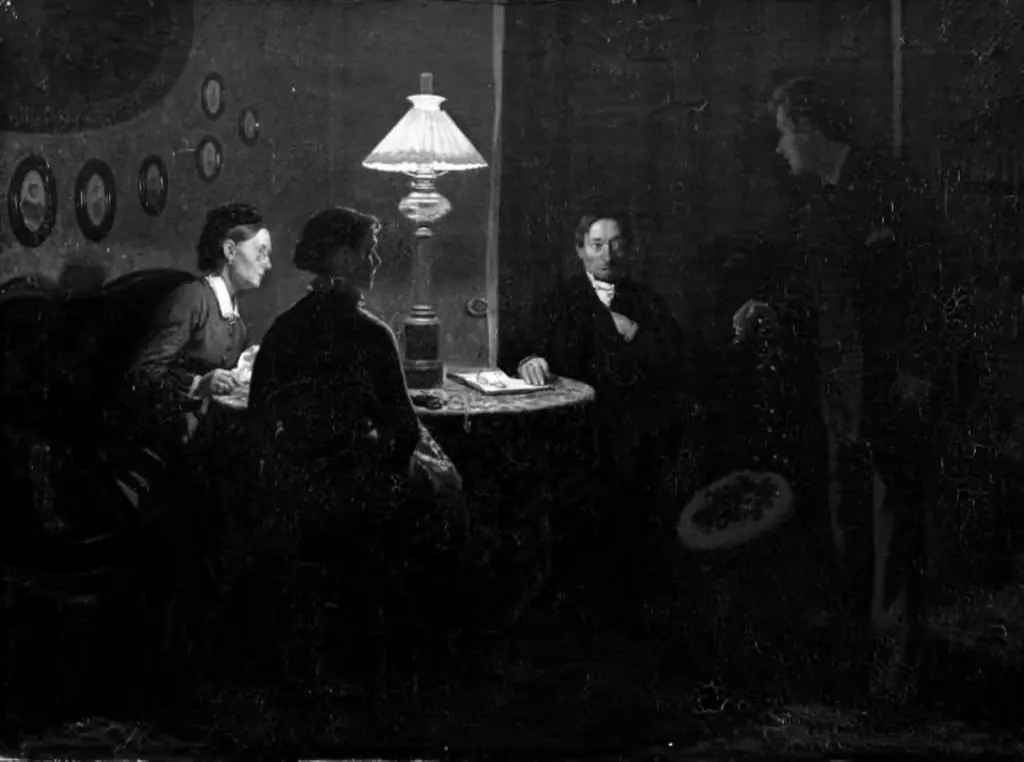
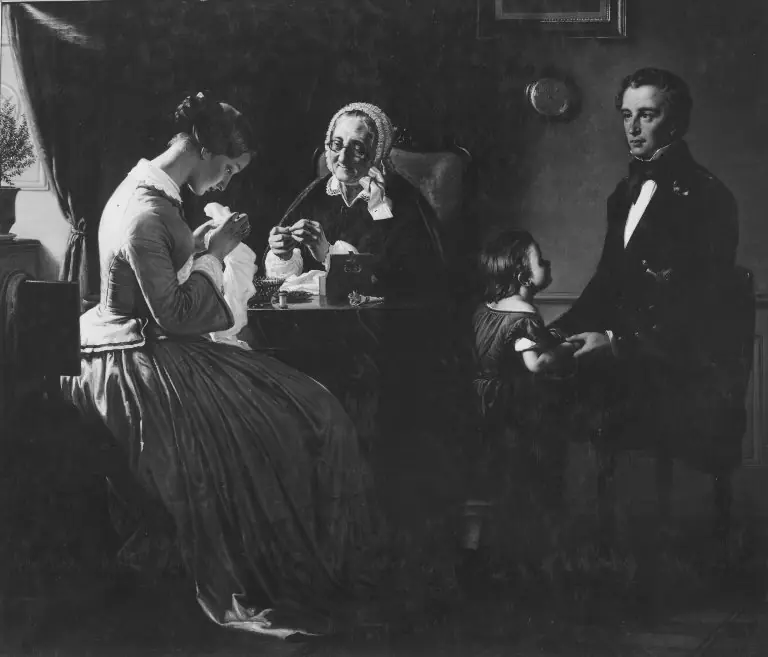
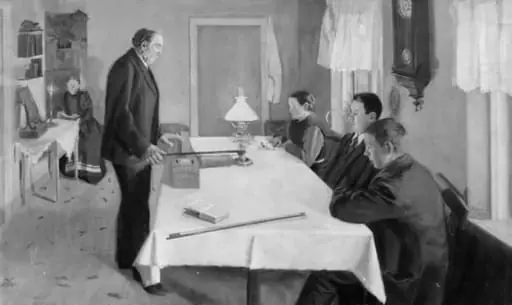
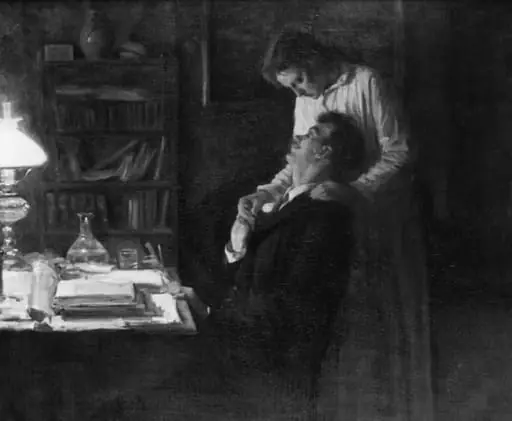
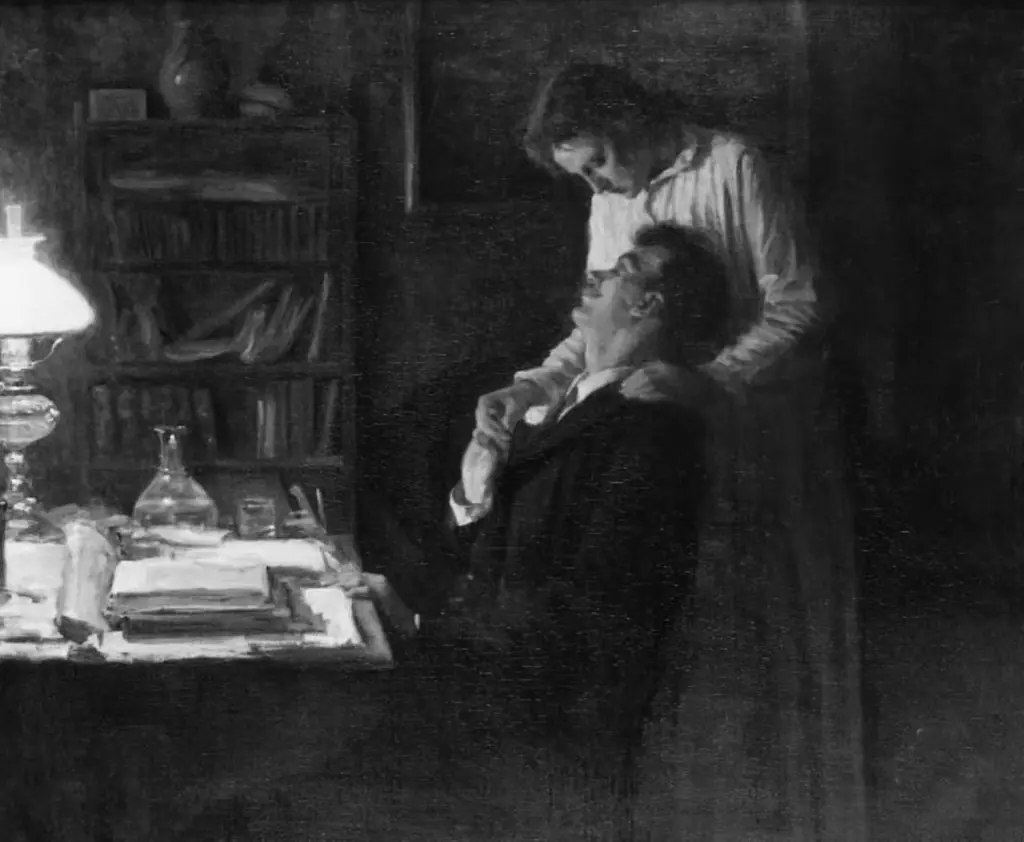
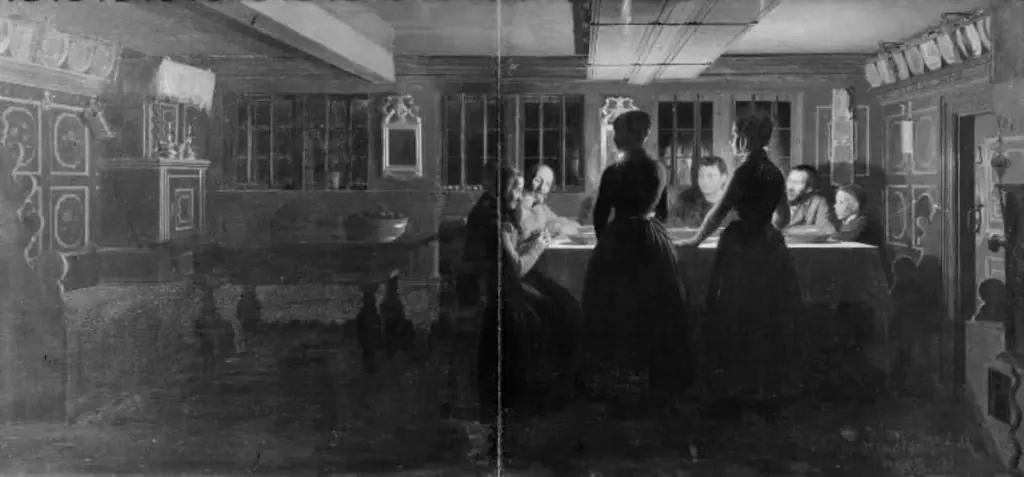
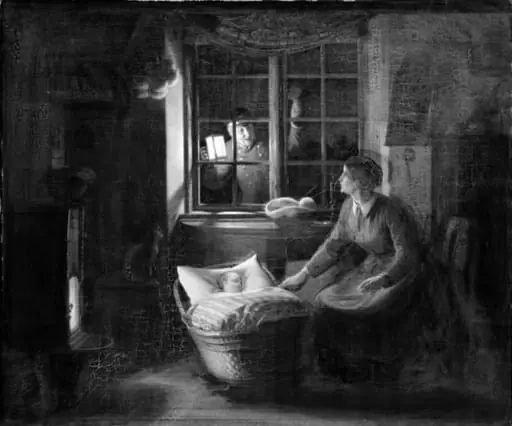
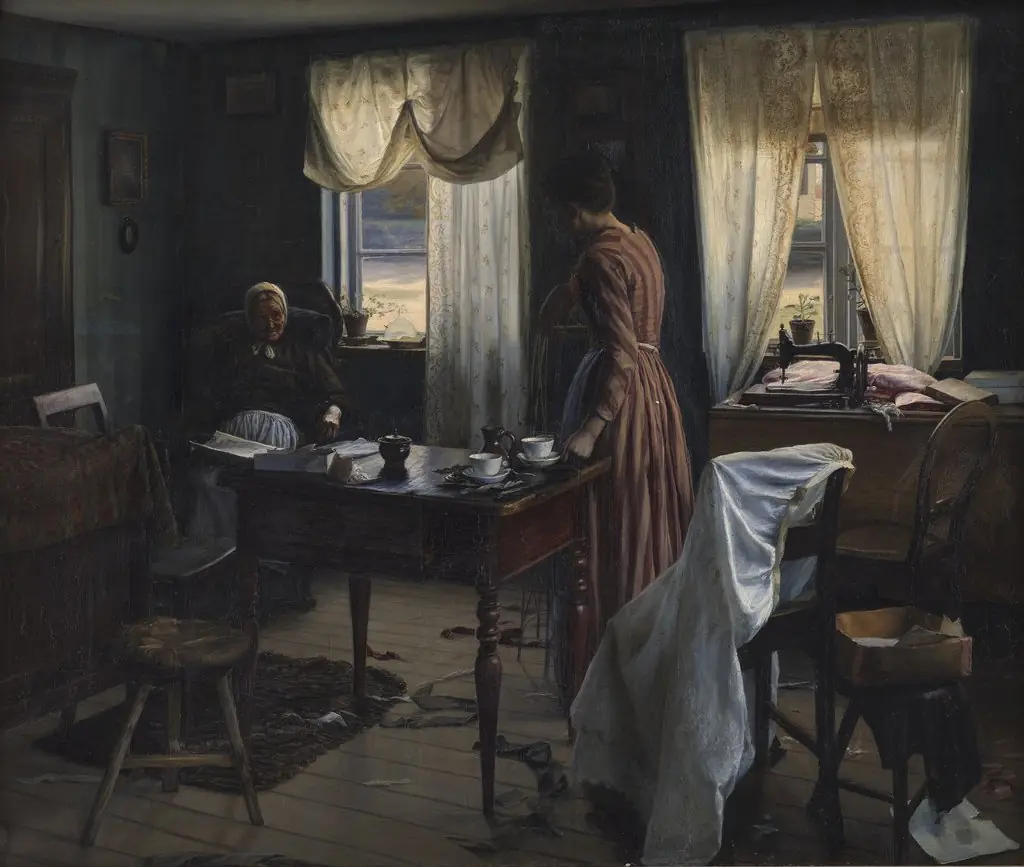
Interior with two Persons is a photography by Unknown. It dates from 1887 and is held in the collection of the Statens Museum for Kunst. Created around 1887, this black-and-white photograph captures an unadorned domestic interior.
About this work
Overview
No dramatic action occurs; instead, the scene conveys stillness through subtle gestures and the interplay of natural and artificial light.
Created around 1887, this black-and-white photograph captures an unadorned domestic interior. The image is part of the Museum of Ethnography’s collection and presents a quiet, unposed moment in a modest home. No dramatic action occurs; instead, the scene conveys stillness through subtle gestures and the interplay of natural and artificial light. The composition avoids theatricality, focusing on the rhythms of daily routine.
Subject & Meaning
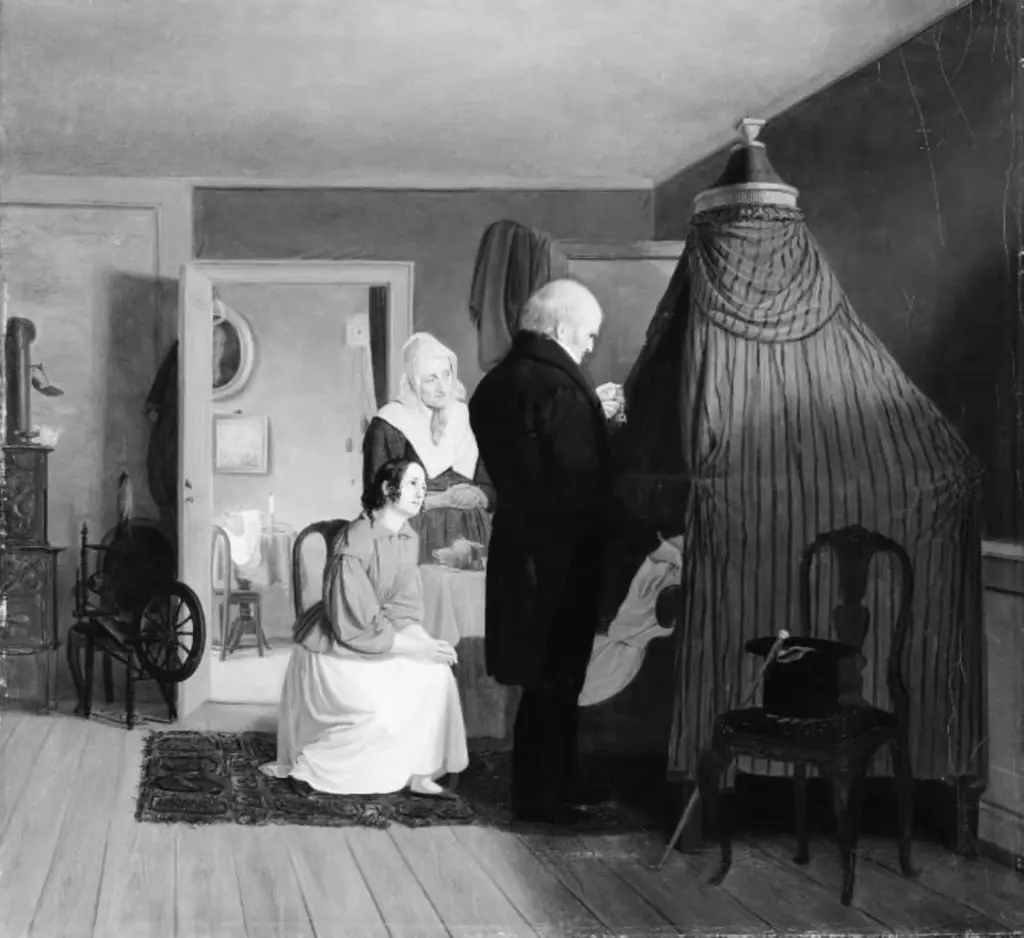
Two individuals inhabit the space: one seated at a table, engaged in reading or writing under a lamp; the other stands, handling a length of fabric, possibly preparing it for sewing. Their proximity and quiet activity suggest a shared domestic rhythm. The absence of facial detail and the ordinary nature of their tasks emphasize anonymity, inviting reflection on the quiet labor and solitude inherent in everyday life.
Technique & Style
The photograph relies on natural and lamplight to model form and space, employing chiaroscuro to define volume and depth. Shadows pool in corners and along furniture edges, while the sheer curtains diffuse daylight into soft gradients. The camera’s fixed perspective and lack of movement reinforce the stillness of the scene. The monochrome palette enhances texture—wood grain, fabric folds, and paper surfaces—without distraction.
History & Provenance
The photograph was acquired by the Museum of Ethnography, likely as part of a broader effort to document domestic life in the late 19th century. Its origin as a personal or documentary image is unclear, but its preservation suggests it was valued for its representation of ordinary environments. No record of the photographer or subjects has been documented, reinforcing its status as a silent witness to anonymous lives.
Context
In the late 1880s, photography increasingly served as a tool for recording everyday environments, especially among social reformers and ethnographers. This image aligns with efforts to capture domestic interiors as cultural artifacts, distinct from staged portraiture. The presence of a sewing machine and fabric implies a household where textile work was both practical and routine, reflecting gendered labor patterns of the era.
Legacy
Though not widely exhibited or reproduced, the photograph endures as a quiet example of early documentary realism. It contributes to a visual archive of domestic life that predates modern photojournalism. Its value lies not in fame or composition, but in its unembellished testimony to the rhythms of ordinary existence, offering a glimpse into lives rarely recorded with such stillness.
Artist & collection

 Domestic Scene
 Giacomo and Cardinal Marco, investing Andrea, Abbot of San Zeno, with his Benefice
 The Nymph of Fontainebleau
 Portrait of a Woman
 Madonna and Child with Saints in the Enclosed Garden
 Venus and Minerva
 Family Group of Four on Sofa
 Wall painting from Room H of the Villa of P. Fannius Synistor at Boscoreale