Artwork
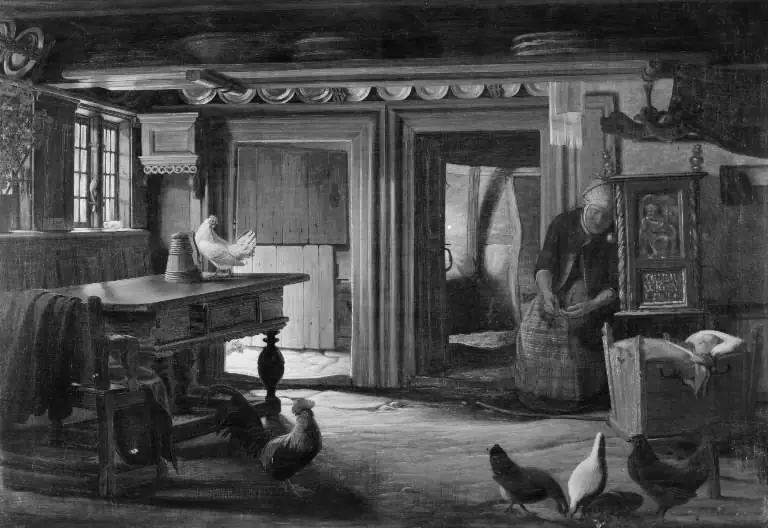
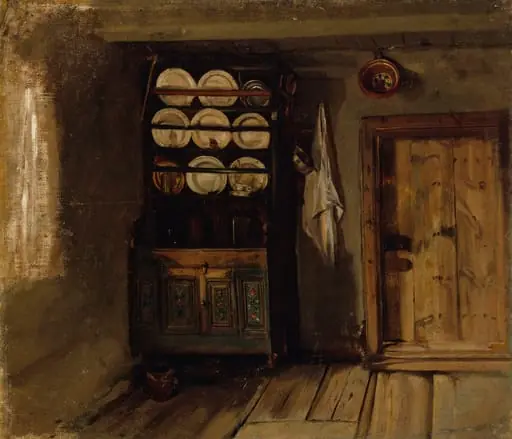
Et bryggers i en bondegård
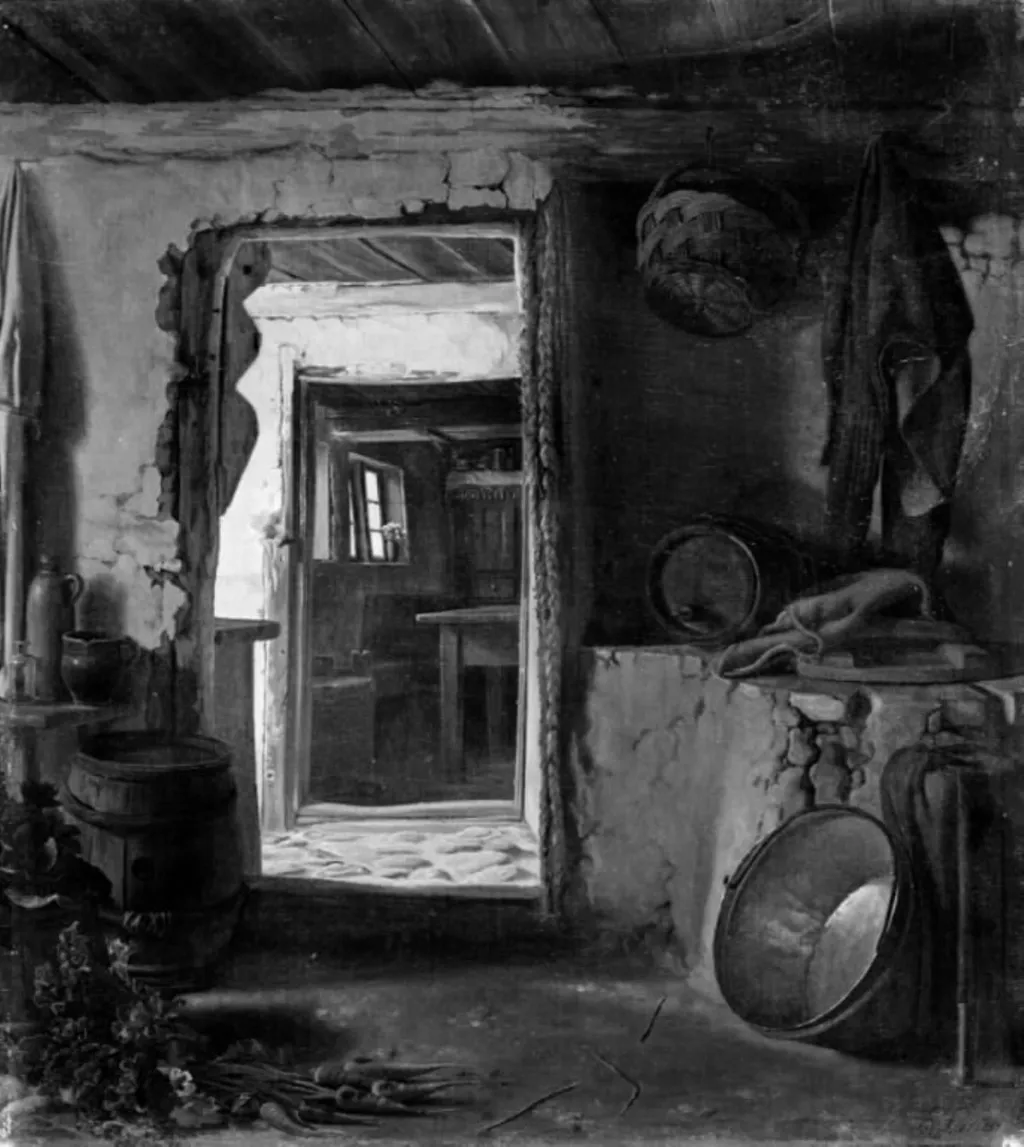
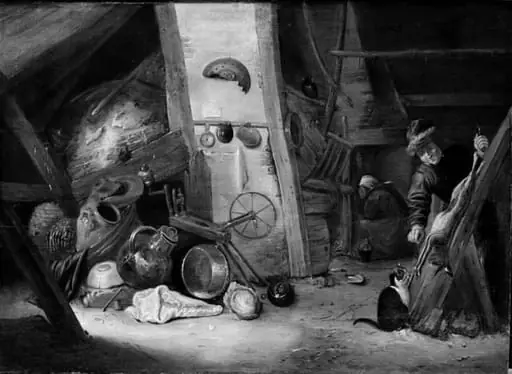
Et bryggers i en bondegård is a photography by the Impressionist artist Unknown. It dates from 1861 and is held in the collection of the Statens Museum for Kunst.
About this work
Overview
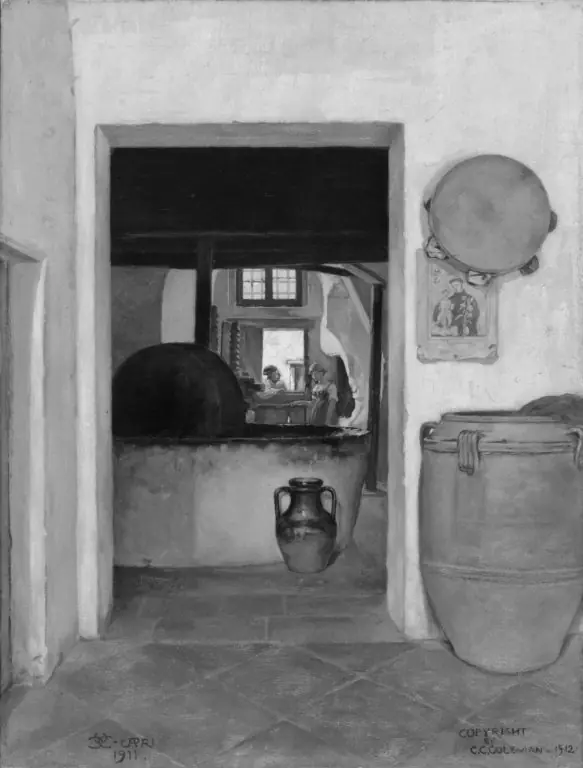
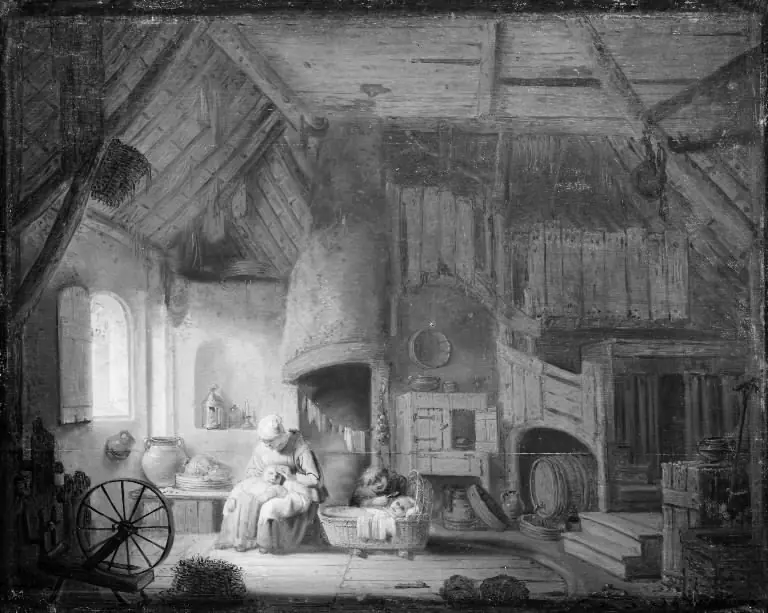
Et bryggers i en bondegård, a black‑and‑white photograph taken in 1861 by the photographer identified as 552_person, depicts the interior of a modest rural outbuilding. The image is part of the collection of the Museum of Ethnography, where it is preserved as a visual record of nineteenth‑century Danish farm life.
Subject & Meaning
The scene presents a dimly lit pantry or storage room of a farmhouse, its stone walls and earthen floor suggesting a functional, unadorned space. Objects such as a wooden barrel, a woven basket and scattered garments hint at everyday domestic activities, emphasizing the simplicity and self‑sufficiency of rural households.
Technique & Style
Captured in monochrome, the photograph employs strong contrasts between light entering through a left‑hand window and the shadowed interior, creating a chiaroscuro effect reminiscent of earlier pictorial traditions. The composition balances the illuminated foreground with a darker doorway that recedes into the background, reinforcing a sense of depth.
History & Provenance
Created in 1861, the photograph entered the Museum of Ethnography’s holdings at an unspecified date, where it has been catalogued as a visual document of agrarian architecture and interior design. Its attribution to 552_person reflects the archival practice of using numeric identifiers for anonymous or poorly documented photographers.
Context
The image belongs to a broader nineteenth‑century interest in documenting folk culture and rural environments across Scandinavia. Such photographs were often used by ethnographers and scholars to illustrate the material conditions of peasant life, complementing written descriptions and field notes.
Legacy
While the photograph itself is not widely reproduced, it serves as a reference point for researchers studying historic Danish farm interiors and the visual language of early documentary photography. Its preservation in a national ethnographic collection underscores its value as a cultural artifact.
Artist & collection

 Domestic Scene
 Giacomo and Cardinal Marco, investing Andrea, Abbot of San Zeno, with his Benefice
 The Nymph of Fontainebleau
 Portrait of a Woman
 Madonna and Child with Saints in the Enclosed Garden
 Venus and Minerva
 Family Group of Four on Sofa
 Wall painting from Room H of the Villa of P. Fannius Synistor at Boscoreale