Artwork
A Little Boy is Taken to the Monastery by His Parents
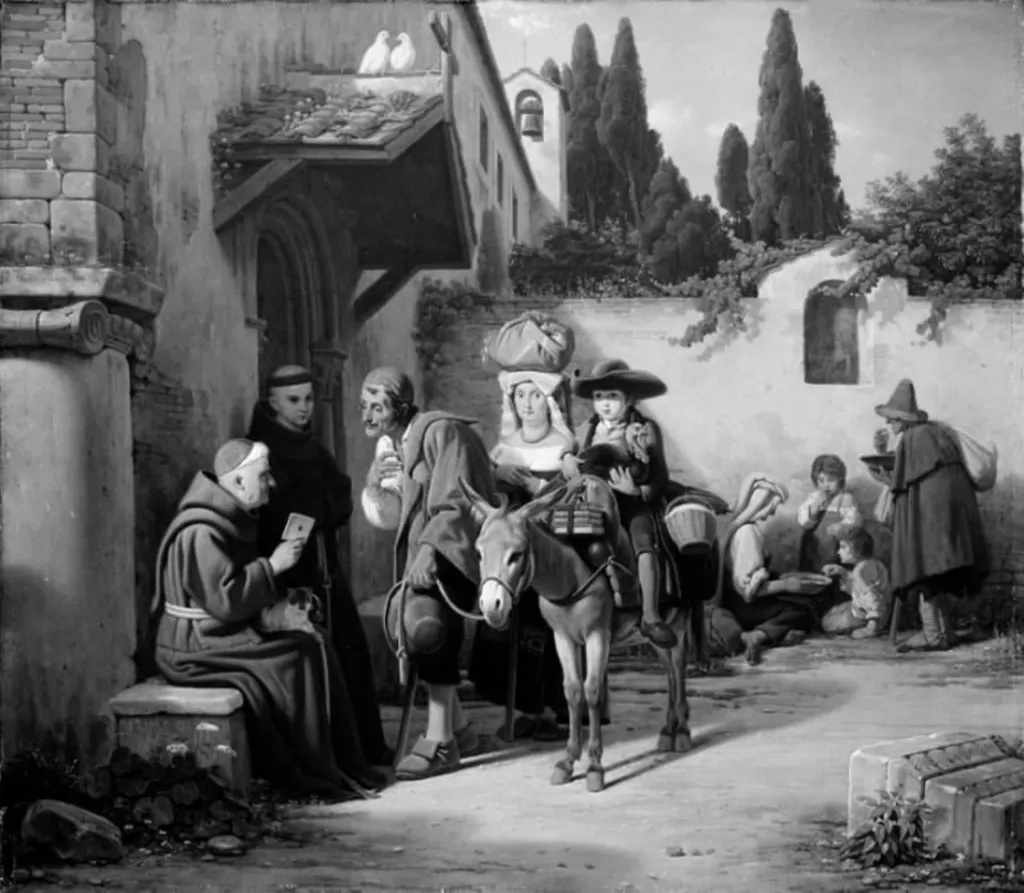
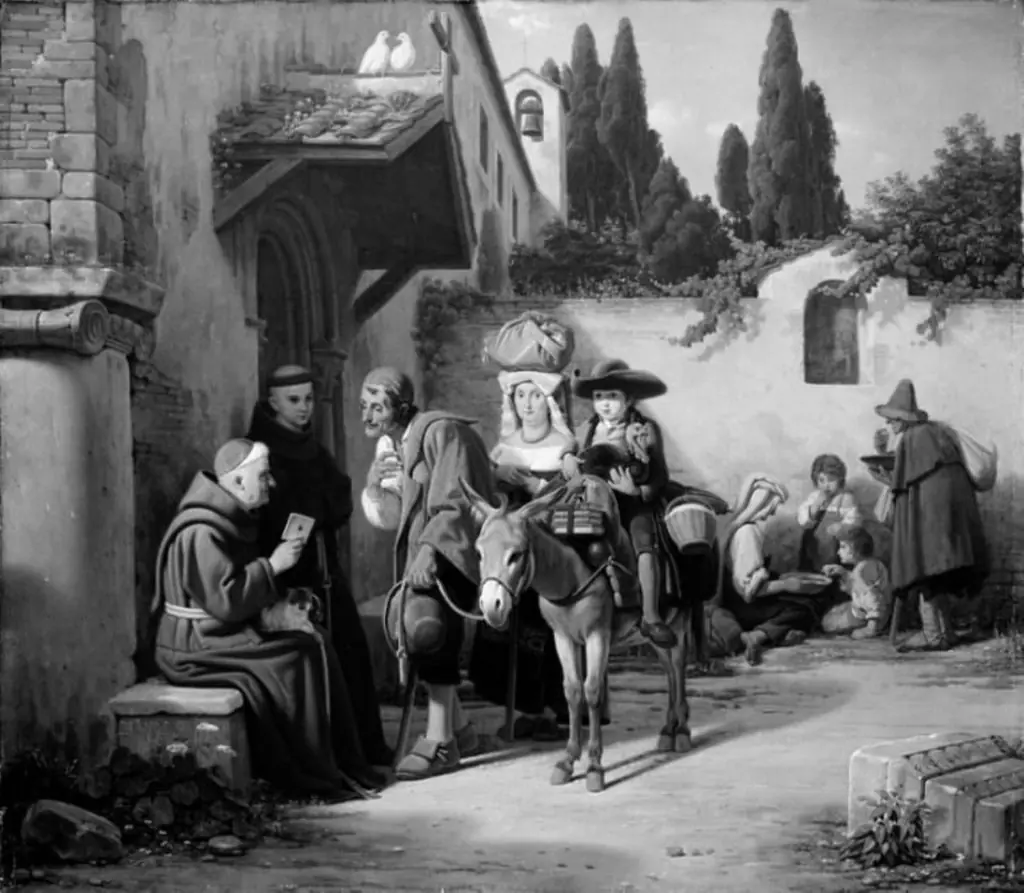
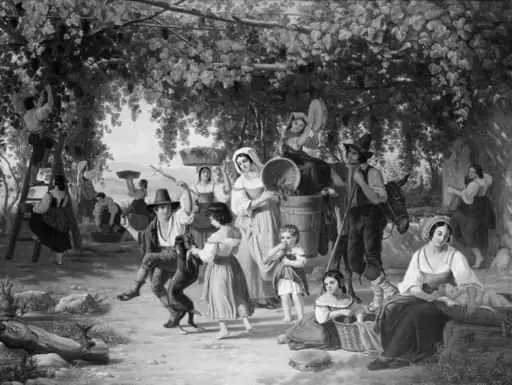
A Little Boy is Taken to the Monastery by His Parents is a photography by Unknown. It dates from 1836 and is held in the collection of the Statens Museum for Kunst. Created around 1836, this image depicts a quiet domestic ritual: parents bringing a young boy to a monastic institution.
About this work
Overview
Though labeled as a painting, the visual qualities suggest a photographic process—soft tonal gradations, muted contrasts, and an emphasis on texture over color.
Created around 1836, this image depicts a quiet domestic ritual: parents bringing a young boy to a monastic institution. Though labeled as a painting, the visual qualities suggest a photographic process—soft tonal gradations, muted contrasts, and an emphasis on texture over color. The scene is grounded in everyday life, with no dramatic flourish, reflecting a documentary impulse common in early visual records of social customs.
Subject & Meaning
The composition centers on a boy being led by his parents toward a monastic entrance, accompanied by a donkey, likely carrying belongings. The figures are arranged in a loose, natural grouping, their expressions subdued. The act suggests a rite of passage—perhaps the boy’s entry into religious life. The absence of overt emotion underscores the solemnity of the moment, framed as a routine yet significant cultural transition.
Technique & Style
The image employs a grayscale palette with delicate tonal variation, avoiding strong shadows or highlights. Details in fabric, skin, and architecture are rendered with careful attention to surface texture rather than line or color. The lighting is even and diffused, creating a calm, almost meditative atmosphere. These qualities align with early photographic aesthetics, suggesting the work may be a daguerreotype or calotype rather than a painted composition.
History & Provenance
The work resides in the Museum of Ethnography, indicating its value as a cultural artifact rather than a fine art object. Its origin as a work by '555_person' remains unverified, and no documented provenance exists beyond its current institutional custody. The absence of signature or date on the image itself reinforces its role as an anonymous record of social practice in the early 19th century.
Context
In the 1830s, monastic institutions across Europe and the Near East often received children for education or religious training, particularly from rural or modest families. The presence of a donkey and traditional dress points to a non-urban setting. This image captures a moment before mass literacy and state schooling, when religious communities played a central role in child development and social structure.
Legacy
Though not attributed to a known artist, the image contributes to a growing archive of early visual ethnography. Its quiet realism offers insight into familial and religious customs of the period, influencing later documentary practices. It stands as a quiet testament to the everyday rituals that shaped community life, preserved not for aesthetic acclaim but for historical witness.
Artist & collection

 Domestic Scene
 Giacomo and Cardinal Marco, investing Andrea, Abbot of San Zeno, with his Benefice
 The Nymph of Fontainebleau
 Portrait of a Woman
 Madonna and Child with Saints in the Enclosed Garden
 Venus and Minerva
 Family Group of Four on Sofa
 Wall painting from Room H of the Villa of P. Fannius Synistor at Boscoreale
 A Relic Dealer in Olevano
 A Relic Dealer in Olevano
 Elegant Company Going Hunting
 Kong Valdemar sætter Liden Else på prøve
 Tanz in der Campagna
 Market Scene
 Kong Valdemar sætter Liden Else på prøve
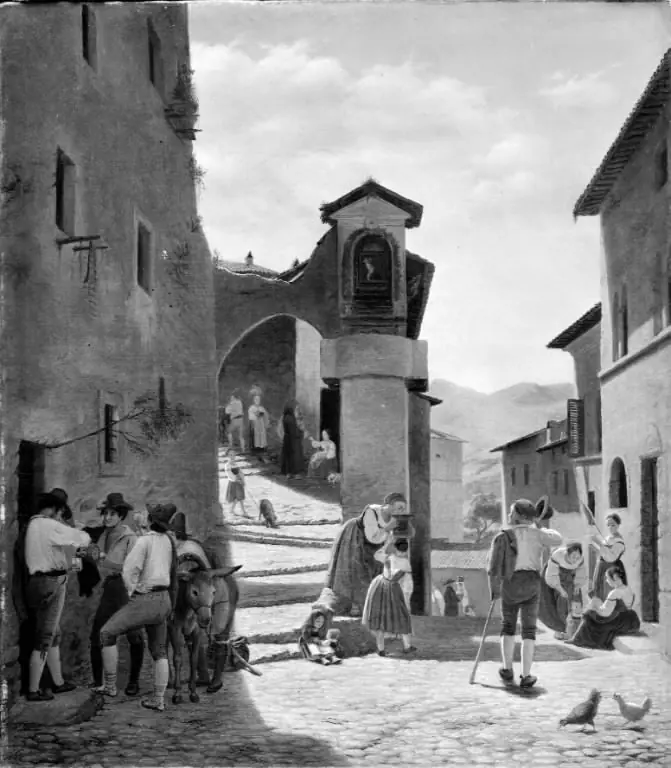 Street Scene in Subiaco, Italy
 Street Scene in Subiaco, Italy
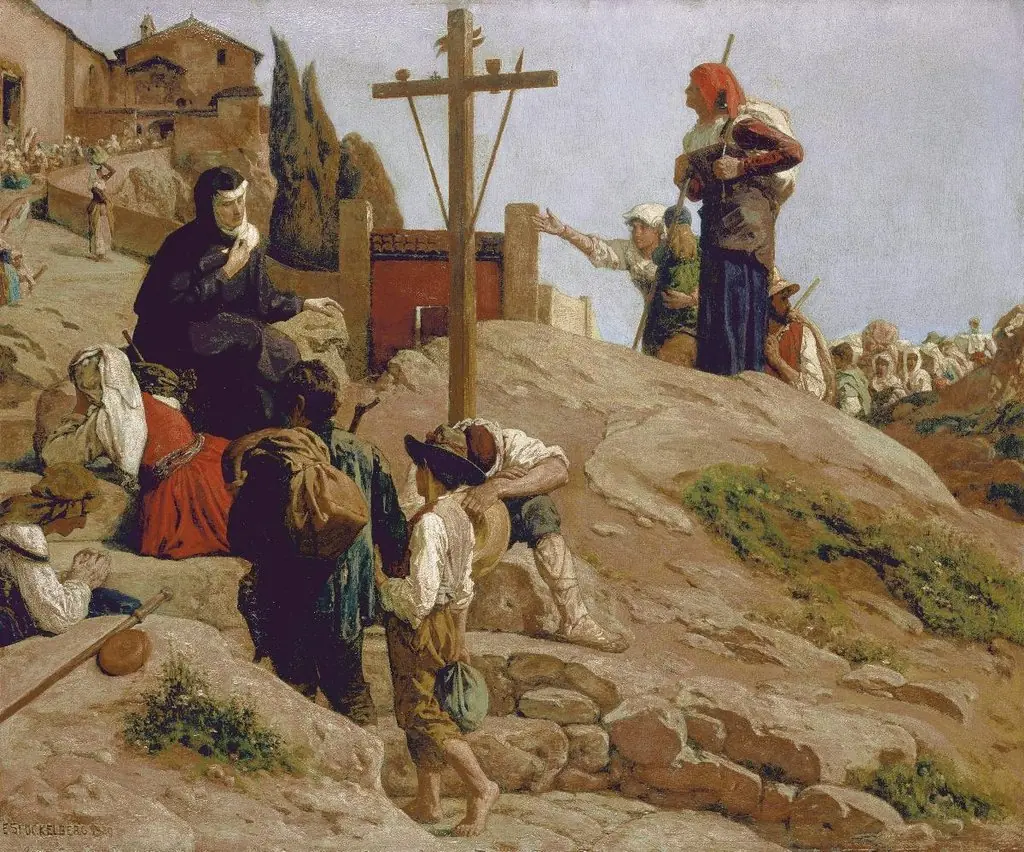 Pilger in den Abruzzen
 A Little Boy is Taken to the Monastery by His Parents
 Vintage in Italy