Artwork
Langs åen i de store enge
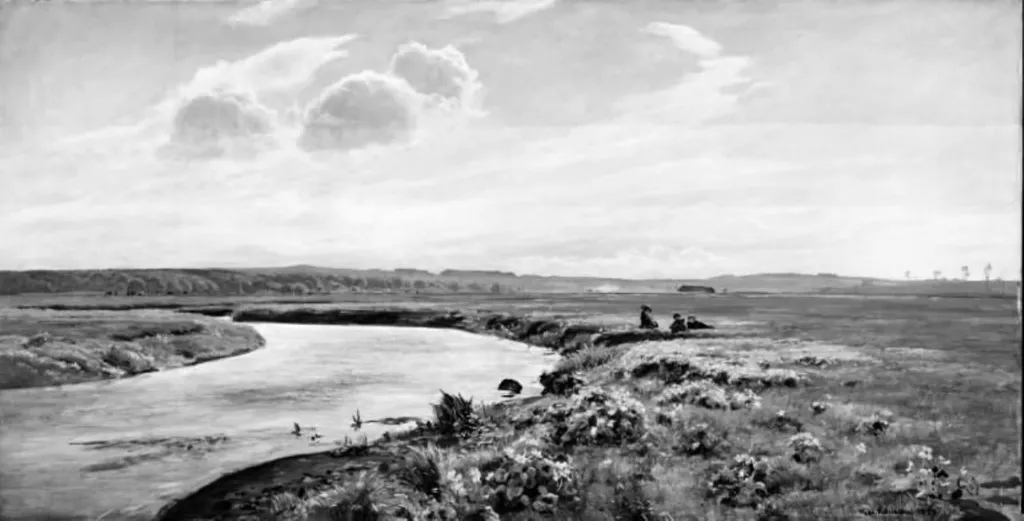
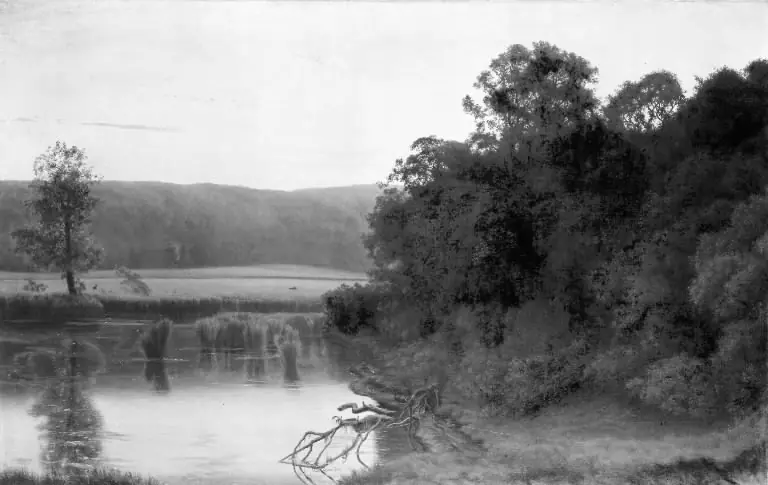
Langs åen i de store enge is a photography by the Impressionist artist Unknown. It dates from 1898 and is held in the collection of the Statens Museum for Kunst. Created in 1898 by the photographer 558_person, this image captures a broad, level meadow traversed by a gently winding river.
About this work
Overview
Created in 1898 by the photographer 558_person, this image captures a broad, level meadow traversed by a gently winding river. The water lies still, mirroring an overcast sky, while a line of trees frames the left edge and tall grasses fringe the right bank. The composition conveys a sense of spacious tranquility, emphasizing the subtle interaction between land, water, and sky.
Subject & Meaning
The photograph presents a quiet rural landscape, where the river serves as a natural conduit through the open field. The muted palette and soft clouds suggest an impending change in weather, adding a contemplative mood. Small, indistinct figures near the bank hint at human or animal presence, reinforcing the theme of humanity’s modest place within a vast natural setting.
Technique & Style
Executed in a realistic photographic style, the image relies on natural lighting and a balanced tonal range to render the flat terrain and reflective water. The photographer’s choice of a wide perspective emphasizes depth, while the careful placement of trees and grasses guides the viewer’s eye along the river’s curve, reinforcing the realism of the scene.
History & Provenance
The work has been part of the collection at the Museum of Ethnography since its acquisition, though the exact date of transfer is not recorded. Its inclusion reflects the museum’s interest in documenting everyday landscapes and rural environments from the late nineteenth century, providing context for ethnographic studies of the period.
Context
Produced at the close of the 1800s, the photograph aligns with a broader European interest in documenting natural scenery and agrarian life. During this era, photographers often focused on unembellished, everyday vistas, contributing to a visual record that complemented ethnographic research on regional land use and environmental conditions.
Artist & collection

 Domestic Scene
 Giacomo and Cardinal Marco, investing Andrea, Abbot of San Zeno, with his Benefice
 The Nymph of Fontainebleau
 Portrait of a Woman
 Madonna and Child with Saints in the Enclosed Garden
 Venus and Minerva
 Family Group of Four on Sofa
 Wall painting from Room H of the Villa of P. Fannius Synistor at Boscoreale