Artwork
Rassdorfs papirværk mellem Preetz og Plön i Holsten
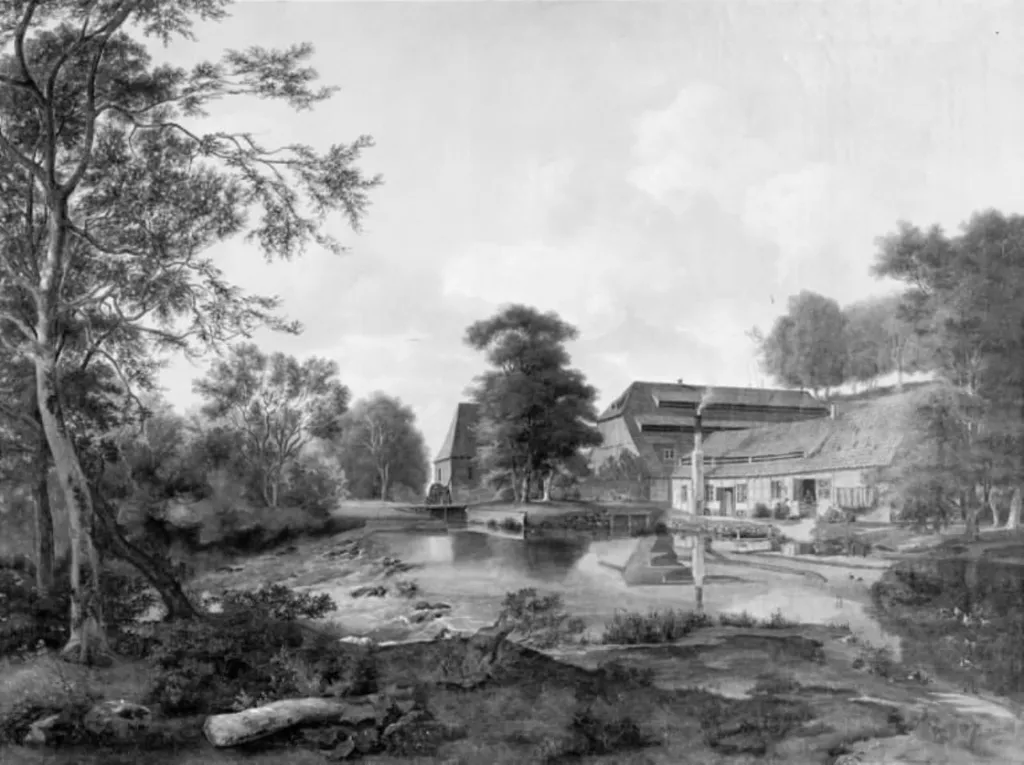
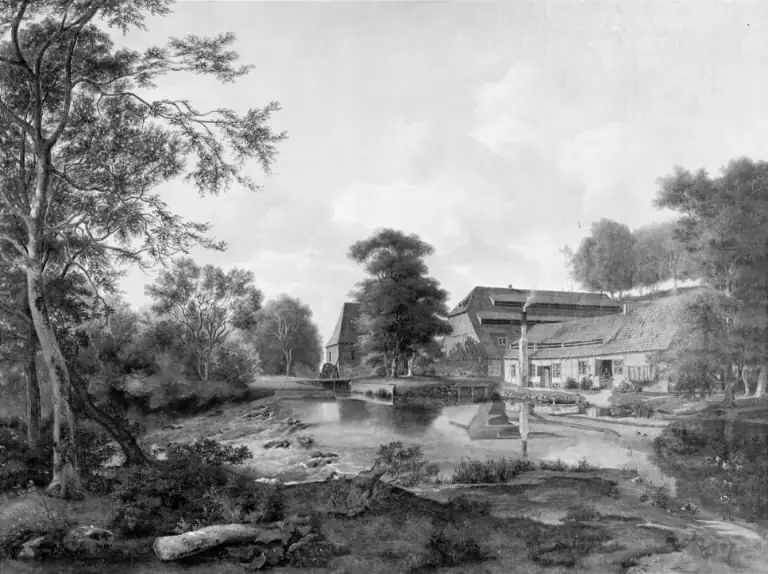
Rassdorfs papirværk mellem Preetz og Plön i Holsten is a photography by Unknown. It dates from 1850 and is held in the collection of the Statens Museum for Kunst. This black-and-white image, dated around 1850, depicts a rural landscape between Preetz and Plön in Holstein.
About this work
Overview
Created by an artist identified only as 565_person, the work captures a quiet stretch of countryside with a stone bridge, a winding river, and scattered trees.
This black-and-white image, dated around 1850, depicts a rural landscape between Preetz and Plön in Holstein. Created by an artist identified only as 565_person, the work captures a quiet stretch of countryside with a stone bridge, a winding river, and scattered trees. It is held in the collection of the Museum of Ethnography, where it is preserved as a record of regional topography and daily life in mid-19th-century northern Germany.
Subject & Meaning
The scene presents an unembellished view of a modest rural environment, emphasizing ordinary elements: a functional stone bridge, uneven terrain, fallen logs, and trees whose branches cast soft shadows. There is no human presence, suggesting an interest in the land itself rather than human activity. The composition invites contemplation of place, time, and the quiet rhythms of agricultural life in Holstein.
Technique & Style
Rendered in monochrome, the image relies on tonal variation to suggest texture and depth. The rough surface of the bridge, the delicate interplay of light and foliage, and the subtle gradations in the river’s surface reflect careful observation. The artist’s attention to natural detail—such as the angle of leaning trees and the irregular ground—suggests a documentary impulse, aligning with emerging practices of topographical recording in the mid-1800s.
History & Provenance
The work entered the Museum of Ethnography’s collection as part of a broader effort to document regional landscapes and vernacular architecture. Its origin as a paper-based image, likely a drawing or early photographic print, reflects the transitional nature of visual documentation in the 1850s. The artist’s identity remains obscure, and no further records of its creation or early ownership have been traced.
Context
Created during a period when European scholars and artists increasingly turned to regional landscapes for ethnographic and topographical study, this image aligns with efforts to catalog rural environments before industrialization transformed them. In Holstein, such records served both scientific and cultural preservation aims, capturing places that were still largely untouched by modern infrastructure.
Legacy
As a quiet, unadorned record of a specific place and moment, the image contributes to historical understandings of 19th-century rural Germany. It stands as an example of how non-elite landscapes were visually documented during a time of rapid change. Its preservation in an ethnographic museum underscores its value as a cultural artifact rather than a work of fine art.
Artist & collection

 Domestic Scene
 Giacomo and Cardinal Marco, investing Andrea, Abbot of San Zeno, with his Benefice
 The Nymph of Fontainebleau
 Portrait of a Woman
 Madonna and Child with Saints in the Enclosed Garden
 Venus and Minerva
 Family Group of Four on Sofa
 Wall painting from Room H of the Villa of P. Fannius Synistor at Boscoreale
 Landskab med en bondehytte
 Road near Village
 Pige der sælger gæs
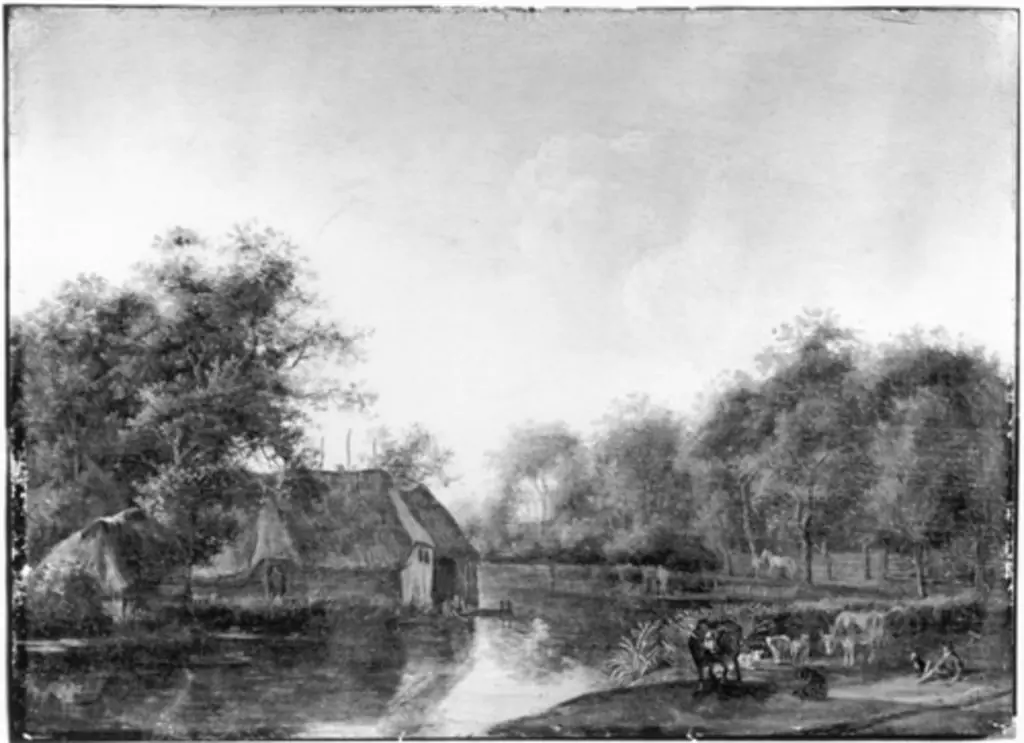 Flusslandschaft mit Hütten und Vieh
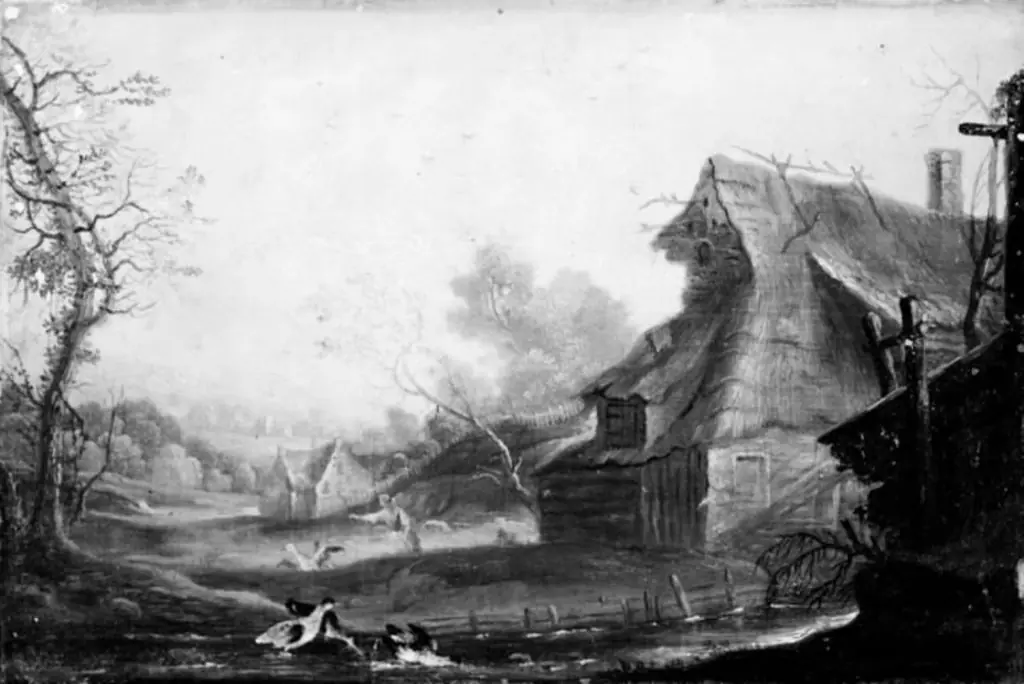 Pige der sælger gæs
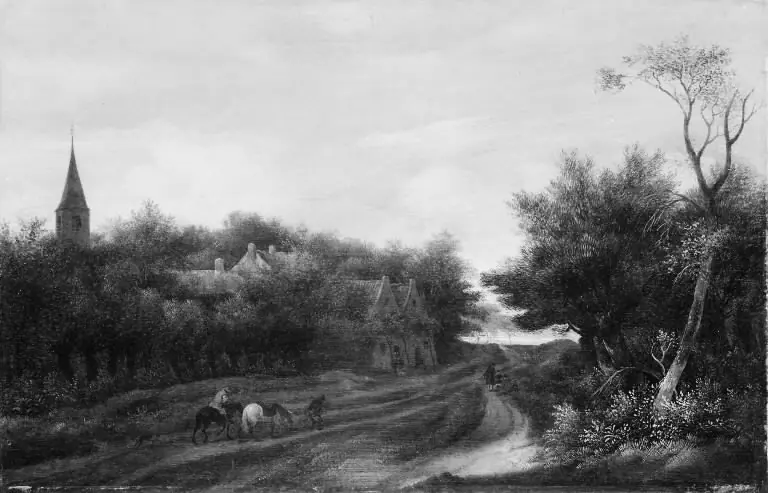 Road near Village
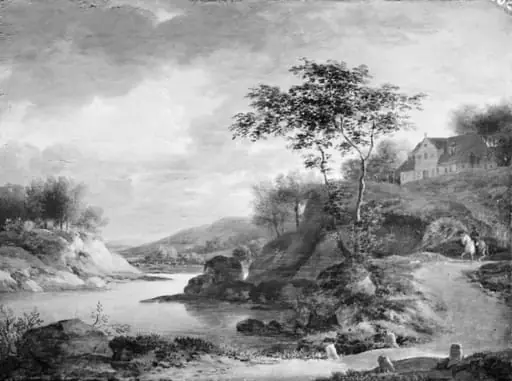 An Autumn Landscape by the Rhine
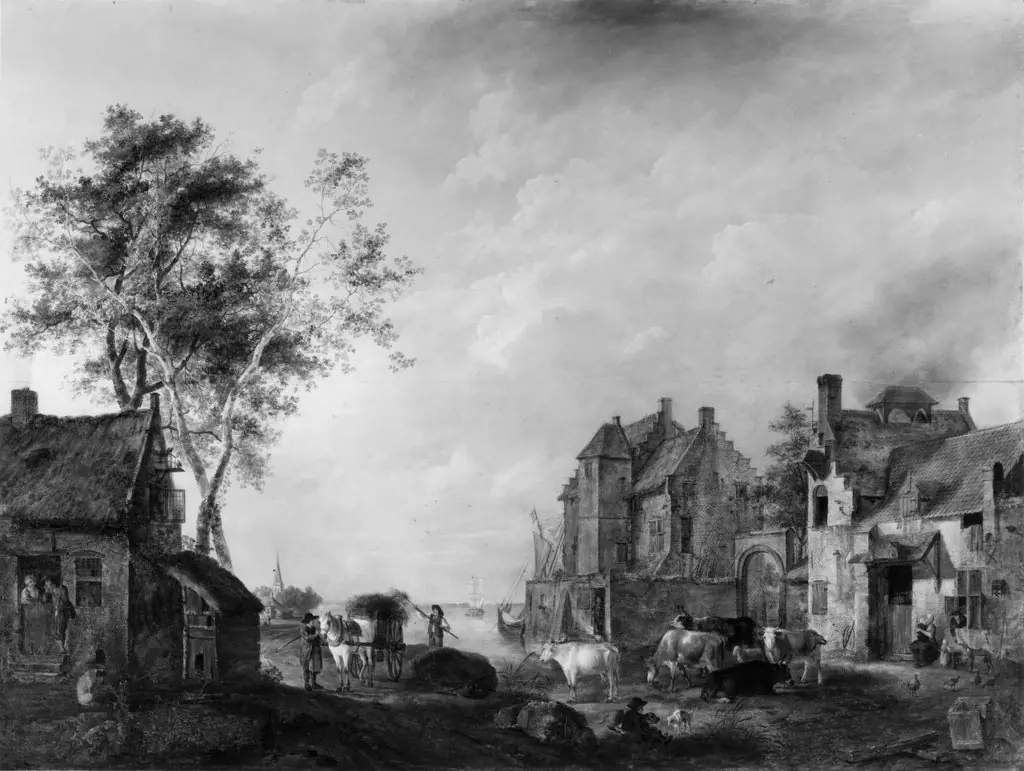 Village Scene on a River
 View of the Country House Oversteen
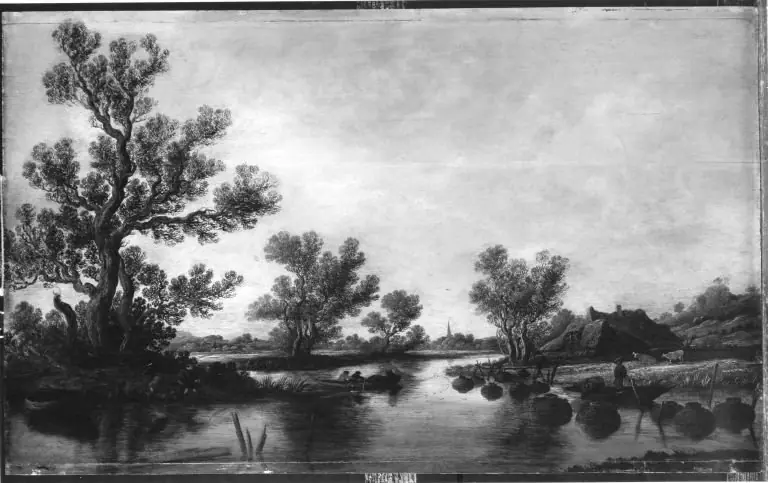 Kanallandschaft
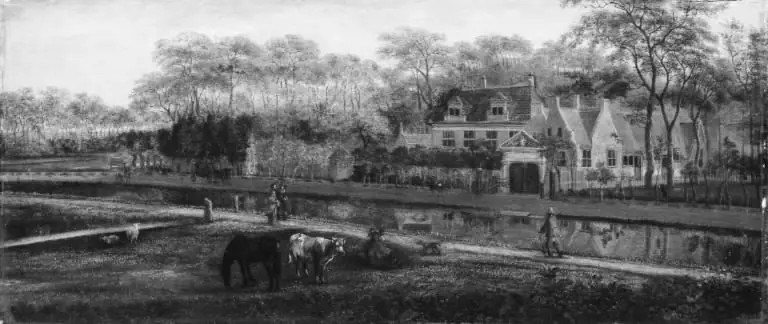 View of the Country House Oversteen
 Rassdorfs papirværk mellem Preetz og Plön i Holsten