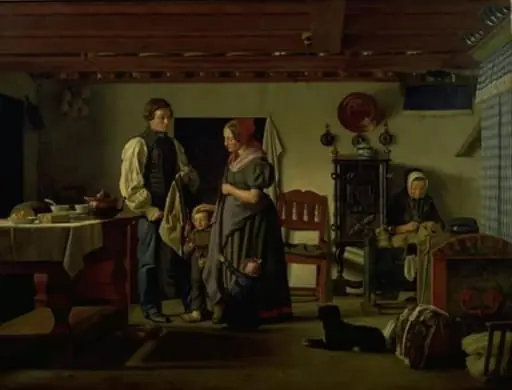
Artwork
En bondekone, som giver sin datter noget at spise
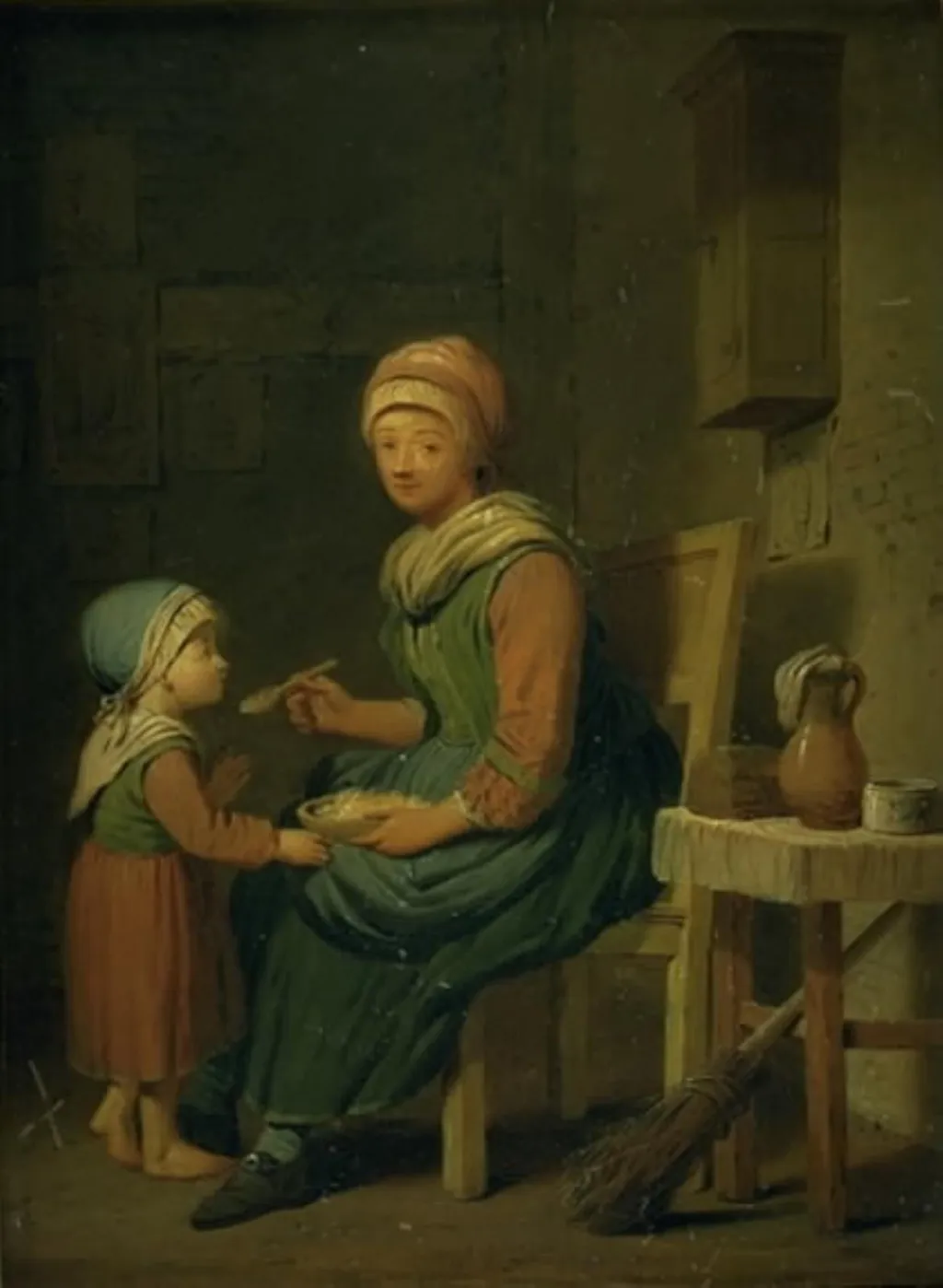
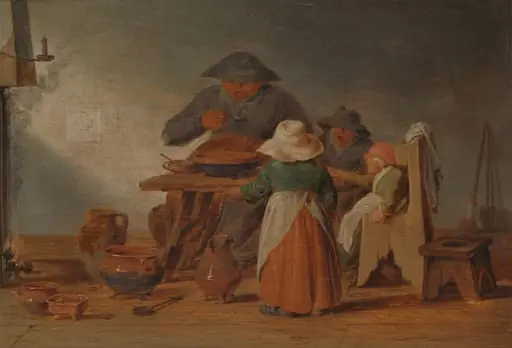
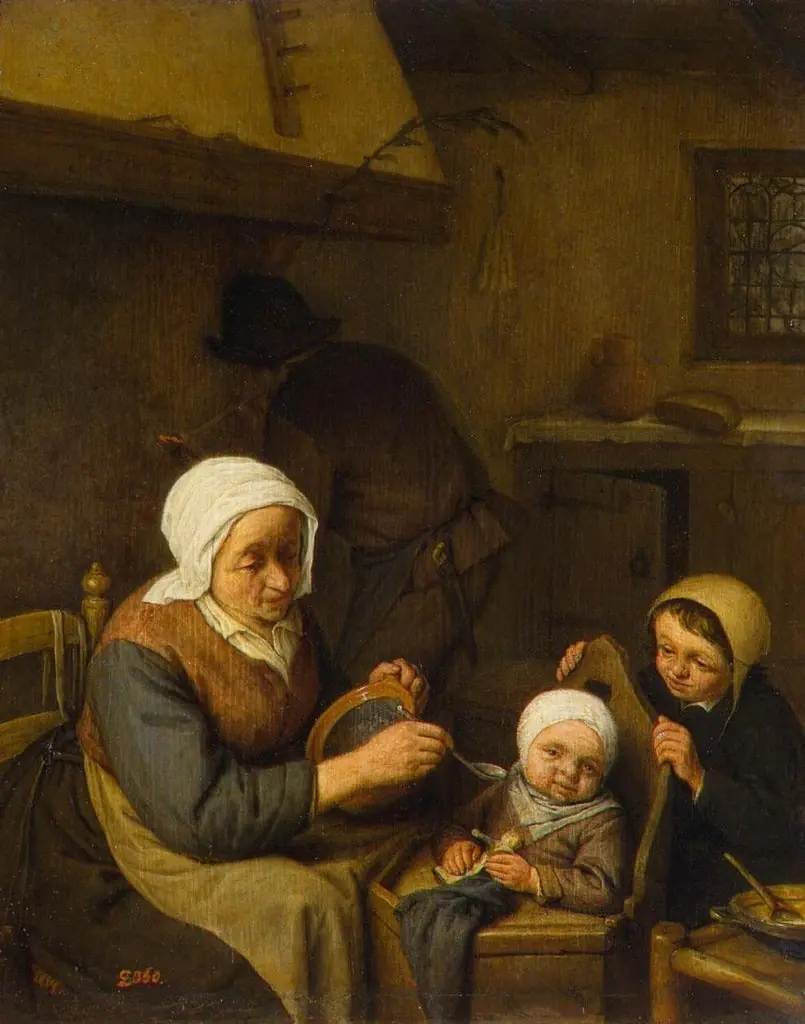
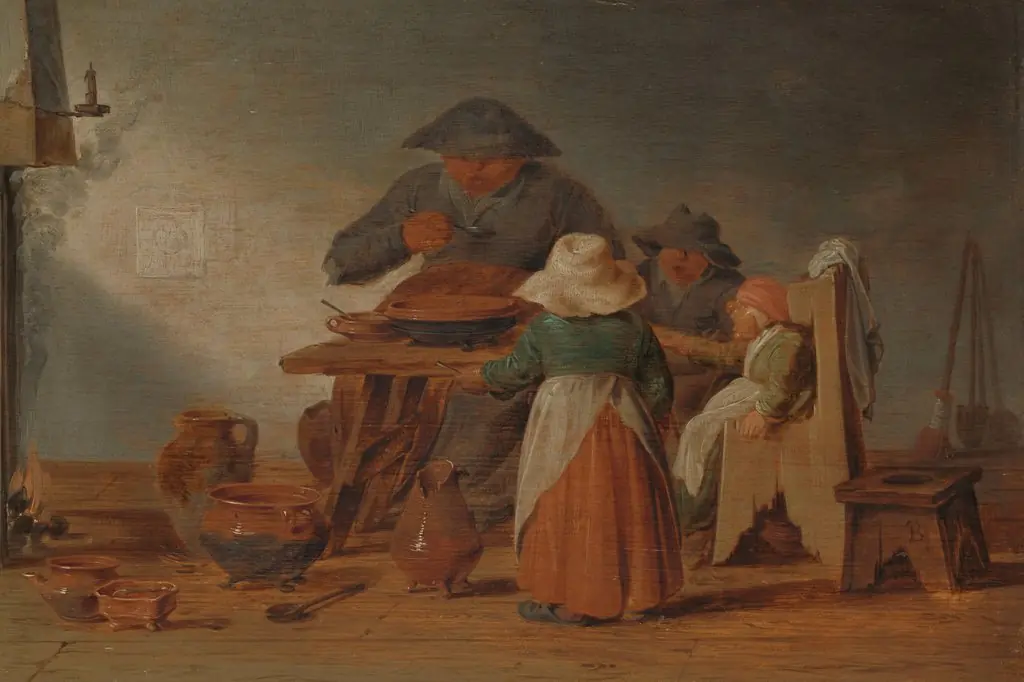
En bondekone, som giver sin datter noget at spise is a photography by the Romanticist artist Unknown. It dates from 1781 and is held in the collection of the Statens Museum for Kunst. Painted in 1781, this work depicts a rural Danish mother sharing a meal with her young daughter.
About this work
Overview
The painting resides in the Museum of Ethnography, where it is valued for its unidealized portrayal of peasant life in late 18th-century Scandinavia.
Painted in 1781, this work depicts a rural Danish mother sharing a meal with her young daughter. Executed in oil on canvas, it captures a quiet domestic moment with restrained emotion. The painting resides in the Museum of Ethnography, where it is valued for its unidealized portrayal of peasant life in late 18th-century Scandinavia. Its modest scale and intimate subject reflect a growing interest in everyday realism during the period.
Subject & Meaning
The scene portrays a mother feeding her child from a shared bowl, emphasizing care and sustenance within a humble household. The child’s attentive gaze and the mother’s composed demeanor suggest a bond grounded in routine rather than drama. No symbolic elements override the simplicity of the act; the focus remains on the physical and emotional exchange of nourishment, reflecting the daily realities of rural families in pre-industrial Denmark.
Technique & Style
The artist employs soft, directional lighting to highlight the faces and hands, drawing attention to the act of feeding. Shadows deepen the texture of the stone walls and wooden furnishings, lending depth to the cramped interior. Brushwork is subdued, avoiding ornamentation; colors are muted, dominated by earth tones and the green of the mother’s dress. The composition is tightly framed, reinforcing the intimacy of the moment without theatricality.
History & Provenance
Created in 1781, the painting entered the collection of the Museum of Ethnography in the late 19th century, likely as part of a broader effort to document Nordic folk life. Its attribution to the artist remains unverified in public records, though stylistic analysis aligns it with regional painters of the time. It has been consistently displayed as an example of domestic realism rather than as a work by a named master.
Context
In late 18th-century Denmark, rural communities faced economic hardship and limited access to resources. Artistic depictions of peasant life were uncommon outside of satirical or moralizing genres. This painting stands apart by avoiding sentimentality or didacticism, instead offering a neutral observation of subsistence and familial duty, aligning with emerging ethnographic interests in authentic daily life.
Legacy
The painting contributes to a modest but significant body of Nordic genre works that prioritize observation over idealization. It influenced later ethnographic collections and regional art studies, particularly in Scandinavia, where its quiet realism became a reference point for documenting pre-modern domesticity. Though not widely reproduced, it remains a touchstone for scholars examining the visual representation of ordinary life in 18th-century Europe.
Artist & collection

 Domestic Scene
 Giacomo and Cardinal Marco, investing Andrea, Abbot of San Zeno, with his Benefice
 The Nymph of Fontainebleau
 Portrait of a Woman
 Madonna and Child with Saints in the Enclosed Garden
 Venus and Minerva
 Family Group of Four on Sofa
 Wall painting from Room H of the Villa of P. Fannius Synistor at Boscoreale