Artwork
Reservesoldatens afsked med sin familie
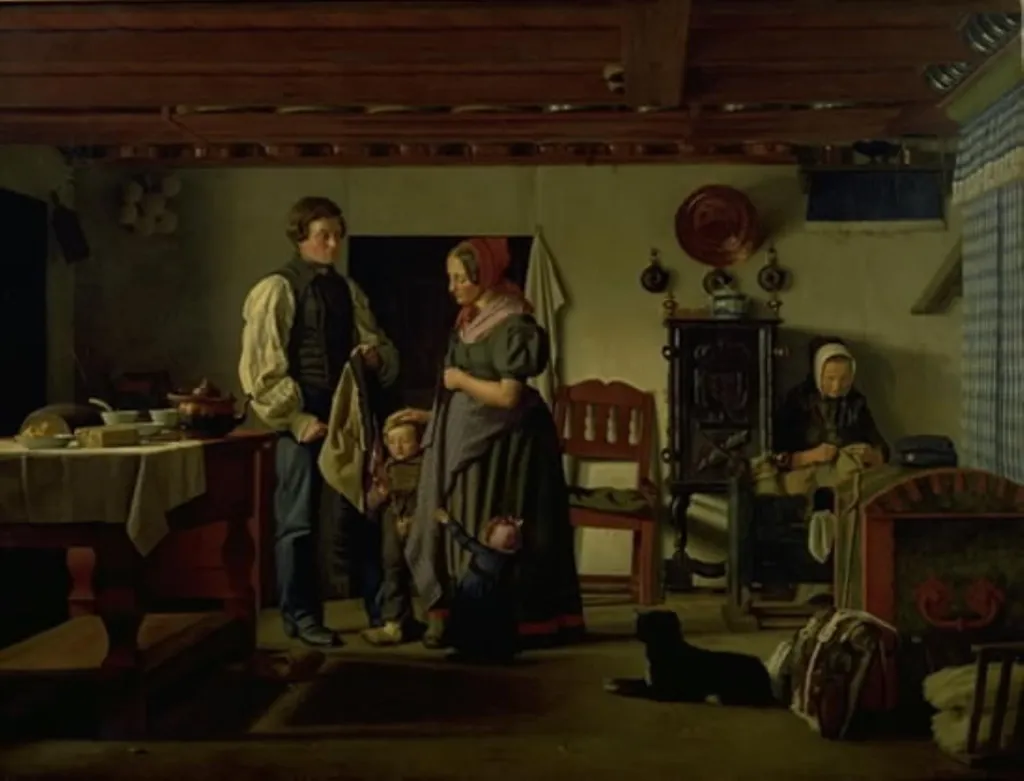
Reservesoldatens afsked med sin familie is a photography by the Romanticist artist Unknown. It dates from 1849 and is held in the collection of the Statens Museum for Kunst. Created in 1849, this early photograph depicts a reserve soldier bidding farewell to his family.
About this work
Overview
Created in 1849, this early photograph depicts a reserve soldier bidding farewell to his family. Taken during a period when photography was still emerging as a documentary tool, the image preserves an intimate domestic moment with unusual immediacy. It is held in the collection of the Museum of Ethnography, where it serves as a record of civilian life in 19th-century Denmark.
Subject & Meaning
The scene centers on a soldier and his wife clasping hands with their two children, surrounded by the quiet routine of home. An elderly woman sews near the stove, reinforcing the sense of daily continuity. The absence of dramatic gesture or symbolic props suggests a restrained, authentic farewell—reflecting the quiet gravity of military service in ordinary lives rather than heroic narrative.
Technique & Style
The photograph’s composition relies on natural light and unposed figures, typical of early daguerreotype or calotype processes.
The photograph’s composition relies on natural light and unposed figures, typical of early daguerreotype or calotype processes. The dim interior, plain walls, and modest furnishings are rendered with clarity despite technical limitations. The focus on mundane details—bread, pitcher, sewing tools—emphasizes realism over idealization, aligning with photography’s emerging role as a witness to everyday existence.
History & Provenance
The photograph was made in Denmark during a time of military reform, when reserve soldiers were commonly called to service. It entered the Museum of Ethnography’s collection in the late 19th or early 20th century, likely as part of efforts to document national social customs. Its preservation reflects early institutional interest in photography as ethnographic evidence rather than fine art.
Context
In the mid-19th century, photography began to challenge painted representations of life by capturing unmediated moments. While Romantic artists idealized emotion, this image offers a quiet, unembellished view of familial separation—mirroring broader societal shifts toward realism and the documentation of common experience in an era of industrial and military change.
Legacy
As one of the earliest photographic records of Danish domestic life, it contributes to the historical understanding of how ordinary families experienced national obligations. Its endurance in a museum setting underscores photography’s growing authority as a medium for preserving social history, influencing later ethnographic and documentary practices.
Artist & collection

 Domestic Scene
 Giacomo and Cardinal Marco, investing Andrea, Abbot of San Zeno, with his Benefice
 The Nymph of Fontainebleau
 Portrait of a Woman
 Madonna and Child with Saints in the Enclosed Garden
 Venus and Minerva
 Family Group of Four on Sofa
 Wall painting from Room H of the Villa of P. Fannius Synistor at Boscoreale
 En friers moder taler sin søns sag
 Vægteren på nytårsvisit. Køkkenscene
 Vægteren på nytårsvisit. Køkkenscene
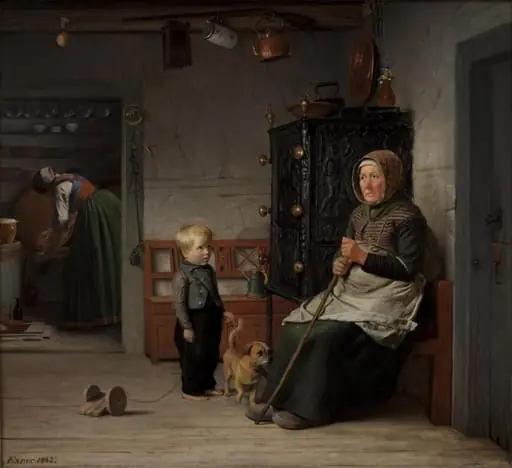 En fattig kone der venter på et krus øl i en bondestue
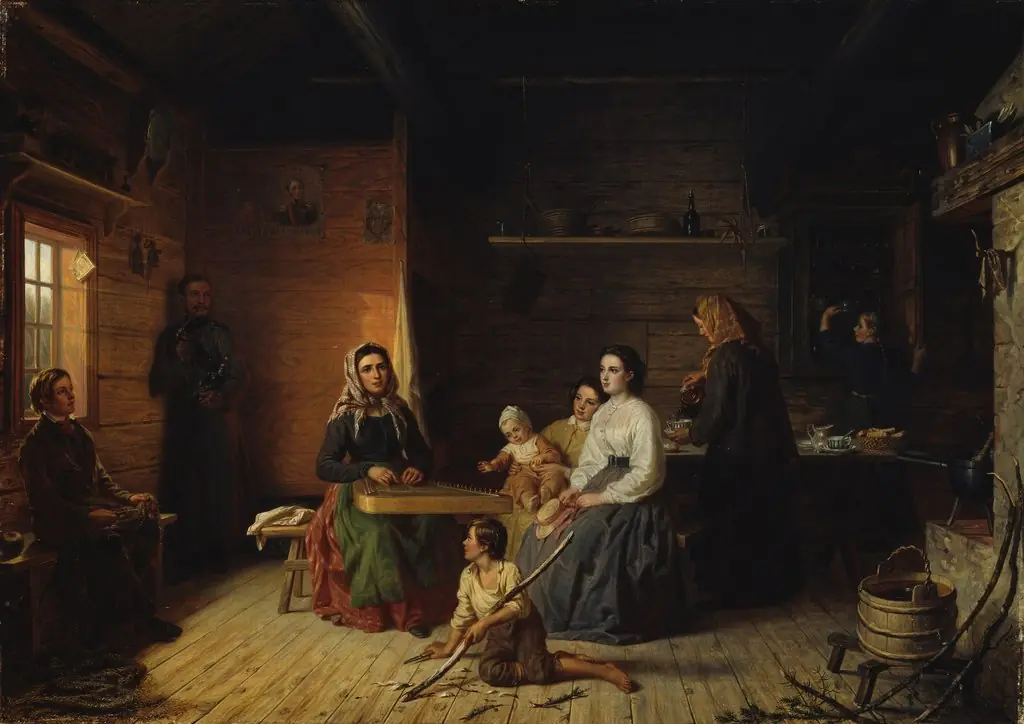 Kreeta Haapasalo Playing the Kantele in a Peasant Cottage
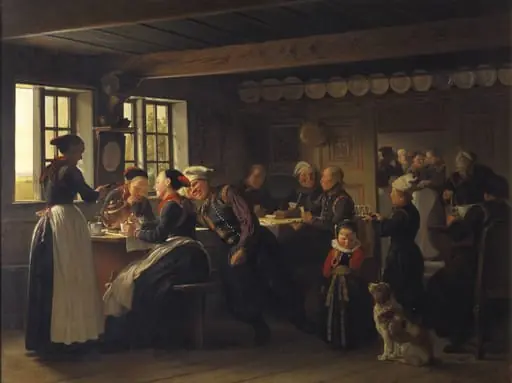 Episode af et gilde på Amager
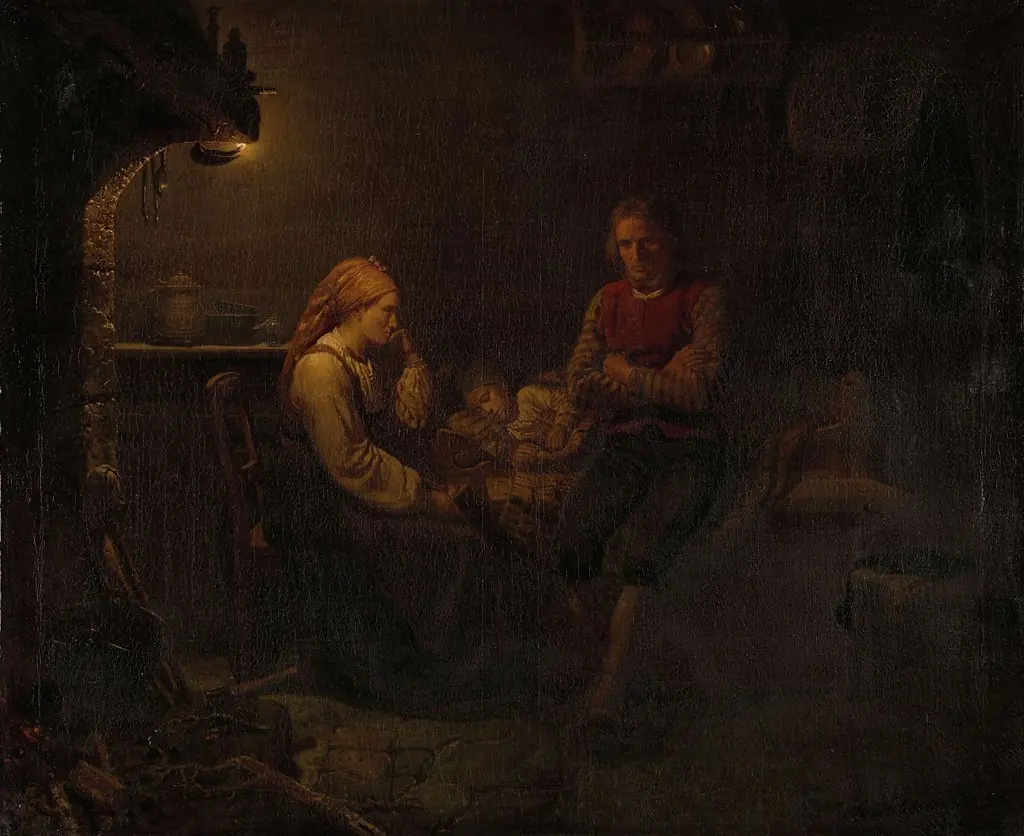 The ill child
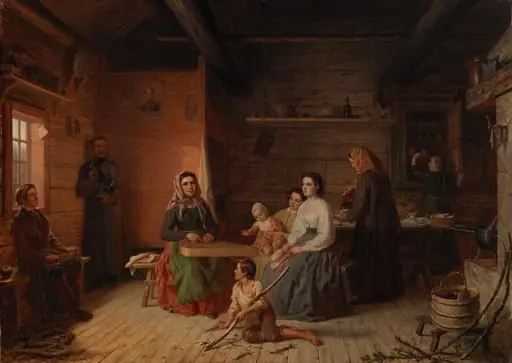 Kreeta Haapasalo soittaa kannelta talonpoikaistuvassa
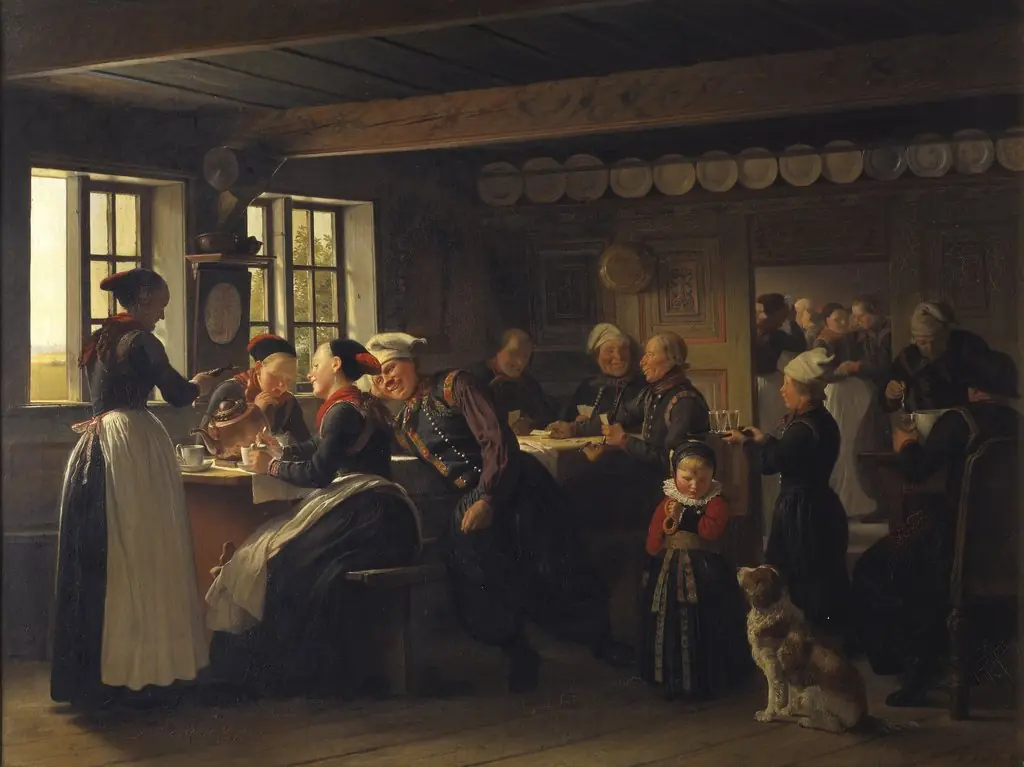 Interior with peasants from the region of Amager
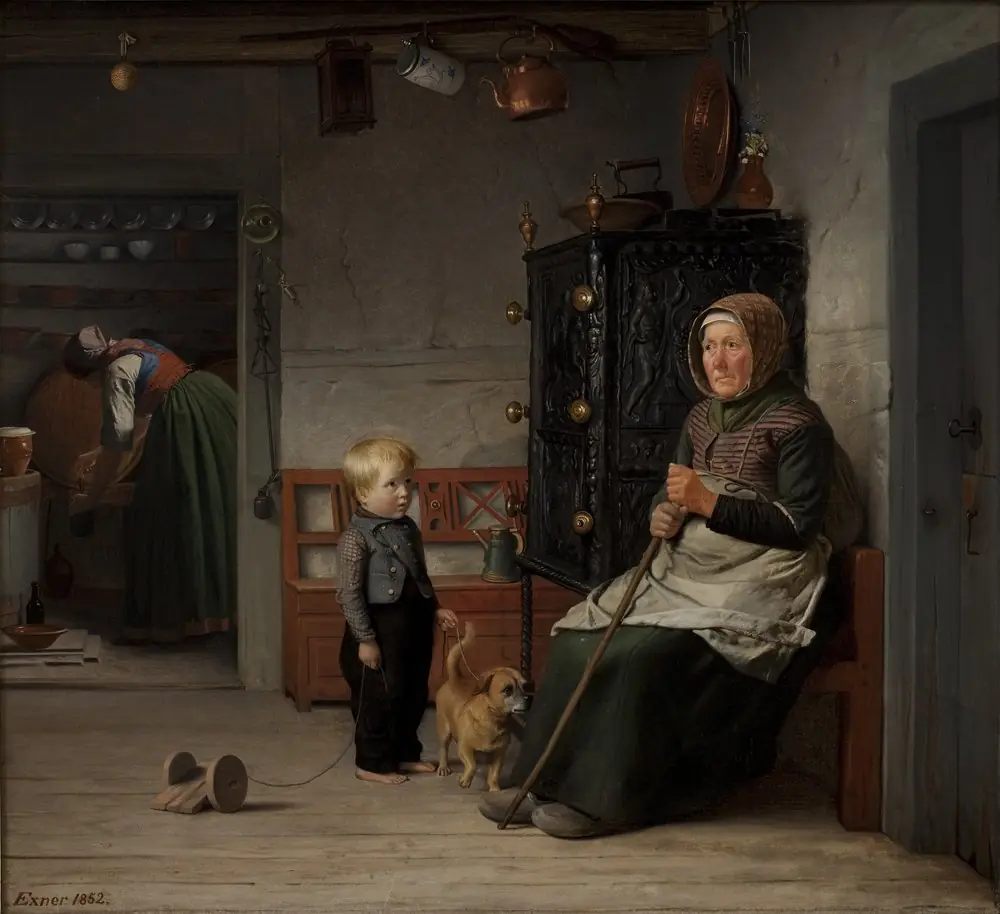 En fattig kone der venter på et krus øl i en bondestue
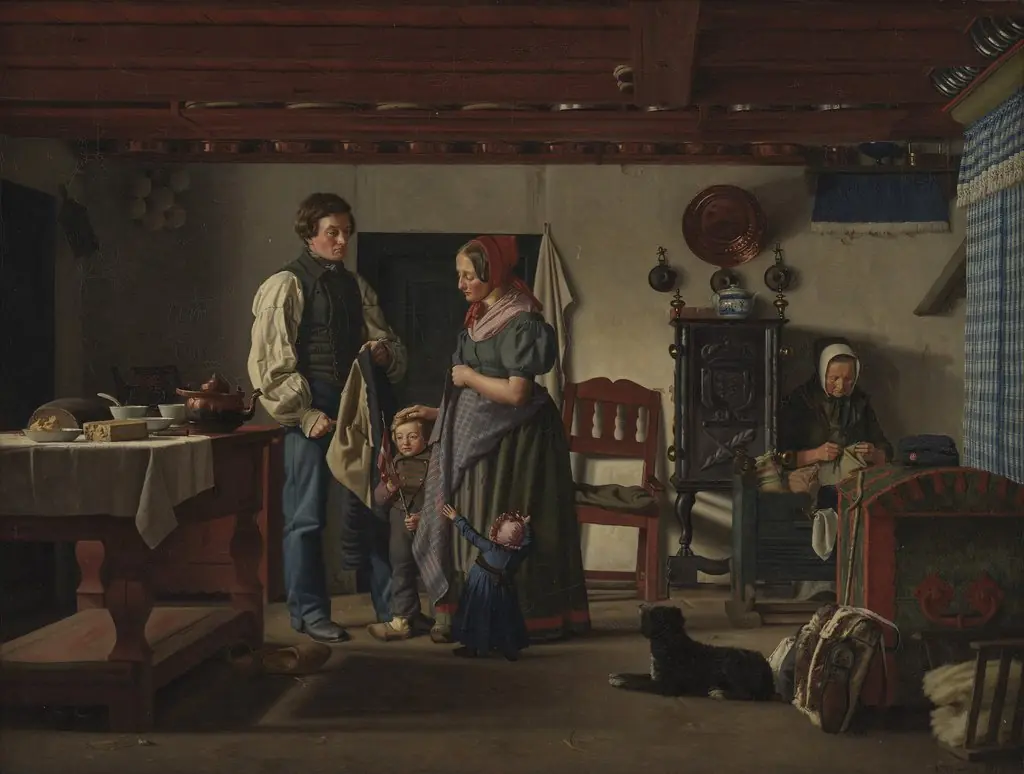 Reservesoldatens afsked med sin familie
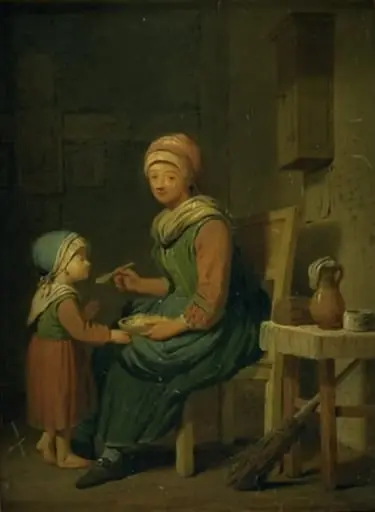 En bondekone, som giver sin datter noget at spise