Artwork
Landscape With Skaters
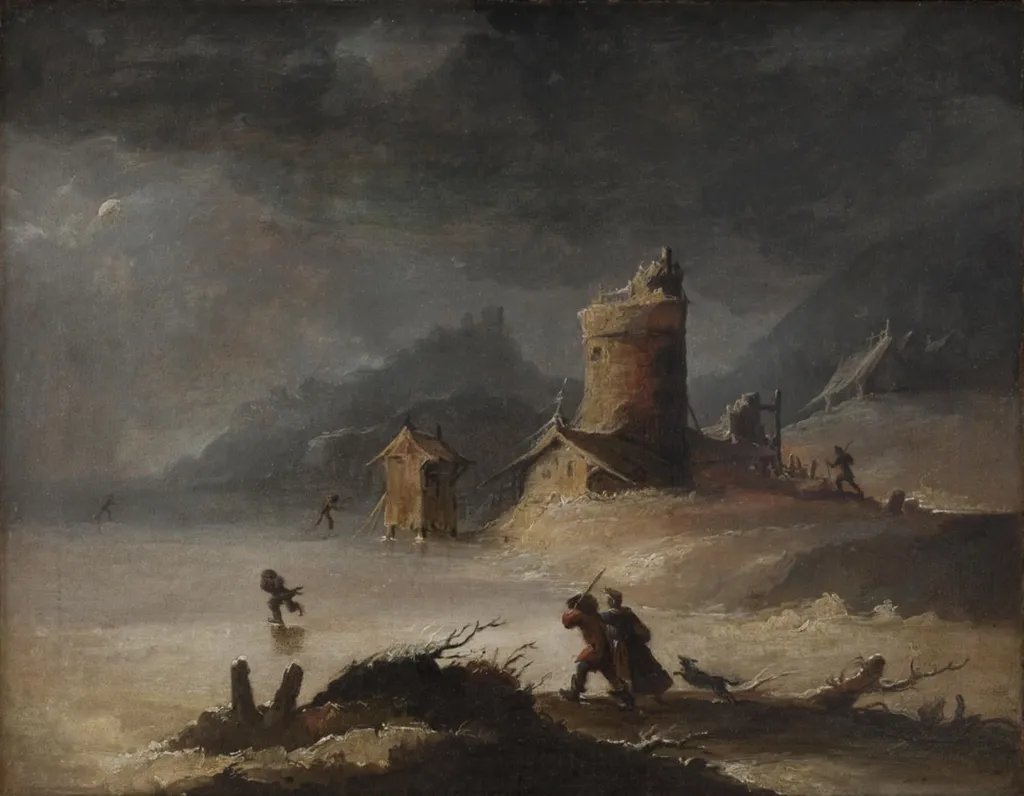
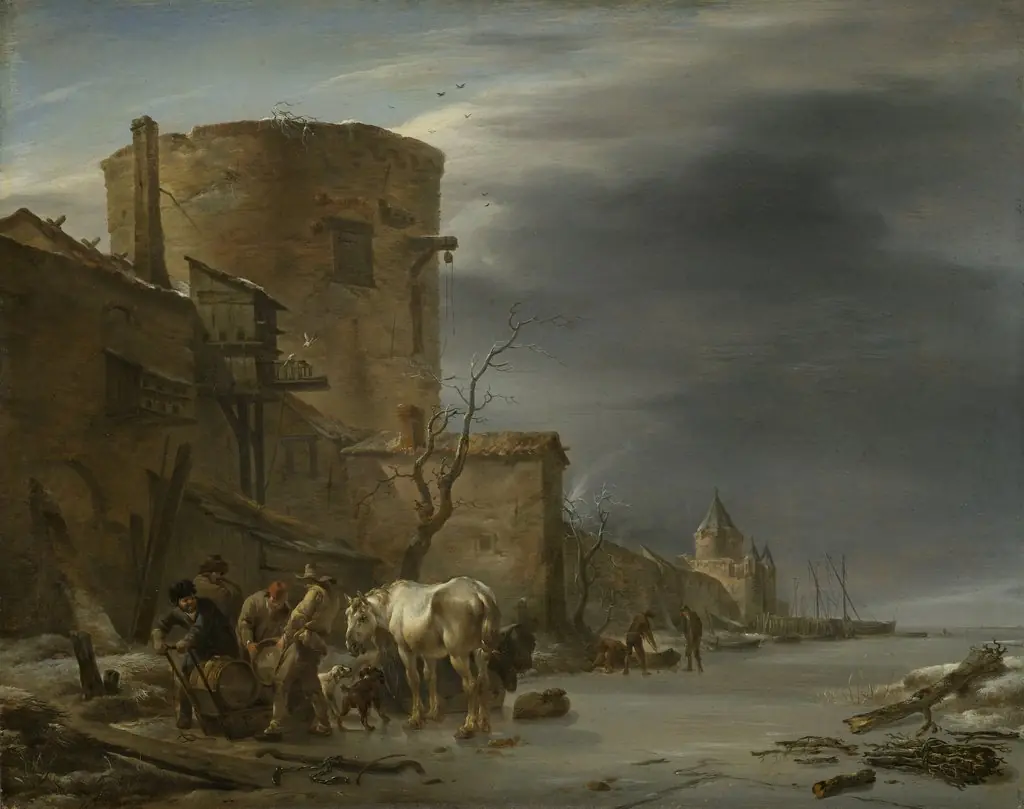
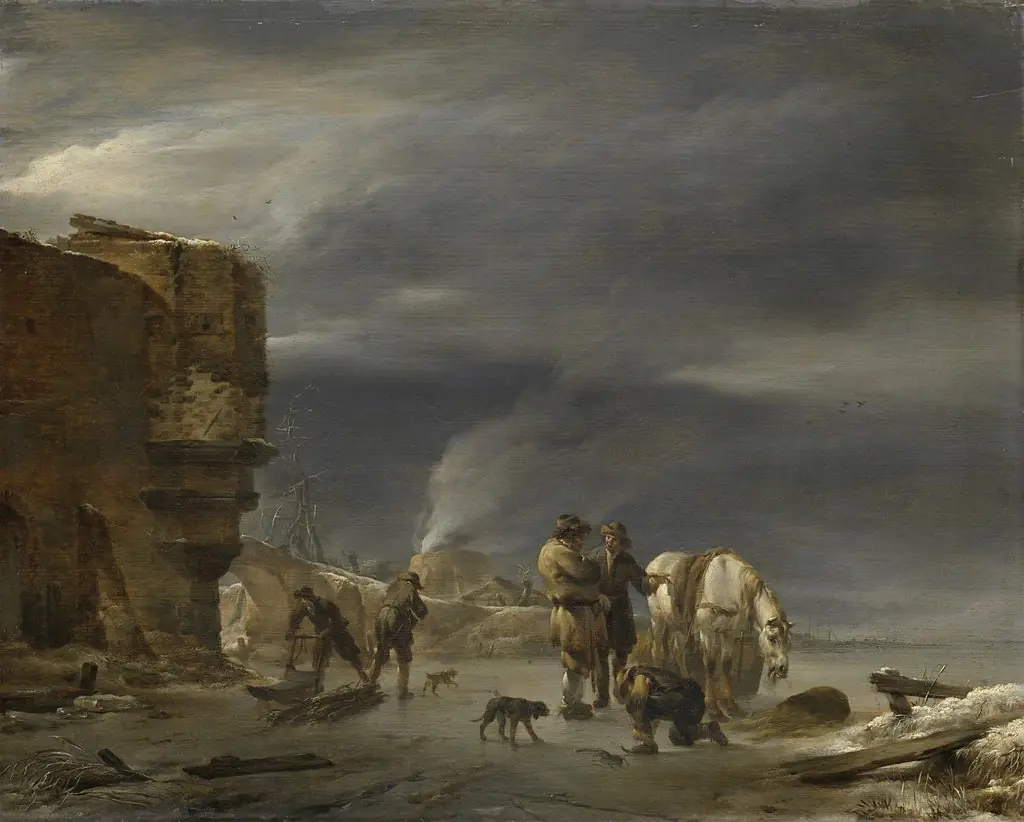
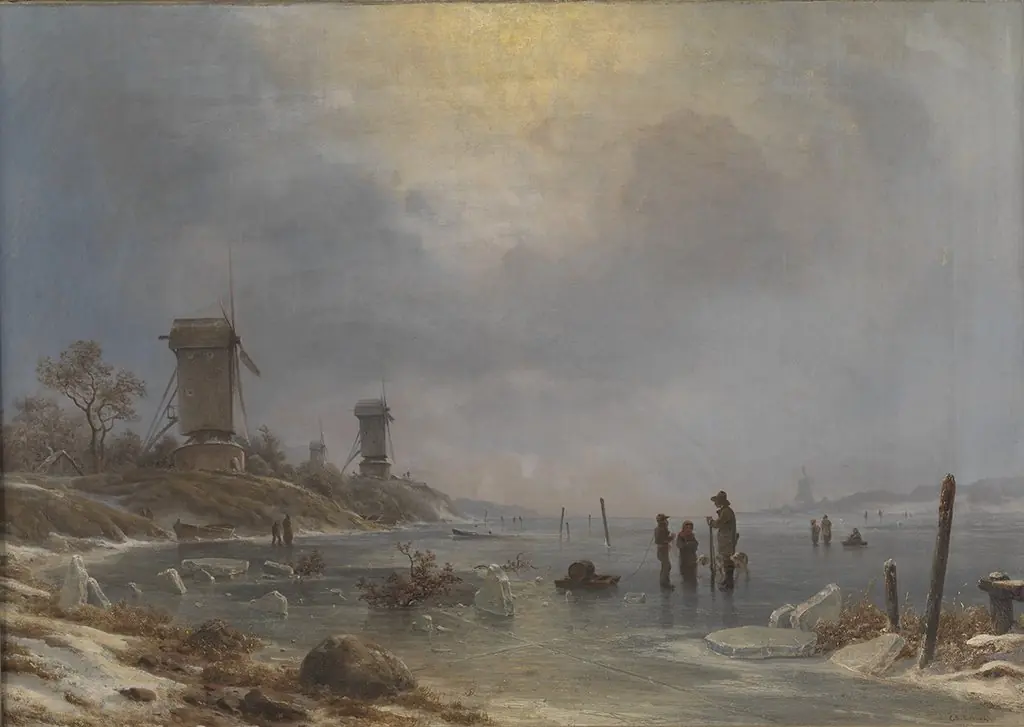
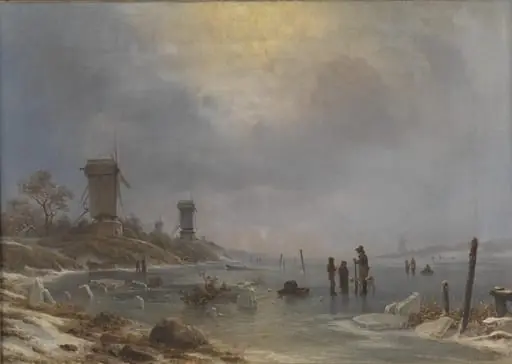
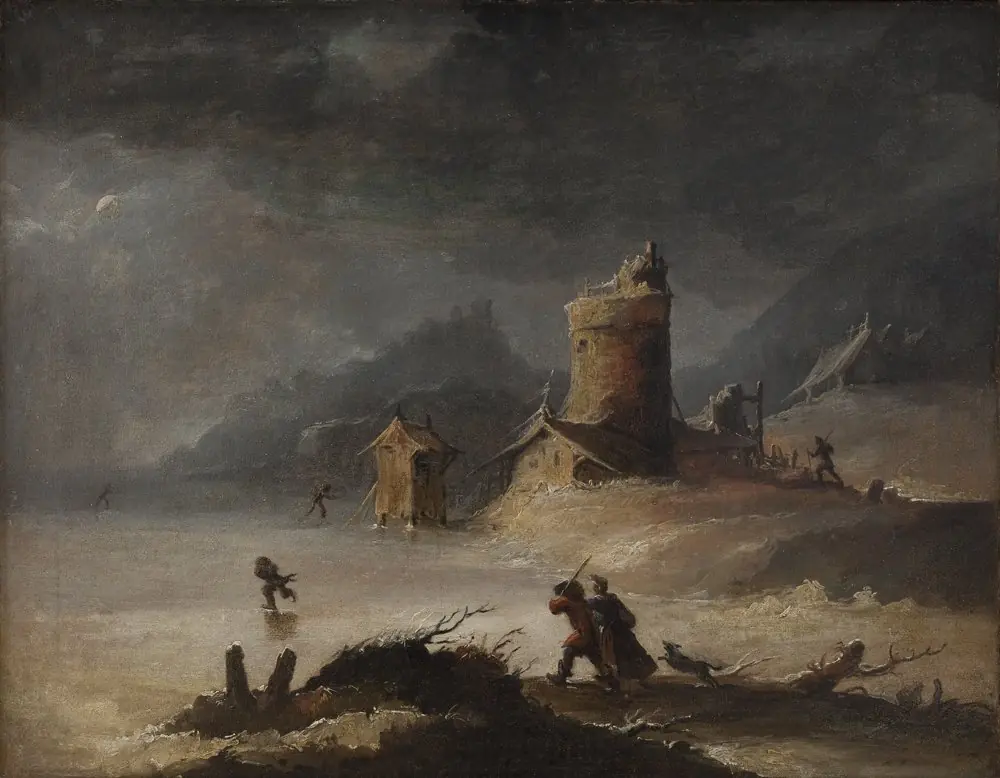
Landscape With Skaters is an unspecified painting by Unknown. It dates from 1774 and is held in the collection of the Statens Museum for Kunst. Painted around 1774, this landscape depicts a windswept coastal scene with a crumbling tower and modest dwellings near the shore.
About this work
Overview
Painted around 1774, this landscape depicts a windswept coastal scene with a crumbling tower and modest dwellings near the shore. The work is part of the Museum of Ethnography’s collection. Its mood is somber and atmospheric, emphasizing nature’s dominance over human presence. The composition directs attention toward the central ruin, framed by a turbulent sky and restless sea.
Subject & Meaning
The scene portrays a quiet, almost desolate shoreline where a few figures move indistinctly along the sand. Their small scale underscores human transience against the enduring, weathered architecture and elemental forces. The ruined tower may suggest decay or forgotten history, while the stormy sky reinforces a sense of isolation and impermanence, evoking contemplation rather than narrative.
Technique & Style
The artist employs chiaroscuro to heighten emotional tension, contrasting deep shadows in the tower and clouds with faint highlights on the wet sand and waves. Brushwork is restrained, favoring tonal gradations over fine detail. This approach creates a moody, theatrical atmosphere, aligning with late 18th-century sensibilities that valued emotional resonance over idealized beauty.
History & Provenance
The painting entered the Museum of Ethnography’s holdings in the early 20th century, though its earlier ownership remains undocumented. It was likely acquired as part of a broader collection of Northern European landscapes. No records confirm the artist’s identity beyond a catalog reference labeled '603_person,' suggesting incomplete archival data from its creation period.
Context
Created during a time when landscape painting increasingly reflected inner emotion rather than topographical accuracy, this work aligns with emerging Romantic tendencies in Northern Europe. Artists were turning to nature as a vessel for mood and existential reflection. The inclusion of ruins and stormy weather echoes broader cultural interests in decay, memory, and the sublime.
Legacy
Though not widely exhibited or reproduced, the painting contributes to a quieter strand of 18th-century landscape art that prioritized atmosphere over spectacle. Its preservation in an ethnographic museum, rather than a fine arts institution, hints at its role in broader cultural narratives about place and human endurance, rather than artistic fame.
Artist & collection

 Domestic Scene
 Giacomo and Cardinal Marco, investing Andrea, Abbot of San Zeno, with his Benefice
 The Nymph of Fontainebleau
 Portrait of a Woman
 Madonna and Child with Saints in the Enclosed Garden
 Venus and Minerva
 Family Group of Four on Sofa
 Wall painting from Room H of the Villa of P. Fannius Synistor at Boscoreale