Artwork
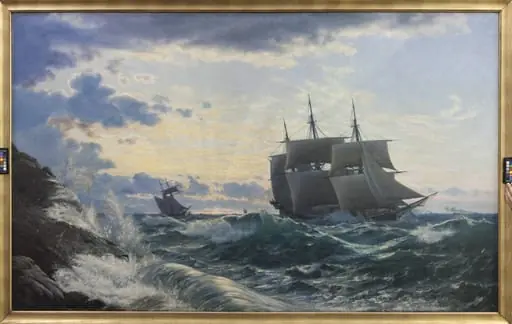
Lissabons rhed
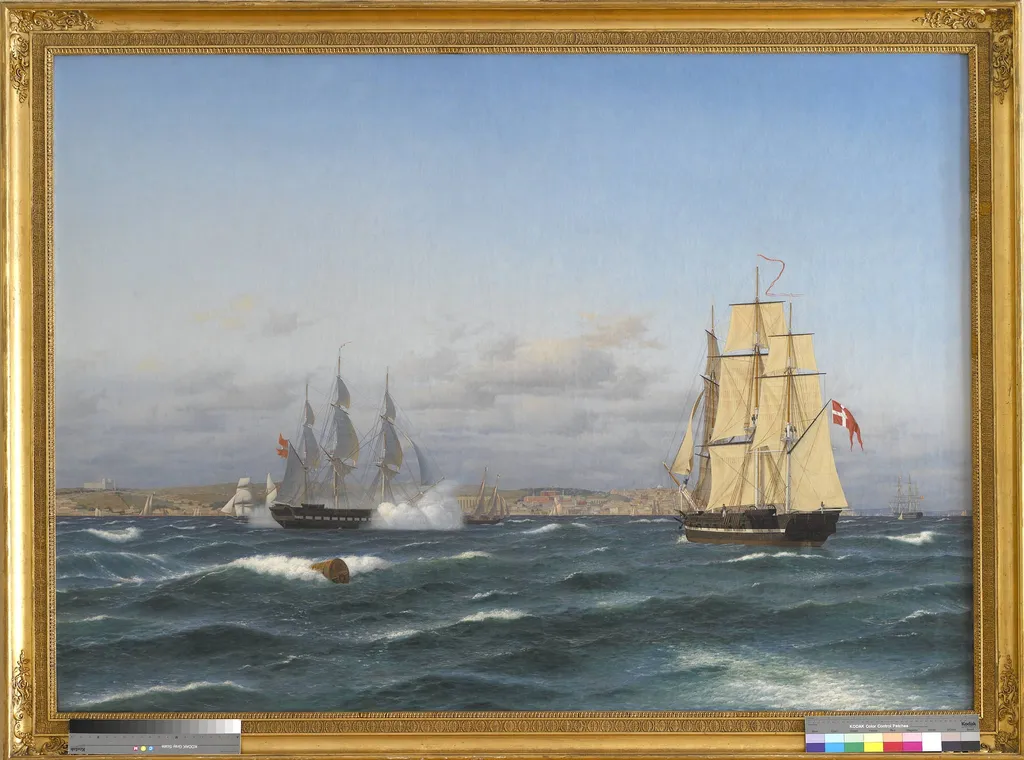
Lissabons rhed is a photography by Unknown. It dates from 1850 and is held in the collection of the Statens Museum for Kunst. Created around 1850 by the artist 604_person, this oil painting depicts the harbor of Lisbon with meticulous attention to maritime detail.
About this work
Overview
Created around 1850 by the artist 604_person, this oil painting depicts the harbor of Lisbon with meticulous attention to maritime detail. It is part of the collection at the Museum of Ethnography, where it serves as a visual record of 19th-century port activity. The composition balances movement and stillness, capturing the rhythm of a working harbor without overt drama.
Subject & Meaning
The scene portrays Lisbon’s harbor teeming with vessels of varying sizes and rigging, suggesting active trade and naval presence. The city skyline in the distance, though simplified, anchors the image in a specific place and time. The calm atmosphere, despite the bustle, implies a quiet dignity in daily labor, reflecting a period when maritime commerce shaped urban life.
Technique & Style
Rendered in a realistic manner, the painting emphasizes precise rendering of ship structures, water textures, and atmospheric perspective. The palette is restrained, dominated by soft blues, grays, and muted earth tones, enhancing the sense of quietude. Brushwork is controlled, avoiding theatrical lighting or exaggerated contrast, favoring observational accuracy over emotional intensity.
History & Provenance
The work entered the Museum of Ethnography’s collection in the late 19th or early 20th century, likely as part of a broader effort to document global port cultures. Its origin as a personal or commissioned piece remains undocumented. No significant exhibitions or sales records are known prior to its institutional acquisition.
Context
In the mid-1800s, Lisbon remained a key Atlantic port, though its global influence had waned from earlier centuries. Paintings like this reflected a growing interest in documenting everyday maritime life, often for scholarly or colonial ethnographic purposes. The subdued tone aligns with contemporary European tendencies to depict industry with restraint rather than glorification.
Legacy
Though not widely reproduced or studied, the painting contributes to a modest body of 19th-century Portuguese harbor imagery. It offers a quiet counterpoint to more dramatic naval scenes of the era, preserving a nuanced view of port life. Its preservation in an ethnographic context underscores its role as a cultural document rather than a celebrated artistic achievement.
Artist & collection

 Domestic Scene
 Giacomo and Cardinal Marco, investing Andrea, Abbot of San Zeno, with his Benefice
 The Nymph of Fontainebleau
 Portrait of a Woman
 Madonna and Child with Saints in the Enclosed Garden
 Venus and Minerva
 Family Group of Four on Sofa
 Wall painting from Room H of the Villa of P. Fannius Synistor at Boscoreale
 New York Harbor
 Christian VIII Aboard his Steamship "Ægir" Watching the Manoeuvres of a Squadron near Copenhagen
 Christian VIII Aboard his Steamship "Ægir" Watching the Manoeuvres of a Squadron near Copenhagen
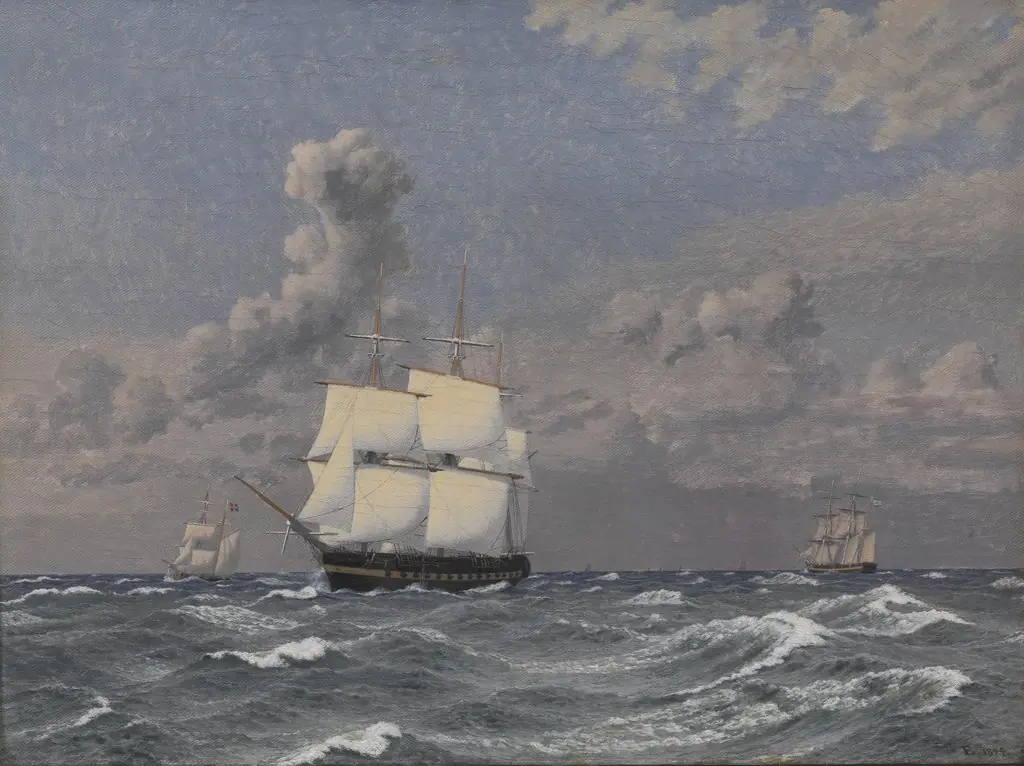 A Frigate and some other Ships Cruising
 A Frigate and some other Ships Cruising
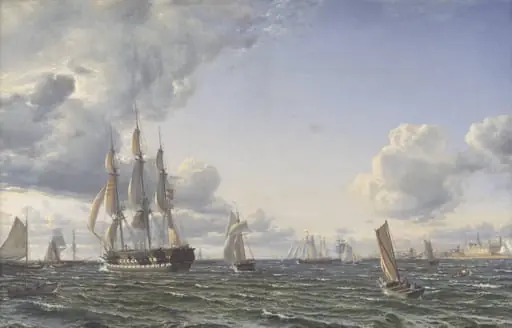 Linieskibet "Valdemar" krydser Sundet ind for en frisk bramsejlskuling
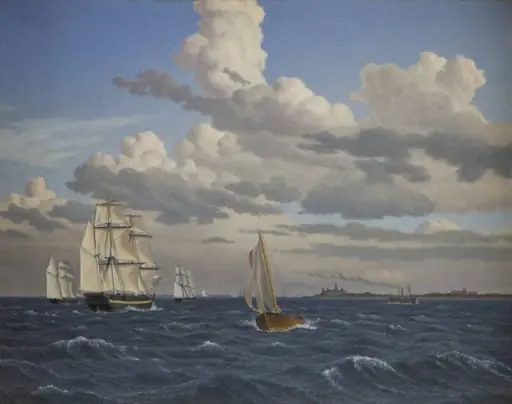 Ships in the Sound North of Kronborg Castle, Elsinore
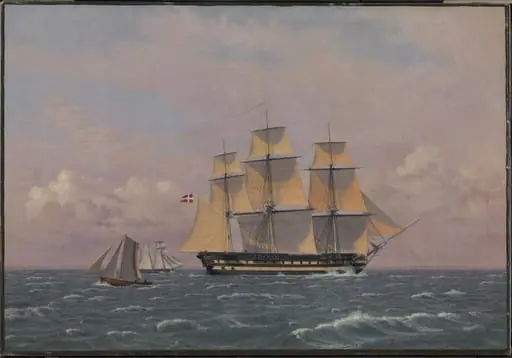 The 84-Gun Danish Warship "Dronning Marie" in the Sound
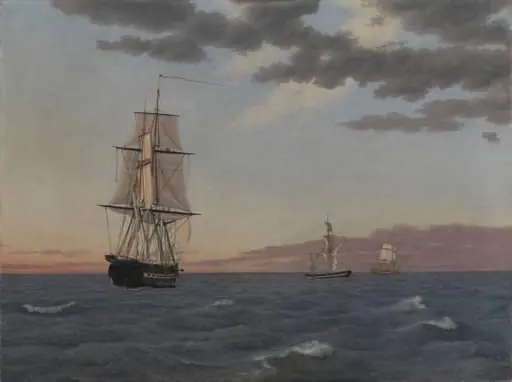 The Corvette "Galathea" Lying to in order to Send Help to the Brig "St Jean"
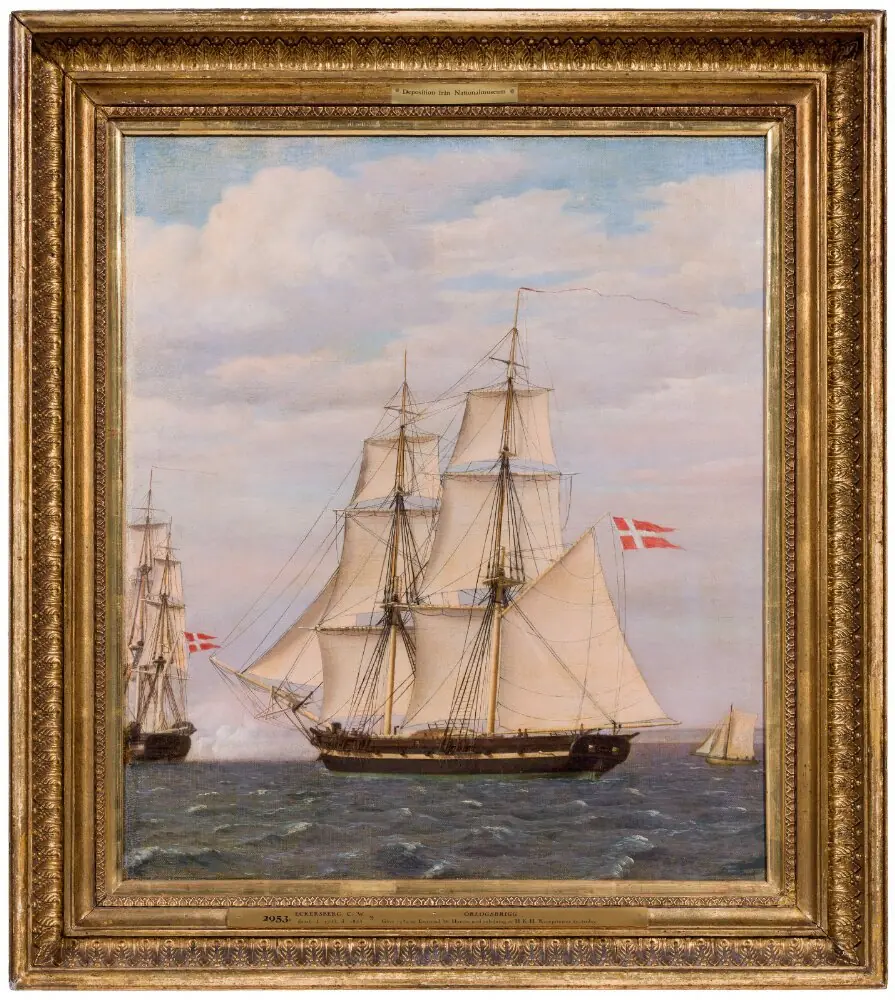 Naval Brig
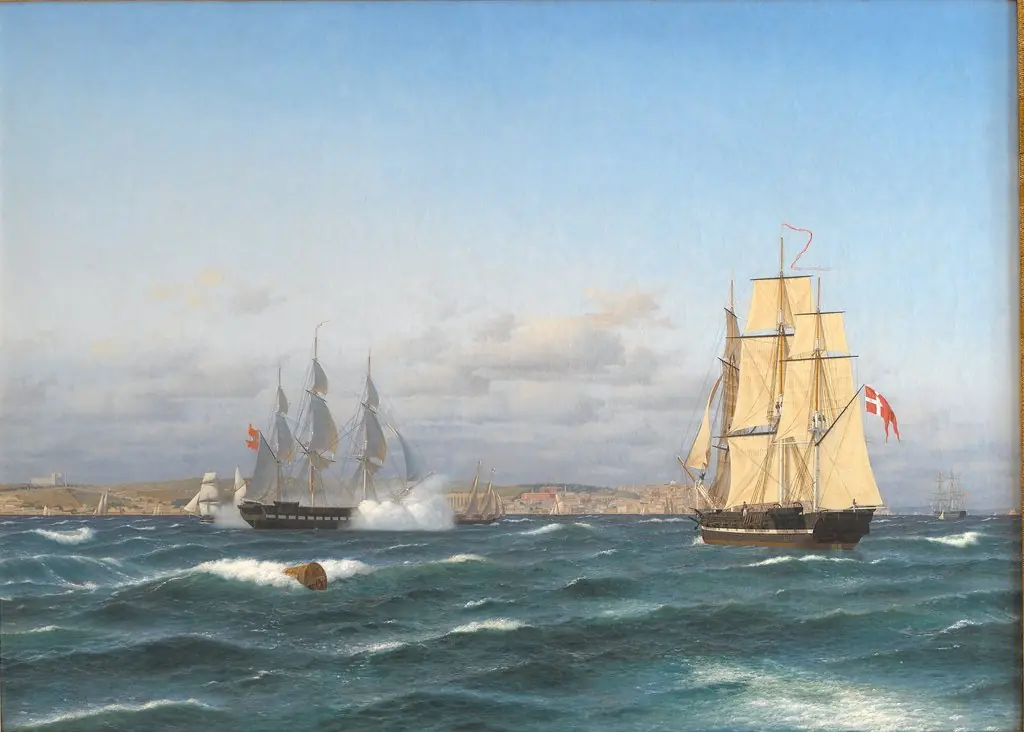 Lissabons rhed
 Skibe som morgenen efter en storm klarer landet for sig