Artwork
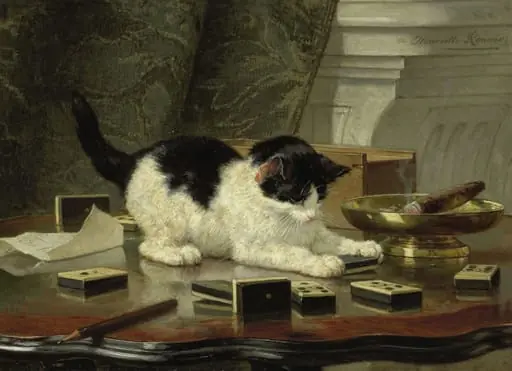
The Cat in the Studio
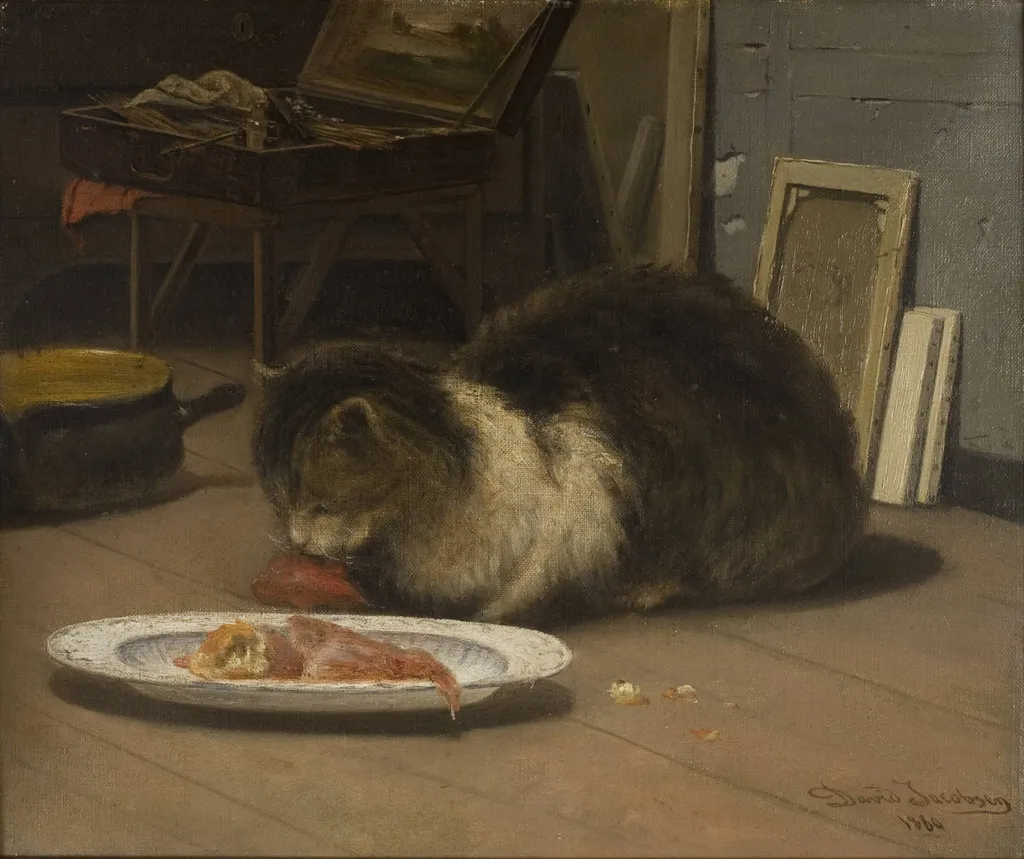
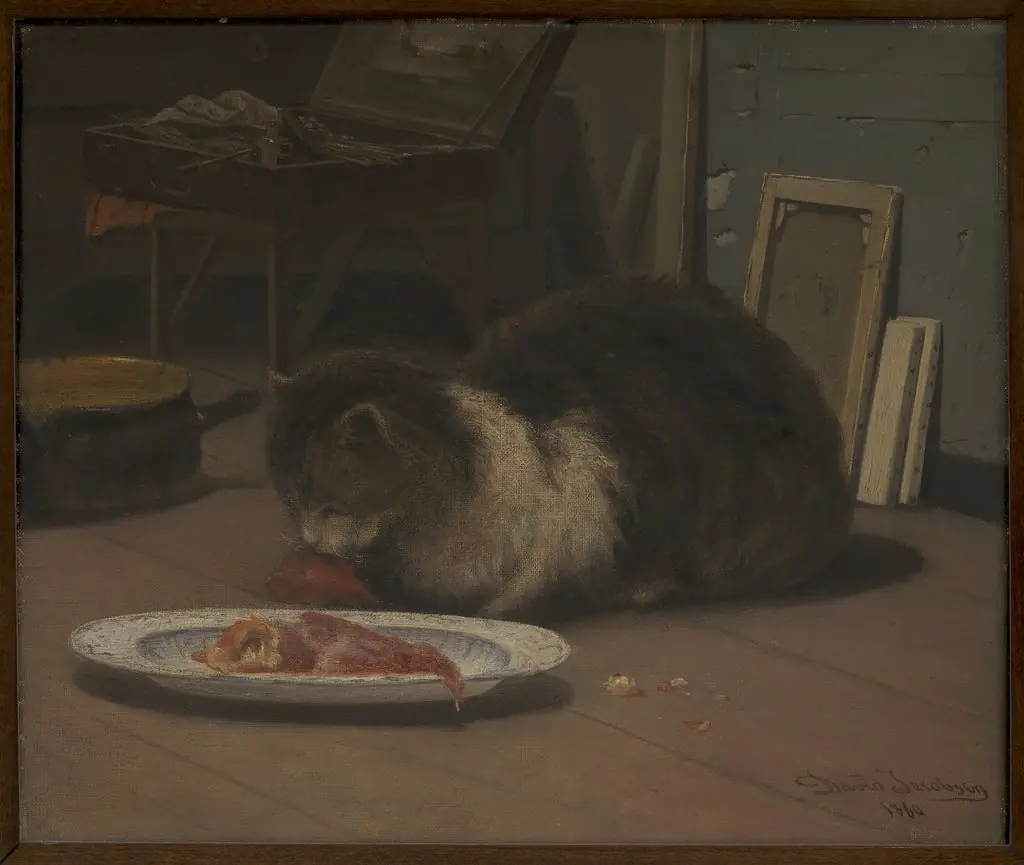
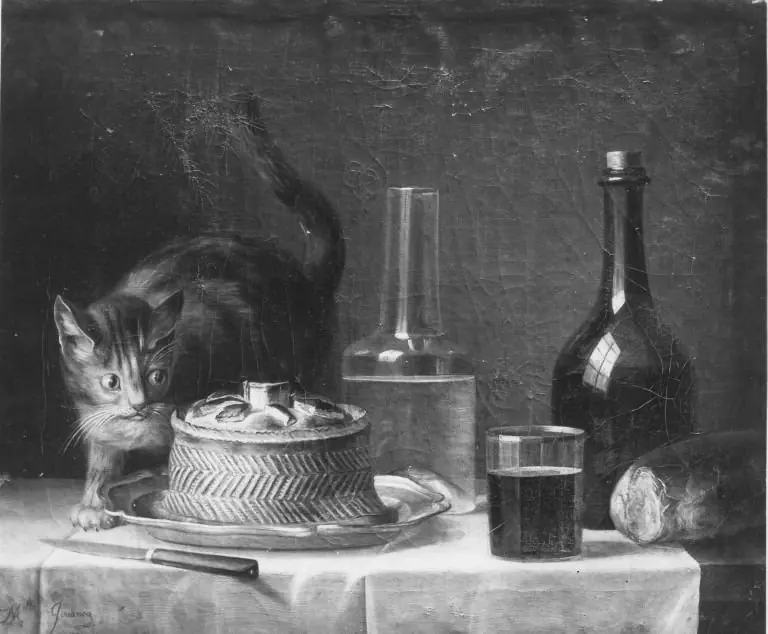
The Cat in the Studio is a photography by the Impressionist artist Unknown. It dates from 1860 and is held in the collection of the Statens Museum for Kunst. Painted in 1860 by 6050_person, this small interior scene captures a domestic moment within an artist’s studio.
About this work
Overview
Painted in 1860 by 6050_person, this small interior scene captures a domestic moment within an artist’s studio. A cat is seated centrally, engaged with a plate of food, while scattered crumbs and blurred studio furnishings suggest quiet activity. The work avoids dramatic narrative, instead focusing on an unremarkable, intimate observation of animal behavior amid creative space.
Subject & Meaning
The cat, depicted in a natural, unposed posture, becomes the quiet anchor of the composition. Its focus on the plate of meat implies a moment of sustenance, not symbolism. The absence of human figures shifts attention to the animal’s autonomy, framing it as an unobtrusive inhabitant of the studio rather than a decorative motif or metaphor.
Technique & Style
Brushwork is restrained, with soft modeling of forms and muted tones dominating the palette. The cat’s fur is rendered with subtle texture, while background elements like the table and chair are loosely suggested, creating depth without detail. The composition is deliberately uncluttered, emphasizing stillness and spatial containment through careful placement and tonal balance.
History & Provenance
The painting has been held since its creation by the Museum of Ethnography, suggesting early recognition of its anthropological value. Its preservation in a collection focused on cultural artifacts, rather than fine art, implies it was viewed as a document of everyday life. No records indicate public exhibition prior to the 20th century.
Context
In mid-19th-century Europe, domestic animals in art often served symbolic or sentimental roles. This work diverges by presenting the cat without allegory—its presence is observational, not narrative. It aligns with a growing interest in mundane realism, paralleling contemporary genre painting that valued quiet moments over grand themes.
Legacy
Though not widely reproduced, the painting contributes to a quieter strand of 19th-century art that privileged unembellished observation. Its inclusion in an ethnographic museum underscores its role as a record of domestic life, influencing later artists who sought to depict animals as autonomous subjects within human environments.
Artist & collection

 Domestic Scene
 Giacomo and Cardinal Marco, investing Andrea, Abbot of San Zeno, with his Benefice
 The Nymph of Fontainebleau
 Portrait of a Woman
 Madonna and Child with Saints in the Enclosed Garden
 Venus and Minerva
 Family Group of Four on Sofa
 Wall painting from Room H of the Villa of P. Fannius Synistor at Boscoreale