Artwork
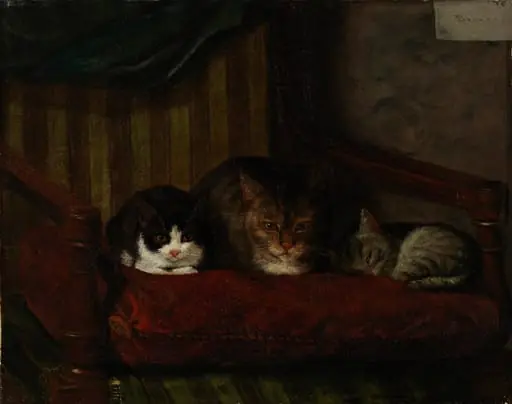
Nukkuva harmaa kissa ja rotta
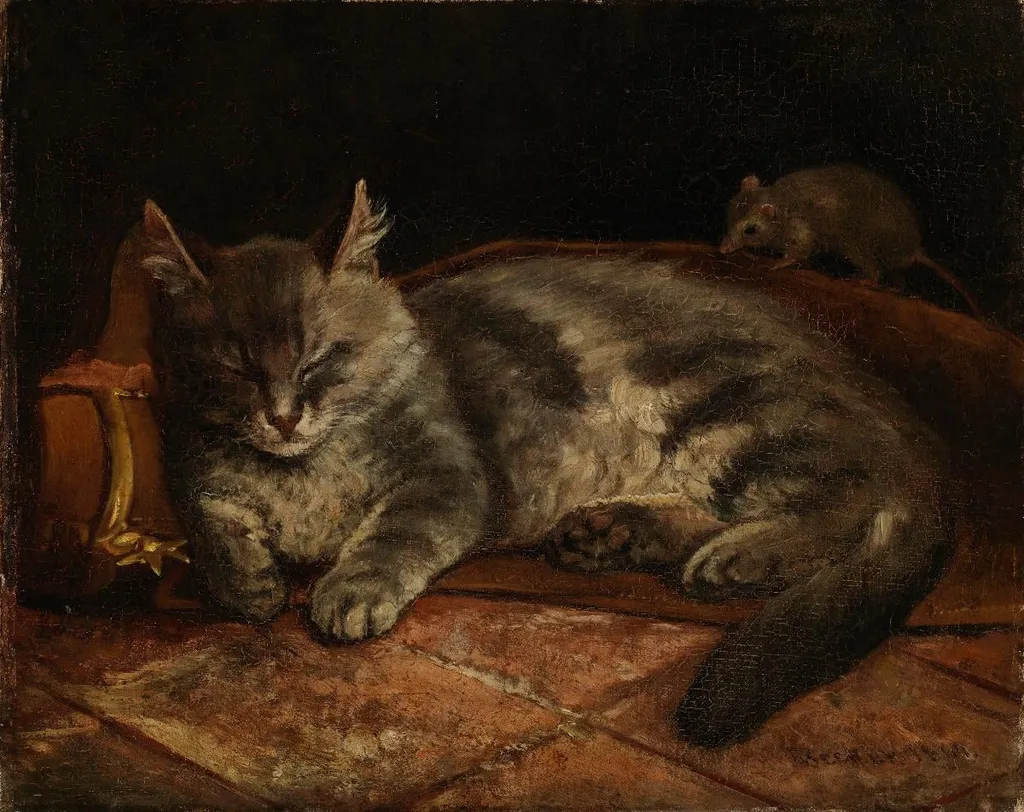
Nukkuva harmaa kissa ja rotta is an unspecified painting by Adolf von Becker. It dates from 1880 and is held in the collection of the Finnish National Gallery.
About this work
Overview
A red cushion nearby introduces a subtle contrast in tone, grounding the scene in a domestic setting without drawing attention away from the cat’s repose.
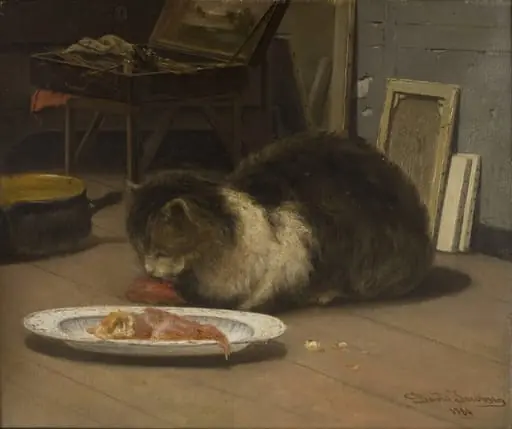
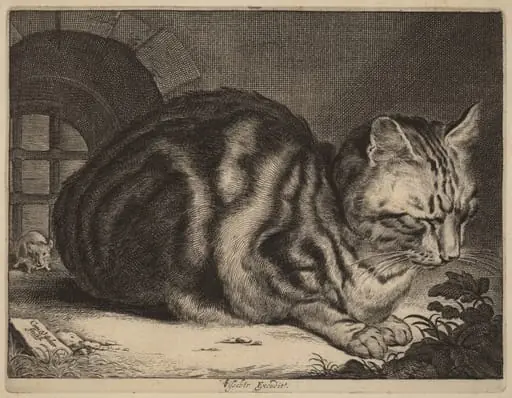
Painted around 1880 by Adolf von Becker, this work depicts a quiet domestic scene: a gray cat asleep on a textured floor, with a small brown rat perched on a wooden chair behind it. The composition emphasizes stillness, with no indication of threat or movement between the two animals. A red cushion nearby introduces a subtle contrast in tone, grounding the scene in a domestic setting without drawing attention away from the cat’s repose.
Subject & Meaning
The painting captures an uneventful moment between predator and prey, neither acting nor reacting. The cat, deeply asleep, ignores the rat’s presence, suggesting a suspension of natural instinct. This deliberate omission of tension invites contemplation of coexistence, silence, or the fragility of peace. The scene resists narrative drama, instead offering a meditation on stillness and unnoticed proximity.
Technique & Style
Becker renders the cat’s fur with soft, layered brushwork that suggests texture without detail, enhancing the sense of warmth and weight. The rat, painted in muted browns, merges with the shadowed background, reducing its visual weight. Light falls gently across the floor and cushion, creating soft contrasts that define form without harsh edges. The palette is restrained, with the red cushion serving as the only deliberate accent.
History & Provenance
The painting is attributed to Adolf von Becker, a Finnish artist active in the late 19th century, known for intimate genre scenes. It was likely created during his time in Finland or Germany, where he focused on domestic subjects. No documented exhibition or ownership history prior to the 20th century is widely recorded, and its current location remains within private or institutional collections in Northern Europe.
Context
In the late 1800s, Scandinavian and German artists increasingly turned to quiet, everyday moments as subjects, moving away from grand historical themes. Becker’s work aligns with this trend, reflecting a broader interest in domestic tranquility and the subtle interactions within household spaces. The painting’s lack of moralizing or symbolism reflects a shift toward observational realism in regional art circles.
Legacy
Though not widely exhibited, the painting exemplifies a quiet strand of 19th-century Nordic realism that valued atmosphere over drama. Its understated composition has influenced later artists interested in the poetry of ordinary scenes. The work remains a quiet reference point in studies of animal portrayal in genre painting, noted for its restraint and emotional neutrality.
Artist & collection

Artist
Adolf von Becker was a Finnish genre painter and art professor of German descent. He was one of the first Finnish artists to study in Paris, who taught many of the young artists of the Golden Age of Finnish Art.