Artwork
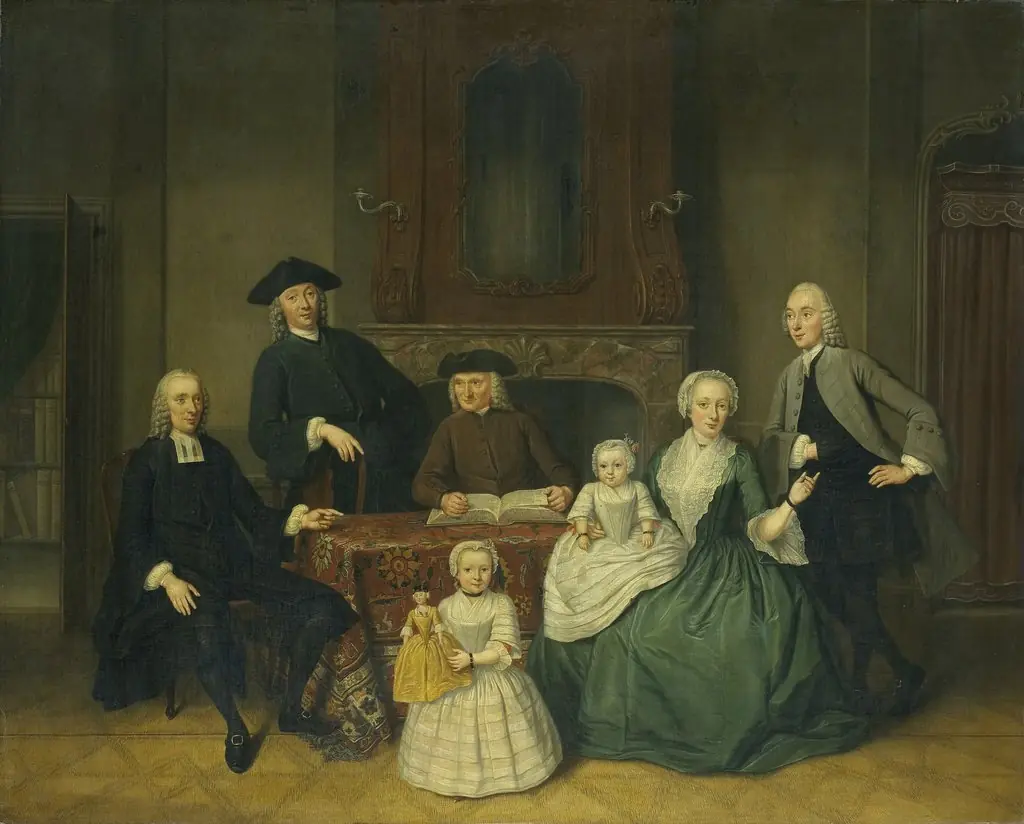
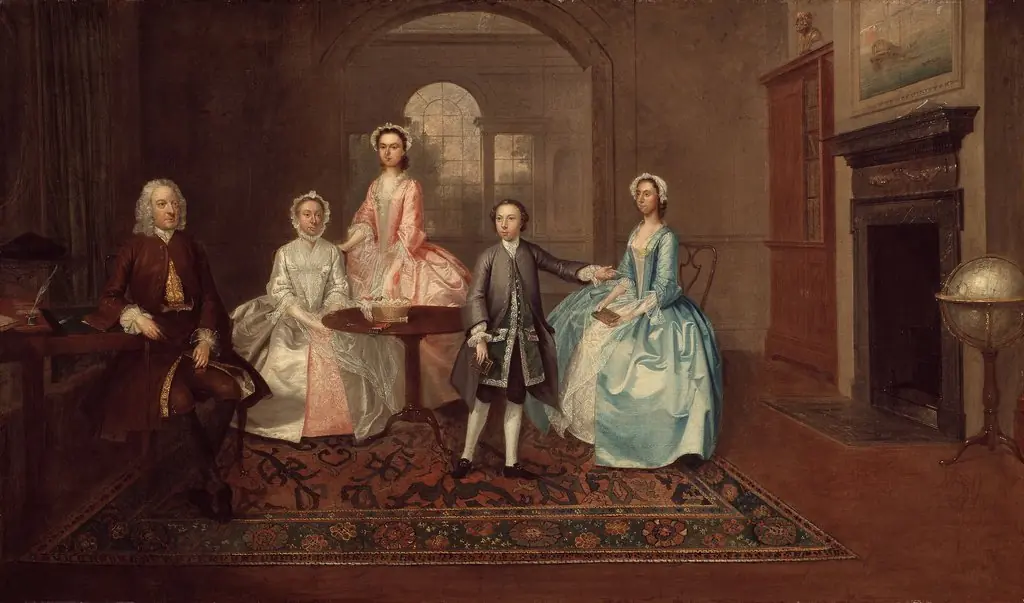
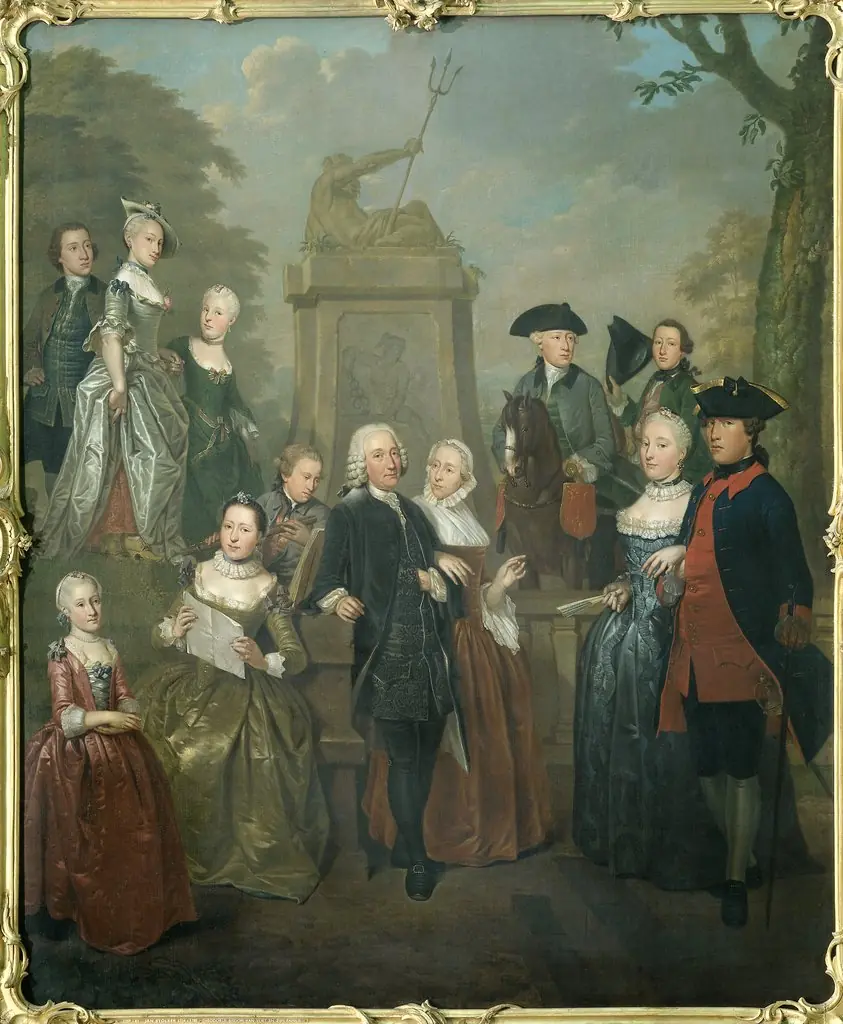
The Artist's Parents-in-Law and some of their Children
The Artist's Parents-in-Law and some of their Children is a photography by Unknown. It dates from 1750 and is held in the collection of the Statens Museum for Kunst.
About this work
Overview
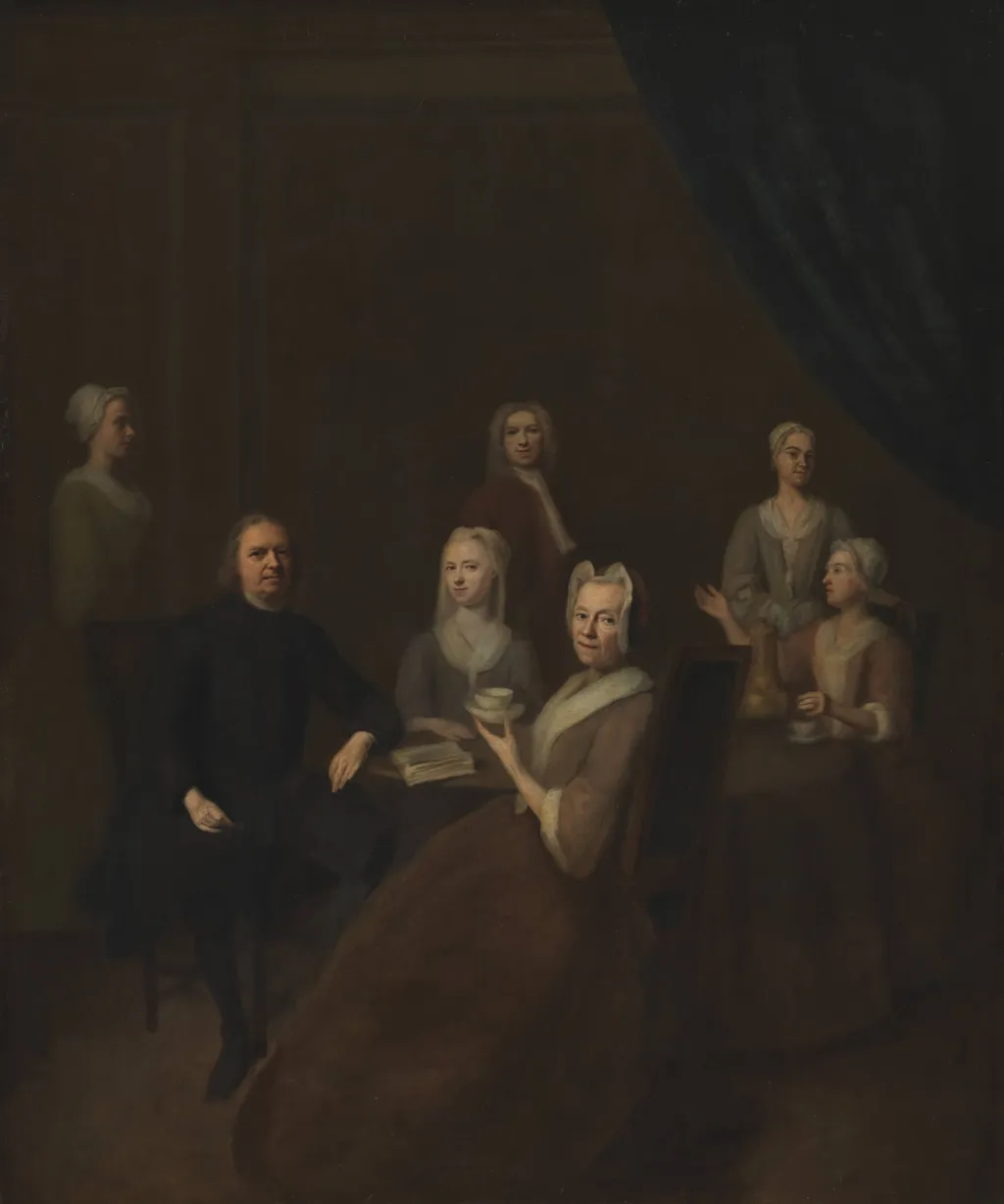
Painted around 1750, this work depicts a family gathering centered on a table, likely portraying the artist’s parents-in-law and their children.
Painted around 1750, this work depicts a family gathering centered on a table, likely portraying the artist’s parents-in-law and their children. Rendered in oil, the composition emphasizes intimate domestic presence over grandeur. The painting resides in the Museum of Ethnography, where it is contextualized as a record of familial and social life in its time, rather than as a formal portrait tradition.
Subject & Meaning
The figures are arranged in a quiet, composed group, suggesting a moment of domestic stillness rather than celebration. The presence of multiple generations implies lineage and continuity. Their formal clothing indicates the significance of the occasion, possibly a visit, meal, or rite of passage. The absence of overt symbolism points to an emphasis on everyday kinship, valued for its authenticity over ceremonial display.
Technique & Style
The artist employs chiaroscuro to model the figures against a deep, unbroken background, enhancing their three-dimensionality. Light falls selectively on faces and hands, drawing attention to expressions and gestures. Brushwork is restrained, favoring clarity over ornamentation. The muted palette and controlled lighting reflect a preference for psychological presence over theatricality, aligning with regional tendencies in mid-18th-century portraiture.
History & Provenance
The painting entered the Museum of Ethnography’s collection as part of a broader effort to document domestic life across social strata. Its origins trace to the artist’s immediate family circle, likely commissioned privately. Unlike public portraits of nobility, this work remained within familial hands before institutional acquisition, preserving its personal character while gaining scholarly relevance.
Context
In mid-18th-century Europe, family portraiture often served to affirm social status. This work diverges by focusing on kinship without aristocratic trappings. Its setting—a modest interior, unadorned furniture—reflects a middle or upper-bourgeois domestic sphere. The emphasis on quiet togetherness aligns with emerging values of private life, distinct from public displays of power or wealth.
Legacy
The painting contributes to the understanding of non-elite visual culture in the 18th century. Its preservation in an ethnographic context underscores its value as a document of everyday relationships. While not widely reproduced, it remains a quiet reference point for scholars studying familial representation beyond the canon of elite portraiture.
Artist & collection

 Domestic Scene
 Giacomo and Cardinal Marco, investing Andrea, Abbot of San Zeno, with his Benefice
 The Nymph of Fontainebleau
 Portrait of a Woman
 Madonna and Child with Saints in the Enclosed Garden
 Venus and Minerva
 Family Group of Four on Sofa
 Wall painting from Room H of the Villa of P. Fannius Synistor at Boscoreale